




Washing and reproofing technical clothing, oilskins and footwear at home is now vital to restore waterproofing, Gill Marine’s gear guru Matt Clark says. But fortunately, it’s easier than ever.

Reproofing and washing your oilskins and technical sailing clothing is surprisingly easy now that gear is designed to be machine washable – and water-repellent finishes can be applied in the same way, in a two-stage process.
European legislation introduced this year, driven by environmental concerns, means the industry is moving away from per- and polyfluoroalkyl substances (PFAS) based durable water-repellent (DWR) treatments.
As a result, looking after waterproof clothing at home is becoming vital to keep the new generation of DWR garments performing at its best.
What should we do when jackets and salopettes start to absorb rain, feel heavy and damp? Time for a newer model?
No, says Gill Marine’s product development and sustainability director Matt Clark: “Nine times out of ten it definitely does not mean that.
“It just means you need to clean and renew your garment.
“Most products can be brought back to life with some simple care and attention.”
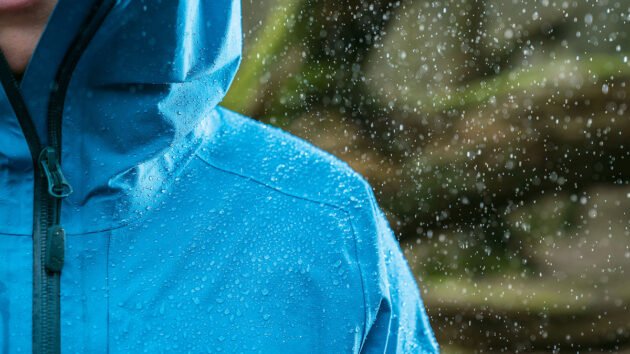
Plans are under way to restrict the use of PFAS ’forever chemicals’ in the EU. The UK is working on an evidence-based approach. Credit: Nikwax
Cleaning regime to restore waterproofing
Rinsing off saltwater, sand, grit and grime is key to prolonging the life of technical clothing and footwear.
Regular machine washing and restoring waterproofing with a wash-in reproofer are also required to maintain optimum performance.
Matt told PBO: “Ironing waterproof gear used to be one of the tricks that you could utilise to rejuvenate and regenerate your durable water repellent (DWR) coating.
“But fabric technologies have moved on, and there’s a lot of sustainability legislation that’s driving an awful lot of changes to product performance and product specification.
“Most recently, we’ve had to ensure that all of our fabrics are PFAS-free.
“PFAS chemicals are environmentally damaging with a long-lasting and persistent effect so it’s the right thing that we’ve removed them from our fabrics.
“But while the initial water-repellent performance of PFAS-free DWR treatments can be excellent, they can require more regular care and renewal to maintain that performance compared with some previous-generation treatments.”
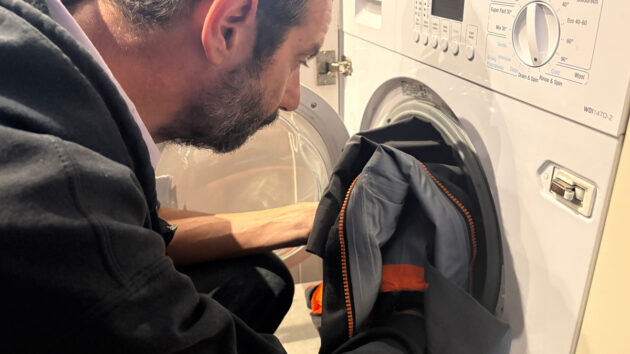
Better for the planet, PFAS-free waterproof coatings fail sooner but are more easily renewed. Credit: Katy Stickland
New legislation
As Gill began transitioning its waterproof fabrics to PFAS-free DWR technologies, the team researched ways to extend the life of the new fabric technologies.
“We knew that at first use, they work fantastically and give an amazing performance out on the water, but then they start to degrade,” said Matt.
“We realised it was important to educate customers, encourage them to wash garments, but also reproof their garments, just to keep them working in optimum condition.”
After ‘how do I wash my waterproofs?’, ‘how do I restore waterproofing?’ is the second most common query for Gill’s in-house repair service.
The team found themselves recommending the water repellent treatments of two British companies with eco credentials, Grangers and Nikwax, but decided “we needed to test them ourselves”, said Matt.
“We put a lot of effort into the development of our own fabrics so we wanted to understand how these cleaners and reproofers might react to it.
“So, we’ve tested all of our waterproof fabrics with the Nikwax Tech Wash gentle soap-based cleaner and Nikwax TX.Direct Wash-In reproofer.
“There are no nasty chemicals in the Nikwax cleaner but it will take off any natural oils that might be contaminating the garment.
“It will also take out dirt, grit and salt residue.
“The great thing is you can put it straight in your domestic washing machine, so it goes into your detergent drawer, you wash it on a regular cycle, and then the Nikwax TX.Direct Wash-In reproofer goes into the detergent drawer for another cycle.”
He added: “How frequently a garment needs reproofing depends on how heavily it’s used, how often it’s washed and the conditions it’s exposed to.
The best guide is the garment itself – when water stops beading and the face fabric starts wetting out, it’s time to clean it and, if necessary, reproof it.”
Spray versus wash-in treatments to restore waterproofing
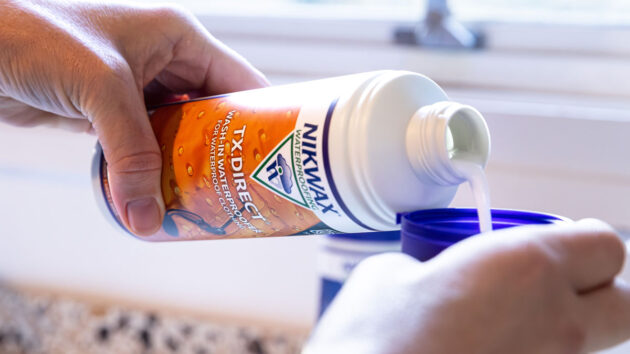
Wash-in treatment to restore waterproofing “works incredibly well”, says Gill Marine’s Matt Clark. Credit: Nikwax
Spray reproofing “can be so messy” with patchy treatment, said Matt.
“Wash-in treatment works incredibly well.
“You can do a jacket and your salopettes in one go – we’ve tested it, we know it works, so we’re happy to recommend it.
“We don’t have a commercial relationship with the Nikwax guys but they’re fabric nerds like we are, so it’s a really good collaboration and partnership.
“We wanted to give our customers an easy solution, since we were being asked the question.”
He added: “In fact, as a spin-off of that, over the last couple of seasons, we’ve introduced garments which come pre-equipped with Nikwax DWR built into the fabric itself.
“So, when customers need to reproof those fabrics – and you will need to at some point – you can reapply the exact same chemical that was put in by the fabric mill.”
Inner layers
Staying warm, dry and comfortable starts with the fabrics next to your skin, so look after base layers too.
“We use merino wool in our socks for its amazing technical characteristics; the fact it’s anti-odour and naturally absorbing,” said Matt.
“It’s a bit of a wonder fibre, given that it’s completely natural.
“Again, wash them alongside base layers and thermal mid-layers on a regular basis, make sure there’s no contaminants in there.
“You want them to breathe as much as possible, because they’re part of an overall clothing system.
“Your protective outer suit is one component, but it starts with your next-to-skin layer, then maybe thermal mid-layers as well.
“All of those need to be in optimum condition.
“Again, don’t use fabric softeners, because they’ll stop your base layer from wicking.
“You want that moisture transportation process to start from the next-to-skin layer, and for that moisture to go through to the outside of your breathable fabrics.”
Breathable footwear care
Like technical clothing, some footwear is designed to be breathable and Gill advises sailors to rinse boots and shoes after use. “
“Then use a really soft brush to make sure there’s no contaminants like grit and sand,” said Matt.
“Leather-based sailing boots in particular can absorb saltwater and take longer to dry effectively.
“So, any salt crystals embedded within that leather will attract moisture, stiffen materials and contribute to their deterioration over time.
“That expansion and contraction of salt crystals can be quite damaging to technical fabrics.”
Seasonal ‘MOT’ to ensure waterproofing works
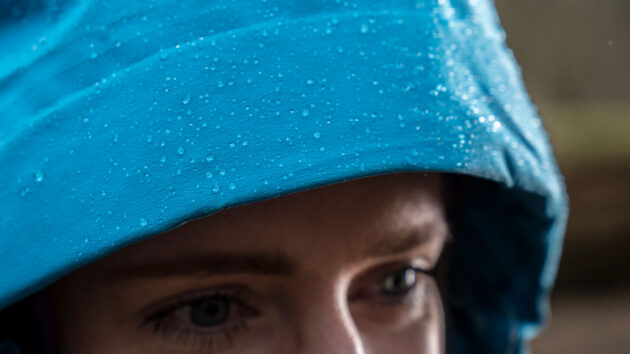
The beading effect, where water rolls off the surface, is your fabric’s first line of defence – if water is starting to be absorbed, you need to restore waterproofing. Credit: Nikwax
Each season, check:
- Does water still bead on the face fabric?
- Zips running smoothly?
- Cuffs and closures working properly?
- Any small holes or abrasion?
- Any seam or tape deterioration?
- Any areas of persistent contamination or mildew?
- Does it need cleaning?
- Does I need to restore waterproofing?
- Is there damage that would benefit from professional repair?
Matt said: “When you stow garments, empty the pockets, make sure it’s dry and, crucially, store it out of direct sunlight, away from dampness and anywhere subject to swings in temperature as that will affect the fabric.
“Perhaps use water absorbers to capture moisture on boats, or place a dehumidifier or chemical-based dehumidifiers in the bottom of your garment locker if you can.”
Other top tips
For insulated gear, after washing, put tennis balls or dryer balls in the tumble dryer to “loft garments back up again”.
Matt said: “It also stops those cold spots, because inevitably, when you wash an insulated garment, it all moves around and you’ll end up with patches of zero insulation, so it definitely helps to redistribute the insulation.”
This works for garments filled with down, feathers, and loose-filled synthetic insulated fibres.
Multiple tumble drying cycles until it’s ‘lofted’ may be required.
Also, avoid choosing sailing gear with metal components.
All of Gill’s Ocean, Offshore and Coastal lines use YKK zips that are 95% plastic.
“They might have a small metal spring in there, but we try to avoid things like coil zippers and metal sliders because they will often salt up, corrode, and stop working,” said Matt.
“Rinse them with fresh water, and certainly don’t force any jammed zips because that can dislodge the teeth and you’ll end up having to replace the entire zipper.”
Repair options
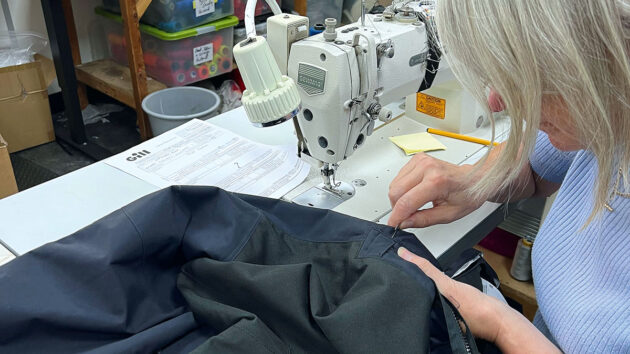
Damage to seams, membranes or inside coatings require a professional repair. Credit: Gill/gb.gillmarine.com
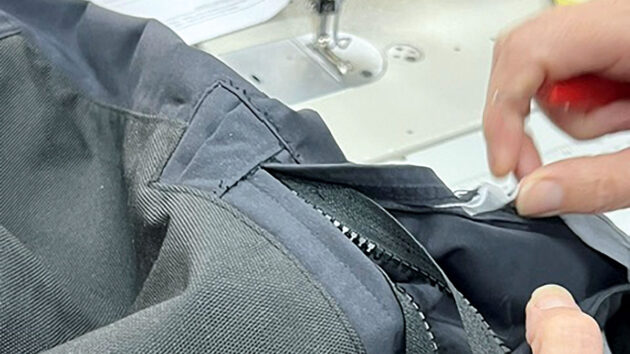
Gill’s zip repairs cost £45. Credit: Gill/gb.gillmarine.com
Never ignore a tiny tear as it can quickly worsen.
Matt said: “Don’t use sticky tape or gaffer tape or anything that might contaminate the outer surface of the fabric.
“You can get circular fabric patches, like McNett Tenacious Tape, from outdoor stores and online, which have an adhesive peel-off strip on the back, to stick to the outside surface of your garment.
“It’s not a permanent solution, but can stop the tear from worsening.”
Before applying any repairs, make sure the garment is clean and dry.
If there is damage to the seams, inside coating or membrane – the waterproof breathable component of the fabric – consider getting a professional repair.
Boat maintenance to ensure no loose shroud ends or snag points when you’re moving around is crucial.
Matt added: “The last thing you want when you’re out on the water is that horrendous tearing sound.”
While Gill has an in-house service, other marine brands like Henri-Lloyd and Musto are supported by Scottish Mountain Gear’s Gore-Tex-approved centre for repairs, alterations and reproofing.
Gill’s team assesses each garment on a case-by-case basis, and offers paid-for repairs on items out of warranty, or by other brands.
Matt said: “We can replace zippers, torn fabrics and buckles, re-tape garments, reproof and alter garments, so if you find your trouser legs might be a bit too long, for example, we do a shortening service as well.
“Customers sometimes return garments that can be 20, 30 years old and they’re in amazing condition, but it’ll be, ‘the zipper’s seized up,’ or ‘my favourite jacket has a slight tear, what can you do?’
“And we’re more than happy to keep those going for as long as we can.”
Gill’s 32-strong list of repair services, accessed via its customer service team, includes £10 for a reflector replacement or £15 for a Velcro cuff, cord or buckle replacement, £30 for a small patch repair, and £45 for a new high-visibility hood or front zip of a lined jacket.
How do I wash my waterproofs?
This is the main question Gill’s customer service team gets asked.
“People can be quite scared about washing waterproof gear, foul weather gear in particular, as it is a considerable investment for sailors,” said Matt.
“Obviously, we design them to last but to get the most out of them, you really do need to look after them.”
Check the label
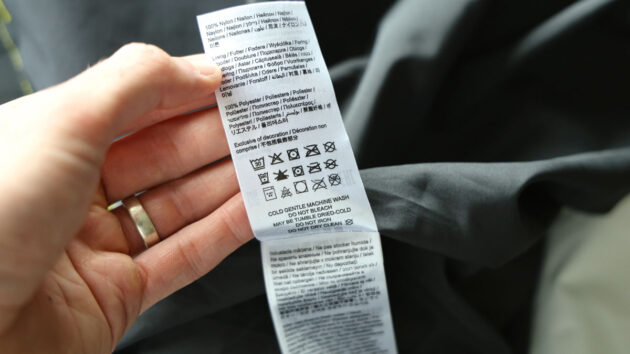
Check your garment’s care label. Credit: Gill/gb.gillmarine.com
Firstly, check your garment’s care label.
“Not that long ago, most waterproof gear was handwash only but now in Gill’s lab, the most important piece of test equipment, I would say, is a domestic washing machine,” said Matt. “It sounds simple, but all of our garments go in there; they get washed five times – all of our fabrics, every single component – so all of that is designed to be easy care, easy to use, so customers shouldn’t feel scared about putting it into a washing machine. And, actually, it’s important to do so.”
Rinse
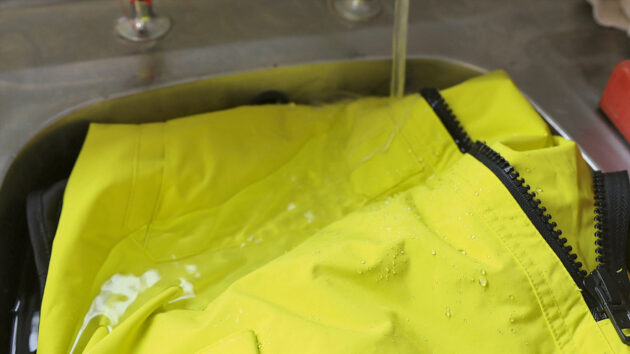
After use, rinse saltwater off the surface to remove any dirt or contaminants. Credit: Gill/gb.gillmarine.com
After use, rinse saltwater off the surface to remove any dirt or contaminants.
“When people perhaps return their garments saying, ‘I think it’s leaking,’ one of the things we notice is that they haven’t been cared for as often as they should have been,” said Matt.
“Salt on the surface of fabrics is really abrasive. So, as a bare minimum, rinse it through with fresh water.”
Zip it
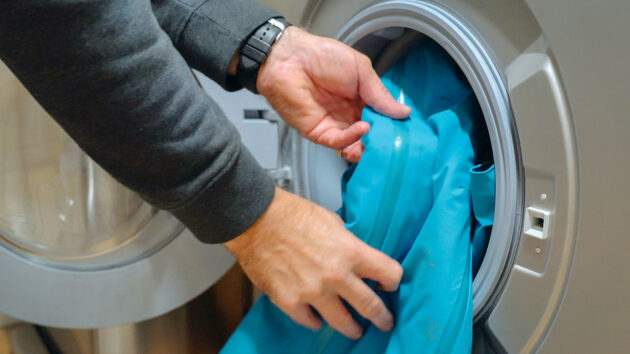
Be sure to close zippers and any Velcro coverings to prevent snags in the washing machine. Credit: Nikwax
There are lots of Velcro and zips that might snag on a waterproof jacket, so close zippers and any Velcro coverings across the cuffs, the front strip, and face guard.
Matt said: “Make sure there’s no hook Velcro, so when it does go into the washing machine, it doesn’t snag and catch any of the other fabrics.”
No fabric softener
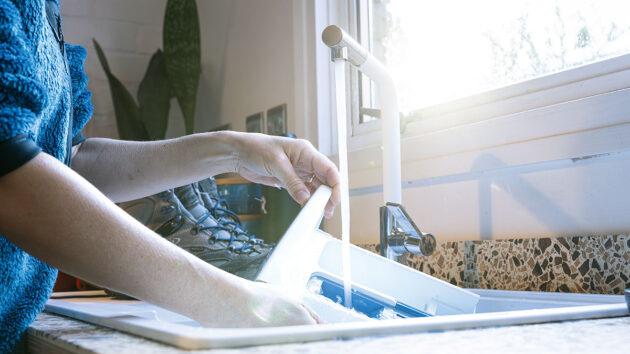
Rinse any fabric softener residue out of the detergent dispenser. Credit: Nikwax
Never use fabric softeners – this is detailed on the care instructions on all Gill garments.
“It might be instinctive behaviour for a lot of customers, what they would normally do for their regular clothing, but fabric softeners can really damage technical fabrics,” said Matt.
“It stops water-repellent coatings from working as effectively.
“One of the reasons why you shouldn’t even really use it on, say, your towels at home, is that fabric softeners stop water from being absorbed.
“So, you might find that towel’s soft and fluffy, but it won’t soak up water as effectively as you want it to.
“And on a technical fabric, such as the inside wicking face of a three-layer fabric, you want that to start the moisture transportation process and take moisture away from the skin. It won’t. It’ll actually push moisture back towards you, which is not what you want at all.”
Machine wash
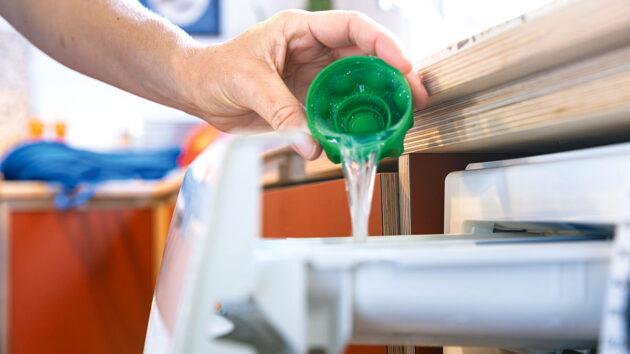
Add Nikwax to machine drawer. Credit: Nikwax
- Remove all detergent build-up from the detergent dispenser.
- Shake the bottle of Nikwax Tech Wash.
- Use undiluted Tech Wash to treat stubborn stains before washing.
- Place a maximum of two garments in the washing machine.
- Use 150ml in medium/hard water areas and 100ml in soft water areas.
- Run a 30°C synthetic cycle on a slow spin.
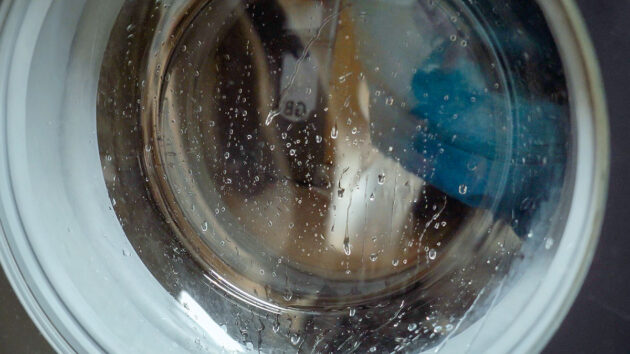
Machine wash… Credit: Nikwax
Nikwax is water based, and the chemistry used means that during the proofing process the waterproofer adheres to the individual fibres of the material and the rest is rinsed away.
A spokesperson for Nikwax promised: “You might notice the water droplets beading on the inside of your washing machine after treatment but the product will not damage the machine, or clothing put in the wash after.”
Or handwash
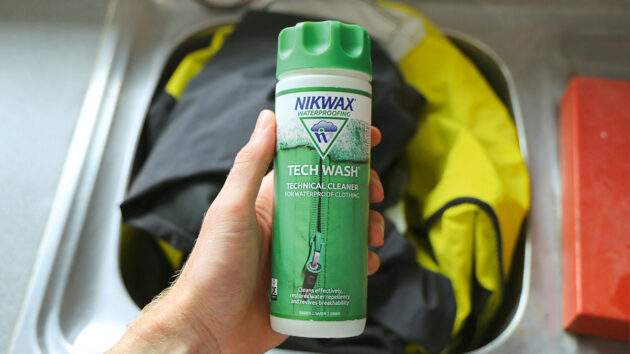
…or handwash. Credit: Gill/gb.gillmarine.com
- Nikwax Tech Wash can also be applied by hand…
- Use gloves.
- Immerse item(s) in 7.5L of warm water.
- Add 150ml in medium/hard water areas and 100ml in soft water areas for one to two items.
- Agitate to mix.
- Rinse three times in clean water.
Drying
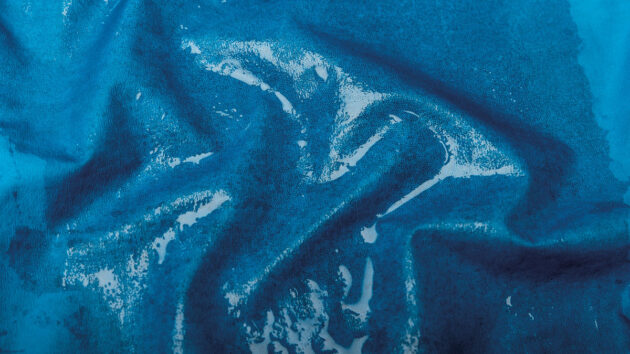
Important! Do not dry if you plan to restore waterproofing. Move on to the reproofing stage before the garment dries out. Credit: Nikwax
Important! Do not allow to dry out if you intend to restore waterproofing.
If not waterproofing, air dry or tumble dry on a low setting if the care label allows.
How to restore waterproofing?
The beading effect, where water rolls off the surface, is your fabric’s first line of defence.
If water is soaking into the outer surface, a garment can feel cold and damp.
“Even if water’s not coming all the way through, it makes them feel heavy and stops them breathing as much, so they don’t perform well,” said Matt.
“They just feel damp and uncomfortable to wear.”
How to restore waterproofing using a washing machine
- Shake bottle before use.
- Remove all detergent build-up from the detergent dispenser.
- Place a maximum of two clean garments – wet from the previous Nikwax Tech Wash – in the washing machine.
- Add 100ml of Nikwax TX.Direct per garment.
- Run a 30°C synthetic cycle on a slow spin.
Restore waterproofing by hand
Nikwax TX.Direct Wash-In can also be applied by hand.
- Use gloves.
- Immerse one clean garment in 7.5L of hand hot water, in a bowl or sink.
- Add 100ml of TX.Direct.
- Agitate to mix.
- Leave to soak for five minutes, then agitate thoroughly.
- Rinse with cold water until the water runs clear.
Drying
Air dry or tumble dry on a low setting if the care label allows.
Tackling mildew
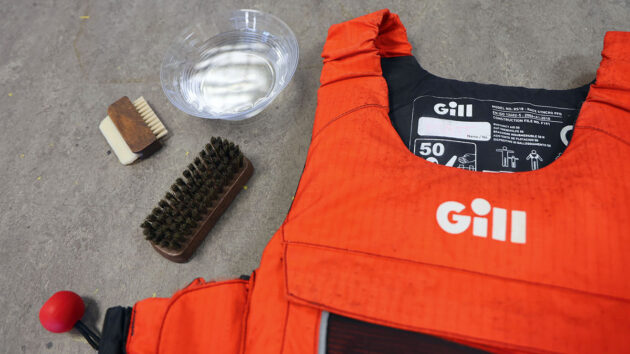
Persistent mildew stains can be really difficult to get rid of, particularly on lighter fabrics. As ever, prevention is better than cure.” Credit: Gill/gb.gillmarine.com
Waterproof fabric failure can be caused by damp conditions.
Wet sailing gear left screwed up in the bottom of a bag can add “fustiness to the fabric and colour migration,” warns Matt:
“After a busy day sailing, you come off the boat, you’re wet, tired, you put it in your kit bag, then in the back of the car potentially, and it can sit there for days.
“We advise getting it out, rinsing it, then importantly, allowing it to dry thoroughly.”
Mildew can be prevalent for garments kept in a locker, in damp, humid conditions, “particularly with the hot weather we’ve been enjoying over this summer”, said Matt.
“And I imagine not much foul weather gear has been getting active use, so it would have been sitting in the locker where inevitably, over time, it’ll soak up moisture, and salt comes into play as well.”
Best practice
- Don’t leave kit on the boat for extended periods of time.
- Take it home.
- Keep it out of direct sunlight.
- Store away from heat – temperature changes are bad for technical fabrics.
Mildew removal
- Agitate the surface of the fabric, firstly with a dry soft-bristled brush to help remove any loose mildew spores.
- Make a really gentle solution of equal parts cool water and white vinegar, and using a soft brush and elbow grease, scrub the mildew off.
- Rinse.
-
“Avoid aggressive chemical cleaners,” Matt warned, “because you don’t know how it will react to the membrane on the inside of fabrics or the coating. Quite often they contain bleaching agents, which will visually remove the appearance of mildew, but could potentially discolour your garment too, so you could end up with a light patch.”
- Clean in the washing machine or by hand using Nikwax Tech Wash.
- Reproof in the washing machine or by hand using Nikwax TX.Direct Wash-In.
- Matt added: “Persistent mildew stains can be really difficult to get rid of, particularly on lighter fabrics.
“As ever, prevention is better than cure.”
End of life options
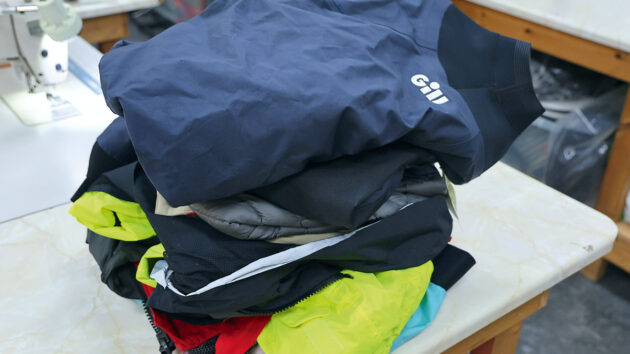
Peeling, flaking or a powdery residue can be signs that the garment cannot be revitalised. Credit: Gill/gb.gillmarine.com
Technical clothing that stops performing at offshore levels of protection may still be perfectly adequate for gentler conditions.
Items can be donated to charity shops or kitround.com (where you can buy Royal Yachting Association gear) or sold via marketplaces such as Facebook.com, eBay.co.uk or Vinted.co.uk.
At some point, all gear will reach its end of life.
Matt said: “The waterproof coating or laminate is a plastic coating at the end of the day, so it can be affected by changes in temperature, by moisture, and UV exposure as well.
“Once your coating has gone, your fabric’s just not waterproof anymore.
“Look out for deterioration on the inside of the fabric, or loose tape coming off the seams.”
The Clean Sailors’ ReSail platform and Sustainable Sports Apparel Charter, launched by 5Thread, allows sailors to search for drop-off points for recycling, upcycling, repair and reuse.
Giveaway! Free trial pack of kit to restore waterproofing
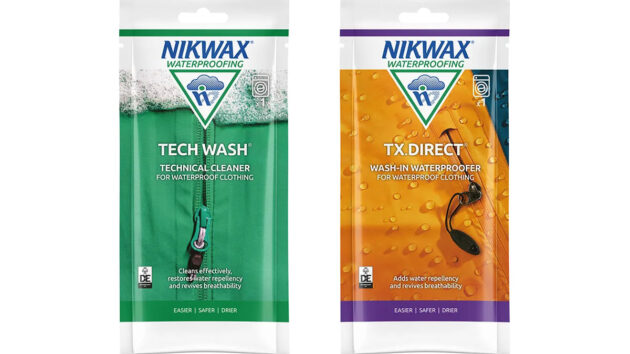
Samples of the Nixwax duo to clean and then restore waterproofing. Credit: Nikwax
Nikwax is kindly giving away 100 samples to PBO readers of Tech Wash and TX.Direct, their top-performing cleaner and proofer to restore waterproofing.
Email pbo@futurenet.com and the first 100 entries to contact us will be notified of their success.
Please note that contact details will be shared with Nikwax in order for the free sample to be sent out. Good luck!
Want to read more articles like How to restore waterproofing?

A subscription to Practical Boat Owner magazine costs around 40% less than the cover price.
Print and digital editions are available through Magazines Direct – where you can also find the latest deals.
PBO is packed with information to help you get the most from boat ownership – whether sail or power.
-
-
-
- Take your DIY skills to the next level with trusted advice on boat maintenance and repairs
- Impartial, in-depth gear reviews
- Practical cruising tips for making the most of your time afloat
-
-
Follow us on Facebook, Instagram, TikTok and X