


Sharon Dyche-Brookes and Johan Truter share their experiences of spending months living aboard in UK waters
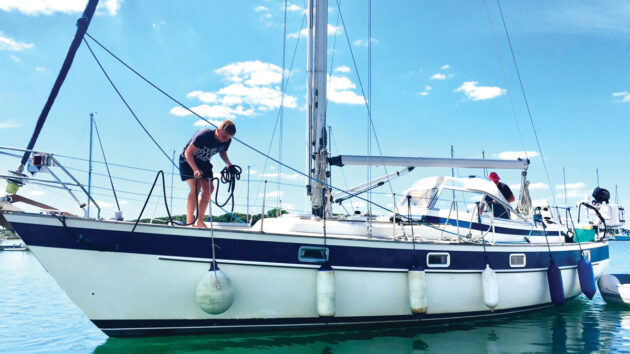
When we decided to experience liveaboard life and swap our house for our 38-year-old Hallberg-Rassy 352 in the UK, our primary concern was the prospect of being on the boat during winter months.
I was also concerned about commuting to my part-time job and whether we could manage the financial implications of the move. To address these uncertainties, we included a six-month clause in the rental contract for added flexibility.
Renting the house turned out to be the straightforward part, especially since our children had moved out and we were eager for a change. The process of decluttering years of accumulated belongings was invigorating, and by the end, we had very little left to put into storage. May 2025 came and with some trepidation, we set off.
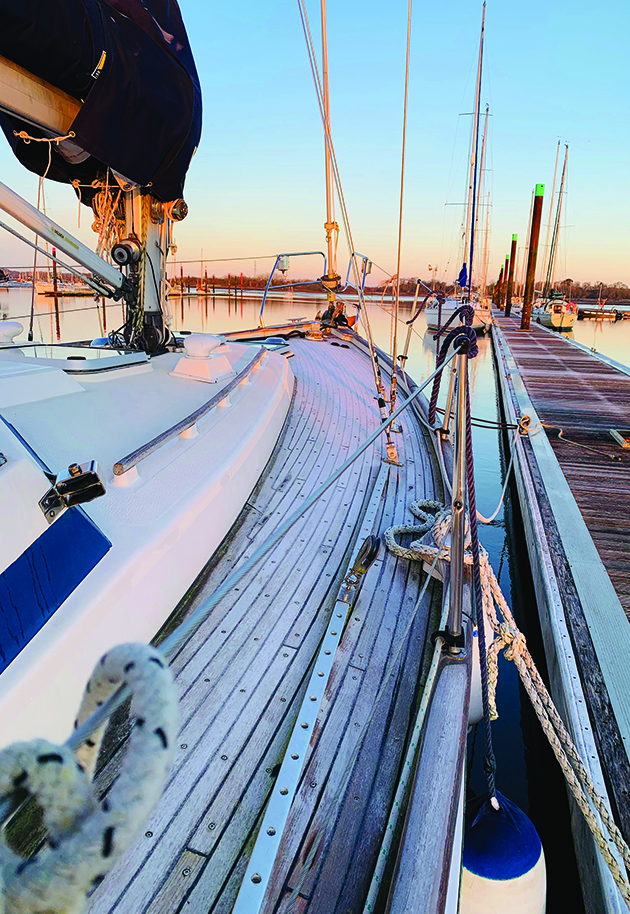
Icy decks; Sharon and Johan used disposable dehumidifiers and their Eberspächer heater to keep moisture at bay. Credit: Sharon Dyche-Brookes and Johan Truter
Transitioning from a house with a garden to a compact floating space necessitates careful consideration of what to bring as you need to be prepared for both the cooler months and the summer season; it was essential to include gear for the cold, the wet and the sun due to the unpredictability of the British weather. We packed the car with the essentials, including fast-drying, breathable gear suitable for both walking and sailing.
Packing essentials for liveaboard life
Key items included a reliable waterproof and windproof sailing jacket, salopettes, which are a must as they keep the torso covered when sitting or bending to put fenders out, rubber-soled boots and shoes to protect the teak wood deck, a warm hat for colder months, and a cap for summer.
Although it seemed like a substantial amount of clothing, our yacht, equipped with numerous small lockers, can accommodate a surprising amount. We also made sure we had tools, first aid kits, a fire blanket, and a fire extinguisher. As is necessary on a yacht, every item must have a designated place and purpose.
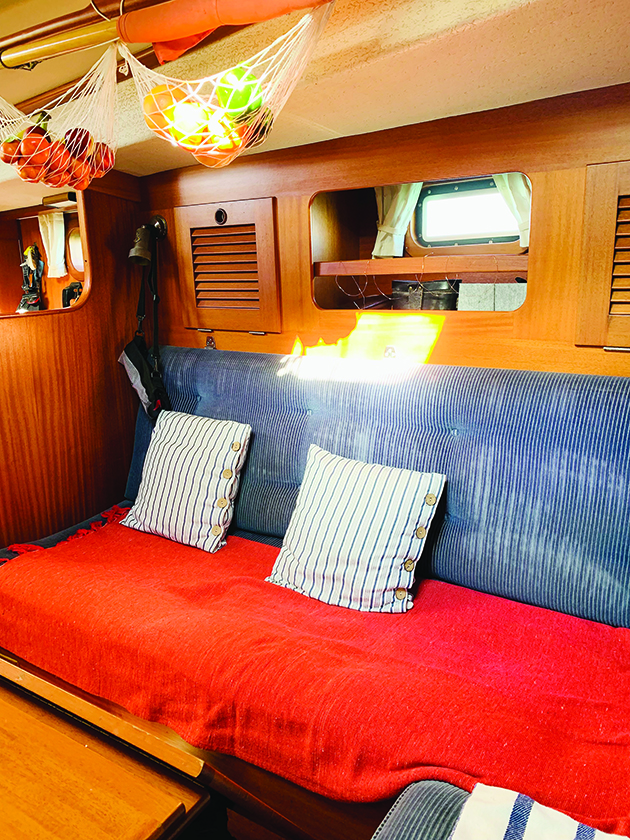
Fruit and vegetables were stored in nets in the main saloon. Credit: Sharon Dyche-Brookes and Johan Truter
As we got used to living on board, we were concerned about the potential for condensation during the cooler months, which can still bring unpredictable weather. To combat this issue we bought disposable boat dehumidifiers – plastic containers containing rock salt – which are designed to absorb excess moisture. We placed these in the bunks, as the chilly nights often meant keeping the hatches closed. When sailing, the companionway is always open for easy access, making hot drinks or when feeling seasick as it’s a stable place to sit during these times.
We also have an Eberspächer 31 air heater for bitterly cold days; it uses a lot of power but quickly warms the small space down below when the hatches and the companionway are closed.
Practical considerations
Our water tanks hold 300lt of water. A few years ago we cleaned the tanks, emptying and siphoning debris from the bottom, but were surprised to find the tanks were in relatively good shape.
We tend to boil the water before drinking even though we use Aquatabs purifying tablets which kill any build-up of bacteria, viruses or algae. We always have fresh bottled water on board too. If filling up at marinas make sure the water runs for a while as it may have been sitting in the hose. This is also a great time to give the boat a good wash, but for the teak wood deck, which is coated in Boracol preservative, we generally use sea water. Don’t forget the dinghy as whole ecosystems can congregate at the bottom.
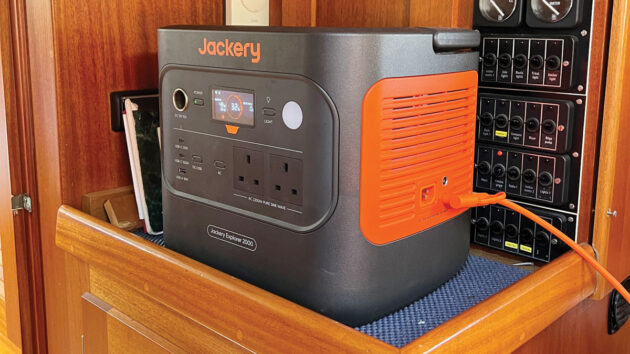
Power was topped up with a portable power bank – the Jackery Explorer 2000 has a 2,200W output. Credit: Sharon Dyche-Brookes and Johan Truter
For essential equipment such as the fridge, lights and navigation systems, we relied on the four 85Ah Absorbent Glass Mat (AGM) house batteries which are charged by the solar power panel and topped up by running the engine.
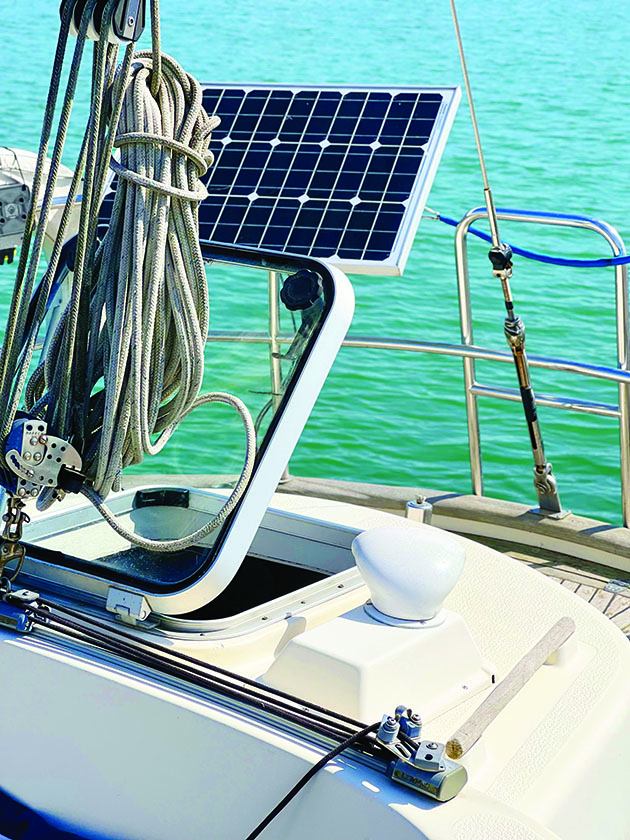
The 3W fixed solar panel was not enough for liveaboard needs. Credit: Sharon Dyche-Brookes and Johan Truter
We have a 200W solar panel mounted on the stern rail, which is sufficient for leisurely weekends, but to continue working effectively on the boat, we decided to invest in a new source. For iPads, laptops and phones, we chose the Jackery Explorer 2000 portable power station. It comes with a foldable 100W solar panel which we were able to position according to the sun’s location; it has proven highly effective in meeting most of our energy needs.
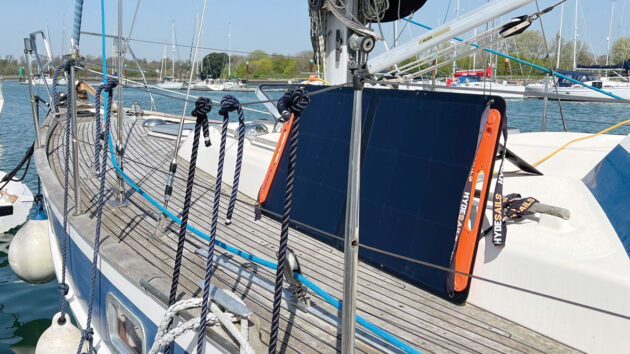
The Jackery 100W SolarSaga is foldable, so it can be easily stored. Credit: Sharon Dyche-Brookes and Johan Truter
In addition, we bought an extra Anker Solix mobile power bank to top up our phones, which we could then take ashore and plug in to charge while spending time at cafes as it was so easy to carry. We do have a television on board but rarely watch it as we are often chatting about the weather, boat maintenance or just taking in nature.
Provisioning
When it came to storing food we found we had to become quite creative. Water and wine/beer bottles could be secured in the sea using rope while at anchor to keep cool and netting was used to hang fruit and vegetables. The small lockers go back a long way on a Hallberg-Rassy, so we could store copious amounts of dry items like pasta, rice and biscuits in Tupperware pots. The fridge would often get damp at the base, so upturned baskets were used to stop produce from getting soggy.
On board we have a Cobb barbecue which doesn’t get hot on the outside, perfect for on deck. For fuel, we use smoke-free Cobble Stones – coconut shell briquettes which burn for two hours, so excellent when barbecuing offshore.
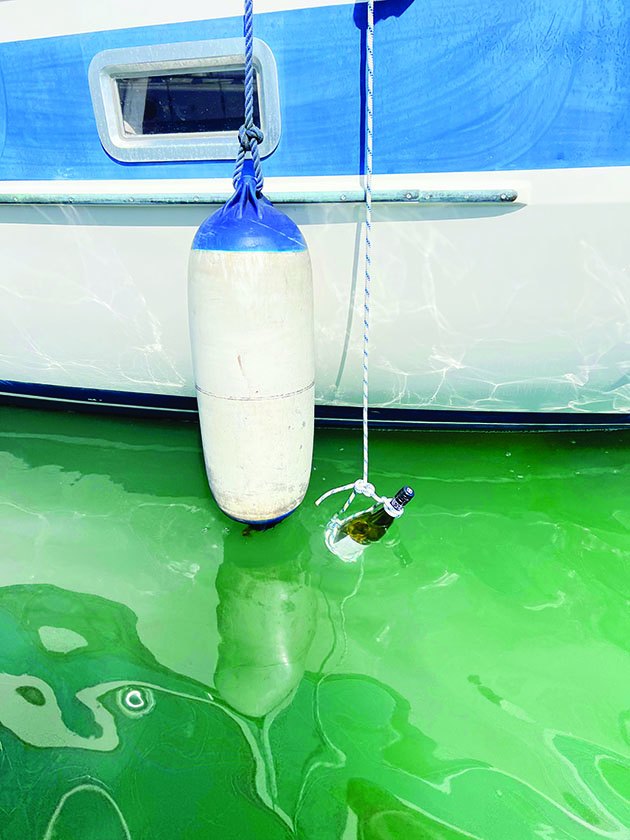
To save on fridge space, milk and wine were kept cool by tying bottles to a rope and putting it over the side. Credit: Sharon Dyche-Brookes and Johan Truter
It’s good to have a backup on board as you never can tell when the gas bottle will run empty.
Shopping while living on a boat can be quite challenging and time-consuming. Although we had a car parked at the marina, our trips involved driving to the supermarket to stock up on supplies, loading them into a trolley, and then navigating the pontoon. On windy days this can be challenging as we weren’t on a walk-on pontoon, so had to transport the goods by dinghy to the yacht.
The Solent offers numerous marinas equipped with launderettes, showers, and shops, ensuring that we’re never too far from the comforts of home. Our favourites were the Folly Inn on the Medina River, which we found had the cheapest mooring, especially off-season; Bembridge, Newton Creek, where we always anchored just outside. Yarmouth is a personal favourite as there is so much to do in the town, and Beaulieu, which is incredibly pretty and a place to seal watch. The staff are always friendly and happy to help.
Riding out weather
The weather plays a crucial role in liveaboard life, determining our sailing schedule, influencing our decision on whether to anchor or dock at a marina, and the use of the paddleboard. It was very windy in 2025 and we had many days when the winds reached 30 and 40 knots, gusting 50 at one point. We were moored up at a marina on one of these days when Johan decided to add an extra line as I was a little worried, although our boat is heavy and sturdy. We have a very sturdy rope which he took from the pontoon cleat opposite the bow to the pontoon cleat opposite the stern, wrapping it completely around the outside of the boat and securing the rope on every other cleat.
We took daily trips to shore since our dog refuses to relieve himself on the deck; despite attempts to provide alternatives like fake grass and seaweed, none have proven effective. He does however tread very carefully when on deck and he always wears his lifejacket, choosing to sit in the cockpit when sailing.
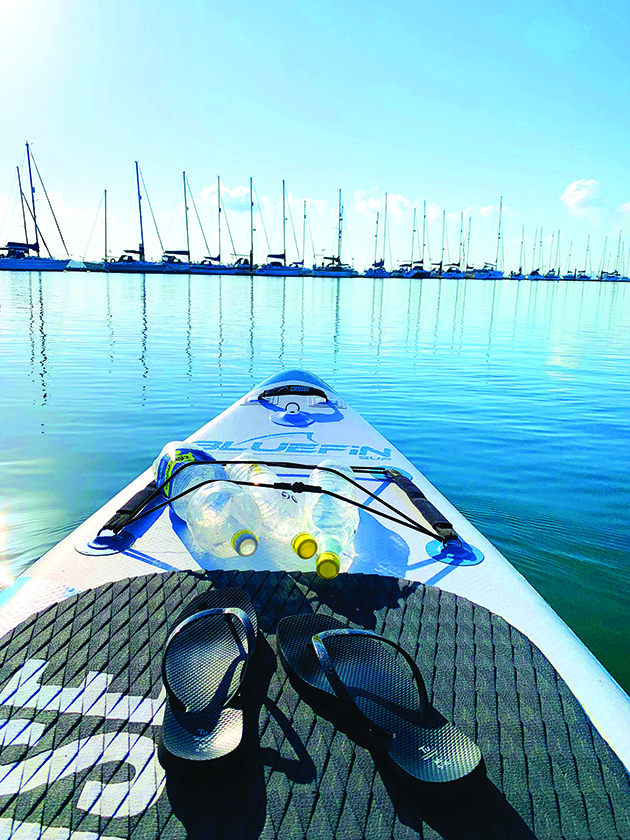
Liveaboard life: A stand-up paddleboard made it easy to paddle ashore to top up on water when needed. Credit: Sharon Dyche-Brookes and Johan Truter
I mostly relied on rowing, as I’d struggle to start our 2.5hp Suzuki outboard engine, and on windy days, Johan took over transporting us at speed using the engine. We’re considering an electric outboard which is on our list of potential upgrades along with a new canopy as saltwater and sun have damaged the old one.
On the days I had to get to work, it was 6am starts for me, and unfortunately for Johan too as I couldn’t leave him stranded; waterproof trousers are a must as the dinghy is always damp first thing. If it’s windy, then invariably the faster you go, the wetter you get. It can be challenging, especially if the weather is too windy or the engine doesn’t want to start, but that’s living on a boat for you. Beautiful sunrises make up for the wet and windy mornings.
Daily liveaboard life
The days living on board unfolded with a unique rhythm that we quickly embraced. Mornings spent on a warm deck, sipping coffee while watching geese soar overhead or observing a harbour seal’s breath just a few feet away, are truly invaluable experiences.
Of course, there can be ice on deck, or it can rain for days but we always found somewhere to sail and things to do.
People would enquire about what our daily activities are or if being a liveaboard became monotonous; it never did. There are challenges but that’s part of the fun; the days pass so quickly, there is always the weather and tides to check, and maintenance to be done. Everything takes so much longer which makes you appreciate things more. Boiling the kettle isn’t just the flick of a switch. Life on board truly makes you stop and think.
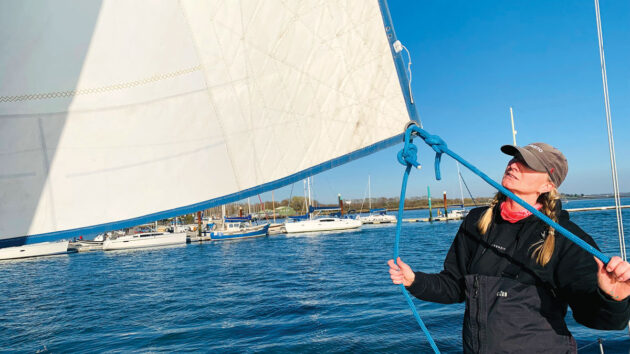
Sharon and Johan found a gentler pace of life living aboard and explored local cruising grounds. Credit: Sharon Dyche-Brookes and Johan Truter
Maintaining fitness is quite manageable. Activities such as rowing the dinghy and winching sails deliver excellent upper body workouts, while going ashore to walk the dog and navigating on and off the deck help maintain flexibility through constant bending and stretching in a confined space. The steep companionway stairs also contribute to leg strength. Although our deck has a slight slope, yoga can still be practised, and when docked at a marina, I often prefer exercise on the pontoon beside the boat. During the summer months, swimming and paddleboarding add an element of fun to our fitness routine.
The primary liveaboard challenge we faced was finding a suitable location to moor for the winter. Most marinas we contacted prohibited long stays on a vessel. Due to work obligations, we didn’t explore options further afield, which ultimately led us to conclude our liveaboard journey. Utilising the clause in our rental agreement, we reluctantly vacated the boat and returned to land.
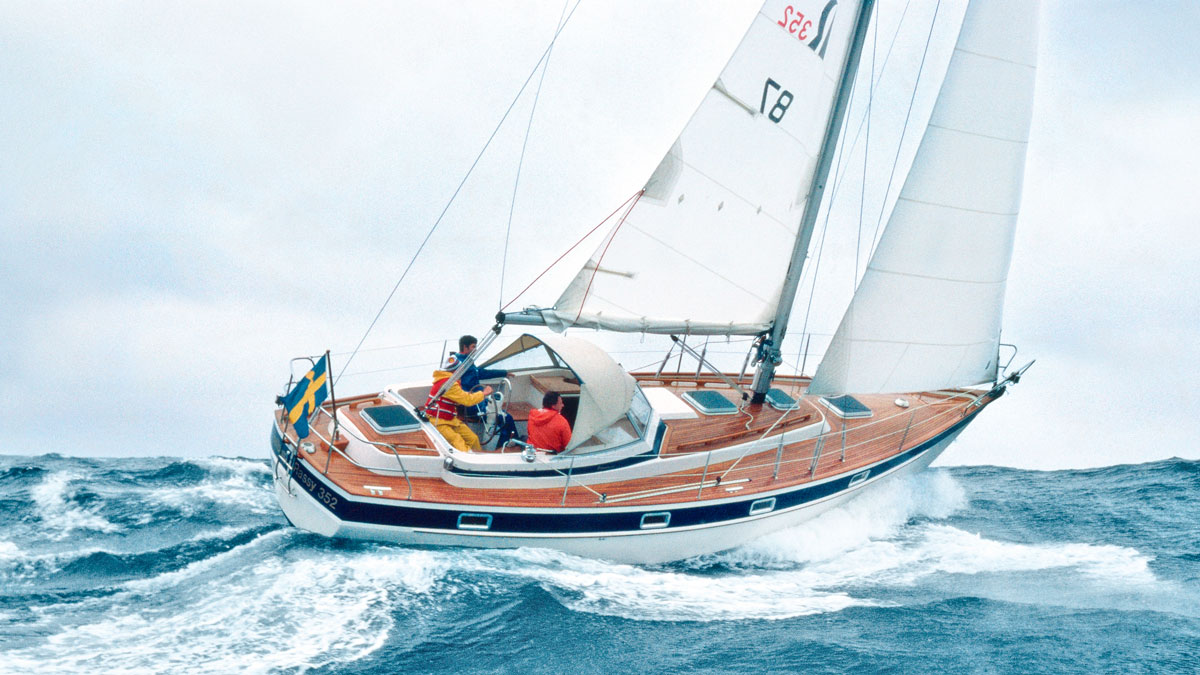
Second hand focus: Hallberg Rassy 352 + 8 alternative yachts to consider
Rupert Holmes celebrates the attributes of this iconic, but expensive, Scandinavian design and highlights other options
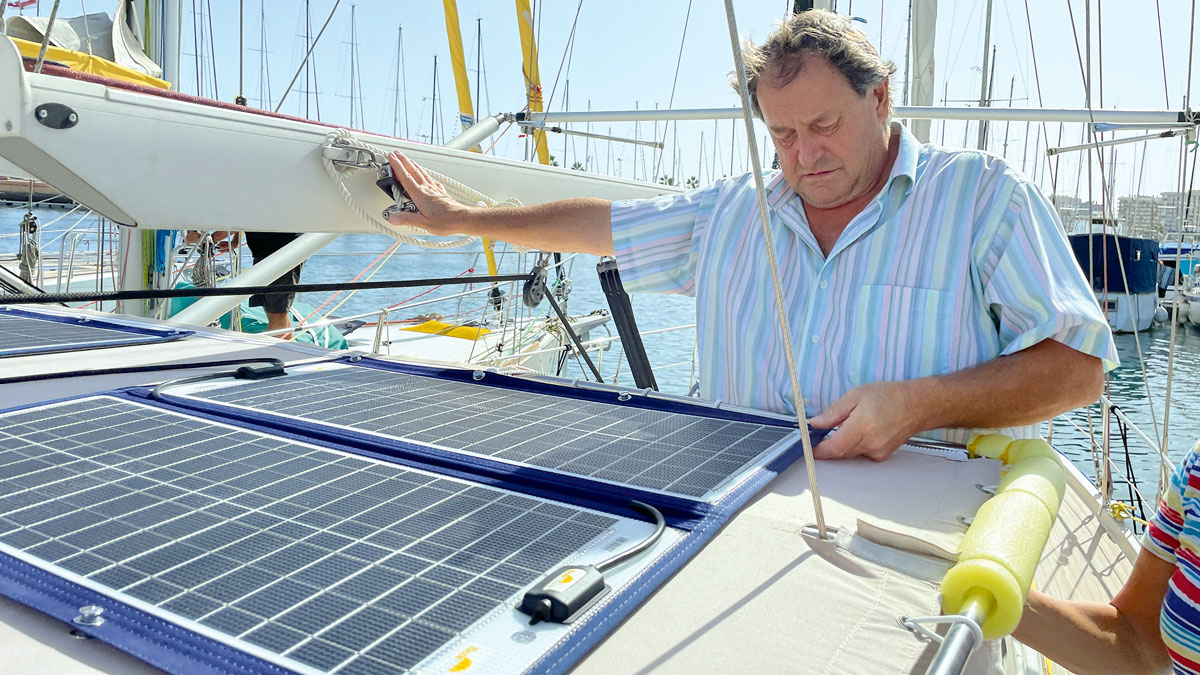
Boat solar panels: Everything you need to know to get started
Topping up the batteries with solar power has never been easier, says Ali Wood, but how do you decide which…
Banish damp from your boat this winter
Ashore or afloat, winter cold and damp can have a detrimental effect. Jake Kavanagh looks at the options for keeping…
Best boat heaters – diesel, solid fuel or warm air central heating?
There are many ways to stay warm afloat, whatever your budget. Ali Wood chooses the best boat heaters
Want to read more articles like Liveaboard Lessons: We Rented Our House to Live on a 38-Year-Old Yacht in the UK (Here’s What Happened)?
A subscription to Practical Boat Owner magazine costs around 40% less than the cover price.
Print and digital editions are available through Magazines Direct – where you can also find the latest deals.
PBO is packed with information to help you get the most from boat ownership – whether sail or power.
-
-
-
- Take your DIY skills to the next level with trusted advice on boat maintenance and repairs
- Impartial, in-depth gear reviews
- Practical cruising tips for making the most of your time afloat
-
-
Follow us on Facebook, Instagram, TikTok and X