




From base layers to life jackets to your hands and feet, this helpful guide from PBO's Ali Wood explains what to wear dinghy sailing so you can stay warm and comfortable on the water.
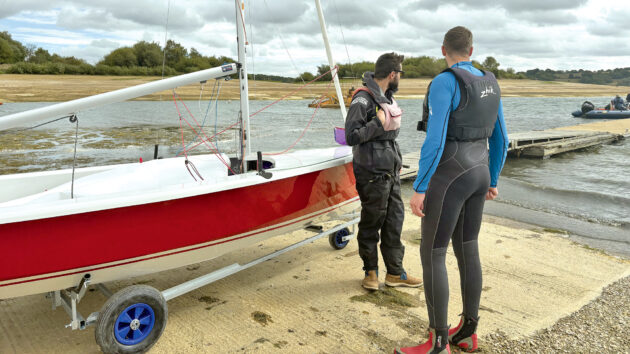
Keeping warm on the water is essential. As soon as a crew member, and especially a child, is cold it’s game over for your meticulously planned sailing trip, and it’ll be far harder to persuade them to come again.
As a parent and a junior safety boat helper, I’ve had many an argument with children who insist they’re fine in their boardshorts or shorty wetsuit… until they’re not, and there’s still two hours to go until we’re back ashore.
These days, I take extra clothing in a dry bag, and have learned to be firm when it comes to keeping warm. A warm crew is a happy crew, and it means we can all spend longer on the water.
But selecting the right clothes for the boat and conditions isn’t straightforward.
Oilskins might be ideal for a yacht, but what about a keelboat? Would a wetsuit be better, or even a drysuit? And what about summer dinghy sailing, when it’s so hot the idea of thick neoprene is unthinkable?
Like with regular clothing, different seasons call for different garments. When you’re jumping around one minute and static the next, you have to be prepared to add or remove layers religiously, and anticipate when your body temperature is likely to go up or down.
What to wear dinghy sailing
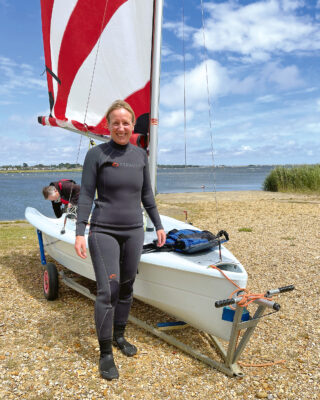
As a dinghy sailor, you’re much closer to the water and exposed to spray as well as the possibility of a capsize.
Because of this, you’ll need a wetsuit that’s stretchy and comfortable both wet and dry. Even if you aim to spend the session in dry clothing, you still need to layer-up as you would on a sailing boat.
What to grab, at a glance:
- MID LAYER: Wetsuits, which come in three main styles, steamers (full-length), shorties (short arms and legs) and long john (sleeveless with long legs)
- FEET: If there’s space, Sealskinz neoprene socks can be worn underneath boots for extra warmth
- BUOYANCY AID: For dinghy sailing, a 50N buoyancy aid should be worn rather than gas or manually inflated lifejackets
What to wear dinghy sailing: Base layer
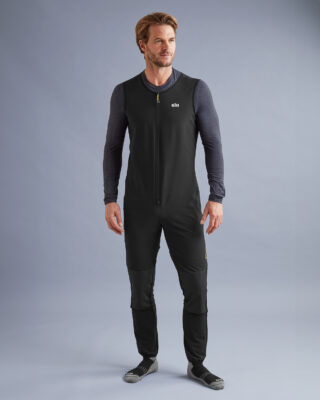
Gill OS Salopettes. Photo: Gill.
British dive contractor Andark formed in 1976 to work on underwater projects such as ship hull surveys.
The company later diversified into scuba diving training, and extended its hard-earned knowledge on keeping warm to selling clothing, not just for diving but all watersports.
Today, Andark sells sailing brands such as Gill, Henri-Lloyd, Musto and Typhoon.
When I visited the stand at the Southampton Boat Show, retail director Matthew Rich had some great advice to share.
‘First, take a look at your base layer; what you’re wearing closest to your skin,’ advises Rich.
‘On a cold day, you’ll wear several layers, and on a warm day, fewer layers, but either way, it’s important your base layer wicks away moisture.
In summer, this can be a UV50 rash vest, for winter, you can get long-sleeved rash vests, such as Typhoon’s Thermafleece, which has fleece for added warmth.’
What to wear dinghy sailing: Mid layers
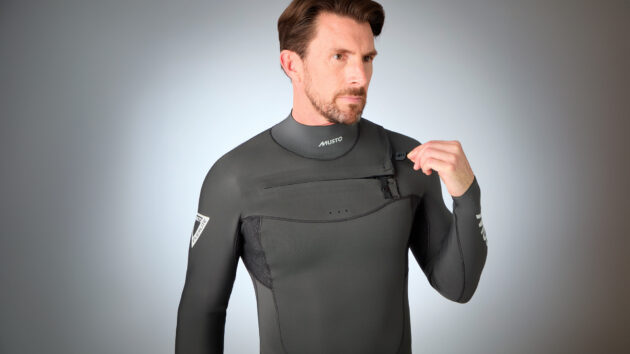
Musto Flexlite Dynamic wetsuit. Photo: Musto.
Over the base layer, there are a couple of options, advises Rich.
Some dinghy sailors wear ‘hikers’, which are specialised padded trousers or shorts for hiking out over the side of the boat. Others prefer a neoprene mid-layer, i.e. a wetsuit.
For summer sailing, Typhoon has a range of deck shorts or trousers with stretch panels for mobility. In winter, its Performance range offers flexible, high-tech fabric allowing ease of movement.
Wetsuits come in three main styles: steamers (full-length), shorties (short arms and legs) and long johns (sleeveless with long legs).
Musto’s new Flexlite Dynamic range, developed with Olympic Gold medallist Ellie Aldridge, is designed for foilers and kiteboarders, but with super stretch qualities and wind protection on the back; it is a good option for dinghy sailors too.
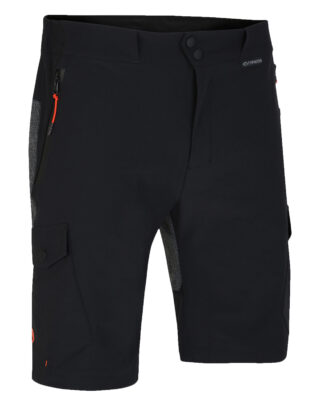
Typhoon TX-1 deck shorts. Photo: Typhoon International.
Bear in mind that dinghy sailing can be tough on the knees, so if wearing a shorty wetsuit, you may also need some knee pads.
Rich says that long john-style wetsuits are popular these days as the mid-layer, with a long-sleeved neoprene top worn over it.
I like this combination and wear Typhoon’s stretchy 3mm Caliso3 Eco Long John with the wetsuit top in winter, and often just a rash vest in summer.
While I prefer this to a regular long-sleeved zipper wetsuit, the top can be a struggle to get off after a sail when your biceps are aching!
A long back zip offers the easiest ‘escape method’, but chest zips, either horizontal or diagonal, are also an option.
Choosing wetsuit thickness
With wetsuits, it’s important to choose a thickness that suits the water and climate.
They’re usually listed as two numbers, relating to the body and limbs. So a 3/2, suitable for water temperatures of 15°C to 20°C, has a 3mm torso and 2mm on the arms and legs.
If you’re layering with a splashtop, or even a long john/top combo, this will probably be fine for most sailing. However, in winter, you might consider a 4/3 or thicker, but the problem then is that mobility is reduced.
Some people just don’t get on with wetsuits sticking to their skin, and if that’s the case, you might want to consider a drysuit, which stands in for both the mid- and outer-layer.
I don’t own one, but I know many sailors who do and insist the high price is worth paying for a completely waterproof outer layer that can be worn over regular clothes.
When I was in the RNLI lifeboat crew, I used to wear a drysuit over a fleece onesie we called the ‘woolly bear’. We were never cold!
I’ve noticed that Gill has recently launched its fleecy OS Salopettes, a long john-style mid-layer, which looks a cosy option to go under oilskins or a drysuit.
What to wear dinghy sailing: Outer layer
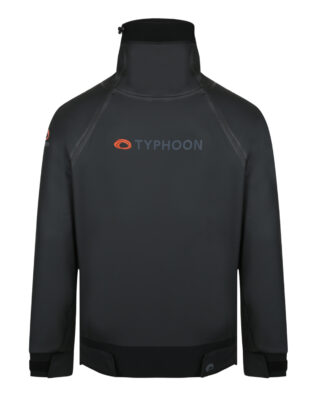
Typhoon’s ultra warm fleece-lined Annan Thermashield. Photo: Typhoon international.
Finally, you need to think about the outer layer, which is usually a dinghy top, smock or splashtop, designed to keep the wind off.
Some are lined with fleece, which is good for ‘taking the bite out of upwind sailing’, says Matthew Rich.
Racing sailor Alice Allen works for Henri-Lloyd, and has been wearing the brand’s Dynamic smock top this summer over a wetsuit.
She says, ‘The new stretch and flex fabric is ideal for dinghies as it stretches across the shoulders and is lightweight but wind- and waterproof.’
I also wear a splashtop for dinghy sailing at my club – a relaxed affair where we potter around the harbour in Wayfarers, Hartley 12s and Laser Picos.
Most of the year, this will be my Decathlon Tribord splashtop, which rolls up so small I’ll take it even on the hottest days in a drybag – and inevitably end up wearing it.
For winter sailing, I have the exceptionally soft and fleece-lined Annan Thermashield top from Typhoon.
Most of the time, this is too hot, something I never thought I’d hear myself say about British sailing!
Keep your head warm
A beanie is great for keeping your head warm, and I particularly like Sealskinz’s waterproof one. Consider a balaclava too for windy days.
However, for dinghies with low booms where a helmet is advisable, it might be easier to go for something like Red Equipment’s Merino headband, which does a good job of keeping you warm while keeping sweat and spray out of your eyes.
What to wear dinghy sailing: Don’t forget your hands
I find hands trickier to keep warm on dinghies than yachts, because you need a constant good grip for the slim tiller and ropes.
Sailing gloves are essential to prevent blisters too, but it’s hard to find warm ones that are thin and still warm.
My budget tip is to wear rubber gloves under sailing gloves to keep fingers dry, but there are technical options too such as Typhoon’s Quantum 5.3 Flex Glove, which combines 5mm and 3mm neoprene for warmth and greater dexterity.
You could also try Gill’s new Booster Liner Glove. With a soft brushed interior, it can be worn on its own or under a waterproof glove as a base layer.
Don’t forget your feet
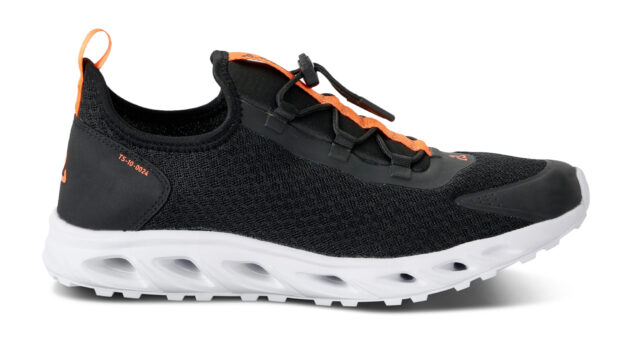
Typhoon TS10 Sneaker is for sailing and all day casual use. Photo: Typhoon International.
Dinghy boots come in a range of designs and thicknesses.
If there’s space, Sealskinz neoprene socks can be worn underneath for extra warmth, but not on their own or you’ll lose them!
Otherwise, invest in the thickest boots you can and consider a robust sole according to the terrain.
My preference is neoprene boots, summer or winter.
However, some dinghy sailors prefer sneaker/deck shoe options such as Typhoon’s TS10 Sailing trainers, which fully drain, and can double as a casual shoe.
‘The TS10 Sneaker bridges the gap between performance and everyday practicality,’ says Kevin Coulthard, managing director at Typhoon International. ‘We wanted to create a versatile shoe that could handle wet environments while remaining stylish, comfortable, and robust enough for all-day wear.’
Last summer, I suffered the dreaded nail fungus from spending too long in wet neoprene boots, so I switched to Helly Hansen’s Skagen deck shoe.
While primarily designed for yacht sailing, the smart lightweight trainer was quick-draining and comfortable without socks. Plus, they were far better than my thin-soled boots for lugging boats across slipways and stony beaches.
Buoyancy aid

Shorty wetsuits with smocks and a buoyancy aid are suitable for summer dinghy sailing.
For dinghy sailing, a 50N buoyancy aid should be worn rather than gas or manually inflated lifejackets – but it won’t stop you being face-down in the water.
For children (and ideally adults), one with a crotch or thigh straps is best. You may also want ones that will keep a child face-up in the water. These are 150N minimum and classed as lifejackets, despite the foam buoyancy.
The downside is that the collars can make them bulky and get caught on mainsheets when tacking small boats such as Optimists.
I like a buoyancy aid with a pocket for a radio, knife (to avoid entrapment) and mobile phone in a waterproof case.
However, more pockets mean more things to catch on rigging, so there’s always a compromise.
For performance dinghies, slim, high-cut buoyancy aids allow for better mobility while leaving room for a trapeze harness.
Note: We may earn a commission when you buy through links on our site, at no extra cost to you. This doesn’t affect our editorial independence.
Want to read more articles about what to wear dinghy sailing?
A subscription to Practical Boat Owner magazine costs around 40% less than the cover price.
Print and digital editions are available through Magazines Direct – where you can also find the latest deals.
PBO is packed with information to help you get the most from boat ownership – whether sail or power.
-
-
-
- Take your DIY skills to the next level with trusted advice on boat maintenance and repairs
- Impartial, in-depth gear reviews
- Practical cruising tips for making the most of your time afloat
-
-
Follow us on Facebook, Instagram, TikTok and Twitter