


Phil Clandillon talks to Southwold YouTuber Ollie Boyes about crossing the North Sea in a £1,400 trailer-sailer
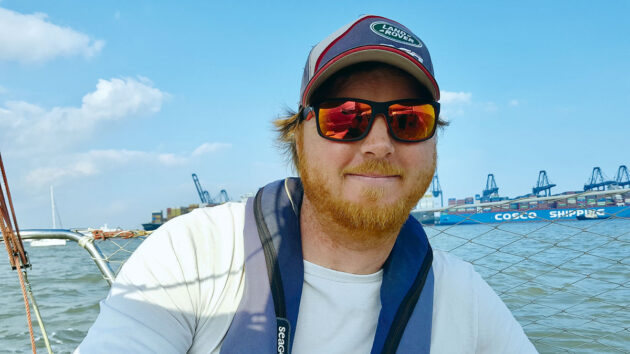
For our call, Ollie Boyes, a boyish, self-employed builder in his early 40s, is sitting in his home in Southwold, less than a 10-minute drive from his boat. After his partner and his four children, sailing is his top priority. “I go to work with good intentions, and then I look at the forecast, and if it’s too good not to go, within 10 minutes I find myself motoring out of the harbour!” he confesses.
Growing up, Ollie’s parents were heavily involved in Southwold Sailing Club, and as an engineer at the local boatyard his father always had a boat project on the go. Ollie really got the bug for sailing after his dad rebuilt a Mirror dinghy, and Ollie began to take her out on the river. “The way Southwold Harbour entrance is framed, with two walls, I always used to wonder what, if I kept going straight, would be there?”
Ollie Boyes raced 505s competitively in his teens and 20s before realising he preferred a more laid-back approach to sailing. While continuing to race his Javelin dinghy, he also decided to sample some offshore sailing. He crewed on some offshore races and signed up for delivery trips, including a memorable seven-day trip from Iceland to Scotland on a 15m Andre Hoek Truly Classic.
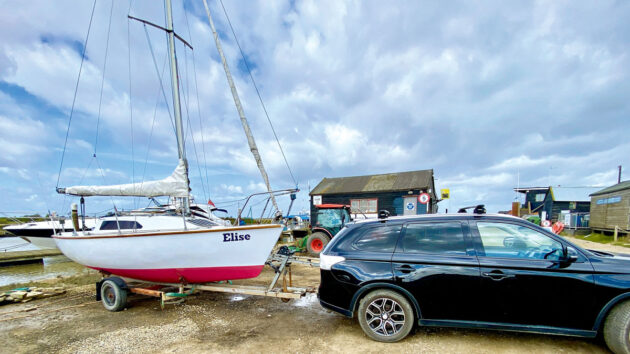
Elise can be happily towed by a medium-sized car. Credit: Ollie Boyes
Inspired by the mixture of routine and escapism that sailing offshore provided, he decided to look for a yacht of his own. Ollie had pretty much decided on a Bavaria 37, but after getting cold feet about the financial commitment he took a different tack. In March 2020, just before lockdown, he bought his 20ft Copland Harrier, Elise, for £1,400.
When afloat, he keeps her on a Southwold Harbour mooring, a suitably rustic piece of timber staging sticking out into the River Blyth, which also has room to store his daughters’ Optimists. He then uses Southwold Sailing Club’s affordable hard standing to take her ashore for maintenance and a pressure wash.
How Ollie Boyes made Elise fit for the North Sea
Ollie began by removing Elise’s deck fittings and sanding back her decks before painting with KiwiGrip and re-bedding hardware with butyl tape.
A previous owner had replaced the hardwood rubbing strake with a rubber one. He removed this and made up an iroko version, solving several leaks around the fixings in the process.
“Elise has a low cut transom, and one of the previous owners had built it back up and out of ply and whatnot, which had rotted. So I cut that out and managed to get it back to standard.”
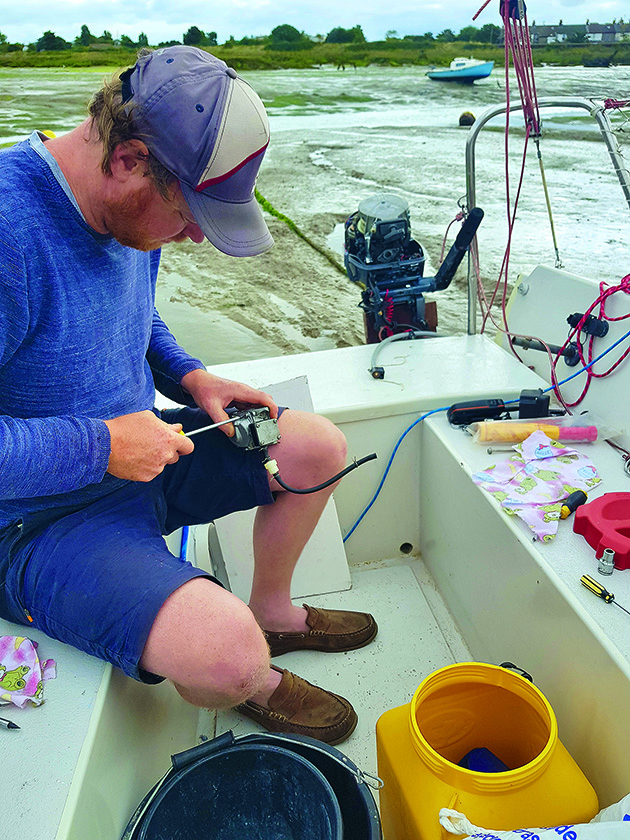
Ollie does much of the maintenance on Elise himself, including on the engine, pictured here cleaning the carburettor. Credit: Ollie Boyes
Ollie then checked over Elise’s standing rigging, replaced much of her running rigging, and got ready for his first sail. He completed his first refit just as Covid-19 lockdown restrictions were lifted. His dad had already made an improved stainless steel rudder stock for Elise, but Ollie was still using the plywood blade that came with the boat. On his third outing, disaster struck.
“It was quite windy, and as we got out of the harbour entrance, the rudder blade snapped. It was one of the worst experiences of my life. We were getting washed towards a sandbank. I tried various methods to steer the boat, none of which worked. I was going into panic mode, and then it suddenly clicked – just chuck the anchor out.”
Dad to the rescue
Once Ollie Boyes had stopped the boat, he called his dad, who towed him in with the boatyard’s RIB, avoiding a lifeboat call-out. The project of making a new rudder then began, with Ollie recycling a carbon fibre and wood 505 centreboard into a much stronger foil for Elise. With the new rudder shipped, Elise proved her seaworthiness on East Coast trips in up to 30 knots of wind, and Ollie decided it was time to answer his 10-year-old self’s question.
Heading straight out of Southwold Harbour’s narrow, walled entrance takes you to the Belgian and Dutch coasts, and he began to prepare Elise for the 18-hour crossing to the lively Belgian city of Ostend.
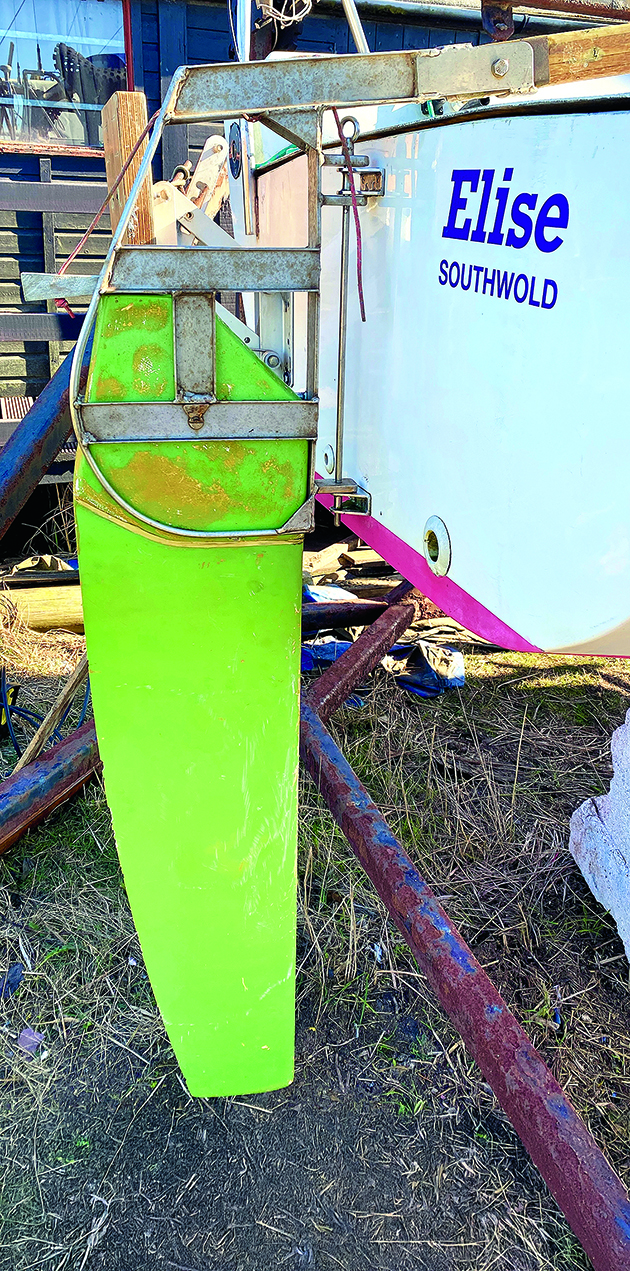
The new rudder blade was fashioned from a 505 centreboard. Credit: Ollie Boyes
In May 2022, Ollie and his friend Matt departed Southwold just after 0400, with the sun already peeking above the horizon, and a light wind from the starboard quarter allowing them to fly a spinnaker. After some initial seasickness from Matt, the crossing to Belgium went smoothly, with the main challenge being crossing the busy shipping lanes safely.
On the return leg, however, they had to dodge five ships at once and needed to call them on the handheld VHF radio. “I was using binoculars and a handheld VHF. I was calling the nearest ship up, asking for the name of the ship behind them so I could call that one next. That was when I decided I’ve got to get AIS.”
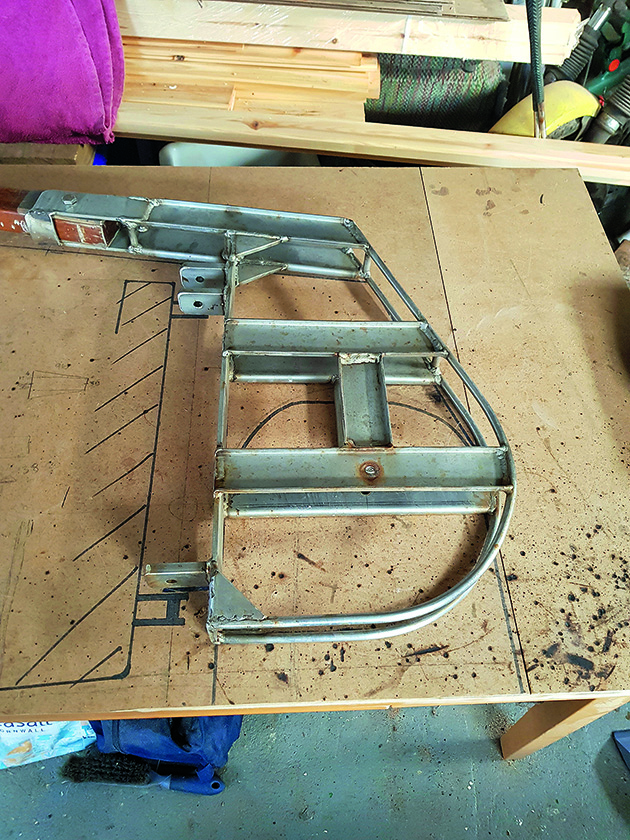
The new stainless steel rudder stock. Credit: Ollie Boyes
On this occasion he managed to contact the ships to let them know his intentions, but back in Southwold he decided he’d need AIS and a fixed VHF radio for the next crossing. He also wanted to supply instrument data to his tiller pilot so it could steer Elise to the wind.
The box of tricks
Ollie inherited a Northstar Explorer 710 DSC VHF from an abandoned project, and snagged a McMurdo Smartfind M10W AIS transceiver in an online sale. He now had four distinct kinds of data he needed to marry up. Elise’s instruments had analogue sensors; the VHF needed to be sent a position via NMEA 0183, and his existing Raymarine ST2000 tiller pilot only accepted the older SeaTalk data standard.
Meanwhile, his Raymarine Axiom 9 chartplotter and the new AIS transceiver needed to be connected via NMEA 2000. He bought a Raymarine iTC-5 Instrument Transducer Converter to convert Elise’s analogue wind, speed and depth sensors to SeaTalk NG. This is Raymarine’s version of NMEA 2000 which uses different cables and plugs but sends the same data. Instrument data could then be bridged into a NMEA 2000 backbone cable, enabling him to connect his existing Raymarine fluxgate compass to the network.
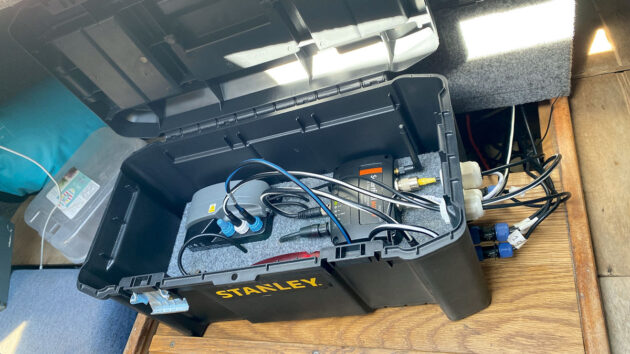
Navigation devices and network cables are installed in a removable toolbox. Credit: Ollie Boyes
He then added an Actisense NGW-1 bi-directional NMEA 0183 to NMEA 2000 conversion gateway, which allowed him to send GPS position data to the DSC VHF. Finally, he installed a Raymarine SeaTalk 1 to SeaTalk NG converter to supply speed and wind direction data to the tiller pilot.
“The fact I’m not spending money on yard packages and marina fees means I’ve been able to make the boat a bit of a powerhouse in terms of navigation,” noted Ollie. The logical place to install all this kit was inside Elise’s companionway step. When sailing offshore in a 20ft trailer-sailer, however, there’s no guarantee that area is going to stay dry. Ollie’s solution was to build the core devices and their network cables into a plastic toolbox. This shields the hardware from incoming green water, and the box can be removed for security or taken home for upgrades.
The new setup proved its worth during Ollie and Matt’s second North Sea crossing in July 2024, when winds of up to 30 knots and heavy seas meant they were tired and cold by the time they needed to negotiate the busy West Hinder TSS, and the later Wandelaar Pilot Station. Ollie was able to judge his crossing using AIS point of approach data on the plotter, and he now knew the names of the ships without having to use binoculars and the VHF radio.
He did, however, struggle to keep his single lead-acid house battery charged, so one of this season’s modifications is a 100Ah lithium battery and a rigid 90W solar panel, installed on Elise’s hatch garage.
A tack away from disaster
For the final eight hours of that trip, both Ollie and Matt had to stay on deck to hand steer and trim, sailing into increasing wind and building waves. The tide was running hard past Ostend and with 15 miles to go, they sailed as close to the wind as possible, intending to avoid another tack.
“If we had needed to put that tack in, we’d probably have lost the mast,” notes Ollie. They had just made it into the calmer waters of the entrance when Ollie noticed the leeward shroud was hanging loose. On closer examination, the turnbuckle had lost its pin and had unwound to the point where it was hanging on by three threads. Luckily no harm was done. It was re-tensioned and secured, and gave no further trouble on the return leg.
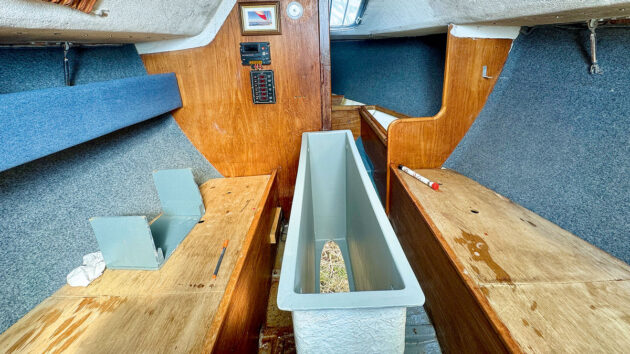
A new keel box was built for Elise to prevent the lifting keel from banging in its case. Credit: Ollie Boyes
As a former trailer-sailer owner myself, I know only too well the uneasy feeling you get when you’re punching into a head sea and hear your lifting keel banging around in its case. As North Sea waves were now a firm part of Elise’s brief, Ollie wanted to achieve a more secure fit.
The Copland Harrier’s keel is a 340kg cast iron fin that’s designed to be fully lowered when sailing, with a GRP tray on the top of the keel that’s supposed to seal the slot. Ollie suspected this tray wasn’t sitting flat in the bottom of the casing, causing the keel to move in waves and transfer uneven loads to the keel box. He decided to remove the keel, and fill and fair the bottom of the keel box with thickened epoxy so the keel tray rested completely flush against the hull.
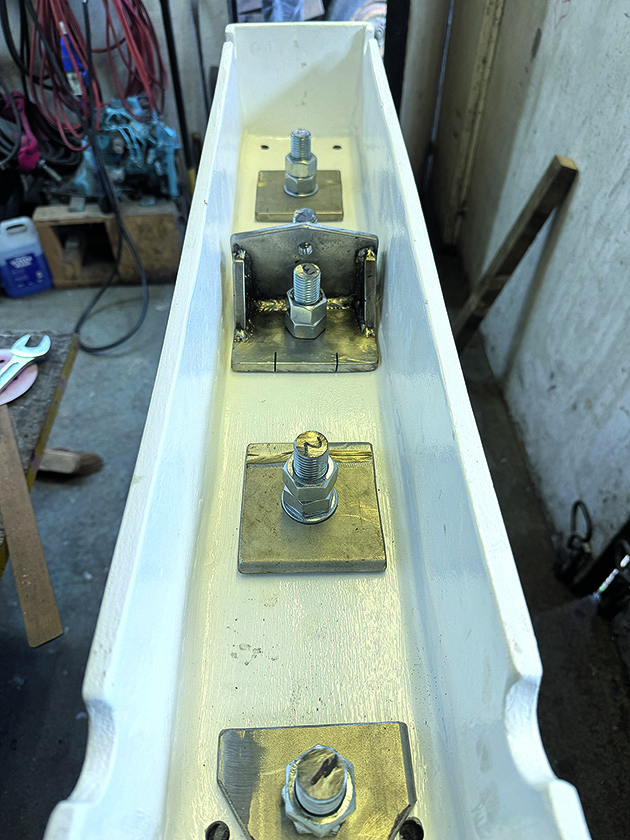
The keel tray, repainted, and showing the new keel bolts, washers, and central lifting point. Credit: Ollie Boyes
“It’s such an improvement both physically and psychologically,” said Ollie. The scope of the project increased once the keel was out, and Ollie also decided to drill and tap new keel bolts to replace the existing 40-year-old ones, and to grind back any rust before coating with a corrosion-inhibiting paint, and re-antifouling. Now the keel is back in, the movement has ceased, and Ollie’s confidence in Elise has increased further.
Ollie Boyes has now done three North Sea crossings on Elise, the big challenges being tiredness and the cold in stronger weather. To make sure he stays fed, Ollie packs pre-made food which is easy to grab and eat, including plenty of snacks, such as flapjacks made by his partner. He has fitted a ‘game changing’ Jetboil single-burner gas stove to a gimbal, allowing him to make hot drinks. He has also installed a diesel heater so he can get warm and dry his gear when he goes below.
Future ambitions
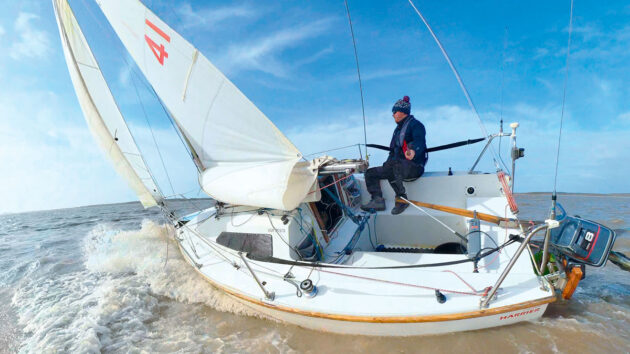
Ollie has plans to sail Elise in Scotland and around Britain. Credit: Ollie Boyes
“Next on the list is to replace the standing rigging. I’m going to consult a professional rigger as part of that, as I want to make sure I add strength wherever I can.” Ollie also wants to make up new spreader ends as part of that work. Sailing-wise, Ollie Boyes would like to do a North Sea crossing where he stays longer and visits some more places on the other side.
“I’d love to explore the West Frisian Islands, enter the Dutch inland waterways at Vlissingen, visit Amsterdam, and end up back in Belgium for Oostende voor anker maritime festival once again.” In the longer term, he wants to take Elise to Scotland for a week or two of cruising, and one day, he’d like to sail her around Britain. “Ideally I’d sail around Britain solo, and in one hit, but I’ve got a young family, so that might not be just yet!”
- You can keep up with Ollie and Elise by subscribing to his social media channels YouTube, Facebook, Instagram, Blog.
Copland Harrier 20
Copland Boats was founded in 1967 and built small yachts at Ventnor on the Isle of Wight until 1985, when they were merged with Souters Shipyards in Cowes. The 20ft Harrier was designed by Uffa Fox’s nephew, Tony Dixon, and was loosely based on Uffa’s design for the 24ft Fox Terrier.
She was built from 1982 to 1985, and there’s no real data on how many were sold – but it’s likely to be a small number as they don’t come up for sale all that often. Her lifting keel is designed to be left down for sailing and raised for launching, allowing her to float off the trailer in very shallow water. Unlike some lifting keel boats, the keel isn’t intended to be raised to reduce her draught for creek-crawling.
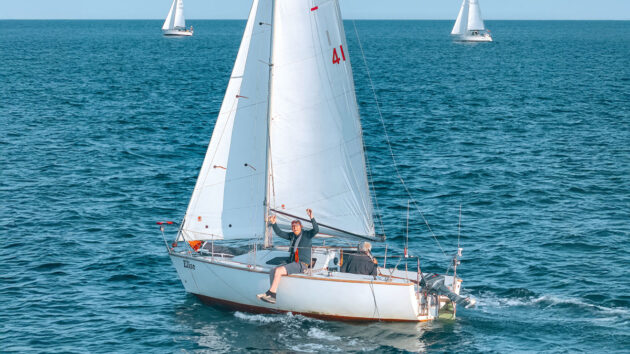
The Copland Harrier 20 was designed by Tony Dixon, the nephew of Uffa Fox. Credit: Sapsford Photography
Contemporary reviewers praised the Harrier’s speed and handling under sail, but criticised her interior finish compared to the small French boats then arriving in the UK. More than 40 years later, her simple construction makes her easy to work on, with no internal liners, bulkheads bonded directly to the hull, and easy access to the back of her deck hardware.
The Harrier has a 6/7 fractional rig, a transom-hung rudder, a relatively large cockpit, and wide side decks that make it easy to get forward. Below, the standard layout achieves four berths by having double-length berths on each side that continue under the cockpit.
Like all lifting-keel boats, there’s a keel casing in the centre of the saloon, but the Harrier has a couple of clever features to minimise its impact. The post and winch used to lift and lower the keel are removable, and the saloon table fits neatly on top of the keel box.
The forepeak is usually used for stowage and to house a chemical toilet, but Ollie has fitted a small V-berth, ideal for his younger crew members. Originally, the galley was built into the box that acts as the companionway step, where Ollie now has his electronics installed.
Some Harriers were purchased part-complete and finished by their owners, so variations on the layout do occur. Power is via an outboard on a transom bracket, and Copland originally recommended a 3-6hp motor. Ollie Boyes has fitted an 8hp Yamaha, which adds weight, but pushes her along well in a head sea.
Buyers should check for any damage to the keel box, and water ingress to the balsa cored deck. Otherwise, if the rig, sails, trailer and engine are present and correct, and everything looks in decent basic condition, she’s likely to represent a good purchase.
Copland Harrier 20 specifications:
Typical asking prices: £1,000 – £6,000
Built from: 1982-1985
LOA: 6.12m/20ft 1in
LWL: 5.56m/18ft 3in
Beam: 2.43m/7ft 11in
Draught: 0.31m/1ft to 1.21m/4ft
Displacement: 907kg/2,000lb
Working sail area: 16.53m²/178ft²

Sailing Uma: ‘How we built an electric sailboat to take us around the world’
Katy Stickland talks to Sailing Uma’s Dan and Kika Deckert about the three year refit of their 1972 Pearson 36…
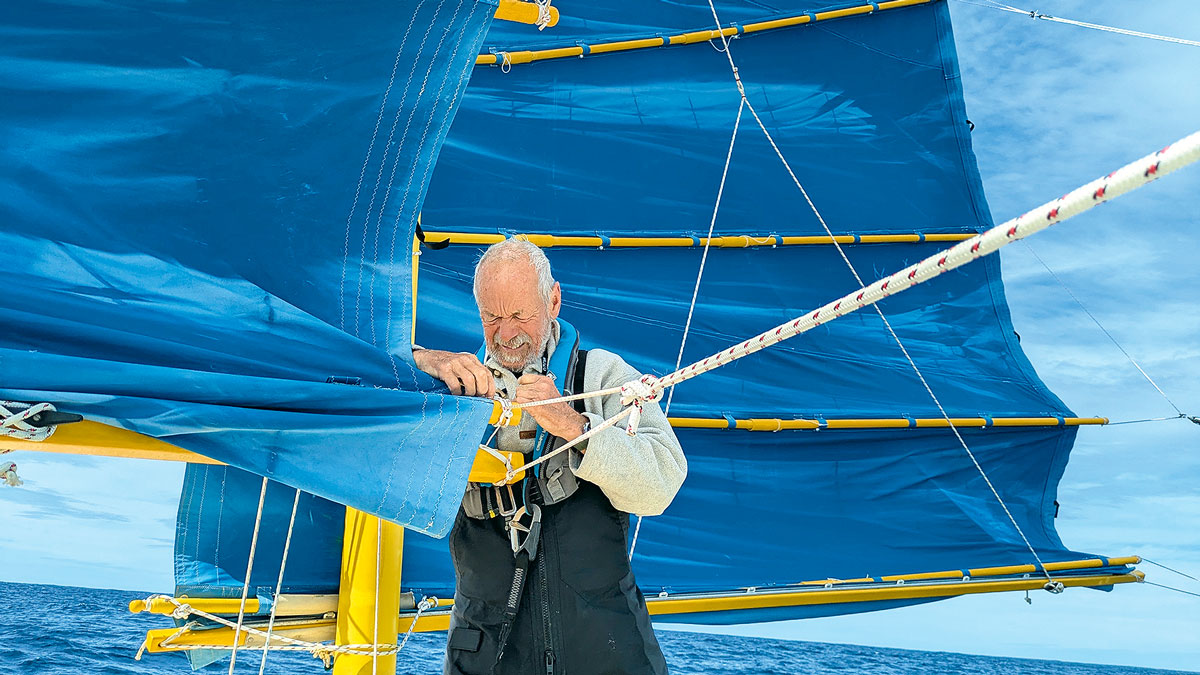
Pete Hill on sail repair, damaged steering and two lost drogues while battling storms in the Tasman Sea
Pete Hill faced damaged steering and lost two drogues while battling extreme conditions in the Tasman Sea. Graham Cox tells…
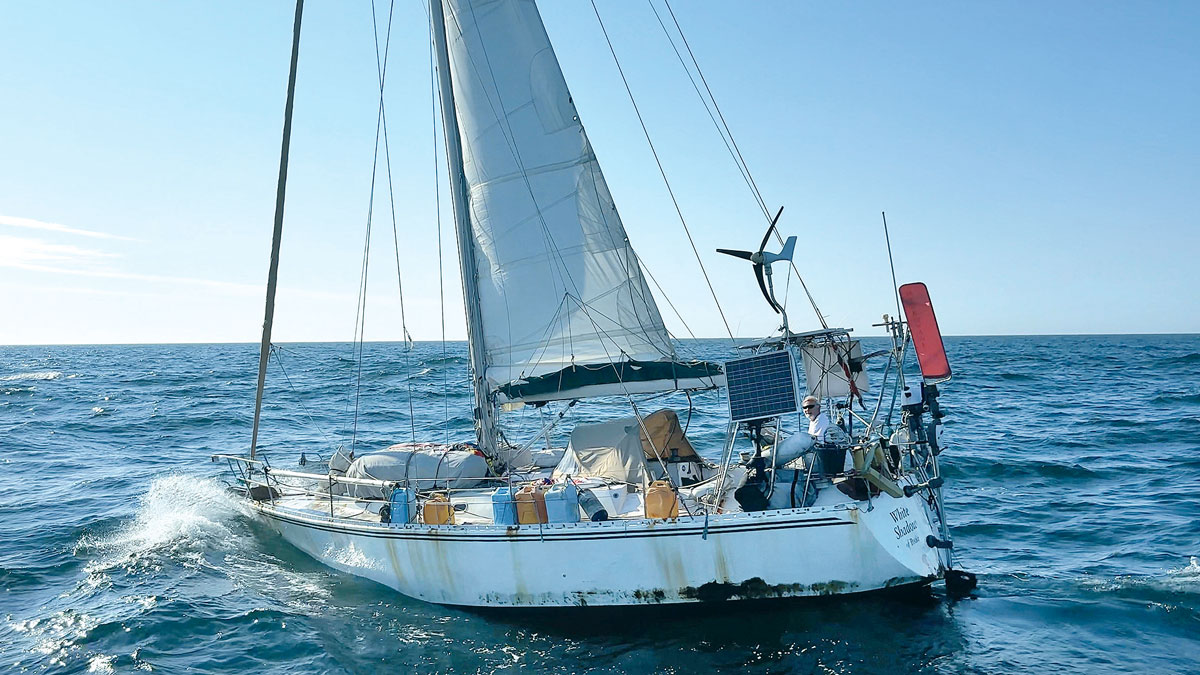
Barry Perrins: ‘I bought the boat and lived the dream’
After nine years of circumnavigating the globe, 'old Seadog' Barry Perrins talks to Laura Hodgetts about seamanship, the realities of…
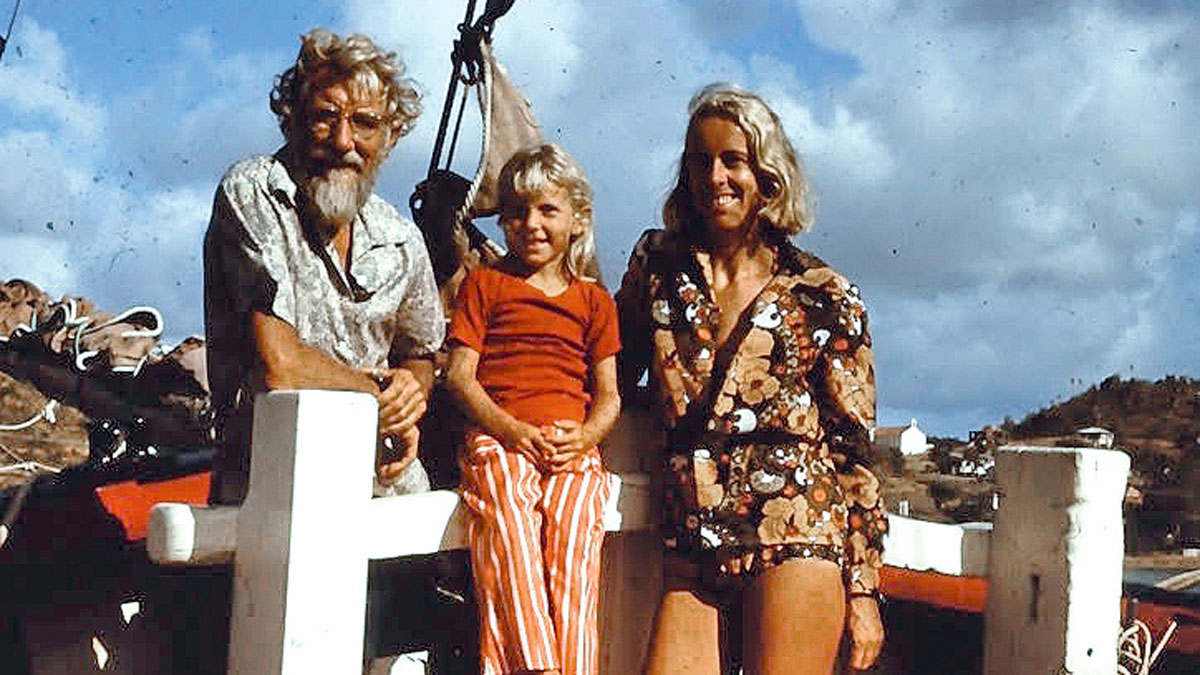
Clare Allcard, Rozelle Raynes & Peter Gerard: how these three sailors found independence through their wooden boats
When I was a child, reading on board Peter Duck, I became obsessed with Ten Small Yachts, Maurice Griffiths’s second…
Want to read more articles like Ollie Boyes: the You Tube sailor on sailing a 20ft boat in the North Sea?
A subscription to Practical Boat Owner magazine costs around 40% less than the cover price.
Print and digital editions are available through Magazines Direct – where you can also find the latest deals.
PBO is packed with information to help you get the most from boat ownership – whether sail or power.
-
-
-
- Take your DIY skills to the next level with trusted advice on boat maintenance and repairs
- Impartial, in-depth gear reviews
- Practical cruising tips for making the most of your time afloat
-
-
Follow us on Facebook, Instagram, TikTok and X