



Trying to get at the almost-out-of-reach boat stuffing box is the stuff of nightmares, Dr Ieuan Davies has some ideas that might make life easier
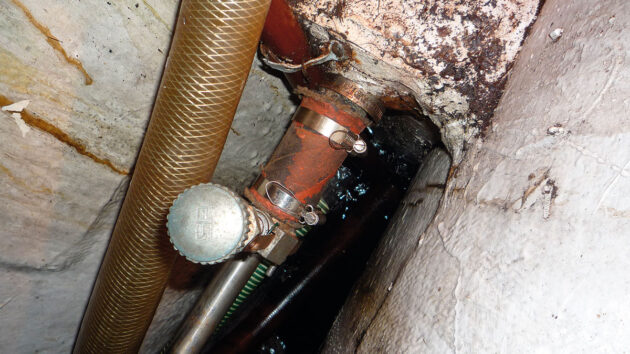
A bad leak at the boat stuffing box can be alarming. It could be caused by disintegration of the hose, deterioration of the stuffing box packing or detachment of the stuffing box hose from the stern tube owing to hose clip failure.
Many motor and sailing yachts have stern glands which are difficult to get at and may not be properly serviced as a result. I’ve owned a 1978 Beneteau Evasion 32 for 20 years and have experienced both hose clip failure at the stern tube and excessive leaking due to deterioration of the boat stuffing box packing.
In my boat, the hose clips at the stern tube are 26in below the lip of the access hatch, and there is only a 3in gap in front of the diesel tank through which to work. Cutting an access hatch in the cabin floor forward of the stuffing box is not an option because of a substantial bulkhead supporting the step for the mizzen mast. In any case, it would not get me any closer to the hose clips or the stuffing box adjusting nuts.
To get over the problem I devised a means of sliding the boat stuffing box forward along the propshaft for repacking. The effective length of my arm below the lip of the hatch is 18in, so all tools to reach the jubilee clips need to be at least 15in long, including their handles. The closest you can get to the front of the stuffing box when contorted within the engine compartment is 18in, so all horizontal tools should be about 24in long.
I’ve mocked up most of the photo illustrations here to show how it’s done – there’s no room down there for a camera!
The toolkit for accessing the boat stuffing box
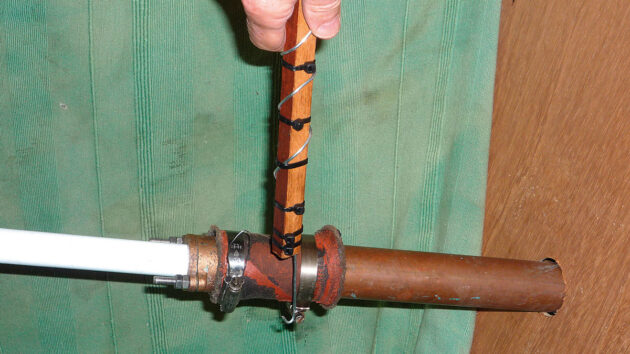
For access to the stern tube hose clips
Credit: Ieuan Davies
Screwdriver with a long handle; a 7mm socket and long extension bar (which must be taped together to prevent them from accidentally dropping into the bilges); a wire
hook to ensure the hose clips remain upright and accessible to the screwdriver or socket.
Each hose clip should have a seizing wire loop permanently attached to it – if the clip rotates away when it is partially loosened, it can be almost impossible to loosen it further in order to remove the hose from the stern tube. If the floor of the engine compartment is also difficult to reach, a strong magnet and a grabbing tool are essential.
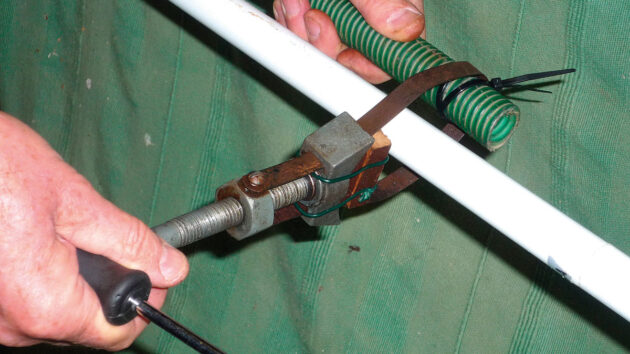
Tool to fit over the boat stuffing box to move it forwards or backwards
Credit: Ieuan Davies
This is an oil filter wrench from which one side of the loop can be temporarily unscrewed and put back once the loop has been placed around the shaft. A sturdy piece of tube is firmly attached to the apex of the loop by means of cable ties.
This tube is used to manipulate the oil filter wrench backwards or forwards and to ensure it is positioned with its adjusting arm upright and reachable from the hatch over the stern tube.
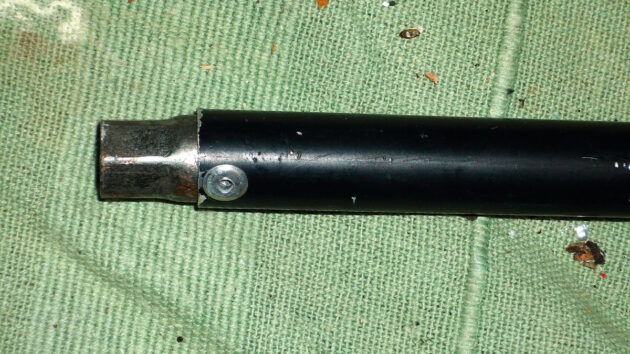
Tools for access to the boat stuffing box packing compression nuts
Credit: Ieuan Davies
Ratchet ring spanner with 11in handle; long-handled open-ended spanner, used to prevent rotation of the inner compressing nut when the outer nut is being locked up tightly against it; a box spanner riveted into a 24in hollow tube (an old ski pole in my case).
Split bung to prevent water from entering
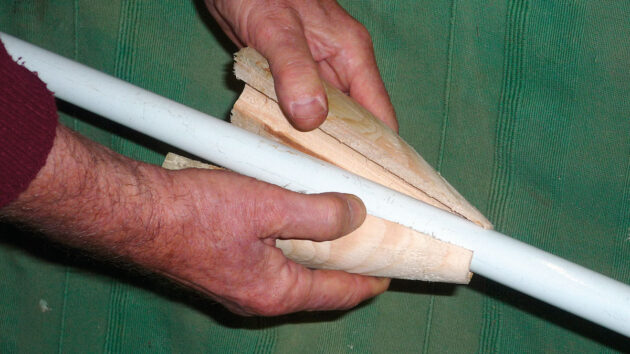
Credit: Ieuan Davies
A tapered bung split longitudinally and hollowed out to fit around the propshaft is pushed backwards to block the stern tube once the stuffing box and hose have been drawn forwards towards the gearbox. Make the bung from a piece of 3in diameter fence post.
Drill a hole the diameter of the propshaft down the centre of the timber and taper it to a size which will fit easily into the stern tube before splitting it longitudinally so it can be fitted around the propshaft. Make one or two extra split lengths without the taper to help push the tapered bung down the shaft.
How to do it
1. Pulling the stuffing box and hose forward over the propshaft
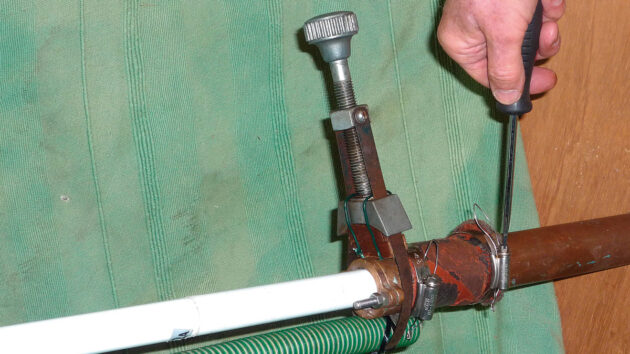
With the filter wrench in place, stern tube hose clips can be loosened. Credit: Ieuan Davies
Before the hose clips are loosened, the stuffing box must be able to be pulled forward along the shaft.
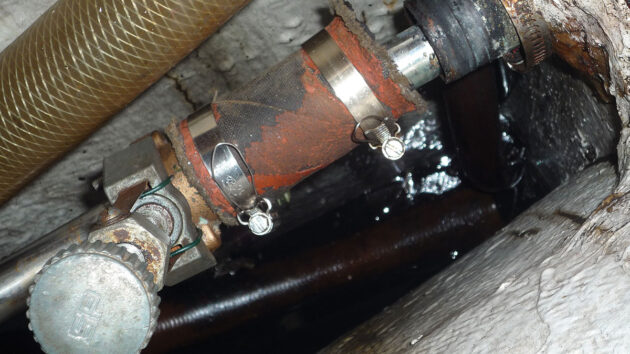
The stuffing box in situ, eased forwards from the stern tube with the filter wrench. Once it’s undone water will start to enter the boat. Credit: Ieuan Davies
The oil filter wrench must grip the stuffing box to pull it forward and gently rotate it to loosen the hose from the stern tube once the clips have been undone: the handle of the oil filter wrench must also be reachable so you can slacken it to slide it backwards and clear of the stuffing box for the next step.
2. How to stem the flow of water through the open stern tube
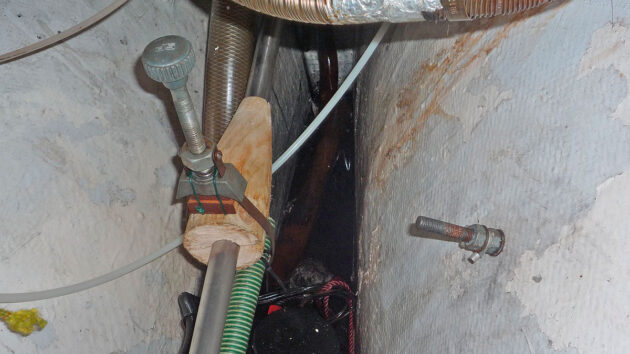
The bung ready to be slid backward along the propshaft. Credit: Ieuan Davies
- Once the hose is removed from the stern tube, water inevitably starts to enter the boat. The amount depends on how much wear there is in the cutless bearing and how recently the propshaft has been used to drive the boat. The amount may be less if the shaft has not rotated for several days.
- Once the stuffing box has been pulled forwards, the oil filter wrench and its attached tube are removed and tightened around the split tapered softwood bung, both halves of which are around the propshaft.
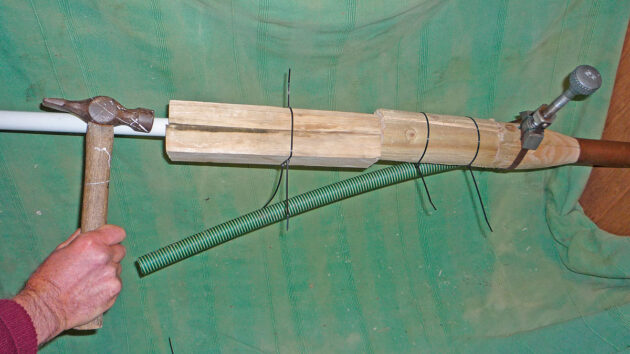
Extra split lengths of wood allow the bung to be tapped into place. Credit: Ieuan Davies
- Once the bung has been pushed backwards an extra one or two split (not tapered) lengths may be required to gently tap the tapered bung into the stern tube. Don’t use too much force or the bung may become too tight as the wood swells in the stern tube. It may require a lot of effort to remove the bung later, which is why the oil filter wrench must have a firm purchase on the bung. When removing the bung, one person has to twist it from side to side from above, while another pulls it forward from the engine compartment using the stiff hose.
3. Returning the stuffing box to the stern tube
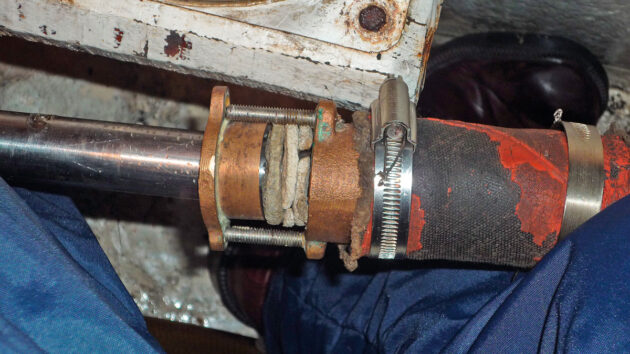
New packing in place, ready for the stern gland to be reassembled. Credit: Ieuan Davies
- Once the stuffing box has been repacked the inner compressing nut is screwed down against the packing compressor so it is hand-tight. The second locking nut must be left several threads away from the first to avoid them locking together prematurely: if they were then further turned, this risks stripping the thread. When the stuffing box is ready to be returned to the stern tube the oil filter wrench gripping the tapered bung is used to jiggle the bung from the stern tube, and when it is free the oil filter wrench is pulled forward.
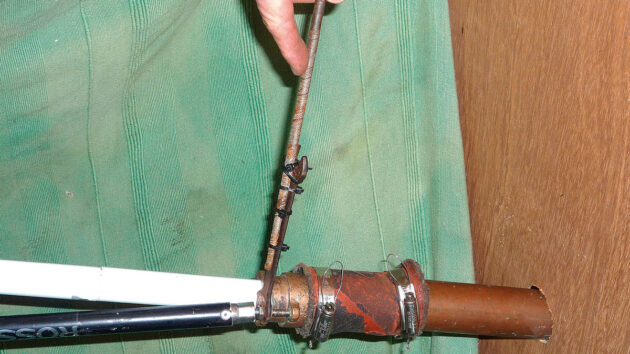
The inner nut is now held with the open-ended spanner while the outer nut is tightened from the engine compartment with an elongated box spanner. Credit: Ieuan Davies
- The oil filter wrench is once again fitted around the stuffing box, which is pushed backwards and its hose manoeuvred over the stern tube.
- With the stuffing box back in position and the hose clips tightened the oil filter wrench is loosened, pulled forwards and finally detached from the propshaft.
- It may take several attempts to achieve the correct compression of the packing. Tighten the inner nuts evenly on both sides using the long-handled open-ended spanner. When the correct compression is achieved tighten the outer locking nut using the elongated box spanner from the engine compartment while a second person holds the inner nut steady with the open-ended spanner to prevent it from turning while the box spanner tightens the locking nut onto it.
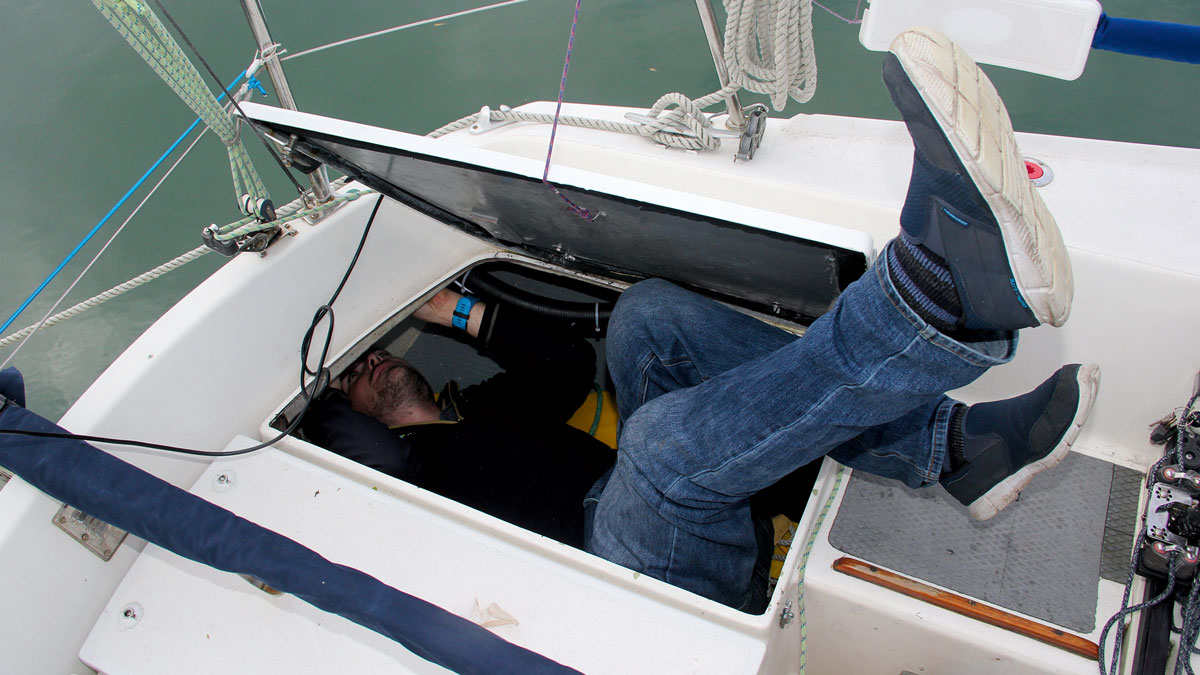
Tools for tight spaces on a boat
Ben Meakins contorts himself terribly in a bid to demonstrate which tools work best when working on your boat in…
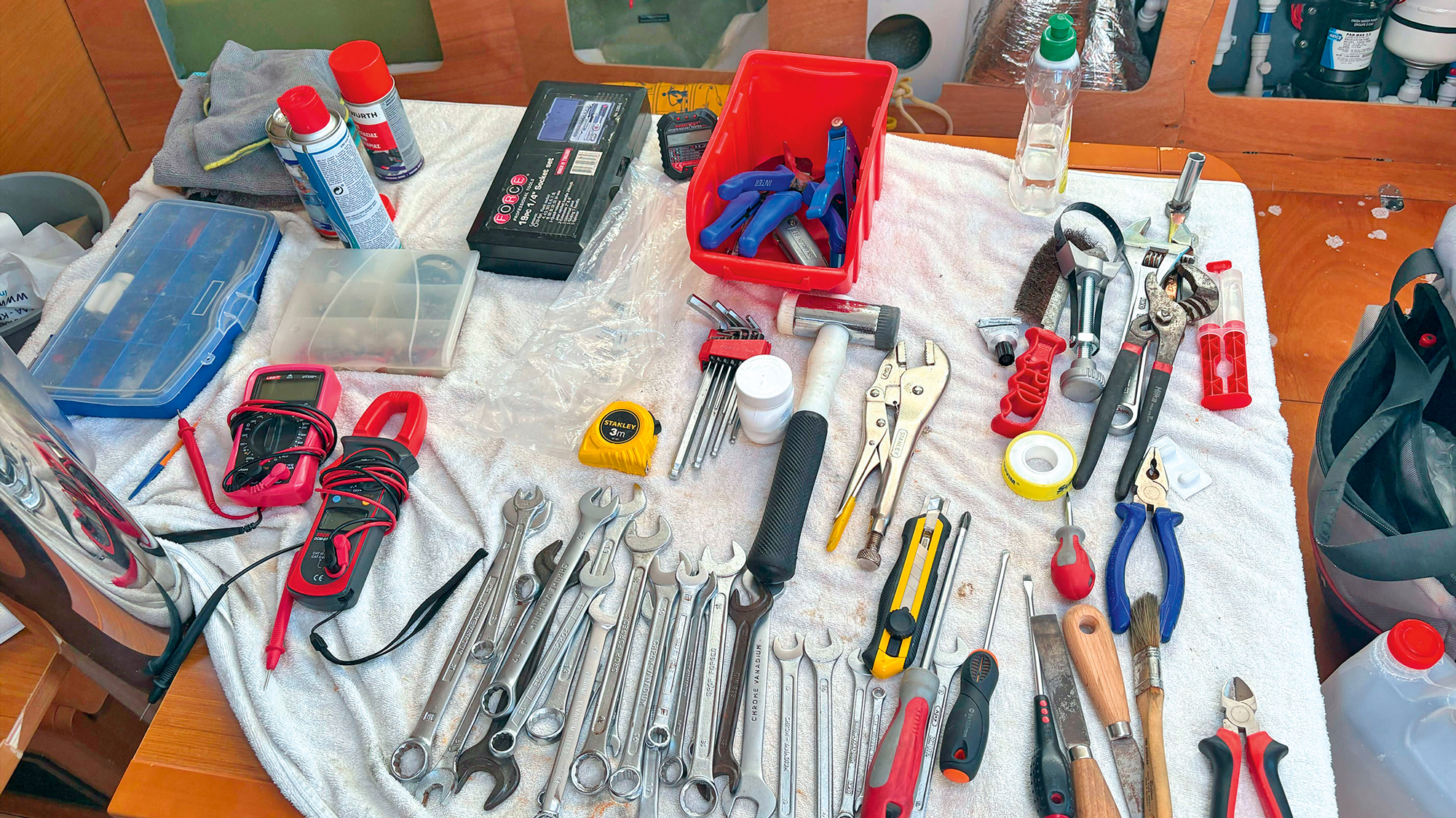
The essential tools to keep on your boat
What tools do you really need for a boat? Say you now own a new or new-to-you boat, and you’re…

How to repack a Stern Gland – step-by-step
How to repack a traditional stuffing-box type stern gland
How to trace tricky boat leaks
Boat leaks are the bane of a sailor’s life, but with patience their source can be traced. Here are some…
Want to read more practical articles like Boat stuffing box access: the tools and techniques to make it easier?

A subscription to Practical Boat Owner magazine costs around 40% less than the cover price.
Print and digital editions are available through Magazines Direct – where you can also find the latest deals.
PBO is packed with information to help you get the most from boat ownership – whether sail or power.
-
-
-
- Take your DIY skills to the next level with trusted advice on boat maintenance and repairs
- Impartial, in-depth gear reviews
- Practical cruising tips for making the most of your time afloat
-
-
Follow us on Facebook, Instagram, TikTok and X