



You can immeaurably increase your sailing pleasure by fitting a cunningham to your mainsail, advises Bob Goode
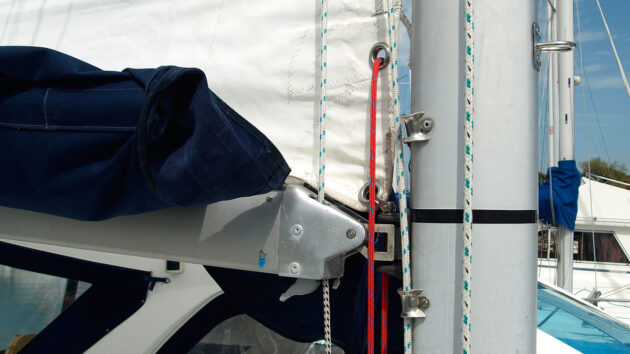
I do not claim to be any kind of wizard at sail trim, but, like many sailors, I do enjoy at least trying to get a well-set sail; when my new mainsail arrived it came with a cunningham cringle, so it was natural that I would read up on how to use it, writes Bob Goode.
Put simply, the cunningham line adjusts the tension in the low third of the luff and is used to move the draught of the sail forward or aft to suit changing wind conditions. Tension on the line flattens the sail and moves the draught forwards.
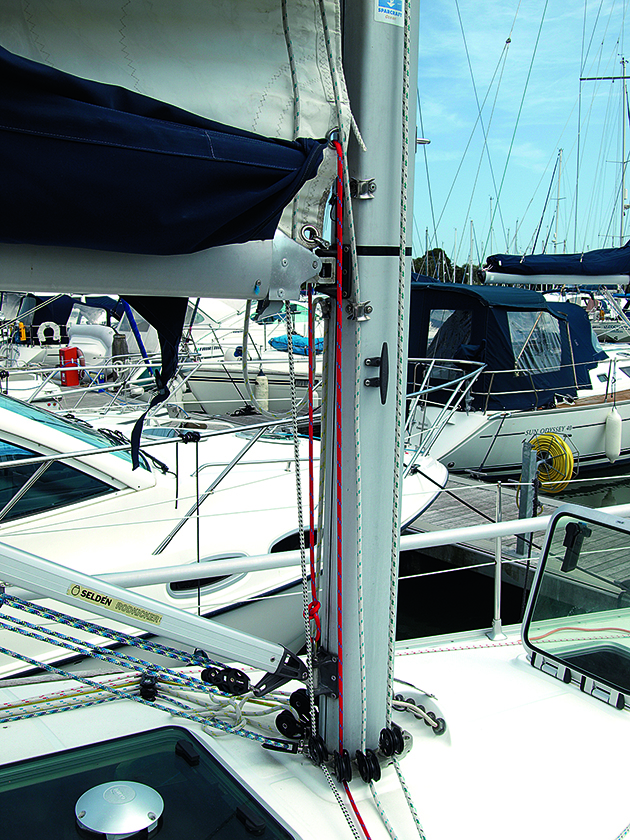
The red cunningham line is led from the vang fitting up and through the cunningham cringle, then down to a block at the base of the mast and back to the cockpit
While you can also do this by increasing the halyard tension, the halyard will act on the upper third more than the lower third due to friction in the sail sliders. A cunningham can be rigged quite quickly using a short line, cleated at the mast and leading up and through the cunningham grommet.
The tension is applied to the cunningham using a simple block and tackle fastened between the line and a suitable point such as the vang fitting. If you want to get really serious, lead the line back to the cockpit and a suitable winch and jammer. If you have the grommet in the sail already then set-up costs are minimal as most of us have odd lengths of line and blocks which are suitable.
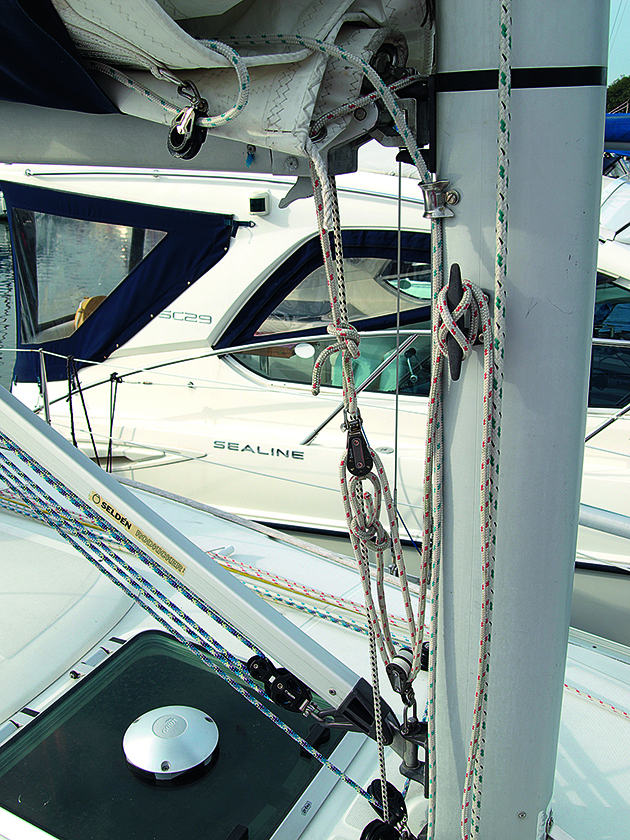
Here’s a simple fix using a short line cleated on the port side of the mast and passing through the cunningham cringle. Tension is applied using a simple tackle cleated on the startboard side
In light airs, you want a fuller sail with the draught of the sail aft, so take all the tension off the cunningham and ease the halyard a little. As the wind rises, the mainsail needs to be flatter and the draught needs to come forwards. This is where the cunningham comes into its own.
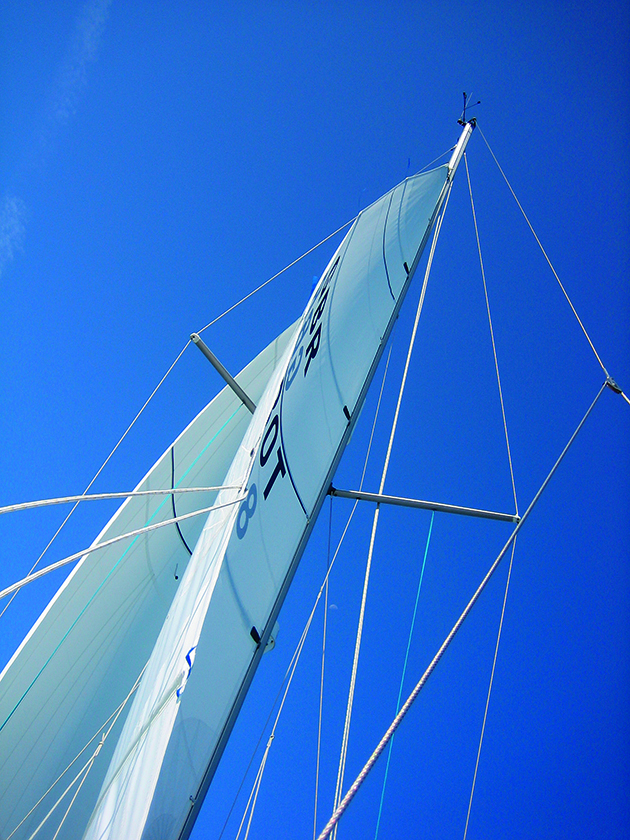
You can have endless hours of fun tweaking your cunningham and changing the shape of the mainsail to suit the wind
Simply cranking the main halyard on will only result in changes at the top of the sail. Applying tension to the cunningham will flatten and move the draught forwards in the lower part of the sail, so combining both halyard and cunningham tension gives a sail better shaped to the conditions and a boat which carries less weather helm, sailing flatter and faster.
Oh, and you get a racing sailor look as well!

Sailing a cutter rig: How two headsails improve handling and balance for cruising
Are two headsails better than one or just twice the bother? David Rainsbury explains why he finds a cutter rig…
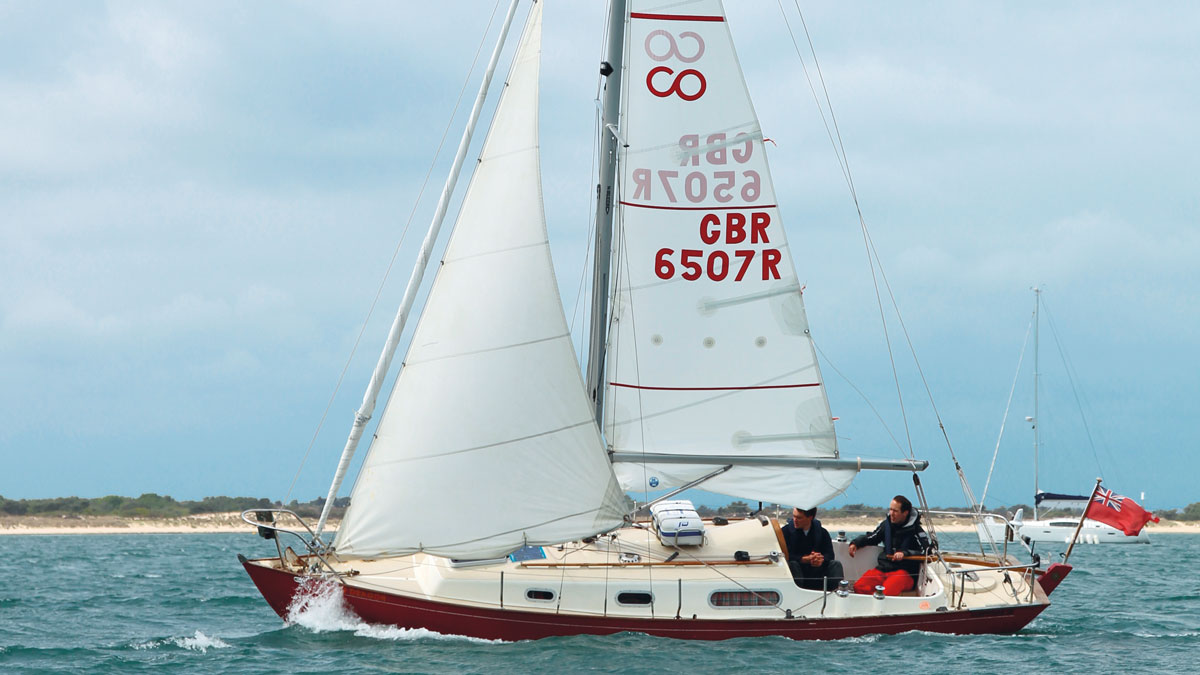
Slab reefing: Guide to sail shape & preventing sail damage
David Pugh explains how to keep in shape for all conditions with a comprehensive guide to slab reefing techniques

The expert advice on picking the right sails and keeping them healthy
The new season’s approaching, and your sails are in tip-top condition, right? You’ve had them laundered and the UV strips…
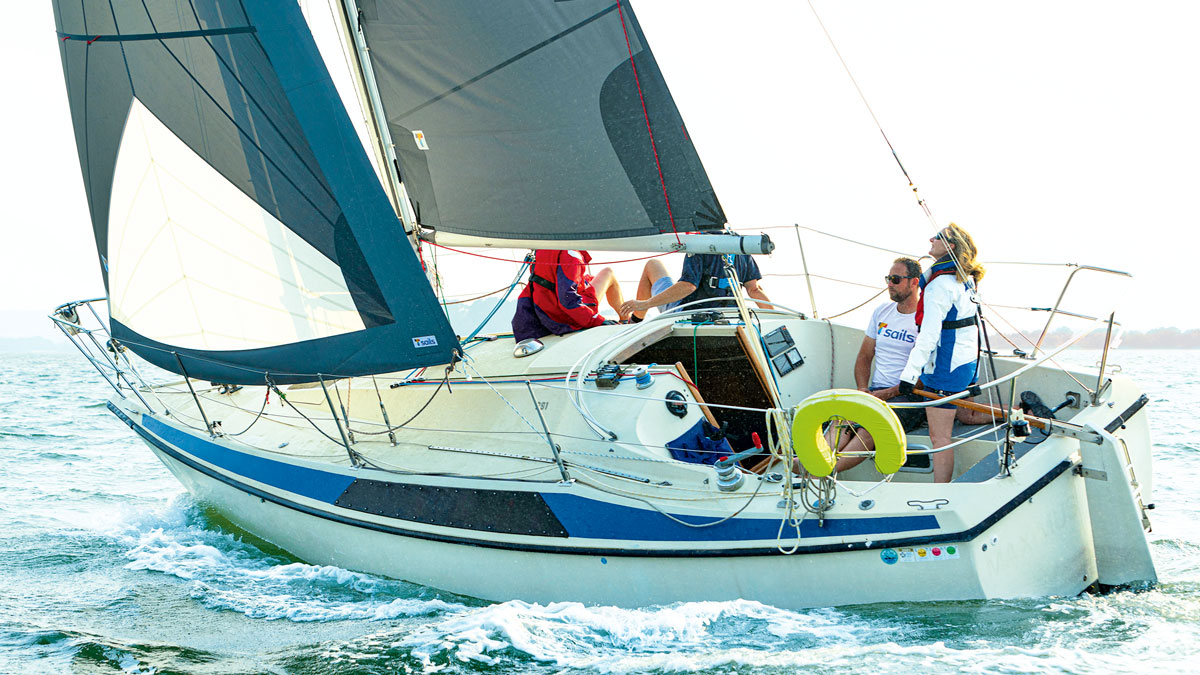
Rig tuning for cruising sailors
Point higher and sail faster – every yacht can benefit from an optimal rig setup. Ali Wood finds out from…
Want to read more seamanship articles?
A subscription to Practical Boat Owner magazine costs around 40% less than the cover price.
Print and digital editions are available through Magazines Direct – where you can also find the latest deals.
PBO is packed with information to help you get the most from boat ownership – whether sail or power.
-
-
-
- Take your DIY skills to the next level with trusted advice on boat maintenance and repairs
- Impartial, in-depth gear reviews
- Practical cruising tips for making the most of your time afloat
-
-
Follow us on Facebook, Instagram, TikTok and X