




Cruising instructor Ben Lowings delves into the common causes of weather helm – and looks at what can be done to control it
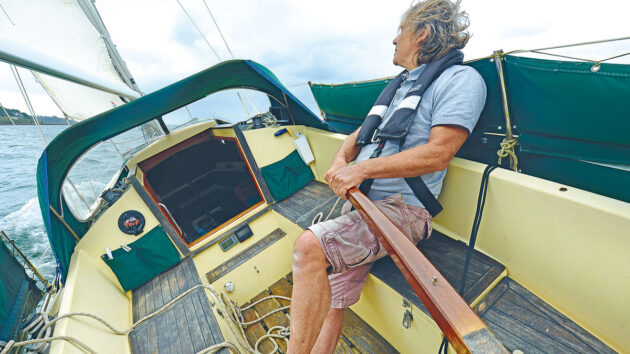
Most sailors will have experienced weather helm, which is essentially defined by the tendency of a sailing vessel to round up into the direction the wind is coming from. It is an affinity to turning, a liking for the wind which is the heart of the old word ‘ardency’. A vessel was said in the olden days at least to be ‘ardent’ if it had a liking for putting its bows into the wind.
The saying ‘hard-mouthed’ in relation to a sailing vessel also means weather helm. That particular saying comes from ‘hardening up’, ie pointing further towards the direction the wind is coming from, and ‘mouth’ as in bows or ‘face’ of the boat. That such sayings have been around for centuries is a good way of illustrating how the concept of weather helm is not confined to modern yachts manufactured for recreational sailing. Weather helm is as old as boats.
Weather helm in practice
Say you’re keeping to a straight line between waypoints on your chartplotter as you head into port after a day’s enjoyable sailing. Disregarding other significant factors at this time, consider how it is more than likely that your wheel or tiller is slightly off centre, ie away from the fore and aft central axis of the vessel. This is a counteraction of weather helm and is perfectly normal. Luckily, modern yacht designers have seen fit to build it into their considerations.
If you’re helming and fall overboard, under sail with a balanced rig, say in the scenario we’ve established, those few degrees of weather helm will increase rapidly as soon as the helm is let go. The boat will turn into the wind, decelerate and eventually stop, or heave-to.
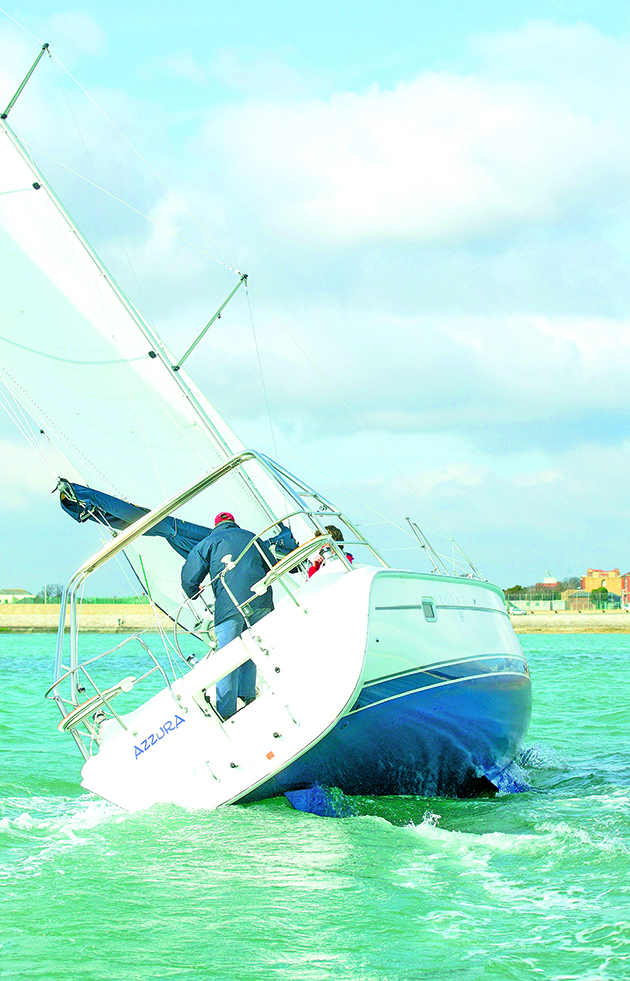
At worst, weather helm can knock knots off your boat speed. Credit: Graham Snook/Future PLC
In practice, the shaking sails and change in motion will alert the crew to come on deck, see you in the water, and allow them time to gather themselves, turn the engine on and retrieve you safely.
When speaking of weather helm as something to be ‘cured’, ie permanently rectified, this is not specifically the thing.
Weather helm is most often seen as a negative when it is excessive. What does that feel like? Well, you need only have a marginal rise in wind strength to feel excessive weather helm on the vessel. The force on a sail is proportional to the square of the wind velocity, and this is why reefing points are not evenly spaced down the trailing edge or leach of a yacht’s mainsail. Higher winds are comparatively harder to deal with on larger vessels.
There’s a reason why sailing ships of old had two adjacent platforms by their wheels: the strength of two people was required to keep on course and counteract such things as weather helm. Four hands were needed on the wheel at any one time. Letting go of one spoke without thinking was a path towards bruising a finger or breaking a knuckle. The boat’s foils are under serious pressure in any high wind. Skilled sailors can mitigate and even take advantage of weather helm in these circumstances. But all tire, and they do so with rapidity.
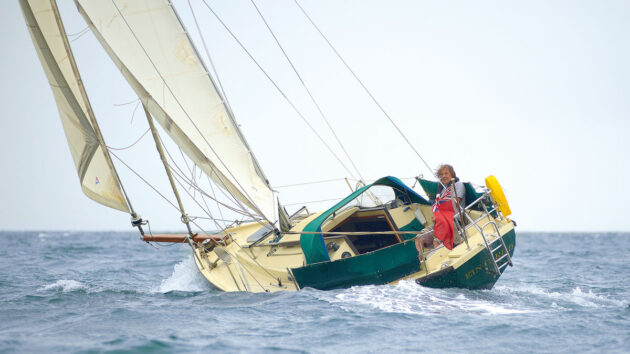
Only a slight rise in wind strength is enough to trigger weather helm. Credit: Nic Compton
From personal experience I can attest to this. A long trick at the helm of a 68ft cutter-rigged sloop on a coastal day with gusts of 45 knots was like death to my soft office-worker hands. The boat’s designer had certainly worked in the ‘smidgen of weather helm’ principle. Prolonged beating under the western cliffs of the Isle of Wight (plus much salty spray on the leather wheel-wrap) meant the boat, if it was to be kept under control, needed a 5-10° application of helm to correct a ‘best course to windward’.
Sailors always like a measure of protection against broaching. The surge of power can convince you that keeping maximum sail up is worth it. But a boat out of balance will bite you.
A long keeled vessel will bring you comparatively slowly to this circumstance. There is a carving to windward, a slower acceleration and a directional stability. Beaminess also moderates these factors. Weather helm comes to be appreciated more gently. Heaviness gets introduced to the steering so that the point at which weather helm becomes excessive is quite easy to pin down.
With a fin-keeler, that’s usually not the case. A creditable track progressing upwind can suddenly be thrown aside. A gust tips the yacht on its side, brings the nose round up, and the steering, once light, turns hard. Correcting course is suddenly like dragging a wooden spoon through treacle. You have excessive weather helm.
Weather helm: Into the theory
It’s time for a dose of physics. I’m no physics teacher, but I do have a grasp of the essentials as they relate to sailing yachts. The regular disclaimer that all yachts behave differently, especially, needs to be highlighted here. What the theory might state and what occurs in reality, hopping over the chop of waves, for instance, can be dramatically divergent.
Physicists like to look at forces in balance with each other, and in the case of sailing craft, they are rarely neat arrows heading in a constant, predictable direction applying a steady and foreseeable force. As tides swirl around headlands and channels, and winds splay out and revolve around systems and topographical features, so the forces applied to and produced by the sails and keel, together with the rudder, are constantly varying and complex.
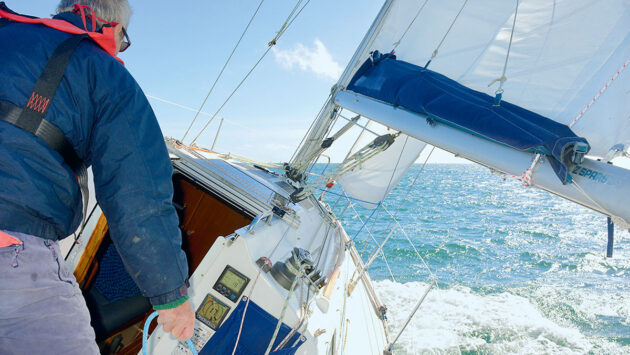
Generally, as the heel increases so does weather helm. Credit: Nic Compton
They can be separated by forces produced by the sails, known as aerodynamic forces, and forces produced by the foils underwater – that is to say, the keel, centreboard, and rudder or rudders – known as hydrodynamic forces. A balanced, trimmed boat keeps these forces manageable.
Measuring these forces can be estimated through the application of mathematical equations, but there’s a great range of variables. A hull produced by the same yard could be driven by sails of different material, shape, size and configuration. There is a whole science to sailmaking which is glossed over when someone asserts ‘to correct weather helm you need to trim the sails properly’.
With my Yachtmaster Scheme students, I will often encourage them to start ‘all-standing’, that is to say, stop the boat and try to make them sail it off this invisible starting mark. Leaving a boat to its own ways and then bringing things together is sometimes a superior way to bring a student to a better appreciation of the physical forces at work than to simply have the boat going on a straight course with sails set and trimmed, and then to hand the wheel over to them. ‘If you can take her on, please…’ etc.
With no pressure on the helm, the boat will round up, and the sails will shake, most usually. Some boats have what’s known as ‘lee helm’, which means a tendency to fall off the wind, a liking for having the tiller pushed right away (‘to weather’) just to keep going in a straight line. Slack-driving like this is beyond the scope of the current article.
I like to first tell students about windsurfing. Boardsailors drive in relation to the wind direction by moving their masts. Tilt the mast forward, and you drop down off the wind, or bear away. Pull the mast back, however, and you slide up into the direction the wind is coming from.
Weather helm theory: Aerodynamics
For a closer look at the theory, it can help to divide things up into two areas: in-the-water area, and above-the-sea’s-surface. They are, respectively, aerodynamics and hydrodynamics. The common principle is the flow (of air or water) around an object. A sail has various forces acting on it, chiefly governed by the angle at which it is presented to the wind. Likewise, a rudder’s effectiveness depends in the greater part on the angle of incidence it makes with the oncoming water flow.
Specifically with a triangular sail, the aerodynamics dictate that the force of the wind is centred on the centre of the right-angle triangle; that is, at the meeting-point of the three lines that go between the mid-point of each side and into the opposite corner. It’s a third of the way along each of the two sides that are perpendicular or at right angles to each other. This is (for a particular sail, not for a set of sails taken as a complete rig) the centre of effort (CofE) of the sail. It is theoretically the centre, because geometrically it’s in the middle. In practice, it moves a bit…
Streaming or laminar air flow over the sail is indicated by telltale ribbons on the leech, showing a clean exit or otherwise of the air, ‘gripping’ the sails.
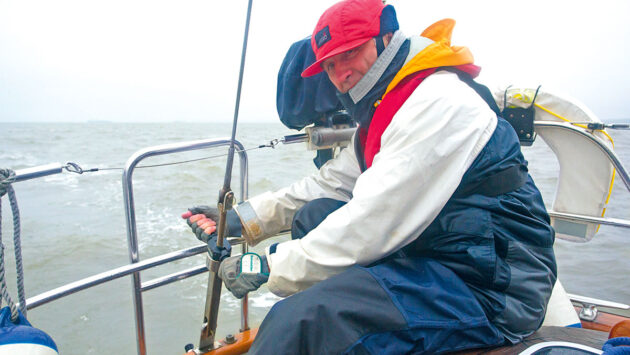
Tightening the backstay flattens the mainsail and luff of the headsail, allowing the sail to spill air. Credit: Colin Work
The rudder doesn’t have telltales, but you can detect a smooth flow from a clean wake. Just as a poorly-trimmed or flapping sail jostles and rips the telltales around, so ineffective rudder trim will manifest itself in a strong curl of water; a lopsided wake. Little whirlpools spin out behind it exactly like the invisible equivalents in the air traced by turbulent telltales. If you’re close to the wind and you let the mainsail out too much, the angle between the sail and the wind becomes too wide, the aerodynamic foil stalls, the mast becomes more perpendicular to the sea surface, and you slow down. If there’s too much rudder on, the angle presented by the rudder to the water is too great, and you slow down and stall the rudder.
Another aerodynamic principle to get your head around is that as long as the air flow hits the sail at the same angle, the force applied at the centre of effort will be proportional to the square of the velocity of the wind. This explains why 20 knots feels so much stronger in the sails than 17 knots, compared with the difference, say, from 15 to 17 knots.
Designers look at these forces, balances of square-metreage of sail and hull area and displacement weight, when crafting sailing boats, especially when calculating safety margins.
Hydrodynamics
A good way to help understand the effects of boat hull shape on hydrodynamic flow is to imagine pushing a banana through the water. A yacht hull isn’t as curved as a banana, but the principle is the same.
Imagine a banana in a bowl of water, hold it by its base so it curves straight down, with the apex of the curve in line with the tip and base of the fruit. Push it forward: it keeps going in a straight line. Push it forward more quickly and the apex of the curve is more apt to rise. The banana quickly finds a path to turn.
A yacht hull tipping or heeling behaves in a similar fashion, although less pronounced. The more curves in the water, the greater the effect. There is less wetted surface area in the direction of the turn and the lateral or sideways resistance of the hull is reduced.
Just as with the aerodynamics, and the focus of forces on the rig, this lateral resistance also has a centre – geometrically, at least. Centre of effort (CofE) and centre of lateral resistance (CLR) are the two key concepts for weather helm.
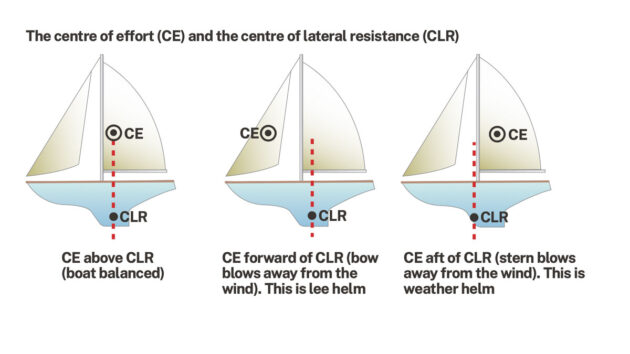
Credit: Maxine Heath
Sometimes a centre of lateral resistance can be mixed up with a centre of gravity, which is the weight of the hull volume pushing down, and also the centre of buoyancy, which is the sum of the force of the displaced water pushing up. It’s a different direction for the balanced forces. A buoyancy higher than gravity tends to turn the boat back upright. In the same way, a centre of effort further back from the wind than a centre of lateral resistance will tend to turn the boat more ‘upright’ to the wind direction, or more towards the wind.
Going back to the boat stationary in the water with my Yachtmaster Scheme students trying to get it sailing… the wind hits the sails, the lift from the aerodynamic force is greater than the drag from the hydrodynamic force of the hull… the physics of acceleration. Once the forces are equal and opposite, the boat will maintain a constant speed.
The forces are both from physically pushing the water out of the way and from the friction between the hull surface and the water.
Calculating the CLR is difficult without a yacht design software application because the hull is curved to a much greater degree than the sails. If you have a half-model of the hull, you could balance it on a table to show you where the approximate centre of gravity lies. The CLR would be nearby, but differently placed because it is the centre of the whole wetted surface rather than the centre of the weight. As with the CofE, the CLR is a theoretical notion and, in practice, it shifts around a bit. In cruising yachts, it’s a fair bet that it will be on the after edge of a fin keel (if that’s what you have).
How to counter weather helm
Adjusting aerofoils
Countering weather helm starts with the simplest and easiest way: trimming sails. Bear in mind that as with most things yachting, pulling in one rope means letting go of another. Everything is in balance.
A traveller reaching across the whole beam of the boat is a great way of adjusting the angle of incidence quickly. For weather helm reduction, it’s good to get the mainsail CofE forward, fast.
Trim
Bringing in a mainsail outhaul will tighten and flatten the sail. A sharper entry point for the airflow comes with a tense luff: grinding up more main halyard or pulling down the gooseneck with a Cunningham does the same thing. A tightened-up kicker or vang will also smooth out the sail.
Increasing backstay tension bends the mast back and can also perform some of the function of the luffing windsurfer. Remember cruising yacht masts are stayed and collared into the deck – they don’t have a universal joint! Many a yacht mast has been bent by an overenthusiastic backstay trimmer.
Easing backstay tension reduces rake and helps keep CofE forward. In this field, adjustments that might seem minuscule at deck-level are definitely not at the masthead. Be careful.
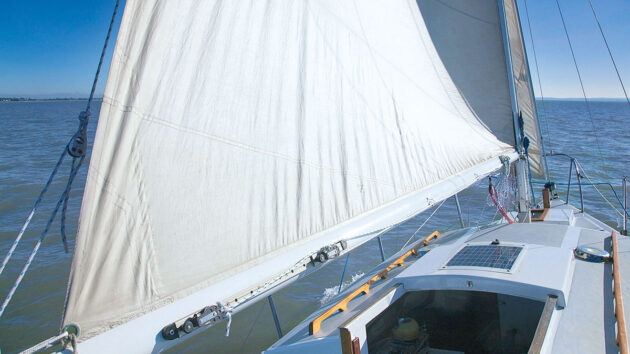
Old, baggy sails can be a classic cause of weather helm. Credit: David Harding
To begin the trimming process you shouldn’t be close-hauled. To measure and correct weather helm by sails alone means starting with the sails. So drop down off the wind, then make your line adjustment, then pick up speed so the rudder draws properly, then turn up into the wind. Perhaps try one line adjustment at a time: halyard, downhaul (Cunningham) outhaul, boom downhaul (vang), traveller, sheet.
A ‘check-list’ process might make it easier to identify which tool might be best to address weather helm. All of the controls will shift the CofE around within the sail.
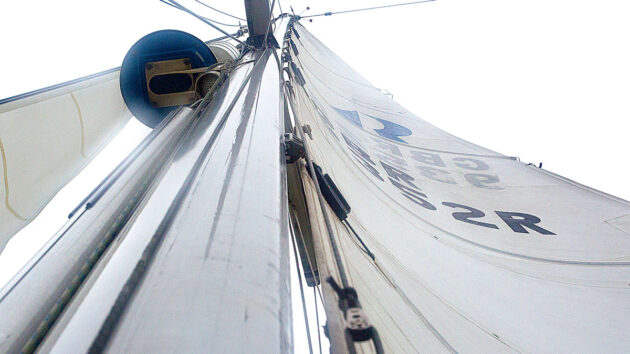
Mast bend helps to flatten the sail, bringing the centre of effort forward which helps tame excess weather helm. Credit: Colin Work
Start with the main, then trim the genoa. Bearing in mind the windsurfing analogy, but also the fact you can’t move the mast (well, not much!) on a cruising yacht, to move the CofE forward you don’t tilt the mast forward, but instead ease the main sail and sheet in the genoa. The CofE goes forward, and – usually – ameliorates your weather helm.
Conversely, to move the centre of effort aft, you ease the genoa and sheet in the main. That’s in line with the theory… reality is more complex, hence the idea of adjusting controls piecemeal in sail trim.
Reef
Reefing is a blunter instrument than trimming. You move the centre of effort in a particular sail. For a mainsail, the CofE is lowered. But for a genoa it can go in all sorts of ways. Sometimes the step-down for a reef (either in the distances between rings on the main leach or the stripes in the foot of a genny) is too dramatic. I mean that in the sense that it can be difficult to quantify how much you’ve lowered your CofE for the sail in question. Assessing how a reefed genoa counters weather helm for a certain angle of incidence (if it does at all) takes patience and testing in various conditions.
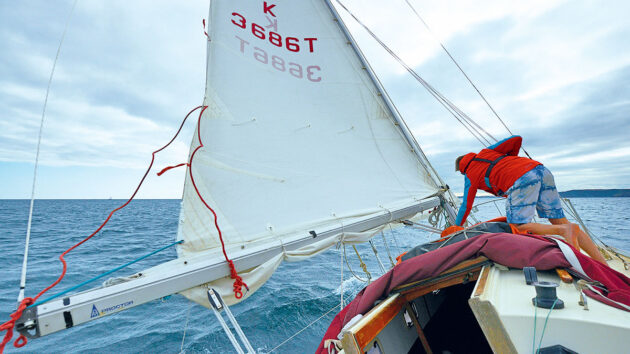
Reefing the mainsail lowers the centre of effort. Credit: Nic Compton
A third more permanent way of adjusting sails to counter weather helm is to buy new ones. Sagging older sails might keep the CofE aft despite your efforts, and new sailcloth could ease your frustrations.
Bowsprit
Staying with the centre of effort, the rig has its part to play. The quest to bring the CofE forward would usually mean bringing the forestay forward. With the mainmast rake minimised or eliminated first, a forestay arriving at the deck in advance of its current position is advantageous for reducing weather helm.
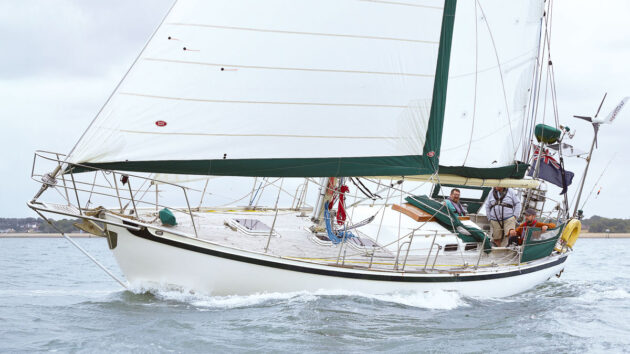
A bowsprit can help move the sail plan’s centre of effort forward, balancing it with the hull’s centre of lateral resistance. Credit: Graham Snook
A bowsprit should be considered. An extendable one (or one which can be steeved, or turned upwards and inboard) might be best for testing which length is appropriate, before a permanent fixture.
Adjusting hydrofoils
If installing a bowsprit isn’t possible, it’s time to examine the underwater options. In the effort to reduce or eliminate weather helm, adjusting your hydrodynamic forces by tinkering with the underwater foils (keel and rudder) is much harder than fiddling with the sail plan. The CofE cannot go forward anymore, so the centre of lateral resistance will have to be dragged backwards, somehow.
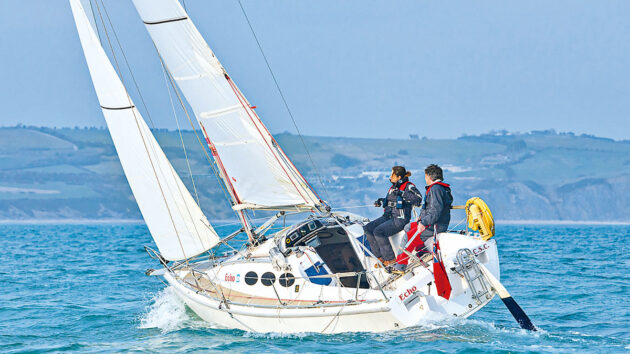
Changing the underwater shape of a keel can reduce weather helm – raising this Etap 24i’s lifting keel may move the centre of lateral resistance aft. Credit: David Harding
Weight distribution in the hull as a whole can be about adding or reducing weight in certain areas. By this, I’m thinking of crew ballast, rather than shovelling a tonne of lead weights into the quarters. Getting the weight lower, taking off deckhouses and accoutrements and transferring that weight below water, could be an idea. It’s probably cheaper than getting a carbon fibre mast.
Centreboard
A movable centreboard is another consideration. Pulling it up, even only by a bit, will bring your CLR aft and counter weather helm. Rather than rebuilding the keel, which would also bring the CLR aft, it’s better first to look at modifications to the rudder and skeg (if you have one).
Rudder
A deeper, lower, more aft-sitting rudder and skeg will generally be good for tackling weather helm. Modifications here are more difficult to assess and should be even more gradual than anything else. It is a world away from easing the mainsheet down the traveller.
Yacht designers are paid good money to calculate the trade-offs between hydrodynamic drag and performance. Factors they will consider include the strength of the foils in question, their construction materials, method of laying up and so on.
Bespoke solutions
Sailmakers are excellent consultants when it comes to discussing specific adaptations to combat weather helm for a certain class of yacht.
Discussions between owners on internet forums are especially helpful for finding solutions to problems on class-specific boats. It wouldn’t be for me here to identify classes with ‘known weather helm problems’ as this is not only unfair but too general. Weather helm often varies more between models of the same make of yacht than it does between different makes.
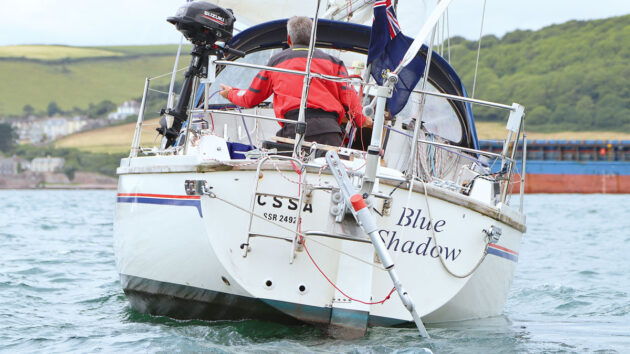
A servo-pendulum wind vane counteracts the tendency for the boat to turn into the wind. Credit: Jake Kavanagh
Manufacturers are a store of knowledge when it comes to tailoring yachts to palliate weather helm.
A servo-pendulum windvane can also change the CLR by shifting it aft towards the stern. Put simply, this allows the servo-oar to counteract the tendency of the boat to turn into the wind through hydrodynamic lift. A range of adjustments is required here to ensure that the idiosyncrasies of the wind vane and boat are accounted for.
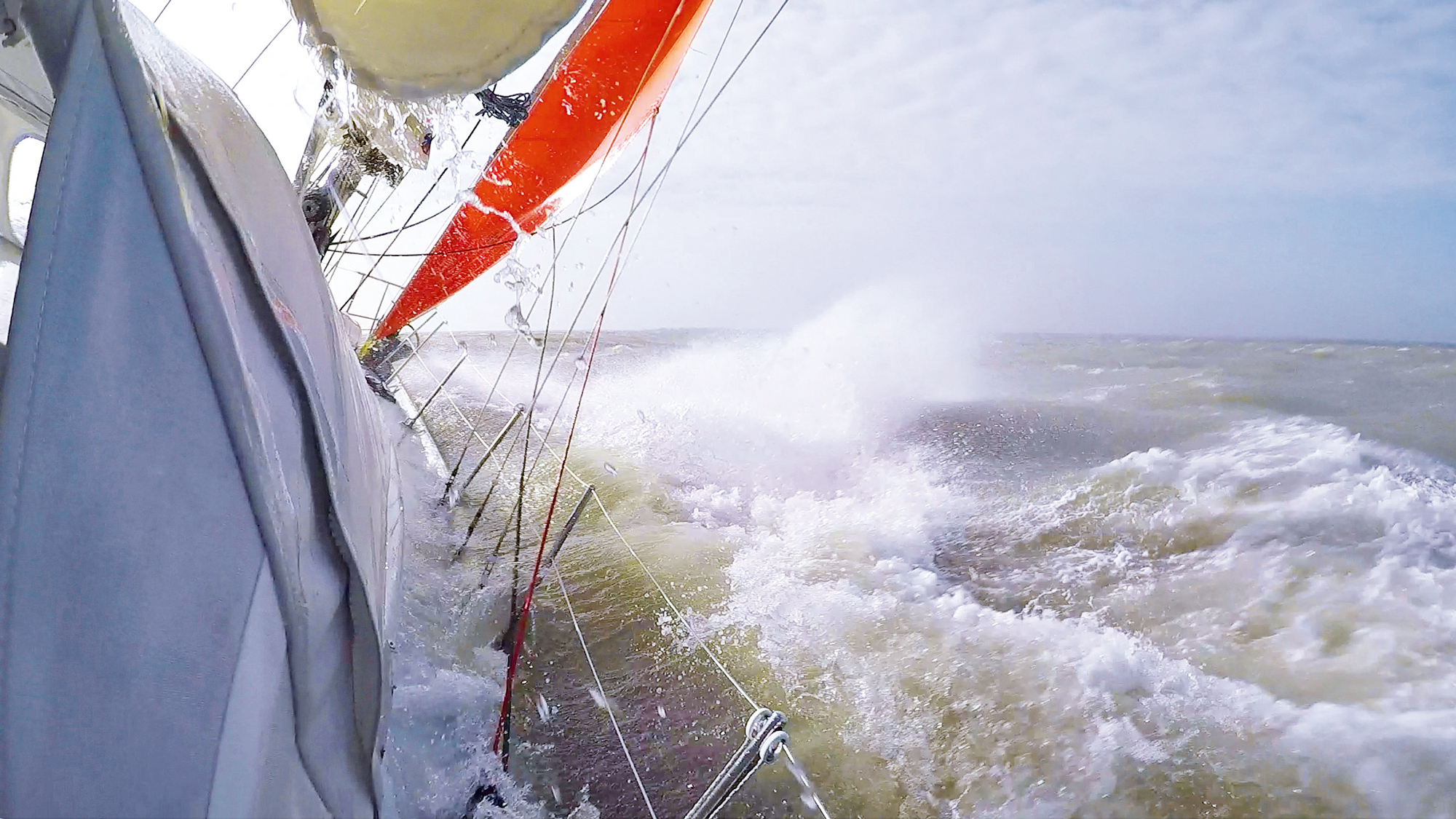
Preparing a small boat for heavy weather with advice from the skippers of the Jester Challenge 2025
The Jester Challenge 2025 once again proved a fertile ground for examples of how a short-handed crew can prepare for…
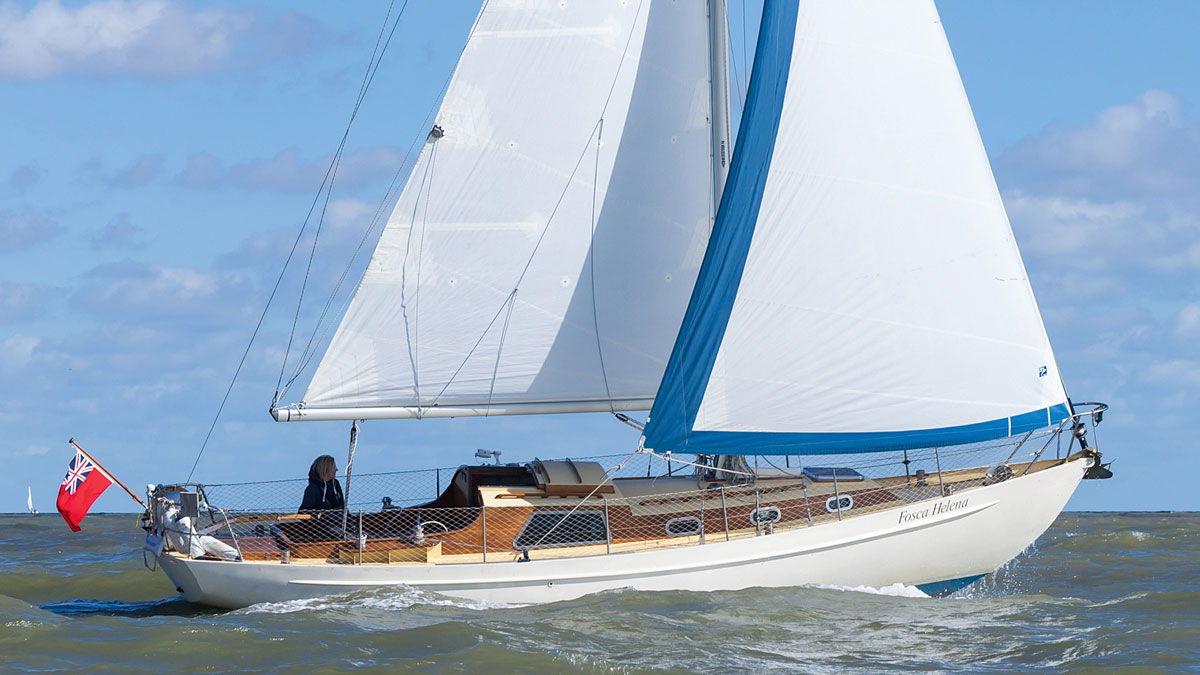
How to cure a heavy boat helm
If your boat has a new rig and new sails, but a tiller that still tries to wrench your arms…
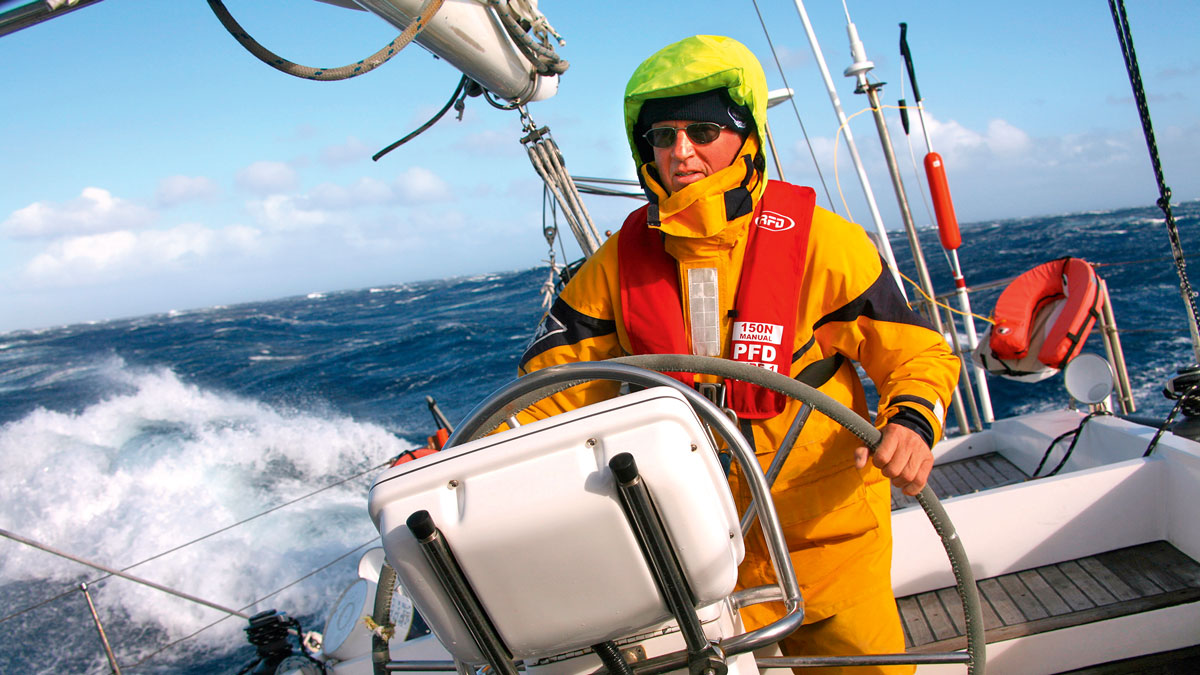
Heavy weather sailing techniques: how to protect your boat in storm conditions
Øyvind Bordal and Magne Klann explain the steps you need to take to protect your rig and sails when the…
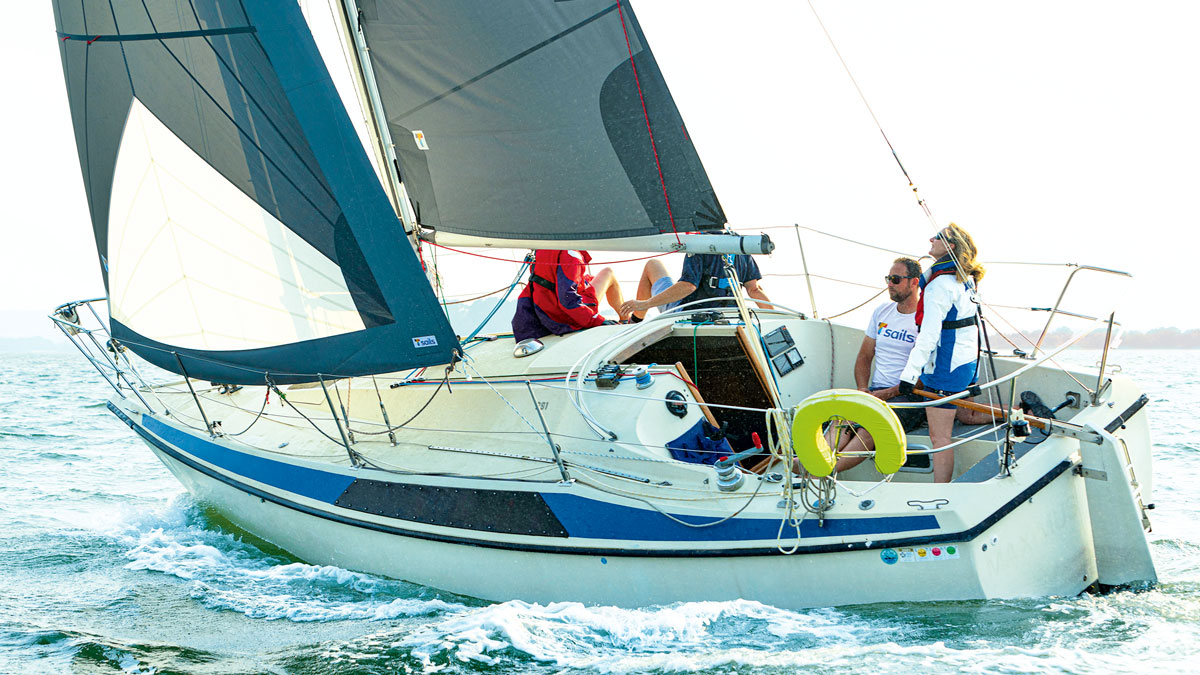
Rig tuning for cruising sailors
Point higher and sail faster – every yacht can benefit from an optimal rig setup. Ali Wood finds out from…
What to read more seamanship articles like Weather helm: what is it and how do you reduce it?
A subscription to Practical Boat Owner magazine costs around 40% less than the cover price.
Print and digital editions are available through Magazines Direct – where you can also find the latest deals.
PBO is packed with information to help you get the most from boat ownership – whether sail or power.
-
-
-
- Take your DIY skills to the next level with trusted advice on boat maintenance and repairs
- Impartial, in-depth gear reviews
- Practical cruising tips for making the most of your time afloat
-
-
Follow us on Facebook, Instagram, TikTok and X