


Expensive, embarrassing or inconvenient, Rupert Holmes shares some practical and seamanship errors he wishes he’d never made
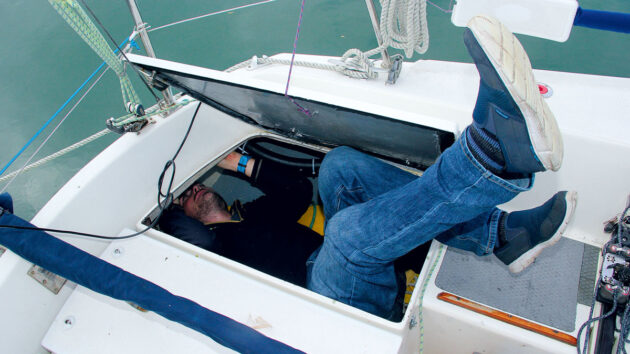
Spend a lifetime on and around the water things will inevitably go wrong from time to time. Sometimes boating mistakes are embarrassing, other times merely inconvenient, but there are always useful lessons to be gained.
1. Aground during an exam
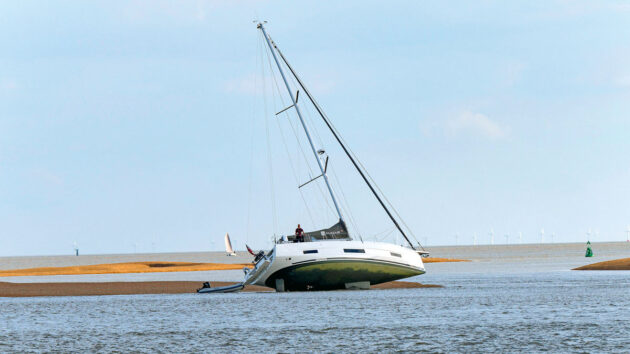
Boating mistakes: Even if you know your local waters well, they can still catch you out. Credit: Clynt Garnham Environmental/Alamy
Running aground during your Yachtmaster exam has to be right up there in terms of memorable mistakes. We were bound from the Beaulieu River to Southampton Water late on a winter’s night and were all tired and a little cold.
Some situations call for quick and decisive action, but others call for a gentle approach which is often far better. In this instance a light breeze was blowing us towards deeper water and the tide rising. All I had to do was wait for the boat to pivot around to face the channel, sheet in and sail off.
Examiners know we are all human and will make mistakes from time to time. Assuming there is no imminent danger to crew or vessel, what matters most is that you can demonstrate the ability to dig yourself out of trouble in an efficient, seamanlike manner and without the situation cascading towards more serious problems.
With hindsight, there was a degree of complacency behind my pilotage mistake. By coincidence, almost every Thursday night the previous winter I’d sailed from the River Medina to Buckler’s Hard to see the live music at the Master Builder’s pub, notching up many night hours without incident in the same waters.
After grounding I assumed I had failed, so relaxed. You can imagine my surprise, after the remaining boat handling and theory assessments the following morning, when examiner John Goode of the Southern Sailing School told me I’d passed. And then offered me a job as a cruising instructor.
I subsequently made sure to avoid complacency, even in waters I knew well, and passed my Yachtmaster Instructor’s assessment a few months later, still at the age of just 22.
2. Watch for chafe
Chafe has the potential to destroy expensive ropes with alarming speed. In my early days as a Yachtmaster Instructor I had a clear demonstration of this while heading north from Guernsey, broad reaching in a Force 5-6. We occasionally sailed too low, allowing the headsail to collapse and each time it filled the sheet whacked against the guardrail. Within 90 minutes a 30cm length of the outer braid was chafed through in places.
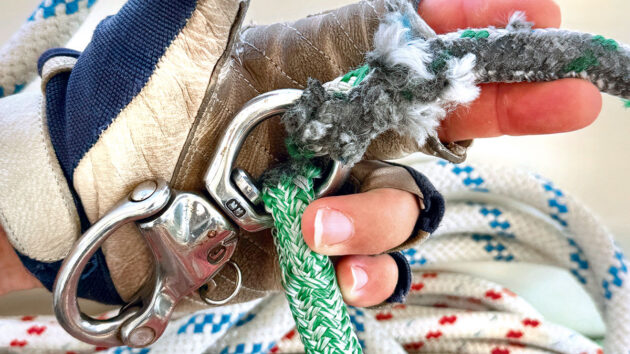
Boating mistakes: Chafe is a serious problem; this line shows chafe after only two days set against the spinnaker pole. Credit: James Kenning
The boat was an older design, with narrow beam and slender transom, so rolled readily in the quartering sea. Today a high performance planing design would, paradoxically, be easier to steer accurately in such conditions.
However, that’s no excuse and in similar conditions I made it policy to rig a third sheet with an outboard lead running under the rail. Spinnaker guy or sheet blocks are often in an ideal position for this. As well as leading the line clear of the rail, this also helps tension the leech, making the sail set better and less liable to collapse.
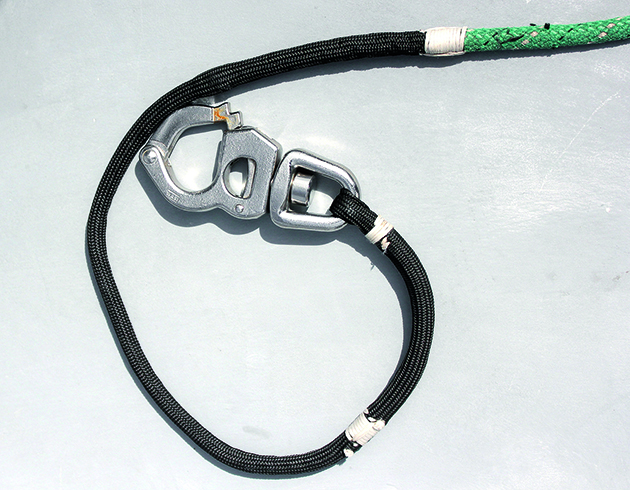
Dyneema chafe jacket protecting a halyard where it passes over a sheave. Credit: Rupert Holmes
Today, Dyneema chafe jackets can be added as an effective extra layer of protection on high-wear areas of lines, such as where they pass over halyard sheaves. This can easily double or treble the lifespan of a line before it needs to be end-for-ended, although regular checks remain important.
3. Accidentally circling a buoy in fog
In those pre-chartplotter and pre-GPS days so-called blind navigation was an important skill to practise ahead of the Yachtmaster exam, enabling you to demonstrate, if asked, that you’d have a good chance of remaining safe in restricted visibility.
During my first spring as an instructor we encountered visibility less than 100m heading gently down Southampton Water on a short hop to the River Hamble late one Sunday evening. We navigated between 2m and 5m depth contours, keeping well clear of the shipping channel until we reached the BP jetty off the eastern shore.
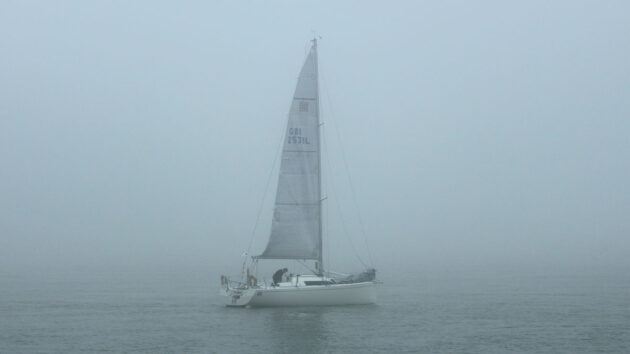
Boating mistakes: Fog can be disorientating so trust the compass and depth sounder when navigating and don’t rely on a fixed object. Credit: Rupert Holmes
All was going well, with a lookout on the bow and the helmsman steering frequently updated compass courses. Then a small green buoy marking the 2m contour appeared on our port side and I suddenly realised we were making a rapid turn to port, towards the shore.
The reason quickly became apparent. With no wind or other visual references, the helm’s instinct had been to keep the buoy in exactly the same position relative to the boat. The result was that we were unconsciously changing course.
Since then I have always remembered a single object visible in fog can be more disorientating than none. Trust the compass and depth, not the instinctive pull of the only thing you can see.
4. Aground again
At Southern Sailing we liked to do as much boat handling and passage making under sail as possible.
One occasion, early in my career, my timing had proved optimistic, leaving us short-tacking out of Newtown Creek on a rapidly falling tide. When still 500m from the entrance Starduster, the school’s Contessa 32, touched bottom in a tack, sliding to a halt in slow motion, and wouldn’t come unstuck.
The mud at that point is deep and soft and we remained bolt upright on the mudflats for almost four hours, with Starduster ‘floating’ in the silt around 20cm higher than her usual lines.
I’ve subsequently spent many occasions deliberately high and dry there, as you can be confident of being safe and secure when the deep water anchorage is overcrowded, with the associated risk of boats bumping into each other when the tide turns in the middle of the night.
However I avoid doing so with boats that have a saildrive. Silt and mud around the leg may accelerate wear of the gearbox seals, with any damage not apparent until the boat is next hauled ashore and the saildrive serviced.
5. Three tales of water ingress
Water ingress can be a nuisance, an embarrassment or a serious emergency. When I was growing up a 21ft pre-war keelboat with a small cuddy served as
a fast, but very compact, family cruiser.
One summer, launching was delayed and the gaps between the planks had opened up alarmingly to 2-3mm.
Yet the boatyard wasn’t fazed about launching, provided we were prepared for a lot of pumping and bailing over the first 48 hours. We emptied everything from the interior, stood watches to pump overnight, and the timbers took up the water reassuringly quickly.
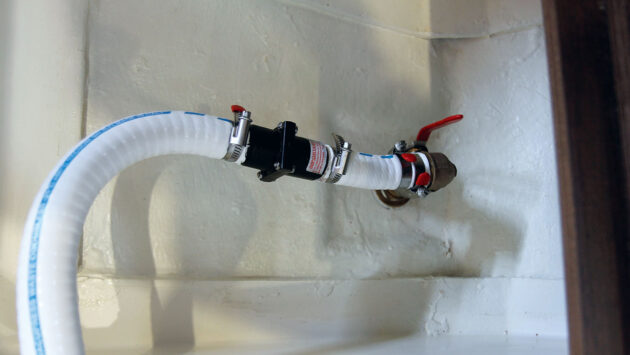
Boating mistakes: Make sure all drain seacocks are closed when not in use; they’re easily forgotten about! Credit: Rupert Holmes
More serious was a 22ft fin keel Pandora – another fantastic boat to sail – about a week after my Yachtmaster exam. The galley sink drain seacock had been left open and, although she was on a normally deep water mooring, a particularly big spring tide, along with a westerly gale meant she swung into shallow water on the ebb. She settled heeled over on the same side as the sink, then flooded through the sink drain on the incoming tide.
Fortunately, the boat had been stripped out in anticipation of being unused that winter, so no cushions, sails, outboard or fuel were on board and there were no electronics. Therefore, no real harm was done, other than a day wasted refloating the boat, cleaning up and rewiring the navigation lights.
The third incident, more than three decades later, involved a 40ft raceboat moored in the Caribbean for a few weeks after a regatta, while awaiting shipping back to Europe. A small leak from a cockpit drain hose went unnoticed by the gardiennage company until batteries, starter motor and alternator were all under water.
It’s a good example of a situation where a remote monitoring system would have paid for itself – even a basic version would have alerted us long before the situation became problematic.
6. Unmanned boat sailing by
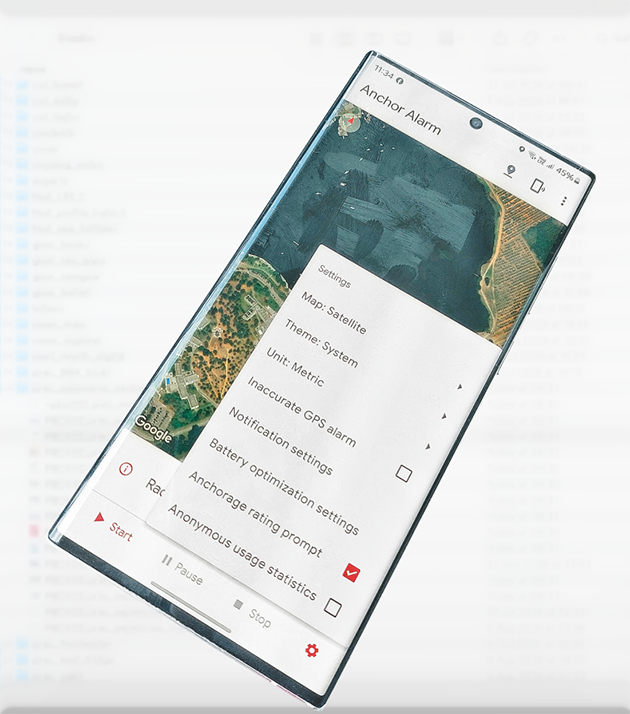
An anchor alarm will alert you as soon as the boat starts dragging its anchor and prevent boating mistakes. Credit: Saša Fegić
I was cruising in company with two other identical engineless 22ft Hunter Duettes, and all anchored clear of the channel on the east side of the harbour before going ashore for the evening.
We were just starting a second round of drinks at the Ferry Inn, which enjoys a spectacular view over the estuary, when a boat began ‘sailing’ backwards towards us on the outgoing tide.
It wasn’t long before it became clear it was one of ours. But which one? After a couple of anxious minutes it was identified as Dave’s. He hurried down to his dinghy, but by now the sea breeze had died and, without engines, it took a team effort to get the boat back to a safe spot to re-anchor.
With an engineless boat, or one with a broken motor, it’s not always easy to be sure the anchor is well dug in, but it is possible if you use the weight of the boat to give it a good tug to set.
Today an anchor alarm that pings a message to your mobile phone would give early warning of an anchor dragging. Had this been available all those years ago it would have saved a lot of effort and reduced the risk of it cascading into a more serious incident.
7. Running out of fuel when heeled
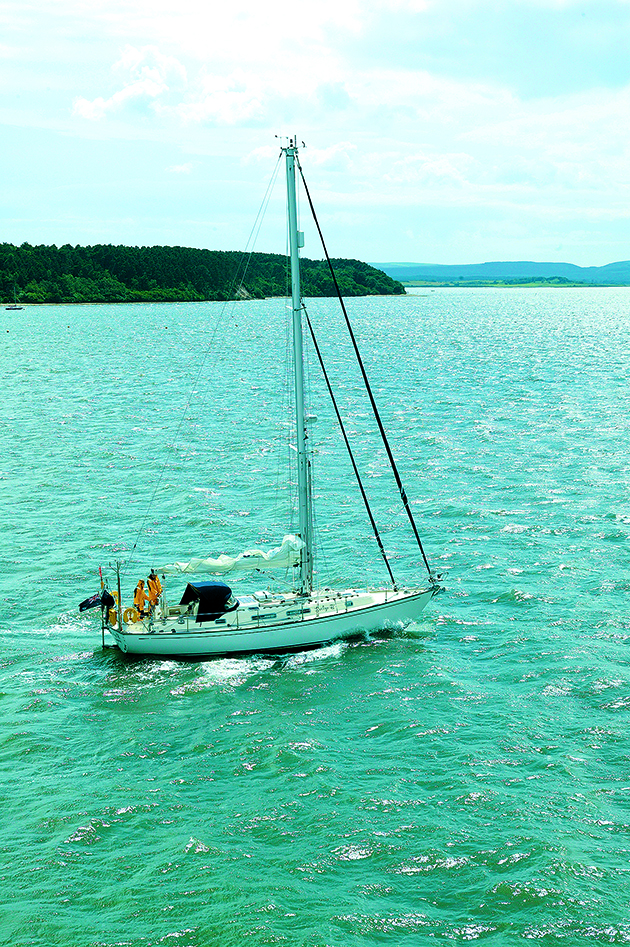
Boating mistakes: Take sails down to reduce heel and prevent problems with fuel being unable to reach the engine. Credit: Graham Snook/Future PLC
This is surprisingly common, but is often blamed on dirty fuel and sediment stirred up in the diesel tank. Many boats have shallow fuel tanks under the double berth in the aft quarter cabin. This works fine when the boat is flat, but can be an issue when well heeled while motor-sailing.
On Ammos, the 30ft Discovery 3000 I keep in Greece, the outlet pipe is on the starboard (inboard) side of the tank. So on port tack the fuel gathers on the wrong side. Initially I assumed keeping at least 20lt in the 80lt tank would suffice, but experience shows this needs to be closer to 30lt.
Fortunately, the immediate solution is simple – either resume sailing, or take the sails down to reduce heel.
8. Kneeing the chartplotter
On tiller-steered boats it’s great to have a proper chartplotter in the cockpit, especially if you sail short-handed.
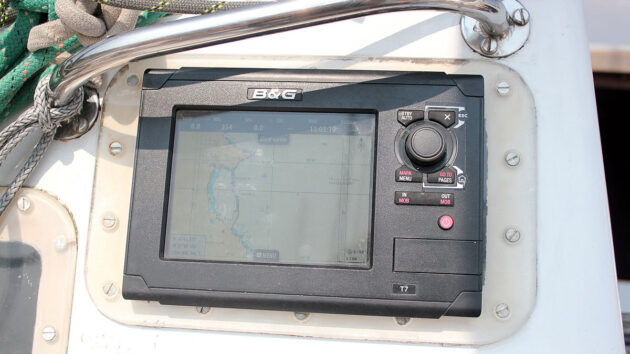
Boating mistakes: Think about where you mount your chartplotter. Rupert managed to put his knee through the screen of a B&G Zeus Touch. Credit: Rupert Holmes
On the 36ft Rob Humphreys-designed one-off, Zest, the only practical place to mount one is on the forward bulkhead, even though this risks impact damage when hoisting sails or reefing. This worked well for the first couple of years, during which we raced to the Azores and back and sailed round Britain and Ireland, covering almost 10,000 miles. But during an overnight solo race from Guernsey to Weymouth I put my knee through the screen while tucking the third reef in during a 33-knot north-westerly squall.
Of course the timing was not ideal –I was crossing the shipping lanes, with visibility of under a mile. Luckily we’d chosen a model (an early B&G Zeus Touch) where every function can be accessed using hard buttons, instead of the touchscreen, and I could therefore still use the chart, bring up AIS data and so on.
We haven’t had a problem for the subsequent decade, and another 15,000 miles, so I have no real regrets about the placement of the plotter.
9. Solar panel wiring
A few years ago I fitted a couple of extra solar panels on the sides of the coachroof of Ammos, in addition to an existing unit on the hatch garage. Frustratingly, the wiring of the new ones loops up at 90° to the panel’s surface, making it difficult to find a way to persuade the wires to lie flat against the coachroof.
Before I had figured out a tenable solution a headsail sheet caught and ripped the wire off the panel and it proved impossible to solder it back in place.
The cost of solar panels has dropped through the floor recently, but, rather than being tempted by an ultra-cheap unit from a big online platform, it can be better value long-term to buy a unit designed for use afloat.
These are even available with the wiring exiting from the underside, making a very neat installation with perfectly protected wiring.
Alternatively, Scanstrut makes a deck gland for a neat and unobtrusive installation for units where the wiring exits parallel to the face of the panel.
10. Misdiagnosing the problem
Jumping to conclusions can be both time-consuming and expensive. I once spent almost £250 on a replacement cable for an external Iridium satphone antenna and lost half a day contorting myself into the most inaccessible corners of the boat to install it.
But the problem turned out to be that the signal was merely being interrupted by the high concentration of yacht masts in the marina.
Since then, I have always tested sat comms in open water before condemning hardware.
11. Patching the underside of an inflatable tender
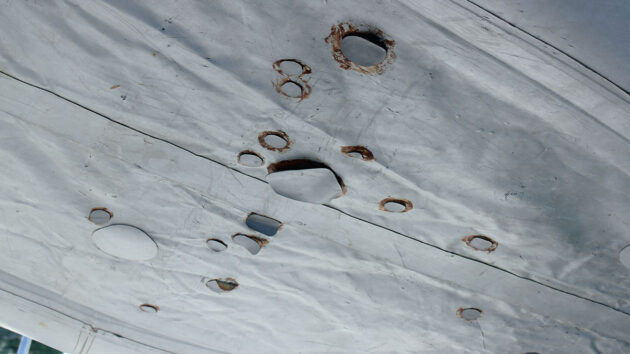
Boating mistakes: Patching the underside of a dinghy may look good but it won’t last. Credit: Rupert Holmes
However kindly you try to treat it, the bottom of every well-used inflatable dinghy will eventually start to develop damage. Ammos has an excellent Avon Rover 2.8 tender, but it’s easily the age of the boat.
Patching the Hypalon tubes has never been problematic, but the first time I attempted the floor I put the patches on the underside. It looked good from inside the boat, but the glue didn’t stand up to repeated abrasion and the patches started peeling after the first year. When re-done from inside the tender – ie on the upper surface of the floor – the repairs lasted much longer.
12. Drowning a tillerpilot
All-in-one tillerpilots are notoriously difficult to waterproof fully because movement of the piston connected to the tiller changes the air pressure within the unit. Despite knowing this I failed to protect the unit during four days of spirited upwind sailing in stiff westerly breezes and a steep chop, on passage from the Corinth Canal to Kefalonia.
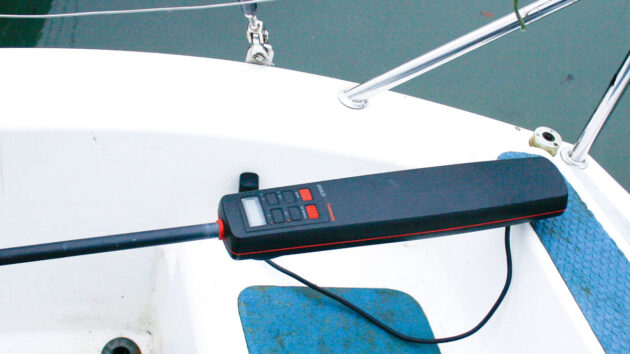
Boating mistakes: All-in-one tiller pilots are particularly vulnerable to water ingress. Credit: Rupert Holmes
Every wave showered the boat with a cascade of water, so with hindsight the result was not surprising.
Eventually I invested in a Raymarine drive, with a separate controller installed near the companionway where it can be better protected from the elements. As the more exposed drive unit only contains the motor and fairly robust wiring, without any fragile electronics, it’s easier to repair if it does get wet. I’ve also been more careful to protect both elements with plastic covers and the system has performed flawlessly for years.
13. Winch drainage holes blocked
Blocking the drainage holes in winch bases with sealant is a common mistake and one that should be easy to avoid. Yet I’ve seen raceboat winches, each costing many thousands of pounds, written off by this mistake.
Too much sealant, or sealant in the wrong place, can block the drainage paths that allow water to escape from the winch base. Once that water is trapped corrosion accelerates dramatically, so it’s vital to understand how the fitting is designed to drain before installing it.
14. Failing to trust instinct
Soon after my partner, Kass Schmitt, bought Zest we noticed a part of the engine that looked as though it could be a disaster in the making.
The pipe intended to make oil changes easier looked vulnerable to cracking – it’s a long pipe with a heavy flared fitting on the end. We therefore didn’t use it for oil changes and simply pumped the old oil out through the dipstick hole, as is common practice on most small marine diesel engines. But we didn’t remove it completely, even though the engine was then 20 years old.
Early in the 2017 OSTAR single-handed transatlantic race it failed while Kass was using the engine to charge batteries. A load of oil spewed into the bilges and she was forced to use a backup towed generator for the next 2,000-plus miles.
Subsequent research showed this to be a common problem with Perkins 103 (Perama) series motors and some Volvo Penta MD2030 series motors that use the same base engine. To give extra resilience on long passages afterwards we also added a methanol fuel cell, so the engine no longer needs to be used for charging.
How to launch a trailer sailer (and the key mistakes to avoid)
George was helping to launch his friend’s boat and asked if Paul and I could give them a hand. My…

How to protect against rope chafe
Aye, there's the rub: Alex and Daria Blackwell warn of the inherent dangers of rope chafe and advocate a simple…
Start of season boaters’ checklist
As excitement builds for the new sailing season, minimise the risk of shakedown cruise glitches and common mistakes with this…
I made international news by running aground off the coast of Brittany
Heading for the start of the annual Waller–Harris two-handed race, an event in which Knight Star had proudly taken the…
Want to read more articles like 14 boating mistakes to avoid, from pilotage and maintenance to gear traps?
A subscription to Practical Boat Owner magazine costs around 40% less than the cover price.
Print and digital editions are available through Magazines Direct – where you can also find the latest deals.
PBO is packed with information to help you get the most from boat ownership – whether sail or power.
-
-
-
- Take your DIY skills to the next level with trusted advice on boat maintenance and repairs
- Impartial, in-depth gear reviews
- Practical cruising tips for making the most of your time afloat
-
-
Follow us on Facebook, Instagram, TikTok and Twitter
PBO web categories