




A timeline has been announced for a proposal to phase out legacy man-overboard (MOB) automatic identification system (AIS) devices, which would mean that from 2030, boaters would need to upgrade to Class M compliant equipment.
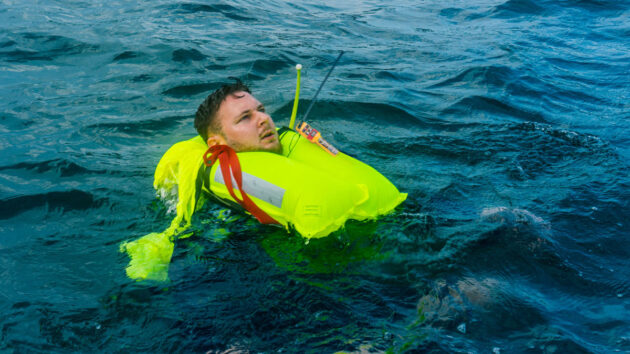
The UK’s communications regulator, the Office of Communications (Ofcom) is consulting on a plan to authorise only MOB AIS devices which are Class M compliant with digital selective calling (DSC) distress alerts, in line with European regulation.
The aim is to address the congestion of AIS frequencies used by Autonomous Maritime Radio Devices (AMRDs) such as fishing gear markers and AIS beacons.
Changes have already taken effect in many countries, including Ireland.
Ofcom’s proposed timeline would allow a phase-out period of up to three months after which it will no longer authorise AIS MOBs that are not Class M DSC compliant for new users.
People who already have this equipment on their licence will be able to continue to use it until 2030, after which date the equipment would no longer be authorised and they would need to upgrade to compliant equipment.
Many of these devices have battery lives of only a few years so would naturally need replacing before the transition period ends.
Boaters in the UK looking to purchase an AIS MOB beacon for a lifejacket should check that it is Class-M compliant.
While legacy kit (such as rescueME MOB1 which contains a DSC transmitter but not a DSC receiver, making it non-Class M compliant) will still function post 2030, it may not be as effective in countries that restrict non-Class M devices.
Check global locations of where legacy kit can be used at: https://docdb.cept.org/implementation/28560.
What is Class M?
Before Class M, many AIS MOB devices transmitted an AIS message without interacting with other communication systems on board vessels.
AIS Channels 1 and 2 are primarily intended for vessel traffic and safety-related communications; however, increasing numbers of AMRDs were beginning to flood the network with signals, raising concerns that critical navigation data could become harder to detect or prioritise.
Earlier AIS-only MOB devices relied on nearby vessels noticing the AIS target appearing on their chartplotter.
In busy or stressful situations, this alert might go unnoticed.
By requiring DSC distress alerts, the Class M standard ensures that nearby VHF radios sound an audible alarm, significantly increasing the chance that the emergency will be recognised immediately.
What’s next?
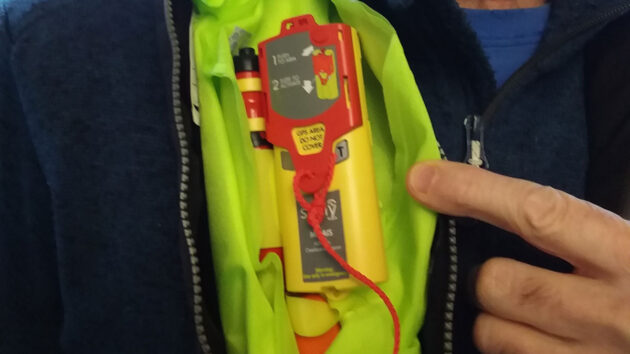
Mark Taylor is keen to warn other readers not to buy non-DSC AIS devices for their lifejackets. Credit: Mark Taylor
Legacy devices are still widely available to buy in the UK despite previous Ofcom announcements.
PBO reader Mark Taylor was annoyed to find out about the planned phase-out shortly after spending £440 on two non-DSC AIS devices last year.
To check if a beacon is Class M compliant, look in the specification sheet/manual for either wording referencing compliance with ‘Class M Regulation’ or with ECC/DEC/(22)02 (ie Class M Regulation).
An Ocean Signal spokesman said: “Boaters should not panic about existing kit in the UK, but new purchases should be Class M to stay future-proof.”
The Ofcom consultation closes at 5pm on 3 June 2026.
Concern about DSC alarm
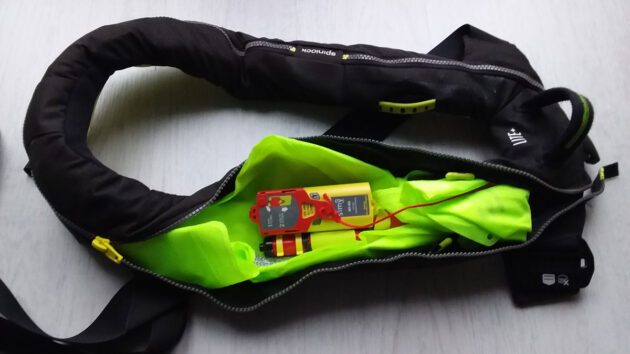
Many legacy MOB devices have battery lives of only a few years so would naturally need replacing before the transition period ends (2030). Credit Mark Taylor
Crewsafe Marine managing director Mike Lisby expects the phasing out of legacy MOB AIS devices to have “very minor impact”, and to just take place naturally over time.
However, he warns that Class M compliance “will mean the DSC receiver allows vessel operators who detect an alarm to ‘acknowledge’ it and unintentionally remotely deactivate further DSC transmissions, and cancel the DSC alarm for all receivers, leaving only the AIS broadcast.”
An Ocean Signal spokesman told PBO: “We can confirm that a MOB2 DSC distress alert is cancelled if the MOB2 is deactivated or if an acknowledgement is received from a Class A DSC radio or Coast Station.”
Only vessels or coast stations equipped with Class A VHF DSC equipment are capable of transmitting this acknowledgment.
These are typically commercial, SOLAS-compliant vessels or GMDSS coast stations.
Vessels equipped with compliant, Class-D DSC equipment do not have this capability.
A Maritime and Coastguard Agency (MCA) spokesperson said: “Rescues at sea can depend on a speedy response, so handling a DSC distress alert properly might make all the difference.
“The correct basic response to receiving a DSC distress alert on your radio is to wait five minutes before acknowledging it verbally.
“If there is no answer or someone confirms they are in distress, contact HM Coastguard on Channel 16 or any other means to provide as much detail as possible.”
The MCA advises that:
- Should a vessel send a DSC distress alert acknowledgement to the Class-M MOB device it would cease DSC transmission (and provide an indication of the receipt of the acknowledgment). However, the AIS transmission would remain until the device has been deactivated or switched off.
- Only coast stations and Class A radios are capable of sending a DSC distress alert acknowledgment.
References:
- Ofcom’s review of UK Maritime Spectrum Licences
- Ocean Signal’s AIS Class M explained in 2026: What’s changed for MOB beacons in Europe (and why it matters)
- ECC/DEC/(22)02 (i.e. Class M) implementation status by country
- GMDSS VHF DSC procedures for small boat users – MCA advice

Beware becoming a man overboard (MOB)… in a marina
Everyone thinks about man overboard (MOB), but what do you do when you have a MIM, man in marina? Mark…

New AIS MOB device rule affecting sailors
Big changes to marine radio device rules are planned to be brought into the UK. The only MOB AIS devices…

Why your boat crew is the most important system on board
Will Spencer explains how to choose and manage a competent and friendly crew for an enjoyable offshore passage