



Based on experience, Gilbert Park ponders what every motorboat owner should consider when sharing the water with dinghy racers
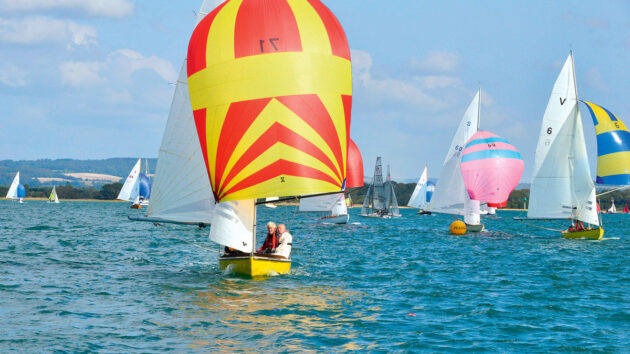
The BBC programme Saving Lives at Sea starts with these words: “We’re an island nation. Drawn to the sea that surrounds us. A playground for some, for others it’s where they make their living.” This article examines how racing dinghies and motorboats relate to one another in that playground and the rules that are designed to keep everyone safe on the water.
I live in Emsworth, a small town at the top of Chichester Harbour. I keep my boat in a little, drying creek that runs up to the side of my house. The creek also runs past the marina, which is also limited by the tide. Coming up to this creek is Emsworth Channel which is designated by Chichester Harbour Conservancy as a narrow channel; there are many moorings here, and the top part also dries.
There are also two sailing clubs in Emsworth and when the tide is right, there is a lot of dinghy racing. Around high-water, the Emsworth Channel can become very congested with racing dinghies.
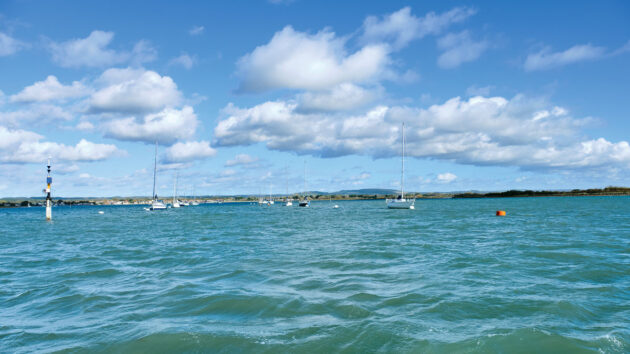
The southern end of the moorings in the Emsworth Channel. Gilbert was aiming for the starboard side of the channel and the red buoy, expecting the racing fleet to turn at the red buoy and head north. However, they hoisted their spinnakers at the red buoy, accelerating and continuing straight across. Note the proximity of the south cardinal marker. Credit: Gilbert Park
One Saturday in early October I was heading north up the Emsworth Channel to my mooring at about high water, and as usual, there was racing going on. Other boats, both motor and sail, were already out sailing, so it was quite busy.
I was approaching the southern end of the mooring trot marked by an empty, red mooring buoy to go up the starboard side of the narrow channel, close to the moored boats. The racing fleet made a change in direction at the Wickor mark (about 200 yards to the north-east) and then headed for the unused red mooring buoy where I’d expected them to head north, into the area where they normally race. Instead, as the racing dinghies turned at the red buoy, they headed towards the NEH buoy (south-west), put up their spinnakers and accelerated. I stopped my boat to let them pass and quickly nipped through a gap in the racing fleet.
I later saw the safety boats halfway up the fleet of 30 or so boats.
Although all was well, it did set me thinking about the relationship between racing dinghies and vessels under power in congested waters.
Racing dinghies vs motorboats: Rules for safety
To keep everyone safe – no matter what they are doing on the water – the International Maritime Organization publishes the International Regulations for the Prevention of Collisions at Sea (IRPCS) also known as COLREGS. These are rules written and adjusted over many decades. They apply to all tidal areas in the world, to all vessels from supertankers to dinghies. They are the Highway Code of the sea and all vessels are expected to obey them.
The COLREGS mentions ‘stand-on vessels’ and does not mention right of way. Generally, the stand-on vessel has a duty to maintain its course and speed when in a close-quarters situation. If the risk of collision is present, then the stand-on vessel must take steps to avoid a collision. At all times, all vessels must maintain a good 360° lookout.
World Sailing publishes the Racing Rules of Sailing, which apply to both large and small sailing boats when racing. These are updated every four years and may have minor changes to suit local needs. These rules repeatedly state that boats have the ‘right of way’. This phrase confers a different emotion to ‘stand-on’ and may be harmful. I am told ‘right of way’ is deliberately avoided in the COLREGS for this reason. At all times the Racing Rules of Sailing are subservient to the COLREGS, but this is only mentioned briefly on page 16 of the Racing Rules.
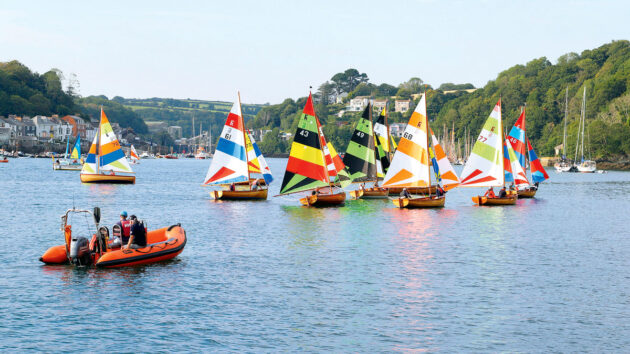
Safety boat positioning is vital. Credit: Alan Spencer Photography/Alamy
In Chichester Harbour there is also the Chichester Harbour Federation which represents 13 active sailing clubs. In addition to the World Sailing Racing Rules, this organisation also publishes its own Race Code of Conduct and in paragraph 13 it states that the International Regulations for the Prevention of Collisions at Sea (IRPCAS) apply when a racing boat meets a vessel that is not racing.
I’d imagine the Racing Rules of Sailing are carefully studied by all dinghy racers and discussed in detail at events, but I wonder if there are discussions about the COLREGS? I know the mantra about power giving way to sail is often repeated, but there are some occasions when this may not always be true.
In my above example, I was the give-way vessel, but the stand-on vessel is required to maintain its course and speed. Flying the spinnaker led to the dinghies accelerating, making it difficult to judge when it was safe to cross. Furthermore, the boats would have failed to maintain a good lookout, partly because of the sail, but also because of the need to manage lines etc. Had I not stopped, a collision might have resulted.
Other boats anxious to enter the channel might not have stopped (indeed, it has been suggested to me that I should ignore the dinghies and just plough straight on), or misjudged the acceleration and with the dinghy crew unable to see them a collision could occur. One thing is certain: a dinghy weighing a few hundred kilogrammes will come off much worse than a vessel under power weighing several tons.
Change is needed
So what might make sailing safer? The first thing I’d like to see is World Sailing avoiding the expression ‘right of way’ in their rules and instead using the COLREGS expression ‘stand-on. This would make it clearer that racing boats do, on occasions, have to give way to avoid a collision.
The Racing Rules do state: ‘When a boat sailing under these rules meets a vessel that is not, she shall comply with the International Regulations for Preventing Collisions at Sea or government right-of-way rules.’
In a race briefing the COLREGS should be mentioned to remind participants that these take precedence over Race Rules and the Chichester Harbour Federation Code. In addition, all rules and codes must make it clear in the first paragraph that the rules and codes are all subservient to the COLREGS and /or local byelaws.
Sailboat racers also need to remember that yelling “Racing!” at the top of their voice does not give them any special rights or privileges.
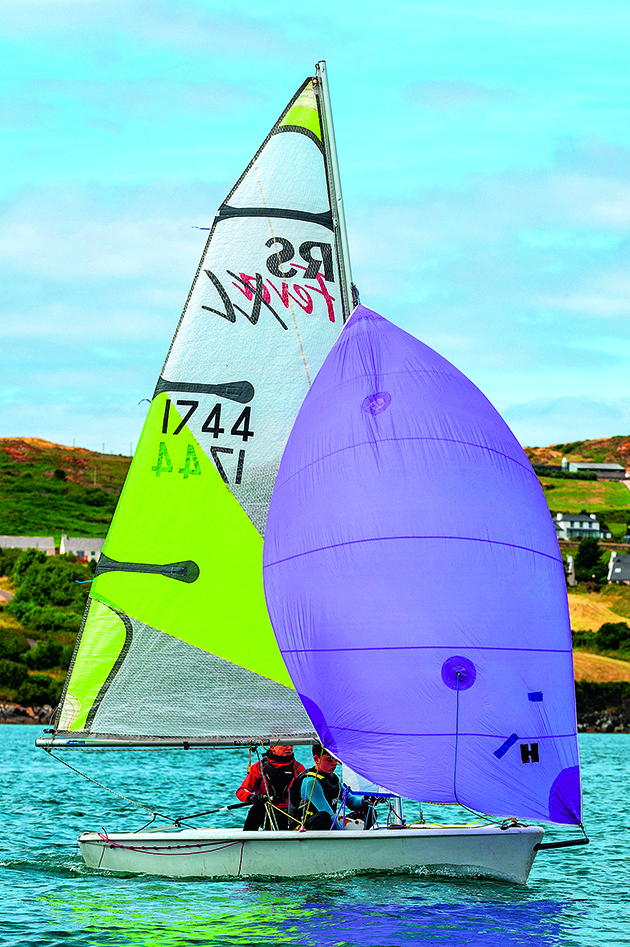
With the spinnaker flying, keeping a good lookout while racing can be difficult. Credit: AG News/Alamy Stock Photo
The RYA does have a safety boat qualification (indeed, I have it), but on reflection, the title is a misnomer; it is a recovery boat. To be a proper safety boat, the crew need to be aware of other risks to the dinghies, such as a collision with a bigger boat – but many of the crew of a safety boat are themselves dinghy racers.
To take the RYA Safety Boat Course, Powerboat Level 2 is needed, but there is only a small amount in this course about the COLREGS. Indeed, it is only recommended for Advanced Powerboat.
Safety boat positioning in the event I described could have been better. To warn other water users about the racing fleet’s movements, the safety boat could have been positioned somewhere near the channel entrance to warn boats entering or leaving the channel. The safety boat crew could also have used a VHF radio, on low power, to issue a warning about racing and the course to either a single boat approaching the channel or if there are several vessels, an All Ships warning. It would also help if the safety boat crew monitored Ch16 so other boat skippers could contact them for information.
Chichester Harbour does issue a weekend bulletin about racing in the harbour. As I write this, the latest one states that there will be racing in the Emsworth Channel: ‘Emsworth Sailing Club 11.00 – 1600 Sir Peter Blake Pursuit Various Classes, Emsworth Slipper Sailing Club 11.00 – 1600 Various Classes’.
This may alert visitors to the need to watch out, but it doesn’t actually say where they will be racing. I understand this may be because courses are only decided on the day, but again, a VHF radio warning from the safety boat crew might warn fellow boaters when they are crossing a channel or its entrance.
Sensible safety
I’ve come across some good examples of allowing everyone to enjoy sailing safely and enjoyably. On one occasion when entering Lymington Harbour the fairway was full of small racing dinghies, such that I and others needed to stop our boats. Two safety boats accompanied the fleet, one upstream and one downstream and cleared a path.
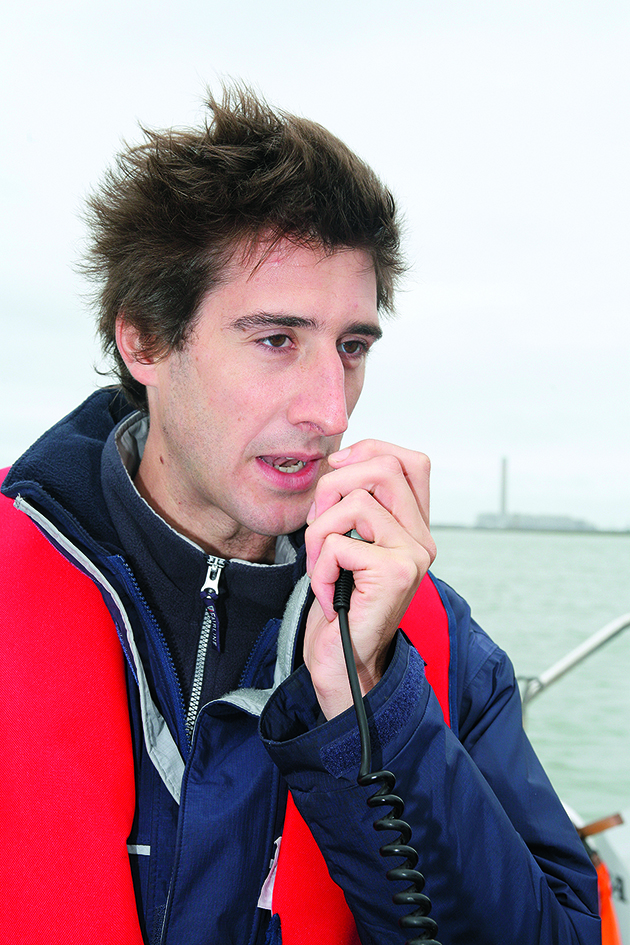
Gilbert Park would like to see safety boat crews using VHF radio to warn of racing fleet movements and to monitor Ch16
The final and best solution is to be found in Salcombe Harbour which creates a temporary safe transit lane for non-racing vessels. The harbour guide states: ‘During a dinghy race start sequence, a boat lane/racing dinghy-free fairway will be established between Millbay/Woodville Rocks and the East Portlemouth Ferry crossing. This is denoted by a line of yellow buoys on the town side of the channel with a yellow cross at either end and is active when the SYC (Salcombe Yacht Club) Watch House displays yellow flashing lights. All non-racing traffic is requested to proceed within this lane maintaining a good look out.’
What did I learn? That there are several complex sets of rules for racing sailing vessels and the marks for racing boats are not red. Finally, don’t expect dinghy racers or safety boat crews to know the COLREGS.
Ultimately, it doesn’t matter who is right or wrong, just that there are no deaths, injuries or damage to boats.
Encountering racing dinghies: top tips

Check for information about dinghy racing on harbour websites. Credit: Katy Stickland
What vessels under power should be prepared to expect when encountering dinghy racing:
- Dinghy racers may not know COLREGS or abide by them. They are focused on racing.
- The safety boat is mostly concerned with rescuing dinghy sailors. Crew will probably not be monitoring Ch16.
- Check the website of the harbour to see if it gives any information about dinghy racing.
- Remember that the course for racing has probably only been decided on the day, so information about it may not be available anywhere.
- Do not enter buoyed areas that protect dinghy racers.
- Proceed with care and at low speed. Be prepared to stop. In the end, it doesn’t matter who is in the right or wrong, just that there are no deaths, injuries or damage.
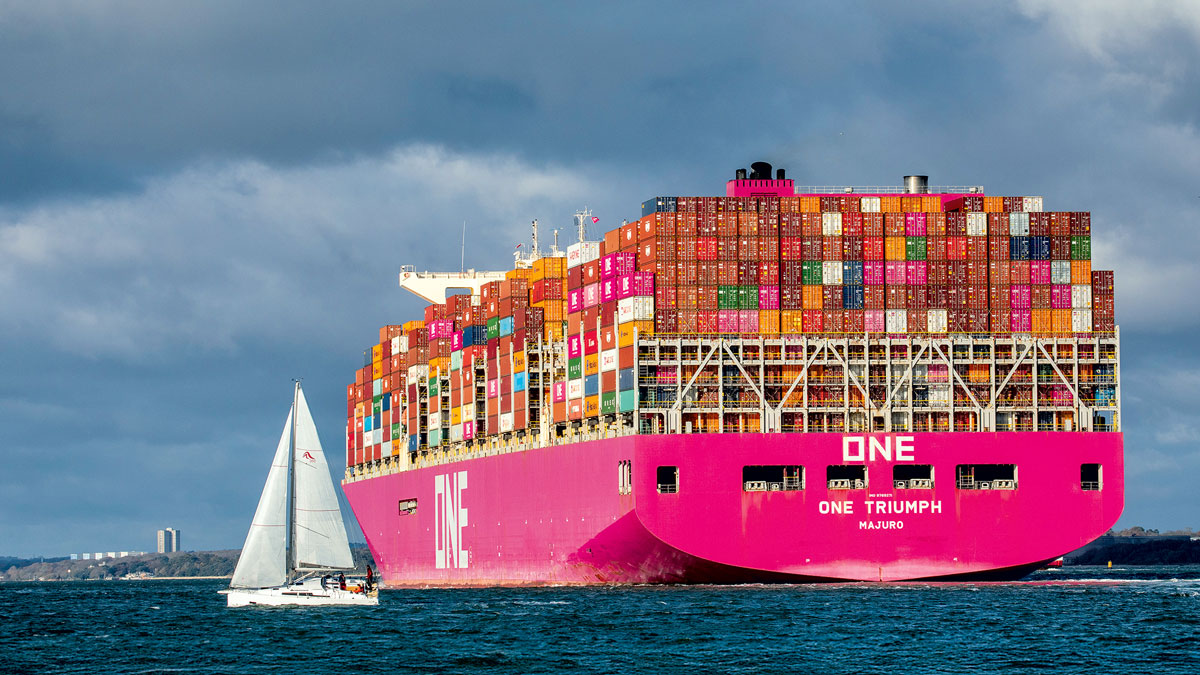
Practical ColRegs for cruisers
Nick and Wendy Tyler’s advice on avoiding collisions, based on their own experience
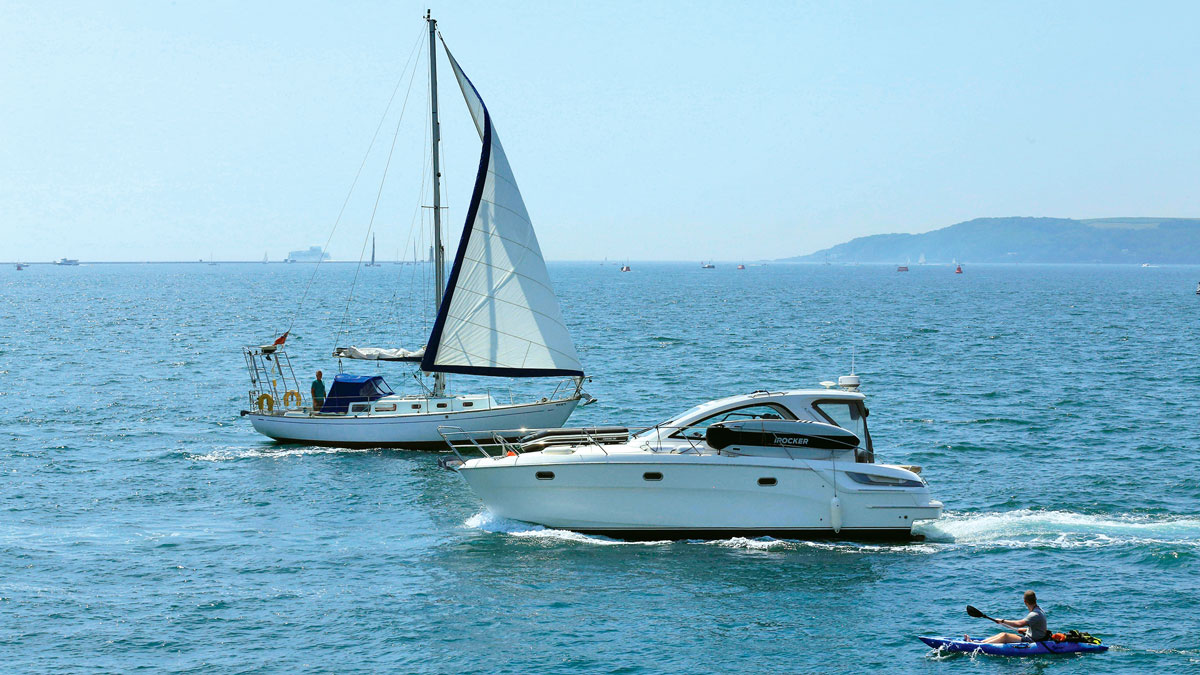
Avoiding boat collisions: understanding COLREGS
If you’re at the helm, can you spot a risk of collision with another boat? Do you know when to…

Colregs made simple: Get your head around the most important boating rules
PBO's expert video guides to the ColRegs

Colregs vs racing rules: How understanding racing rules can help cruisers keep clear
Racing fleets can be intimidating, especially during busy regattas like Cowes Week or the Round the Island Race, where you’ll…
Want to read more articles like Racing dinghies vs motorboats: Who really has right of way?
A subscription to Practical Boat Owner magazine costs around 40% less than the cover price.
Print and digital editions are available through Magazines Direct – where you can also find the latest deals.
PBO is packed with information to help you get the most from boat ownership – whether sail or power.
-
-
-
- Take your DIY skills to the next level with trusted advice on boat maintenance and repairs
- Impartial, in-depth gear reviews
- Practical cruising tips for making the most of your time afloat
-
-
Follow us on Facebook, Instagram, TikTok and X