



David Larner improves the appearance of his yacht’s cockpit
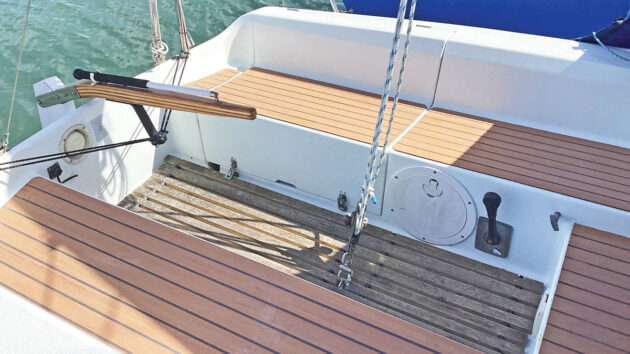
My previous, and more expensive boats, had teak-laid cockpit seats, but not so for my recently acquired Hunter Ranger 245, built in 2000 and called Pipedream. Its plain white GRP cockpit was too glaring for my liking and difficult to keep clean. So I set about finding a teak product to cover the seats and the cabin step.
I didn’t fancy EVA foam material – it’s too thick and cushiony for my application, and more at home on power boats. Real teak of course would be very expensive.
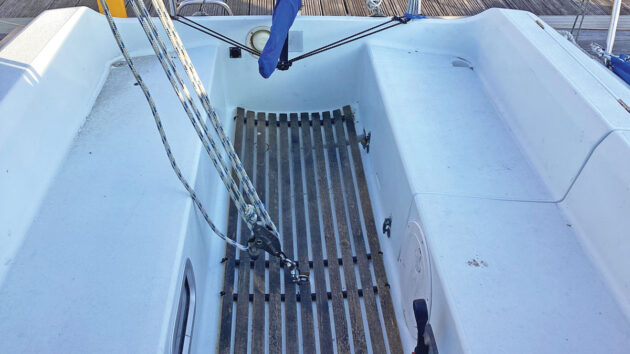
Pipedream’s standard cockpit was functional but not very inspiring. Credit: David Larner
Many years ago I’d fitted the popular diamond-style Treadmaster to deck areas of my 1976 Nantucket Clipper yawl. It was in good shape when I sold her 20 years later, and still looked great in photos taken when she changed hands a few years ago.
I’d got wind of a new material in prototype production at Treadmaster. So I explained my needs for a lined (not diamond pattern) material and Treadmaster kindly sent me a 2.4m x 1m sample roll of their new AquaTeak product.
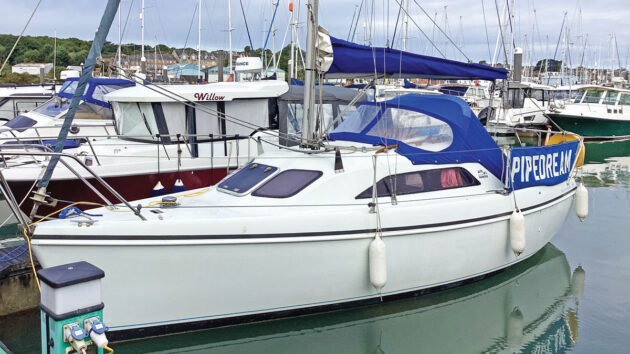
David Larner’s Hunter Ranger 245 Pipedream. Credit: David Larner
It proved a lovely material to work with – flexible enough to be delivered in a roll, thick and robust enough to lay flat when being fitted, but easy to cut with scissors or a craft knife. The photos show the finished, attractive, authentic result – much better than bare GRP.
Fitting AquaTeak
First I sanded the GRP and thoroughly cleaned it before application to improve adhesion. The underside of AquaTeak is covered with an adhesive and a peel-off protective film.
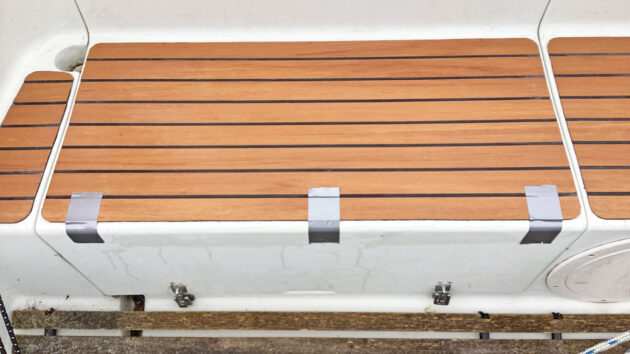
Carefully placed in position, the front edge is taped securely to stop it moving. Credit: David Larner
Once the film is removed, the panel has to be positioned perfectly on the boat first time: there’s no opportunity to slide it around into its final position or to lift it and try again.
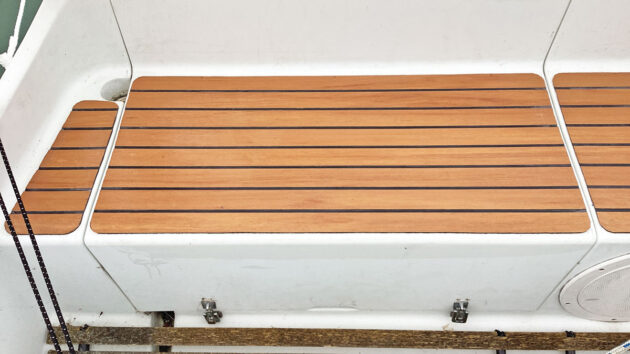
The panel finally glued into position in the cockpit. Credit: David Larner
Here’s how it’s done:
- Once the panel is cut to shape, leave the backing film in place and fix the panel exactly in position at the front edge with gaffer tape.
- Lift the rear edge of the panel and remove a slice of backing film along its entire length.
- Push the back edge down to stick it down into position along its length.
- Now remove the gaffer tape.
- Lift the front edge of the AquaTeak and remove all the rest of the film.
- Working from the back edge, gradually and evenly lower the panel down to glue it into position.
I’m really pleased with the finished result. The new Treadmaster AquaTeak product (not to be confused with their indoor product called TKC) is priced at about £119 per square metre. It has been designed to plug a gap in the market between Eva foam and ‘real’ teak products.

How to lay EVA foam decking on your boat
With the eye-watering cost of teak, Andy Pag decides to lay bargain EVA foam decking in the cockpit of his…

10 low-cost solutions for non-slip decks on boats
Anti-slip decks are vital for safe sailing, with a wide range of attractive, long-lived, and sustainable coverings available. Jake Kavanagh…
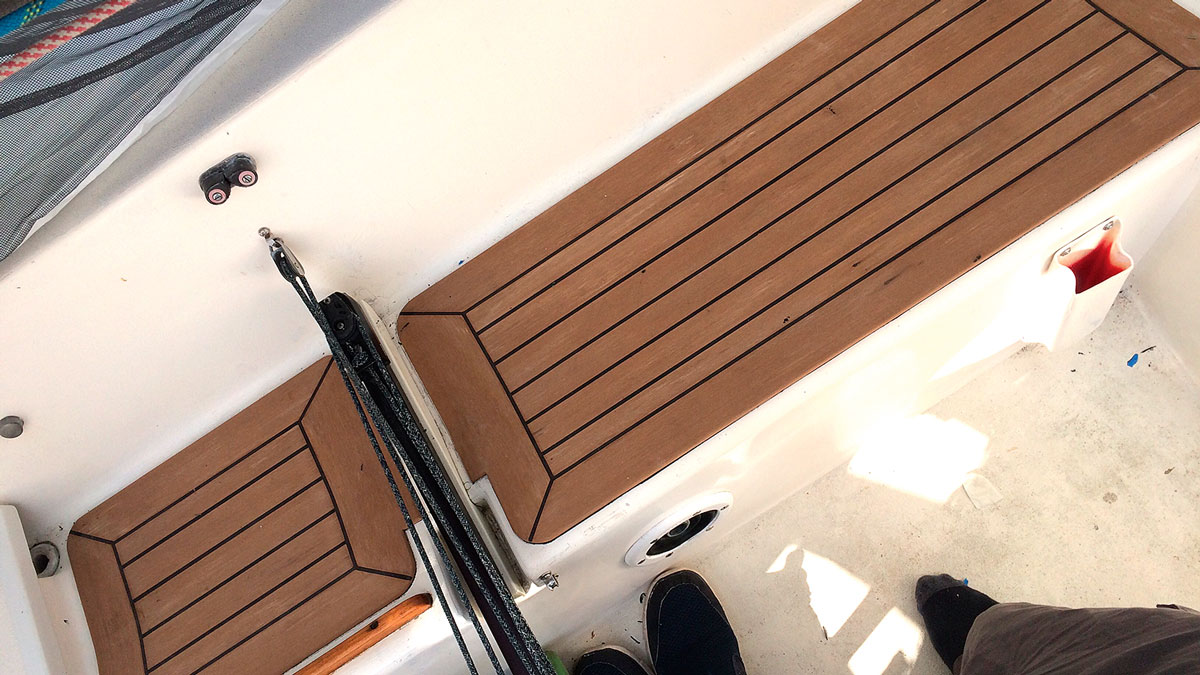
Fitting synthetic teak to a cockpit
Ben Meakins shows how he installed synthetic teak Dek-King seating

The truth about teak decks
Shipwright Robin Benjamin says modern, thin teak decks need lots of regular care, and so it’s vital to follow his…
Want to read more articles like How one sailor used AquaTeak to create a luxury look for a once plain cockpit?

A subscription to Practical Boat Owner magazine costs around 40% less than the cover price.
Print and digital editions are available through Magazines Direct – where you can also find the latest deals.
PBO is packed with information to help you get the most from boat ownership – whether sail or power.
-
-
-
- Take your DIY skills to the next level with trusted advice on boat maintenance and repairs
- Impartial, in-depth gear reviews
- Practical cruising tips for making the most of your time afloat
-
-
Follow us on Facebook, Instagram, TikTok and X