



The Cruising Association has launched its new lobster pot campaign, Marked Gear = Safe Gear, which calls for existing guidance around the marking of static fishing gear to be mandatory – and you can join!
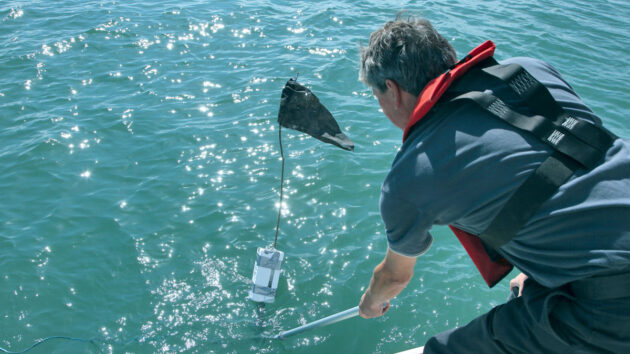
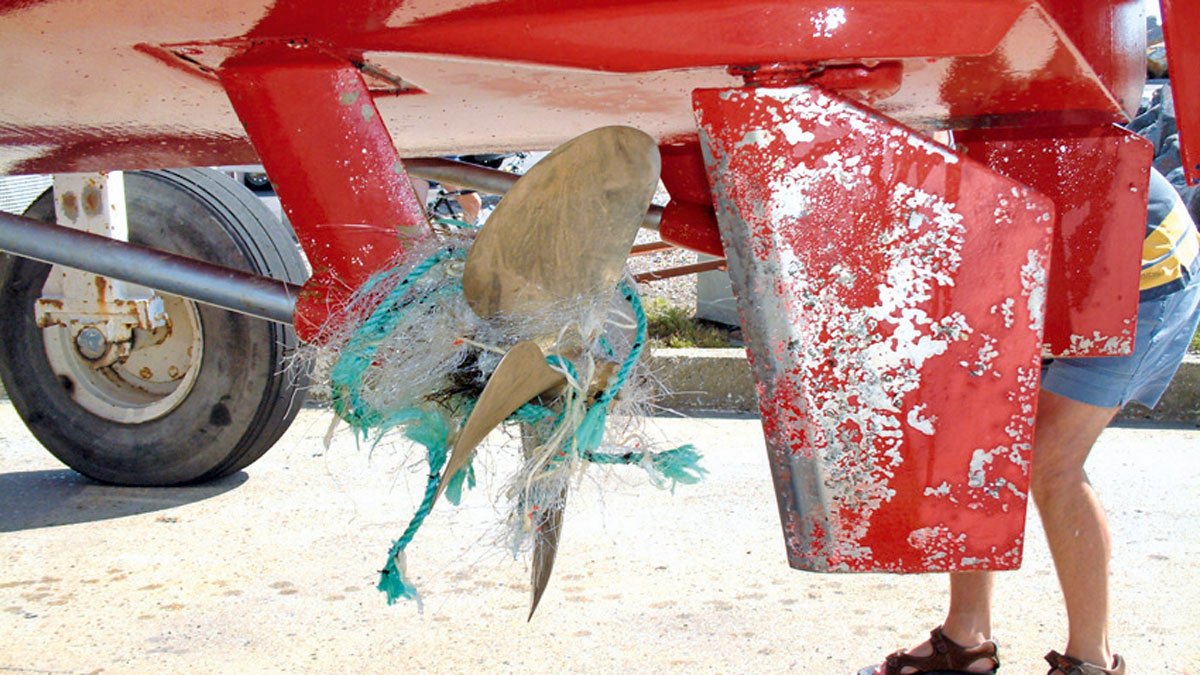
Fouling your boat propeller is never pleasant. At best, it’s an inconvenience or an unforeseen expense, especially if your boat then needs lifting out and repairs made. At worst, it can lead to a potentially life-threatening loss of steering or power at sea. Even if you’re clear of a lee shore and do not need to make a Pan-Pan or Mayday call, your crew may still be at risk.
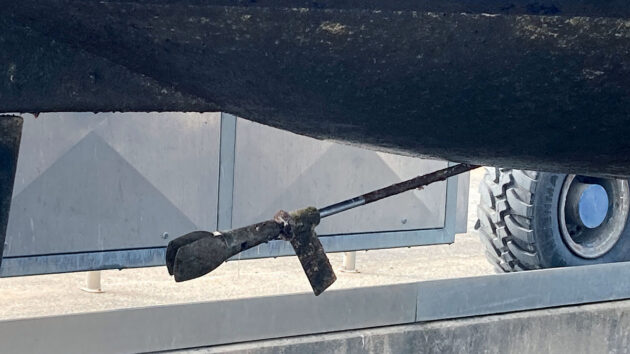
If you don’t have a rope cutter and your efforts to remove the entanglement via a boat hook or a bread knife taped to a boat hook are unsuccessful, one of the crew may need to enter the water to clear the line, potentially putting themselves and others in danger.
We all understand the frustrations and dangers of being entangled in poorly marked static fishing gear – usually lobster pots.
Now, The Cruising Association (CA) is relaunching its lobster pot campaign for all static fishing gear to be safely marked, and the Royal Institute of Navigation, Practical Boat Owner, Yachting Monthly and the Westerly Owners’ Association are part of the alliance calling for change.
Credit: The Cruising Association
Marked Gear = Safe Gear aims to:
- Raise awareness of the risks posed by poorly marked static fishing gear
- Collect and publish incident data on poorly marked static fishing gear
- Highlight high-risk locations of poorly marked static fishing gear
- Work constructively with fishing and boating communities
- Advocate for enforceable Government regulation of poorly marked static fishing gear
Back in 2018, the CA successfully launched a petition calling on the Minister of State in the Department for Environment, Food & Rural Affairs to improve how static fishing gear is marked for the safety of all small craft at sea. Over 10,700 people signed it, and as a result, the Maritime and Coastguard Agency convened a working group to look at the issue.
Their report, published in 2024, acknowledged that while poorly marked static fishing gear was an ‘appreciable hazard’ to small vessels within UK territorial waters and inshore areas, it did not recommend a move away from existing voluntary guidance for marking static fishing gear. Scotland took a significant step in June 2020 by making it illegal to mark creels with anything other than a dedicated buoy.
The Marked Gear = Safe Gear campaign aims to lobby for change, so it becomes mandatory for all static fishing gear to be marked and in a way that is easy to recognise to avoid entanglement in the first place. A key part of making the case is to highlight the scale of the problem. This is where you come in. We need you to report entanglements and badly marked pots to build the evidence needed to take to the Government.
Since 2017, the RNLI has reported 1,400 entanglement-related call-outs due to floating debris and static fishing gear. But this is believed to be only a fraction of the actual cases, as many sailors will attempt to resolve the entanglement themselves rather than report it.
President of the CA, Robin Baron, said poorly marked static fishing gear is not a minor inconvenience, but a serious and growing safety risk. “While many fishermen follow good practice, inconsistent marking continues to create avoidable hazards at sea. Through this campaign, the Cruising Association is taking a clear, evidence-led approach: raising awareness, documenting incidents, working with partners across the marine community, and pressing for meaningful regulatory change,” he said.
“Safety at sea depends on shared responsibility, but voluntary measures have not led to a significant change in practice. It is now time for clear, enforceable standards so that all water users can navigate with confidence. Marked gear is safe gear and that is the standard we must achieve.”
What can you do to support the CA’s lobster pot campaign
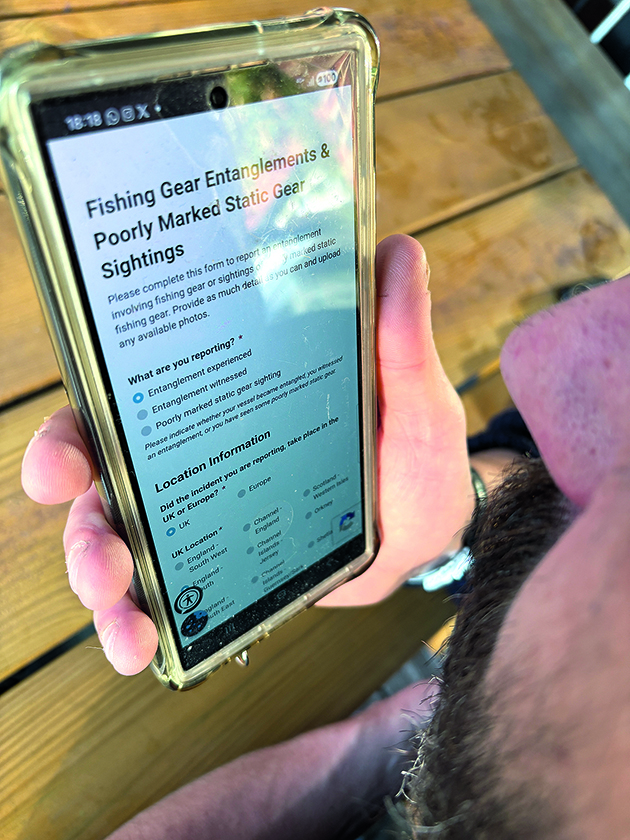
It’s easy to report entanglement incidents or sightings online via the RYA form. Credit: Katy Stickland
To effect change, the Marked Gear = Safe Gear campaign needs to document the scale of the problem with static fishing gear entanglement and its impact on safe navigation.
A new online reporting form has been launched to record all sightings of unmarked, poorly-marked or lost static fishing gear, including lobster pots and creels, and any cases of entanglement, whether you were directly involved, witnessed an incident or are reporting an incident that occurred over the last year.
These are being recorded to clearly identify high-risk areas. The data will also be used to build evidence to provide a strong enough case for change.
The RYA Fishing Gear Reporting form asks for location, date, time, weather conditions and type of fishing gear. It also allows for photo uploads. So, if you see it, report it.
Support for the CA’s lobster pot campaign
Roger Clark is backing the Marked Gear = Safe Gear lobster pot campaign after his boat was badly damaged by fishing gear entanglement while he was sailing off Salcombe aboard his Westerly Fulmar, Concerto.
The entanglement cost Roger Clark the P-bracket on his Westerly Fulmar. Credit: Roger Clark
“It was late, around 11.30pm, pitch black with no moon, and I was approaching Salcombe under power in a roughish sort of sea. The only light I had was from my navigation lights. I suddenly saw a large dark blue buoy just on my port side, so I drove to starboard on the autopilot by 20°, not realising that there was a massive long line, about 20ft long, with a small fishing float about 4in in diameter at the end of it.
“As the boat went by, the propeller caught it, and I heard a clunk. I looked astern but didn’t see the buoy and assumed the rope cutter had done its job. I tested the engine, and it kept running with no strange noise. I picked up a mooring in Salcombe that night, and the next morning, I started the engine, and there was an occasional knocking sound, which I assumed was the float still stuck on the propeller. If I stayed under 2,000rpm there was no noise.
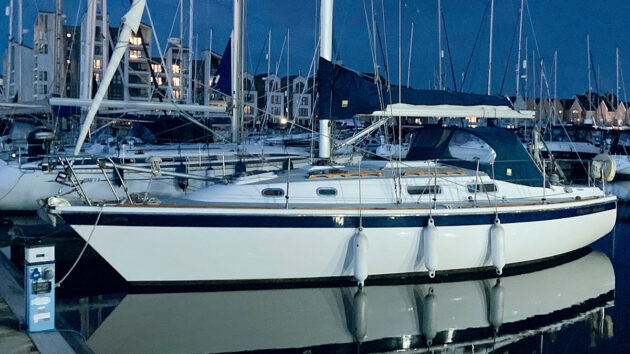
Roger Clark’s Westerly Fulmar. Credit: Roger Clark
“I continued with my delivery trip. Once I arrived at Pwllheli, Wales, I decided to get the boat lifted out to make sure the float was gone. It was then that I discovered the P-bracket had been sheared. The prop shaft had also been bent. The rough estimate for it to be completely repaired, including a new prop shaft, lift out, storage and crane hire, will be around £6,000, luckily covered by my insurance.
“We need a change in the regulations. What we currently see is a lack of proper buoys; instead, fishermen are using either a string net with some cheap footballs to mark the ends of the lines, or dark blue containers or milk cartons. It’s such a risk to so many people and affects all boat owners.”
■ Have you experienced entanglement? Please do get in touch via pbo@futurenet.com and share your story with the campaign.
Report lobster pot and fishing gear entanglement, urges CA and RYA
Sailors and boaters are being asked to report lobster pot and fishing gear entanglement and sightings of poorly marked static…

How I survived a fouled propeller in a crowded marina
The thought of a fouled propeller was the furthest thing from my mind. The sun was shining and my plan…

Fouled propeller fix: top tips for solving the problem at sea
What should you do when you catch a line or fishing net and your prop becomes fouled? Ali Wood looks…
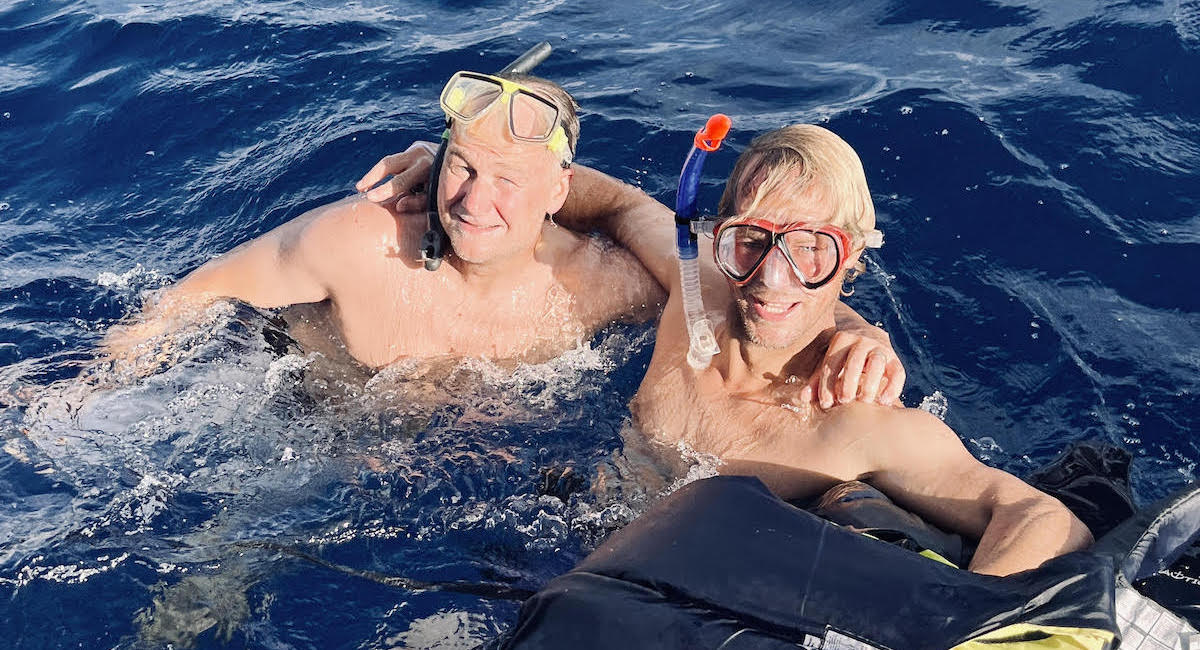
Transatlantic duo dive overboard to free fouled props
Two yachts got tangled in fishing gear last week on the first leg of the ARC+ rally, causing a skipper…
What to read the latest marine news stories?
A subscription to Practical Boat Owner magazine costs around 40% less than the cover price.
Print and digital editions are available through Magazines Direct – where you can also find the latest deals.
PBO is packed with information to help you get the most from boat ownership – whether sail or power.
-
-
-
- Take your DIY skills to the next level with trusted advice on boat maintenance and repairs
- Impartial, in-depth gear reviews
- Practical cruising tips for making the most of your time afloat
-
-
Follow us on Facebook, Instagram, TikTok and X