


Paul Diamond explains how he upgraded his primary fuel filter to make it easier to get at and change
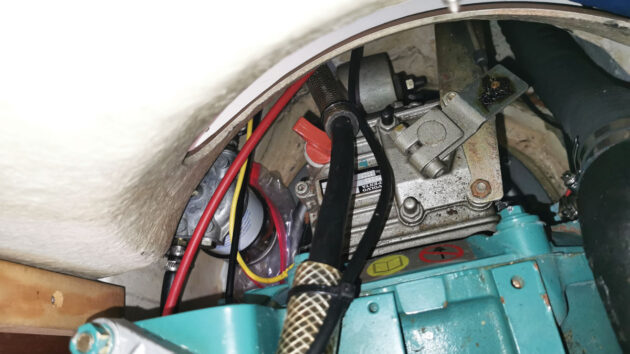
There’s a good chance that if you have a boat with a diesel engine, its fuel system is protected by two fuel filters. There is usually a primary filter to remove larger particulates between the fuel tank and the lift pump, with a water separating function with a sight bowl so you can see any accumulation when you do your regular engine checks.
Then there is a secondary filter, often attached to the engine with a finer filter that protects the injectors after the lift pump.
In a lot of installations, the primary fuel filter/water separator is the Delphi CAV type. These filter assemblies have been around for decades, and are fitted to boat engines (and many other non-marine installations such as tractors, generators, and even oil-fired central heating systems); they work well in ensuring clean fuel is supplied to the lift pump.
Many people are familiar with CAV filters and have changed them numerous times. However, their design is not conducive to quick, easy filter changes.
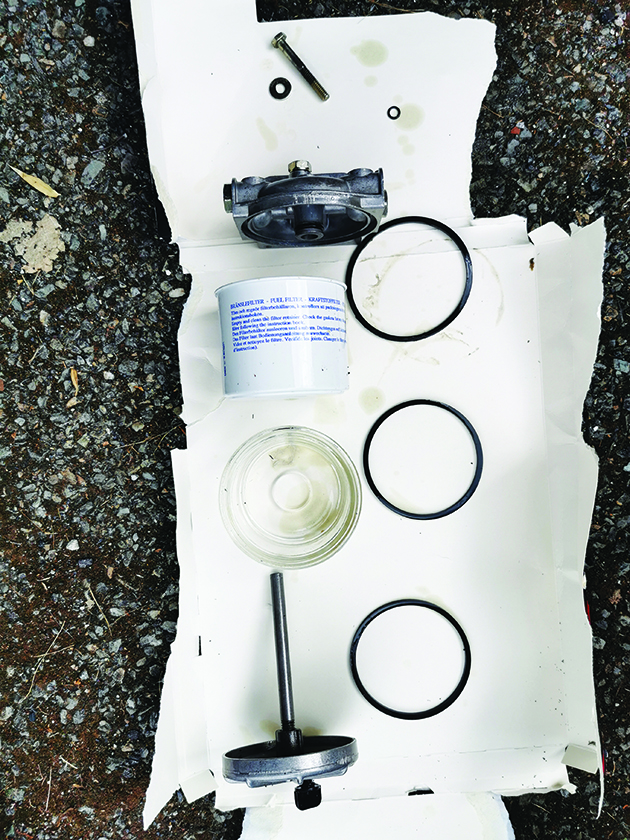
The CAV primary fuel filter assembly is not easy to change: each part needs to be aligned perfectly to work. Credit: Paul Diamond
The top of the assembly is usually attached to the engine bay bulkhead, and beneath are a stack of parts that have to be assembled precisely to ensure good service. There is a top plate beneath which is a sealing O-ring, then the replaceable filter, another O-ring, the water separator bowl, yet another O-ring, then the bottom plate. All this is clamped together with a single bolt that is dropped through holes in all the stacked parts, before being threaded into the bottom plate spigot and tightened with a spanner at the top.
If any of these parts is not aligned, the filter will not seal. All this before purging the fuel lines of air. If the seal on those parts is not good, the engine will not run as air will enter the fuel lines, stopping the engine. Often, access is poor, further compounding the difficulties. I’ve found managing this task, at best, awkward in the confines of a boat’s engine bay.
As we all know, engine access can be limited in many yachts. I have never enjoyed the Jenga-like game of balancing that CAV stack as I try to tighten the through bolt after doing a filter change. The thought of having to do this at sea if lumpy weather has stirred up dross from the bottom of the tank, or if the fuel has become contaminated, fills me with dread.
Imagine approaching your destination harbour after a challenging passage, perhaps at night when everyone is tired, only to find your engine won’t start because this filter is blocked (rough weather can stir up any accumulated debris from the bottom of your boat’s fuel tank and allow it to be sucked through to block filters). The less time spent below in these situations, the better. And there are easier solutions.
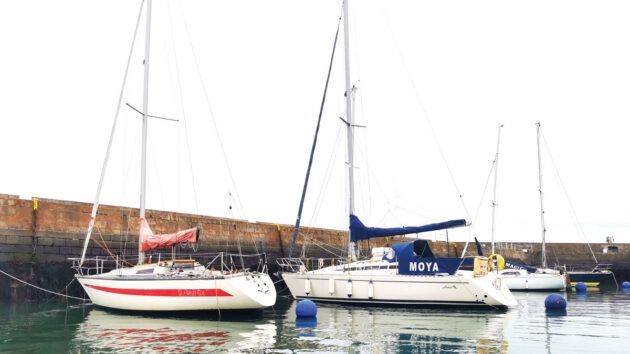
Paul Diamond has changed the primary fuel filters on both Seawolf One (left) and Moya (right) to make them easier to access and change. Credit: Paul Diamond
On my last boat, the 26ft Seawolf, Seawolf One, I had exactly this situation happen. My wife, Kate, took the helm and proceeded to do a never-ending series of tacks with just the mainsail up as we circled incessantly while I fixed the fuel blockage, crawling around the engine bay in seasick-inducing conditions trying to change the primary fuel filter, while ensuring all those parts fitted precisely, before purging the fuel lines.
Needless to say it took a few attempts; each time the engine stopped, it did nothing to calm my crew’s anxieties, and the smell of diesel fumes below did not help my feelings of mal-de-mer! I decided then and there to find a better solution. Fortunately, there are alternative options.
The Racor 500FG drop-in and the R12T screw-on are two common types of primary filter (with water separating function) that are much easier to change. Copies of these can be had at very good prices if you search online.
On Seawolf One, there was space for the larger drop-in type, and this was fitted at the front of the engine bay for good access. To change a filter, you simply have to undo the top T-bar, remove the lid, lift out the old filter, drop in the new one and put the top back on. Purge the fuel lines of air, and you’re good to go.
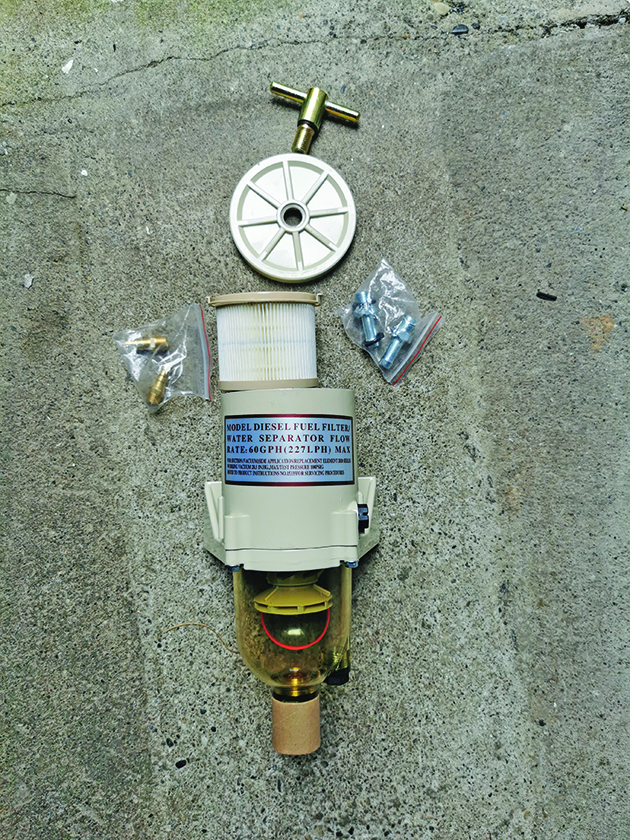
The Racor 500FG drop-in filter has a water separating option. Credit: Paul Diamond
On my current boat, the Hanse 301, Moya, engine bay space is much more restricted, and there was no room for the larger Racor 500FG, which needs a 300mm diameter and almost half a metre in height (to allow space above for a filter to be dropped in, and space below to enable the separator bowl to be drained).
The screw-on type R12T was, more or less, a straight swap for the original CAV. In fact, it was slightly shorter in height, allowing easier access to the water separator bowl drain.
I drained the fuel out (I use a polythene bag and a nappy under the drain plug when changing filters to catch any drips and spills, as it makes cleaning up much easier). Then I removed the fuel pipes and nipples, and unbolted the old CAV from the bulkhead. Both 500FG and R12T assemblies allow the nipples to be configured in various ways to suit the directions of fuel lines in your installation.
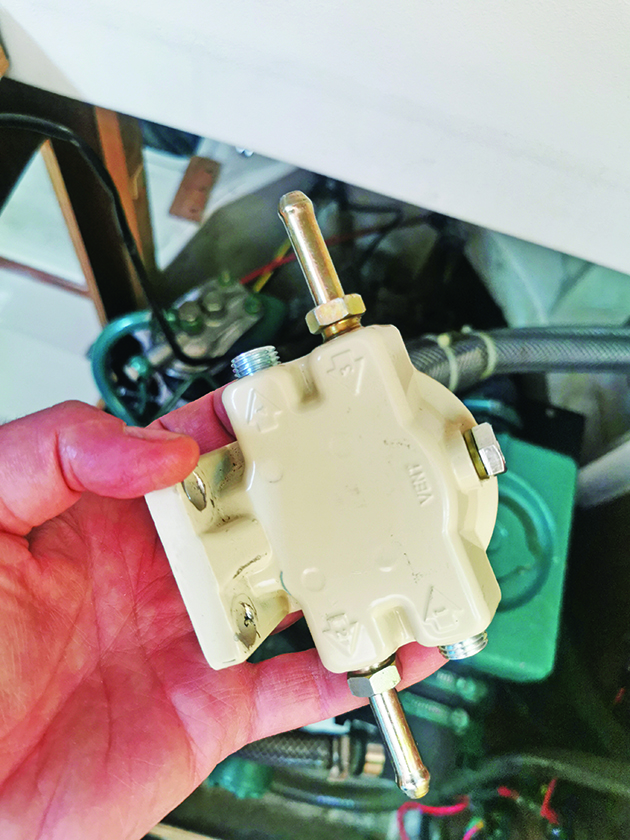
The nipples can be configured to suit the direction of fuel lines. Credit: Paul Diamond
I sealed the threads on mine with PTFE tape, also known as plumber’s tape or thread seal tape. I had to drill one new hole in the bulkhead as the centres on the new screw-on housing were closer together than on the CAV it replaced, but I was able to use one of the existing bolt holes.
Connecting everything back together was straightforward, and I double-clipped all the fuel lines with stainless steel jubilee clips. Both types of filter housing can be ordered with various nipple sizes or banjo bolt fittings, depending on what is required in your existing set-up.
Be mindful of this when ordering your replacement housing. I reused the existing nipples from the old CAV setup.
Troubleshooting
After the plumbing was complete, I attempted to purge the fuel lines of air, but found I could not do so. I put more fuel in the tank, but this didn’t help. Eventually, I used my oil suction pump on the R12T’s vent hole to suck fuel into the new separator bowl and filter. After this, the thumb lever on the lift pump bled the fuel through to the injectors in the usual manner without issue.
A note to self is to get a small suction pump to carry in my spares locker, just in case. I also intend to fit a fuel valve on the side of the R12T assembly to make fuel bleeding/air purging even easier, and fit a priming bulb in a convenient location between the fuel tank and filter.
In future, engine servicing and primary diesel filter changes will be more straightforward, quicker, and easier.
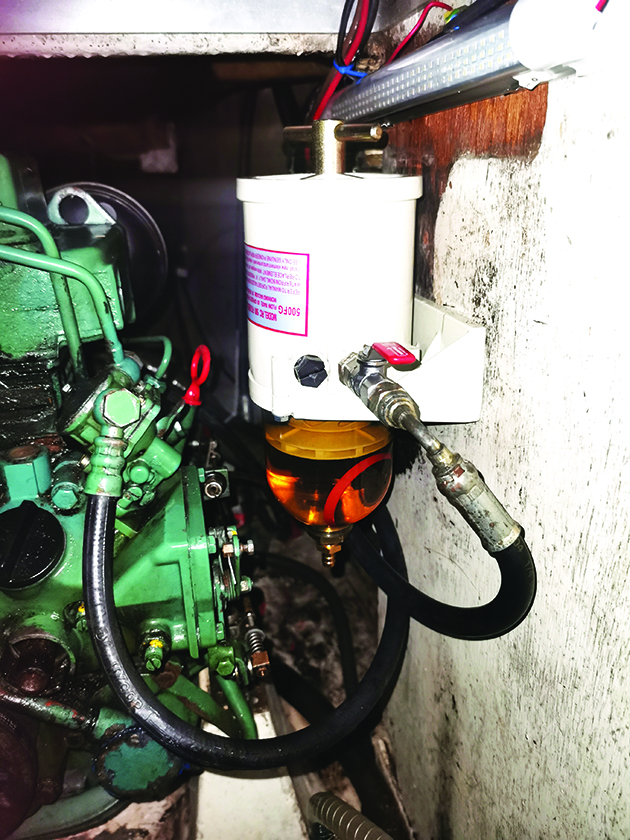
The Racor FG500 drop-in primary fuel filter is now easier to change. Credit: Paul Diamond
If anyone ever has to do this job while Moya is underway, he or she will appreciate the work that went into this upgrade. In summary, a CAV filter can be problematic to change. An 500FG allows quick and easy filter changes (and high fuel flow if needed).
An R12T is smaller and will fit in place for many typical yacht installations. Anything that makes fuel filter changes easier and quicker, particularly in pressured situations where engine use can be a safety issue, has to be welcome.
How can I improve fuel filter efficiency? Ask the experts
Kirk Forrest writes: “I’ve been considering how to improve the fuel filter system on my 45-year-old Fisher 25 motor-sailer which…
How one skipper fixed his fuel problems with a diesel day tank
The wind was dying with the light after a lively passage down the western Peloponnese, but the lumpy sea remained.…
10 ways to save fuel when motoring: Essential tips for engine care, hull trim and propeller pitch
As costs rise, Jake Kavanagh looks at the simple ways boaters can use less fuel and energy when motoring
How to revamp your boat’s fuel system
It’s always a good idea to take a closer look at your boat’s fuel system. After we bought Noontide, our…
What kit have you been impressed with while maintaining your boat?

Follow Practical Boat Owner on Facebook, Instagram, TikTok and X