


Offshore sailor John Carey explains maintenance regimes and troubleshooting hacks to make sure your heads never lets you down
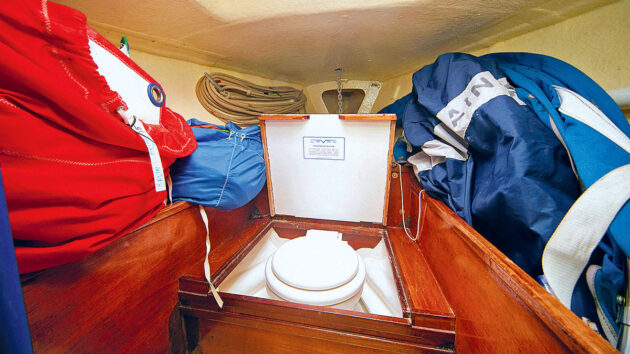
The flushing lavatory is surely one of civilisation’s greatest inventions, but when a boat heads goes wrong, the consequences are too hideous to contemplate.
For me, prevention is better than cure. So here are my suggestions for making sure your boat heads doesn’t become inconvenient.
1. Secure the seat
Have you ever been sitting on the loo when the boat lurches to leeward? As you start to slide, your weight tries to take the seat with you. If you don’t brace yourself, it may pull out of its hinges or mountings.
I tried screwing two small blocks to the underside of the seat. They jam against the inside of the toilet bowl to stop any movement. Fitted well above the flush, they don’t get dirty. Small plastic doorstops are also ideal.
2. Beat those blockages
If the outlet gets blocked you could be in for a long, unpleasant job. Before removing great lengths of tubing, I try to push out any blockages with a length of stiff hose. Remove the plunger or pump mechanism and feed it down through the system. Poke and jiggle it around any obstruction until you hit the blockage.
You may be able to break it up and help push it out. The only problem is when there’s a right-angle connection in the system – which is tailor-made for blockages – and difficult to shift with a hose.
3. Loosen up with lubrication
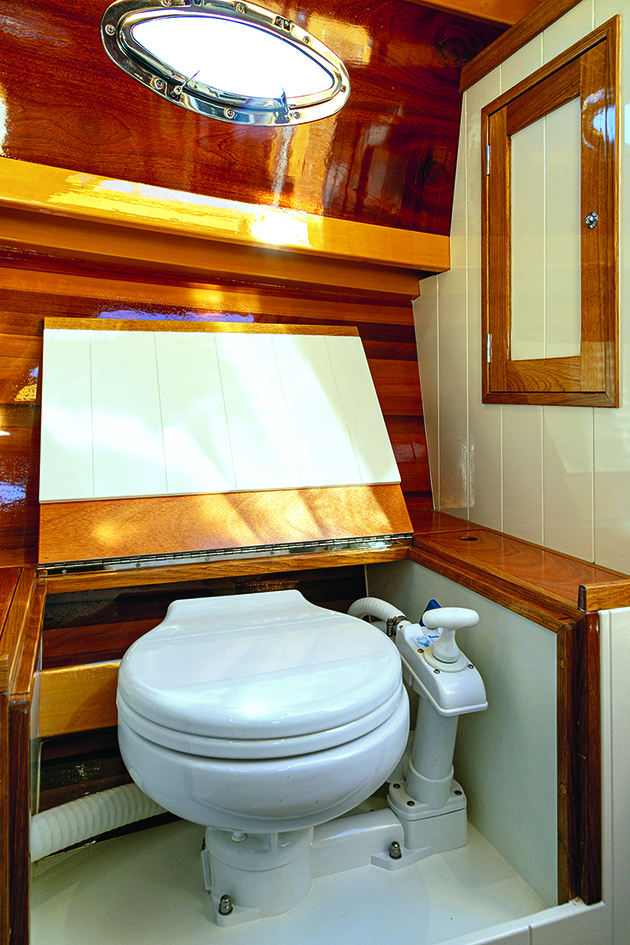
If the plunger gets stiff, lubricate it with PTFE grease. Credit: David Harding
I found that the plunger started to get a bit stiff so I poured a little vegetable oil down the pan and pumped it through. It worked well and pumping was much easier. It is best to use a specifically formulated lubricant, like a PTFE grease, as vegetable or mineral oils can’t be used in holding tanks as it seals in the waste, promoting decomposition.
If the stiffness returns, there may be other problems, of course – the pump seals might need replacing, for example. Alternatively, there could be excessive scale build-up. It’s even possible that debris could have caused abrasions to the pump cylinder.
4. Be pernickety with paper
Different skippers have different rules. Some insist that only the products of what you eat can go through the boat heads; others allow limited amounts of toilet paper. I’ve banned any non-digested solids like sanitary towels, tampons and flushable nappies. Faeces is fine because as it is a semi-solid and tends to be broken up by the pump to form a dischargeable slurry.
Modern boat heads are tested with everything from toilet roll to baked beans, but if the paper doesn’t get broken up, it can catch or clog. So, try limiting its use. This is easier said than done but, in my experience, a manual loo will easily cope with eight sheets of traditional toilet paper, so any more than that should be folded into further sheets and placed in a refuse bag or old flare container which can effectively seal away soiled toilet paper or other sanitary items, especially if you are sailing on a long passage.
5. Beware of bleach
Do not use household chemicals in a boat heads; many are harmful to the environment and use bleach. Avoid using bleach in any form. Although it is an effective disinfectant, it should never be used down the toilet or left in contact with fittings or pipework because it is corrosive and will damage plastic pipes and seals, as well as the environment if you do not have a holding tank.
Try using a soft soap, like Ecover washing-up liquid, diluted in water – it helps keep the seals lubricated as well. Never try to unblock sinks with caustic soda. Not only is it highly corrosive, but it gets hot as it dissolves in water and could cause serious damage within seconds to both the yacht’s plumbing and to anyone coming into contact with it.
6. Seal off smells
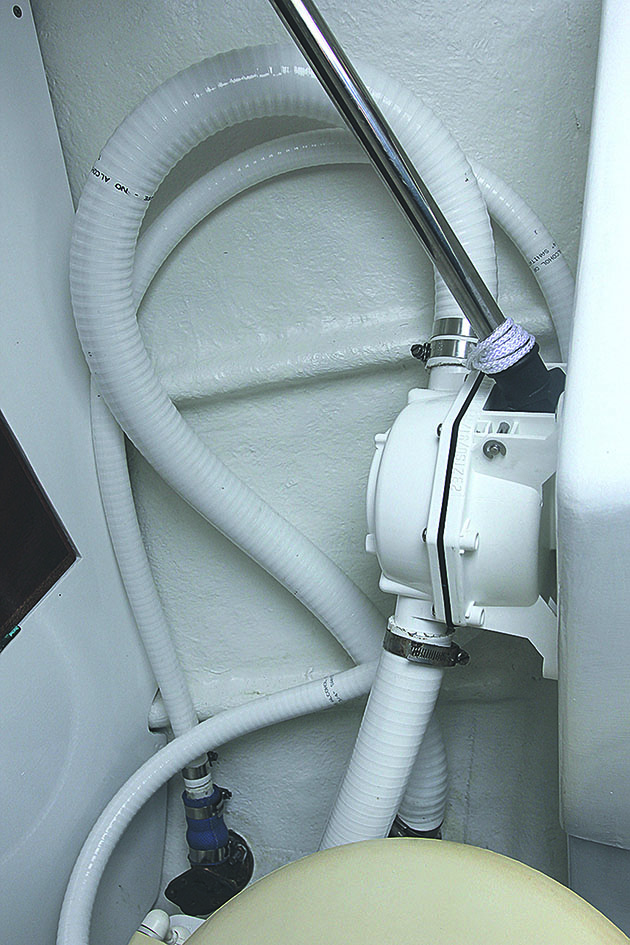
Using proper sanitation-grade pipes will help keep smells at bay. Credit: Ben Meakins/Futurea
Two types of smell come from toilet plumbing; one comes from sea water bacterial build-up on the inlet pipe, the other is sewage sitting in the outlet.
Bacteria from the sea should do no particular damage, and you can easily sterilise the inlet pipe and pump. Gas released from sewage build-up, however, will permeate through your pipework and cause nasty smells. I find a good test is to take a clean cloth and wipe it against the hoses. If the cloth smells, you’ve probably found the cause.
The only cure is to replace the plumbing with proper sanitation-grade pipes. There are now highly flexible hoses on the market – some promising warranty against smells – but these are expensive. More affordable sanitation hoses, like LeeFlex, SeaLand and Griflex, have a special lining which helps keep the smells inside.
7. Pump at your peril
In the UK, you can pump out directly into the sea, but you need to be mindful. The Green Blue advises that you use onshore toilets, fit a holding tank or chemical toilet and use a pumping station to empty your marine toilet. As a last resort, you can empty your holding tanks at sea, but be at least three miles offshore.
You should not be emptying your boat heads in low tidal flushing areas, estuaries and enclosed waters. Although sewage is biodegradable, it may cause bacteria to rise to unacceptable levels in the water. Traditional toilet paper tends to sink and smother living organisms on the seabed.
8. Get serious about siphons
If everyone always shuts the seacock after use, you can get away with short lengths of hose between the sea and the loo. If you forget, you can lose your boat if the toilet valves fail. They’re designed to allow the toilet to operate rather than provide a line of defence against the sea.
If they fail and you don’t have long loops above the waterline, water will pour in through the toilet. My system has anti-siphon valves fitted at the top of the loops. They leak a small amount of air into the hose, preventing it from remaining full of water, and stop water from siphoning in. Long hoses don’t look pretty and can be difficult to hide, but without them you could be relying on just a tiny flap of rubber to save you from sinking.
9. Keep your outlets clear
Mineral deposit build-up will gradually reduce the diameter of outlet tubes, increasing the chance of blockages. The deposit forms when the urea in urine reacts with sea water to form a hard, insoluble mineral.
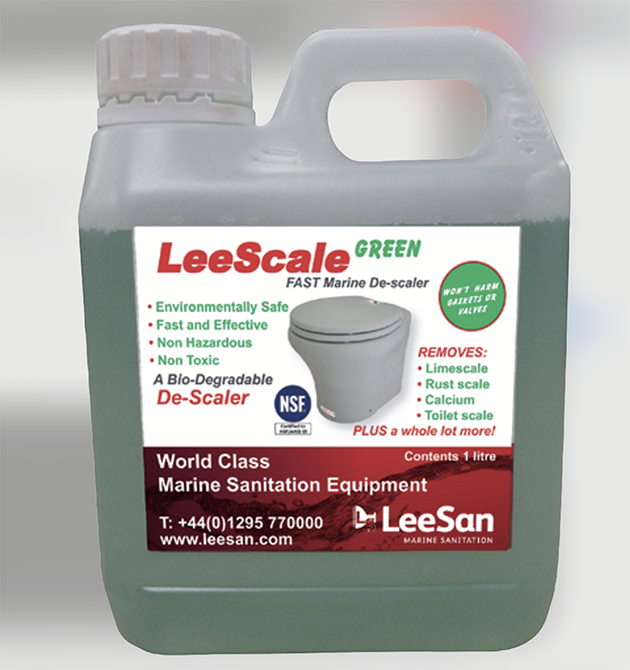
A regular dosing of a marine descaler can keep your boat heads clear. Credit: Lee San
Alternatively, you could regularly flush white vinegar down the boat heads. Flushing regularly with fresh water instead of sea water also helps, or use a descaler, like LeeScale.
10. Neutralise nasty niffs
There are plenty of non-chemical treatments for holding tanks and boat heads. Jabsco produces Toilet Fresh, a non-chemical toilet cleaner, and also Odourlos for holding tanks, which uses enzymes to break down waste, tissue and odours. Marine Hygiene makes Head Maintainer which reduces scale build-up and keeps the heads smelling sweet.
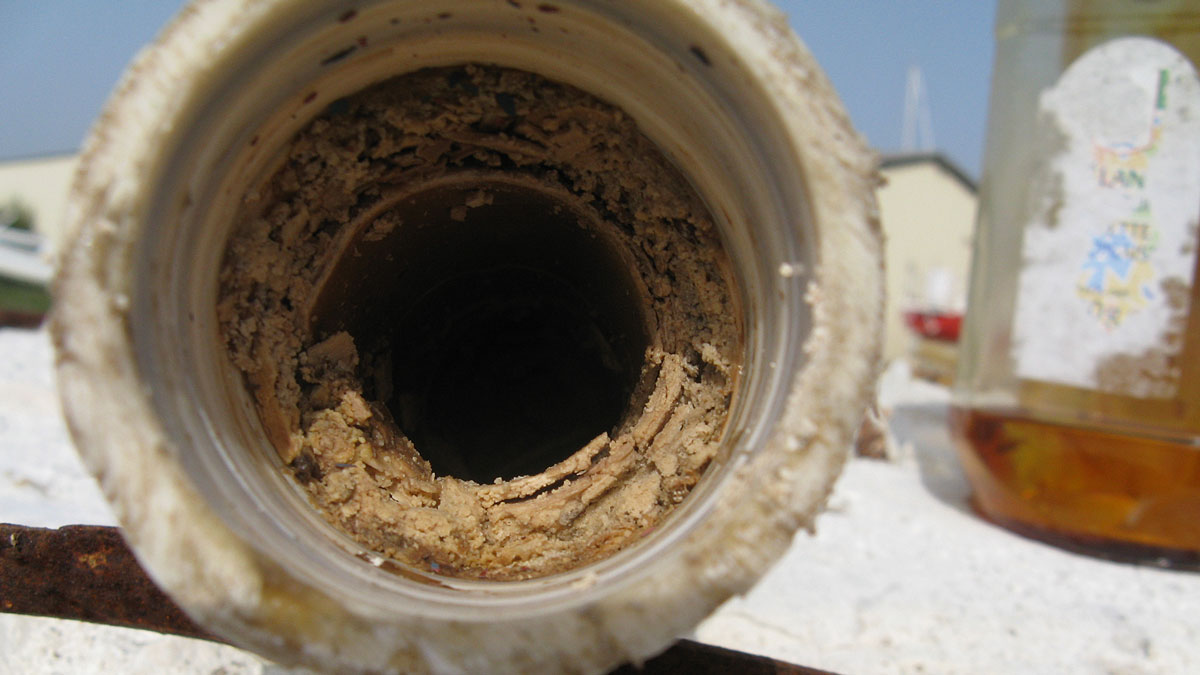
Solutions to descale pipes on your boat
Uric scale can reduce the diameter of sea-toilet hosepipes by half within five years: Richard Hare tests some solutions

Best portable toilet: From compostable to flushable units
We’ve all been there; middle of the night, you need a pee. The marina toilet or camping block is just…
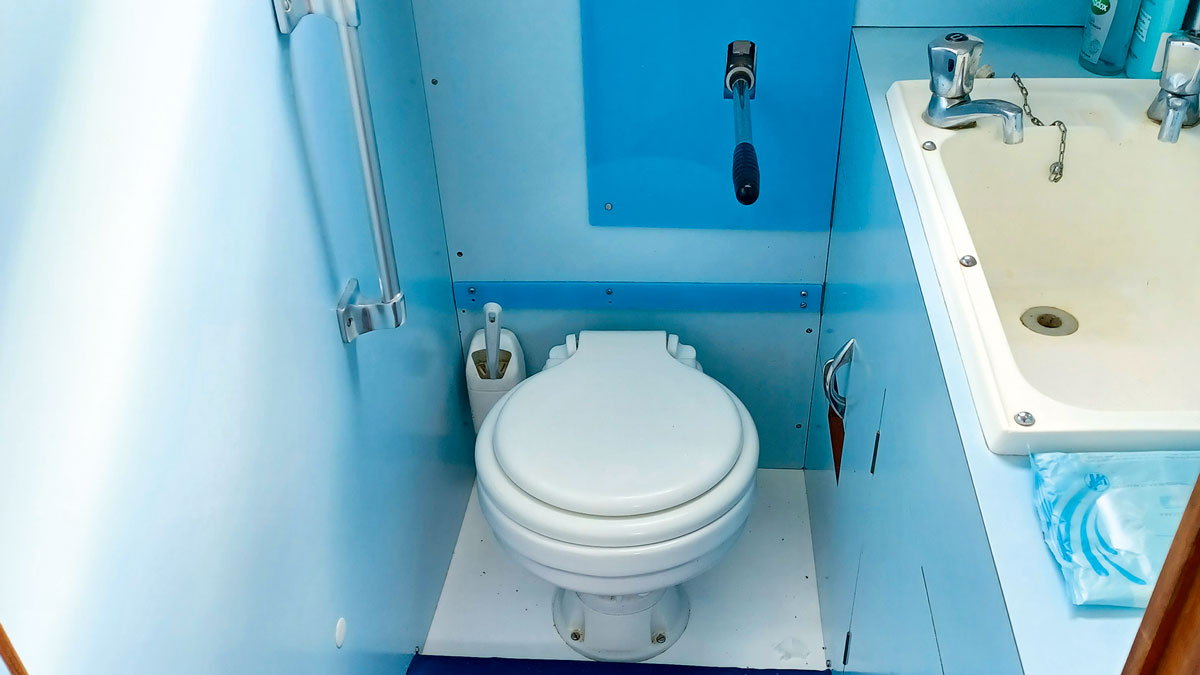
Improving a heads pump installation
Trevor Martin shows how he replaced the pumps and modified the installation of his vacuum heads for easier servicing in…

Sea toilet restoration: How I refurbished the heads on the PBO Project Boat
With seacocks previously installed in the Maxi 84, it was time to connect the hoses. The first thing to decide…

Best boat toilet roll and other practical ideas for the heads
A blocked toilet onboard your boat is to be avoided at all costs and one of the worst culprits is…
Want to read more articles like Antifouling paint tips from the experts?
A subscription to Practical Boat Owner magazine costs around 40% less than the cover price.
Print and digital editions are available through Magazines Direct – where you can also find the latest deals.
PBO is packed with information to help you get the most from boat ownership – whether sail or power.
-
-
-
- Take your DIY skills to the next level with trusted advice on boat maintenance and repairs
- Impartial, in-depth gear reviews
- Practical cruising tips for making the most of your time afloat
-
-
Follow us on Facebook, Instagram, TikTok and X