



Beware the insidious boom droop and your crew will thank you for it – and don’t forget to dig out suitable attire before setting sail.

Boom droop. I had no idea that I too suffered from it until my friend took a picture of me sailing my little Tideway 10.
There it was for all to see.
Ducking under a drooped boom when tacking or gybing is a real nuisance and can easily cause a capsize in a dinghy or day boat.
It’s just uncomfortable and not safe so I set about finding the cure.
Not wishing to bother my regular boat doctor, I thought I’d have a go myself at diagnosis.
This boat was gunter-rigged with both peak and throat halyards.
I removed the peak halyard track on the yard and replaced it in a lower position so as to raise the height of the sail. But the boom still drooped.
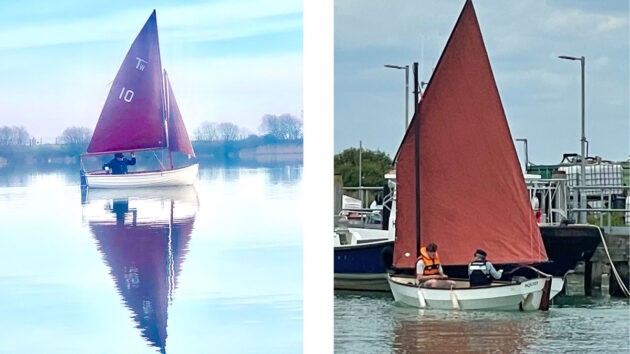
Left: Clive sailing his Tideway 10 with a droopy boom. Credit: Maurice Burgess.
Right: Clive sailing his Modified Dabber with boom too low for 6ft 4in grandson. Credit: Jo Baldock
Next, I removed and replaced every other fitting but all to no avail: at one stage the boom drooped even more.
Last year my boat doctor had adjusted the luff rope and this helped a little, but the droop had returned.
It was getting dark and I was thinking that perhaps I should get the sail cut and reshaped. I slept on it.
The next morning I came to my senses and realised that all I needed to do was to move the rake of the mast a tad further forward.
It took just five minutes to slacken the shrouds and tighten the forestay.
A small movement at the top of the mast makes a big difference to the height of the boom’s aft end above deck (assuming the front end of the boom is attached to the mast at the gooseneck).
This is obvious when you try it on paper with a set square where the base represents the boom, the perpendicular represents the mast, and the hypotenuse represents the leach of the sail.
Pivot slightly forward and see how far the rear end of the boom rises.
It is so easy to spend hours fiddling around only to miss the obvious, particularly at the start of the season.
So, no more droopy boom for me.
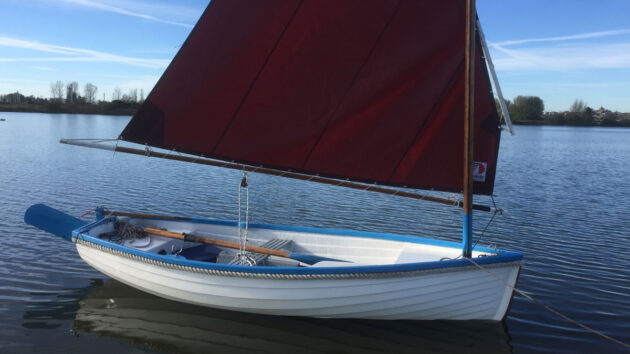
Clive’s fast Smacks Boat with tack pulled down/back to raise boom. Credit: Clive Marsh
As a rough guide to the common causes of boom droop on a gunter, gaff, lugsail check out:
- Mast rake – should it be leaning a little more forward?
- Has your sail got a shrunken luff rope?
- Is the sail worn?
- Forestay too slack?
- Shrouds too tight?
- Lower the halyard attachment on the yard.
- Pull down and back on tack of lug sail.
It could be any or all of the above – or a combination of them – and there may be other reasons which I’ve missed that I’m sure you’ll remind me of.
Shakedown foibles

A bit of droop here might clear the decks. Credit: Arterra Picture Library/Alamy
All this talk of mast rake could lead on to the fascinatingly complex geometry discussion around forward and aft rake and its effect on performance.
But this is best left to the experts like Ian Nicholson who occasionally writes in this magazine (PBO, June 2025).
So, I’ll now divert onto other start of season fumbles.
Is it just me or do you find you’re a bit rusty at the start of the season and do silly things?
I forget the basics, even my lunch, especially when there are spectators.
Having given up outboards for a while I went with the flood tide from the RNLI at Rye Harbour slipway up to Rye Town.
The spring flood tide here is fierce and we had a favourable Force 4 which was backing.
This meant I could easily sail back with the ebb tide and not have to put in too many tacks.
On return, as I sailed up to the slipway, I was on a fast run and the plan was to turn into the wind at the last minute and give all the bystanders yet another fine example of British boatmanship.
Unfortunately, being the start of the season, I had forgotten to raise the long daggerboard.
It hit bottom, the boat went on its side and tipped me out.
I was left standing in shallow water as the boat recovered.
An excited bystander came rushing up and expressed his amazement saying that he had never seen that done before.
He thought, as did the others, that it was some smart intentional manoeuvre.
But I won’t be trying it again until next spring.
This is the beauty of boating. Just when you think you have it all sorted, you find out that you haven’t.
The next challenge is trying to remember what to wear.
The sun is shining, the easterly wind is biting, the sea is freezing, and the lochs and lakes may be even colder.
I know I should wear my wetsuit or drysuit.
Problem is I dislike both of them.
They are fine for a short time when racing around the buoys but not much good for dinghy cruising.
The wetsuit is too restrictive for any length of time, and the drysuit forces my Adam’s apple down my throat making me sound like an aggravated crow.
Worse still, I can’t drink tea through a restricted neck and even worse, if I forget to remove air from the legs, I could end up floating with my feet up and head down.
Clive’s go-to dinghy sailing attire (when he can find it)
To get over these issues of attire, I have come up with a compromise which includes quick-dry trousers, a buoyant gilet with pockets for my VHF etc, a Breton cap and sandals.
The sandals allow my feet to dry. I might then put some socks on.
I have tried waterproof socks, but they seem to make things worse and wellington boots are useless when launching.
I also wear a vest and shirt.
This kit is not recommended by any of the recognised institutions but works for me.
I do have various personal flotation devices too and all sorts of other recommended stuff.
Having worked out what is best for me (which may not be best for you), the problem at the start of the season is that I forget where it all is and I end up sailing unsuitably attired.
I couldn’t find my gilet or quick-dry trousers, so I wore shorts and a buoyancy aid with no pocket.
I put my VHF, remote keys, wallet and iPhone in my shorts pockets so when I was tipped out of the boat, in three feet of water, they were all immersed too.
Hopefully, by the end of the season, all will be fine again.
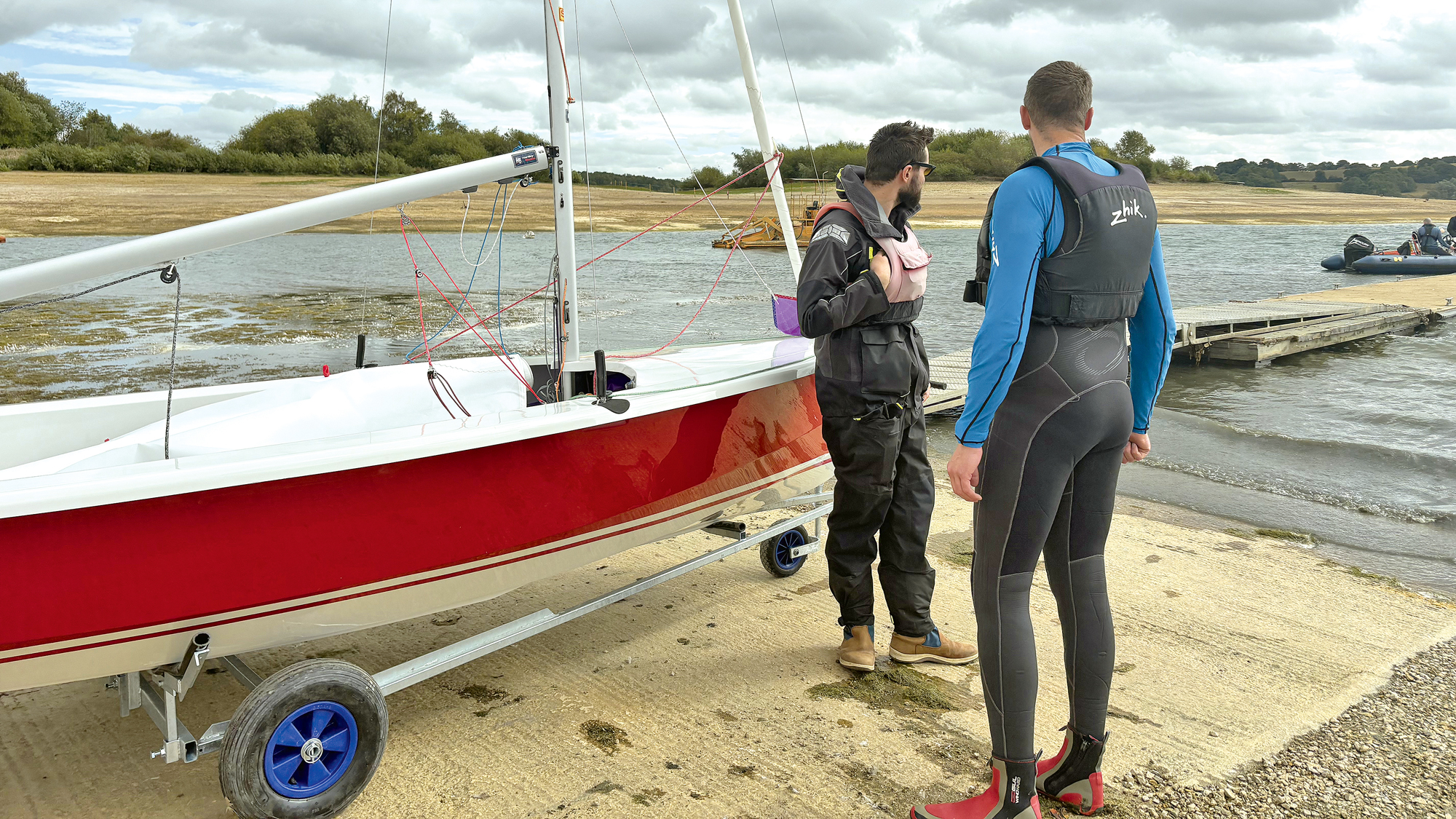
Your complete guide to what to wear dinghy sailing
From base layers to life jackets to your hands and feet, this helpful guide from PBO's Ali Wood explains what…

How to set up your rig: tension your shrouds on masthead or fractional
How to set up your rig: tension your shrouds on masthead or fractional If boats were cars, many of those…
Which is the best cruising dinghy?
Clive Marsh explains what he looks for in a lightweight cruising dinghy
What to read more of Clive’s articles?
A subscription to Practical Boat Owner magazine costs around 40% less than the cover price.
Print and digital editions are available through Magazines Direct – where you can also find the latest deals.
PBO is packed with information to help you get the most from boat ownership – whether sail or power.
-
-
-
- Take your DIY skills to the next level with trusted advice on boat maintenance and repairs
- Impartial, in-depth gear reviews
- Practical cruising tips for making the most of your time afloat
-
-
Follow us on Facebook, Instagram, TikTok and X