




Should you be electrically bonding seacocks on your boat? Vyv Cox has this advice
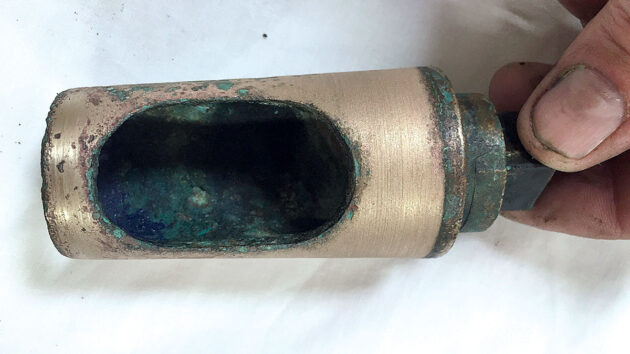
I know a surveyor who has seen galvanic corrosion on some Blakes seacocks when owners fit them with stainless steel bolts or electrically bond them. I understand why this might happen with stainless steel bolts, but does electrically bonding seacocks also do the same?
I have also been advised to check for pinking on dezincification-resistant (DZR) brass ball valve seacocks, as it is a sure sign of corrosion. I always understood that DZR was designed to resist this.
Can you explain why this might happen?
June Young
Vyv Cox replies: Electrically bonding metallic items inside the hull with heavy copper cable is a classic example of doing wrong by trying to do right.
It’s assumed that by bonding in this way and connecting everything to an anode, they will all be protected. Following the basic rules of cathodic protection, the anode should be able to ‘see’ the object being protected and be a short distance from it. On the hull of a boat this is impossible.
Instead, items near to each other may form a galvanic cell in which, for example, one seacock corrodes at the expense of another, or some stainless steel bolts corrode. Incidentally, I can see that where stainless bolts are connected to external flanges or strainers there would be a galvanic cell. This might also be the case if the bolt heads were exposed.
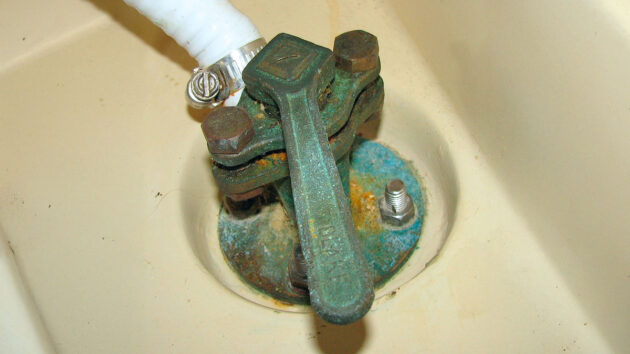
A Blakes seacock on expert Vyv Cox’s own boat. Credit: Vyv Cox
However, as an example every Sadler built (as far as I know) has stainless steel bolts attaching Blakes seacocks. There is no external flange: the bolts are countersunk into the hull, bedded in sealant. Mine are in perfect condition after 40 years, and I know of no other Sadler that has had a problem with Blakes seacocks.
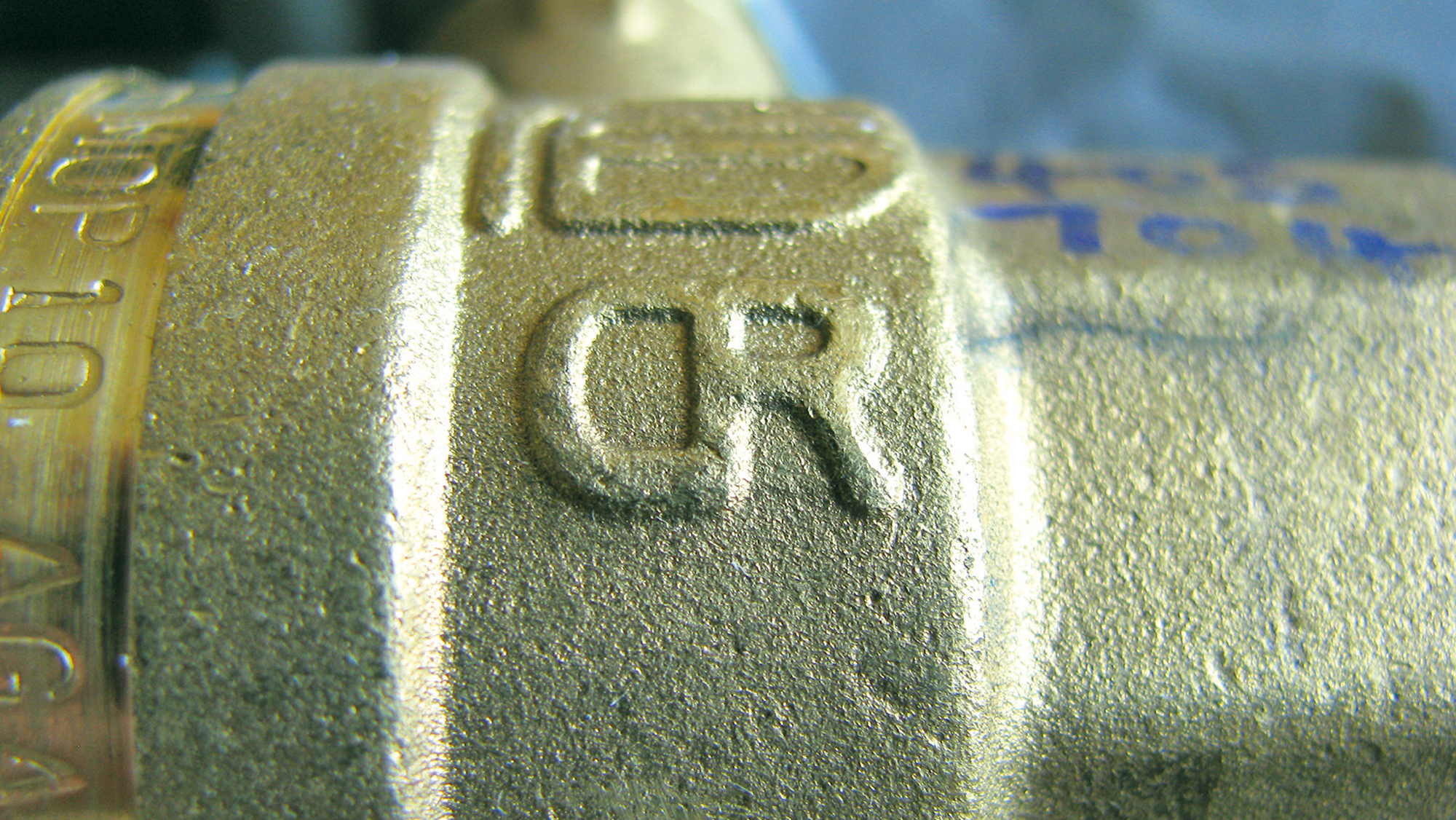
I have seen very minor pinkness on the cone of my toilet outlet seacock. It’s a very thin layer, easily abraded away when grinding in the cone. This is definitely not something that needs to concern the owner. Dezincification only needs to be a concern when the component has lost structural strength, ie it is distinctly red. Slight pinkness, as shown on the Blakes cone from my boat, is harmless.
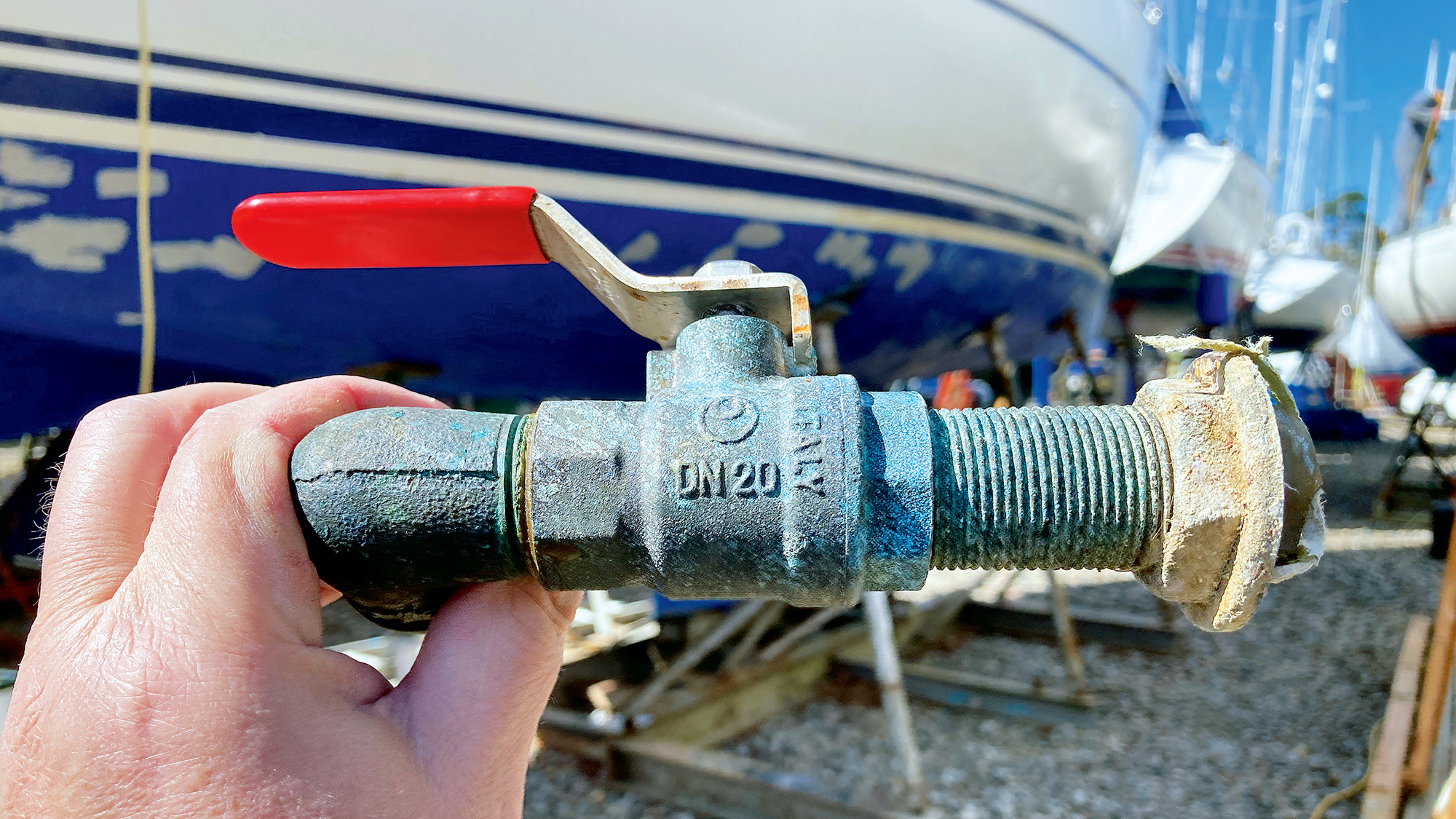
Skin fittings and seacocks explained
Surveyor Nick Vass examines the different types of skin fittings and seacocks on the market and shares advice on how…
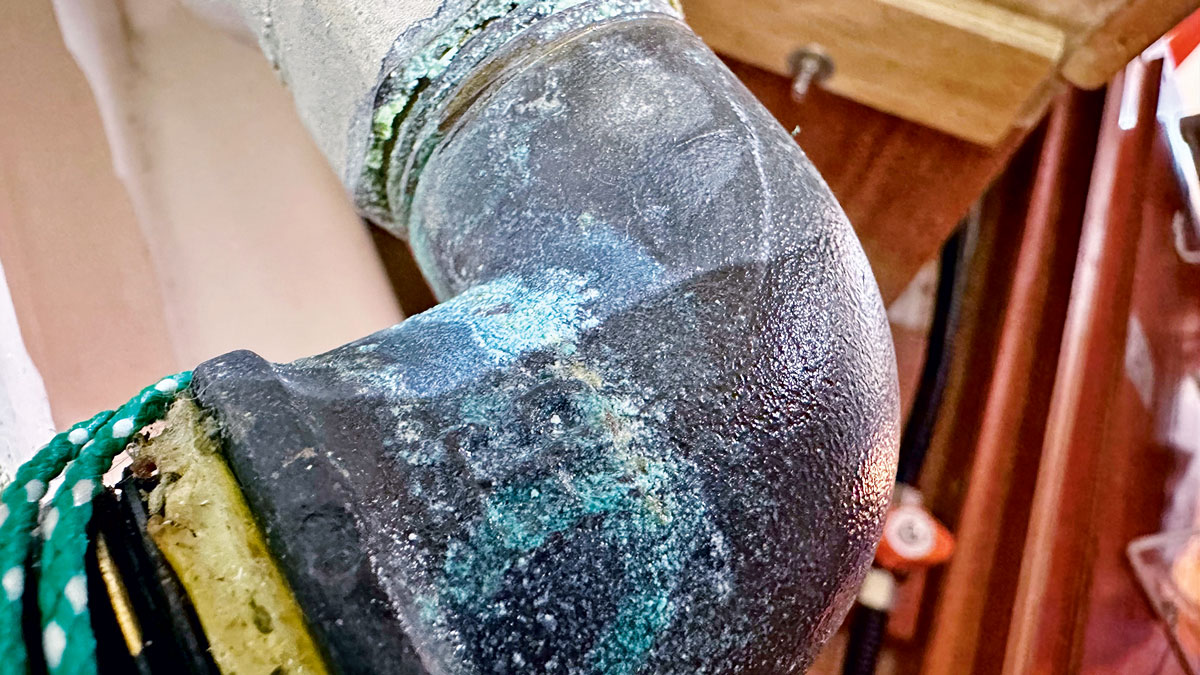
Why is there a film on the seacocks?
PBO reader Camilla Ransom has found a "strange film" on one of the boat's seacocks. What should she do? Surveyor…
Dezincification resistant (DZR) skin fittings explained
Vyv Cox busts the myths surrounding the use of dezincification resistant (DZR) seacock materials.
Fitting new seacocks and skin fittings on the PBO Project Boat
Maximus, our PBO Project Boat, had four seacock fittings that need changing – three ball valves in the forepeak (1…

What to read more practical articles like Is electrically bonding seacocks a good idea?
A subscription to Practical Boat Owner magazine costs around 40% less than the cover price.
Print and digital editions are available through Magazines Direct – where you can also find the latest deals.
PBO is packed with information to help you get the most from boat ownership – whether sail or power.
-
-
-
- Take your DIY skills to the next level with trusted advice on boat maintenance and repairs
- Impartial, in-depth gear reviews
- Practical cruising tips for making the most of your time afloat
-
-
Follow us on Facebook, Instagram, TikTok and Twitter