


Ben Meakins explains how you can eliminate danger while poling out the jib
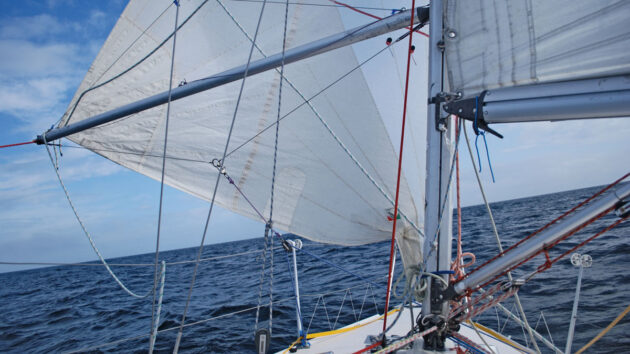
Sailing dead downwind, booming out the jib is a great alternative to a spinnaker if you’re short-handed or in lots of wind. It stops the jib flogging around and makes the boat much more directionally stable. But there’s a catch: going onto the foredeck to set up the pole can be extremely dangerous, especially in any sea, as the jib and pole can flog around dangerously close to head height.
There is, however, a way to pole out the jib and stay safe. It assumes you have all the control lines led aft – but even if yours terminate at the mast, it still keeps you off the foredeck.
1. Tame the jib. Boats with roller-furlers can roll up the jib, or if yours is hanked-on or uses a headfoil, sheet it hard in to leeward to stop it flogging from side to side.
2. It’s now safe to venture onto the foredeck. Rig a separate windward sheet to the clew, with a lead well aft – a spinnaker sheet is perfect for this.
3. Put the inner end of the pole well up the mast, clip in the new sheet to the outboard end of the pole, and lift the end over the boat’s guardwires.
4. With the pole now set up, get back to the cockpit. From here you should now be able to control everything
5. Pull on the pole uphaul until the end is level with the jib’s clew.
6. Now ease off the leeward sheet while pulling on the new windward sheet. This should gently pull the sail across. Boats with roller furling have an advantage here – you can pull on the windward sheet while slowly unrolling the sail. You’ll need to pull hard on the final few metres to get the sail to the end of the pole.
7. Adjust the up/downhaul to get the pole to the correct level of the clew. You may need to use the downhaul to pull the pole forward enough.
8. Cleat everything off. If the boat is beginning to roll, lower the pole end, which will stop the top of the sail twisting off and help stabilise the boat.
9. If you need to gybe in a hurry, all you need to do is release the windward sheet and pull in on the leeward one. You can then tame the pole by pulling on the downhaul.
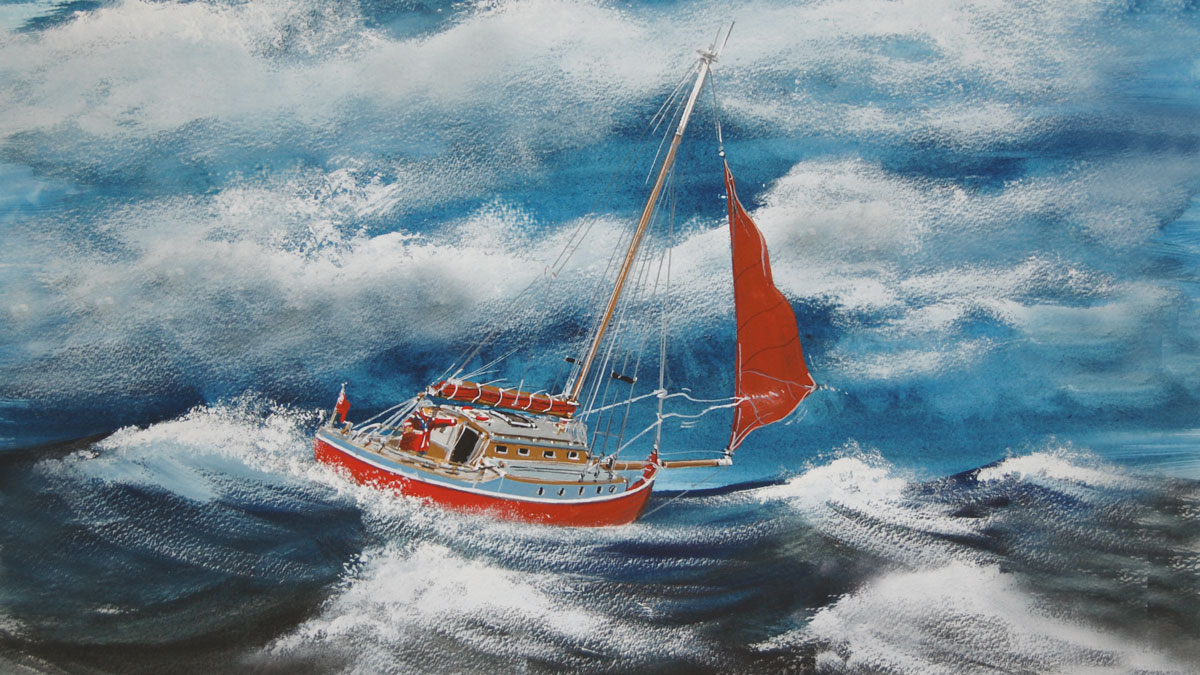
“A big gust hit us, ripping the clew from the jib”: How I got to the marina safely after gearbox failure, a ripped sail and sheet wrap while sailing against wind and tide
When his drive failed near sandbanks, Bob Angell thought he could sail out of trouble... until the wind picked up

7 Storm Jibs on test
We test 7 storm jibs, including wrap around and sleeved sails, to find out the best options for your boat

How to heave to with a self tacking jib
Small modifications to his Hunter Pilot's jib track mean that Dave Young can now heave to easily with his self-tacking…

Turn a storm jib into a trysail
A storm jib came with my second-hand 23ft (7m) Hunter Duette, but it couldn’t be run up the forestay because…
Want to read more articles like How to boom out a jib safely?
A subscription to Practical Boat Owner magazine costs around 40% less than the cover price.
Print and digital editions are available through Magazines Direct – where you can also find the latest deals.
PBO is packed with information to help you get the most from boat ownership – whether sail or power.
-
-
-
- Take your DIY skills to the next level with trusted advice on boat maintenance and repairs
- Impartial, in-depth gear reviews
- Practical cruising tips for making the most of your time afloat
-
-
Follow us on Facebook, Instagram, TikTok and X