



Catamaran sailor Chris Hitchins demonstrates the easy and reliable method he uses for picking up swinging moorings when sailing single- or short-handed
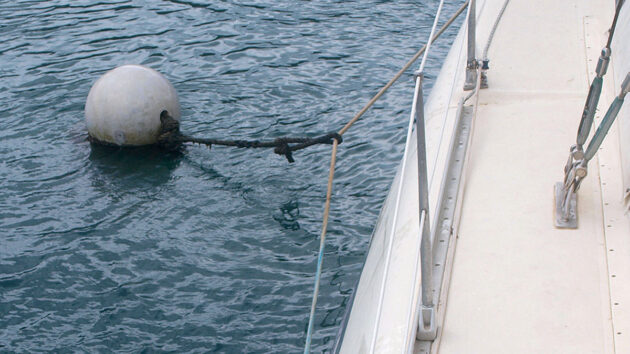
If you single-hand – or end up single-handed – then here is a virtually failsafe method of picking up a boat mooring that will save you a lot of missed attempts and grief. It works equally well on a cat or a monohull, and even if you’re double-handed it is a very useful concept as it makes for a much easier approach and pick-up on the first attempt.
You will need a strong line (we use ¾in/20mm on Wild Wind III, our 15m/50ft Prout 50 catamaran) that is 3m (10ft) longer than the boat’s overall length and width – so for us, that’s about 24.4m (80ft).
Initial choices for choosing a boat mooring
You can often partly determine your approach from the chart or pilot book, but it’s always worth making a final assessment near the boat mooring: we aim to stop about 20-50 yards off so as to observe the situation. For sailors of catamarans with the helm on one side, you will need to gauge your approach so that you pick up the mooring on that side.
If you sail a monohull or your boat has two helms you can pick up on either side. Generally I choose to be on the windward or current side of the buoy, whichever is stronger.
Before you approach, rig a line from the forward cleat on the side opposite the one from which you will be picking up the buoy and run it outside everything around the bow and down to your helm, leaving the line lightly tied off near you. Have your boathook at the ready beside you.
Before you start: step-by-step
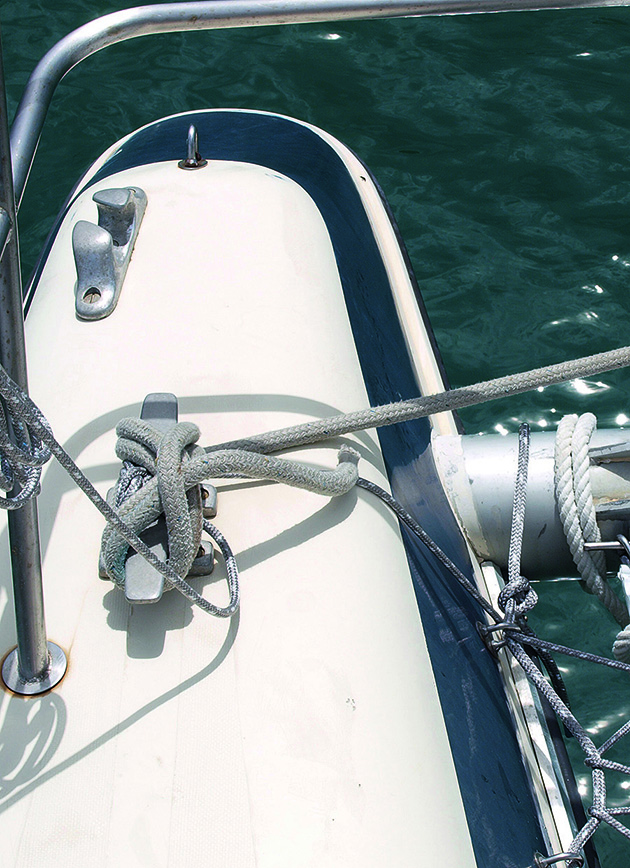
1. If picking up to starboard, first secure the line to the port bow. Credit: Chris Hitchins
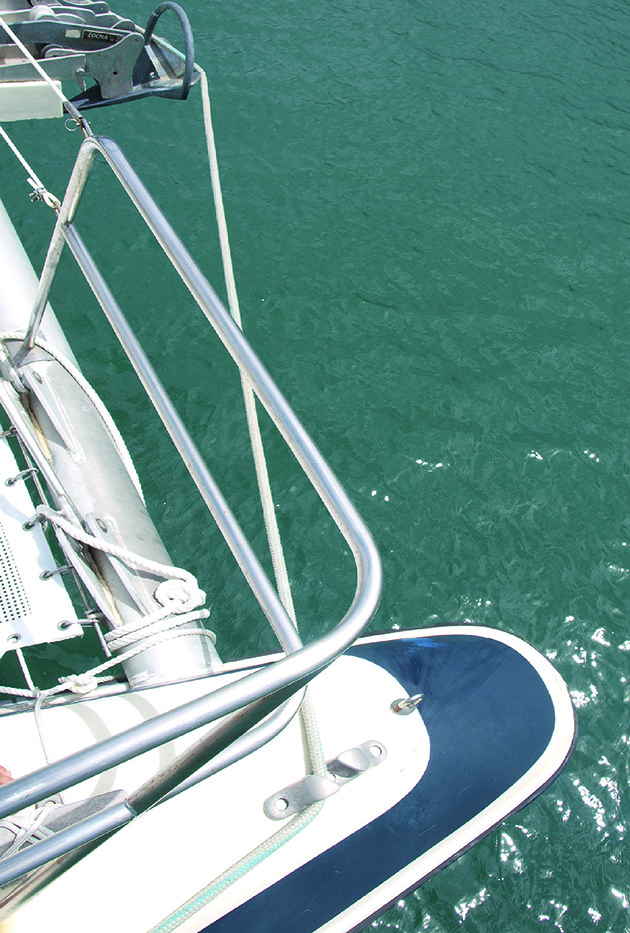
2. Lead the line outside and across the bow and through starboard fairlead. Credit: Chris Hitchins
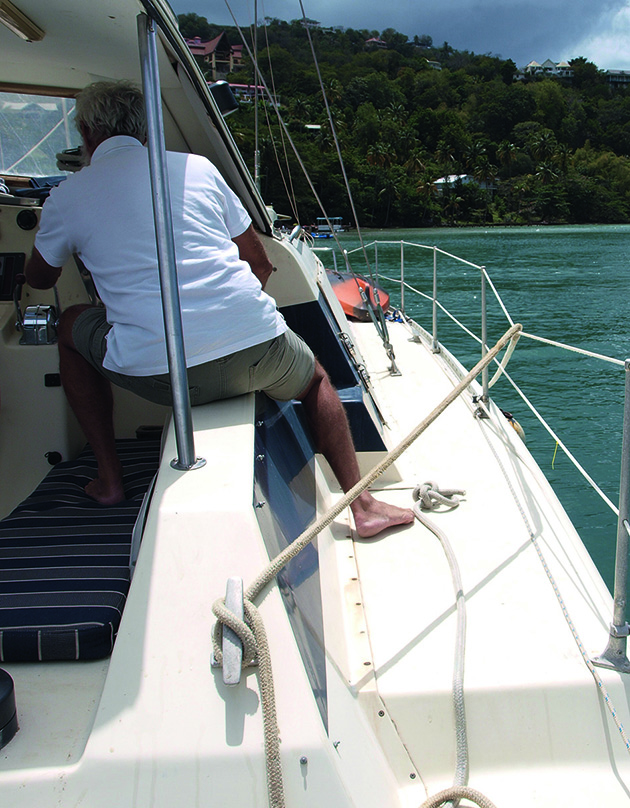
Lead the line aft, outside everything and lightly secure it at the starboard helm. Credit: Chris Hitchins. Ed’s note: It is a good idea to wear a lifejacket when on the water
Picking up the buoy
Having set the line as above, motor towards the buoy and manoeuvre so it passes slowly down the side of the boat you chose for your approach. Even if you’re sailing double-handed this type of approach is worthwhile as you can see the buoy clearly as you approach it, rather than using the side away from the helm and relying on calls from another party.
As the buoy gets close to your position you should be moving very slowly and drifting onto it. Use the boathook to lift the buoy (or its looped line) aboard. Quickly release the end of the long line near the helm, pass it through the buoy loop and then, keeping the line outside of everything, make it fast to the aft cleat, shortening the line as much as you can in the process.
You are now attached to the buoy. (If you miss this pick up, back off and repeat. It’s usually the result of drift pushing the boat off the buoy.) Once you’re attached, make sure the engine is in neutral. Observe the situation.
Boat mooring: Picking up the buoy

Credit: Chris Hitchins
1. We approach the mooring from windward.
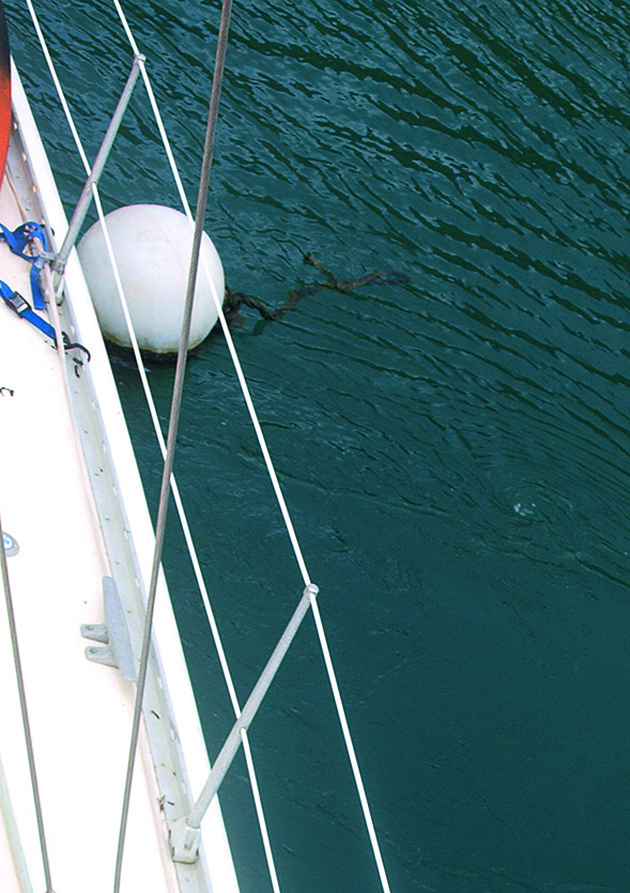
Credit: Chris Hitchins
2. This lets us move slowly forward and down onto the buoy.
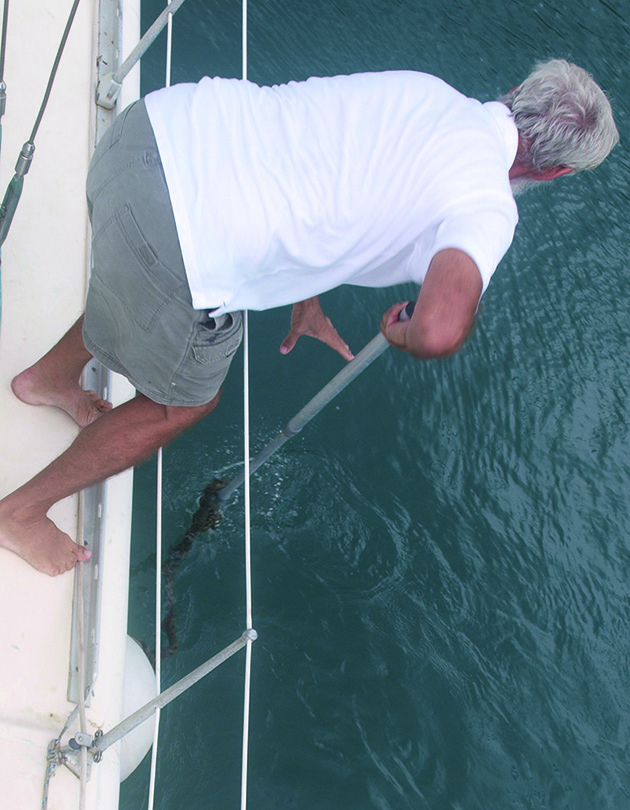
Credit: Chris Hitchins
3. Pick up the buoy (loop) with a boathook. Ed’s note: It is a good idea to wear a lifejacket.
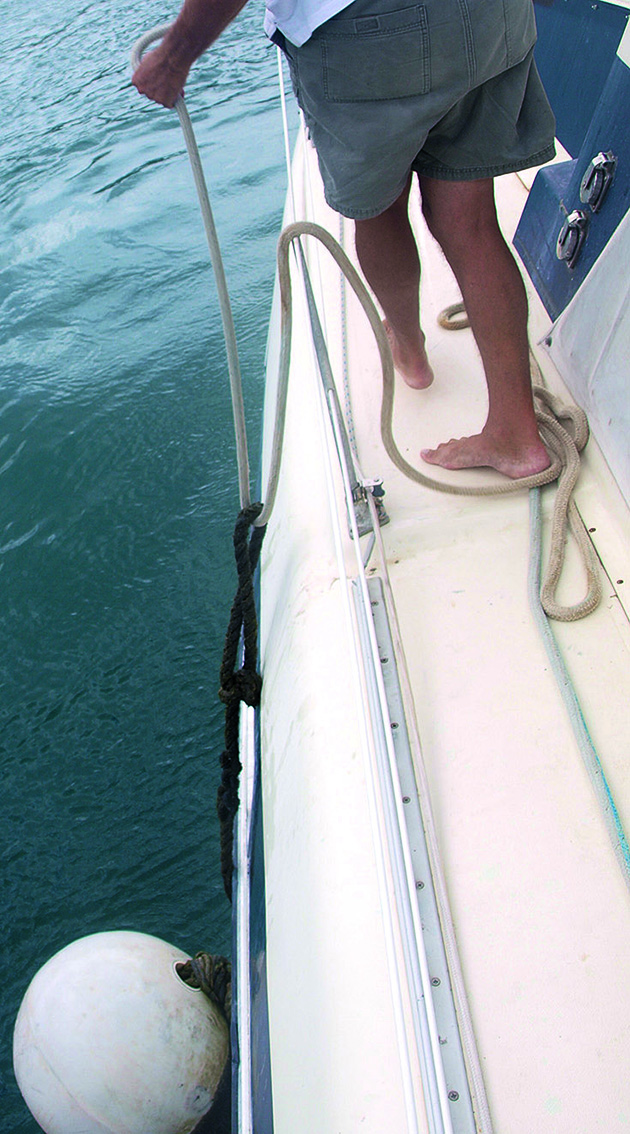
Credit: Chris Hitchins
4. Thread the line through the buoy loop and take it aft to secure it.
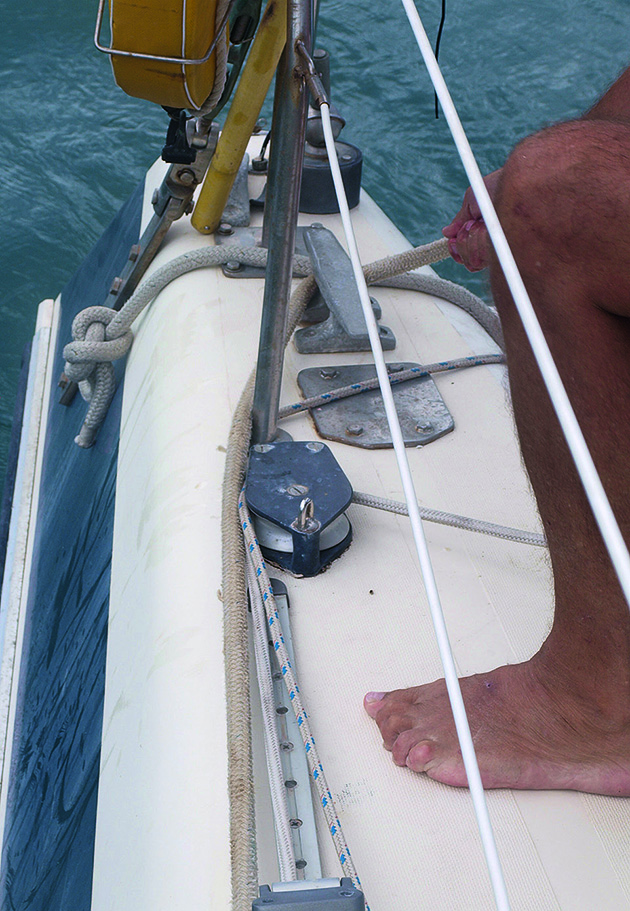
Credit: Chris Hitchins
5. Make the line fast to the starboard aft cleat.
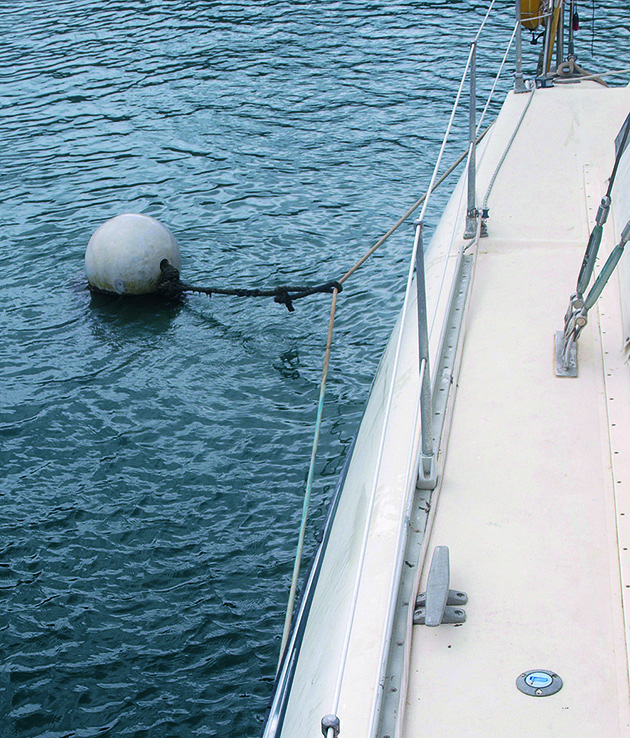
Credit: Chris Hitchins
6. Gently use the engine to keep the buoy away from the hull and let the buoy move forward.
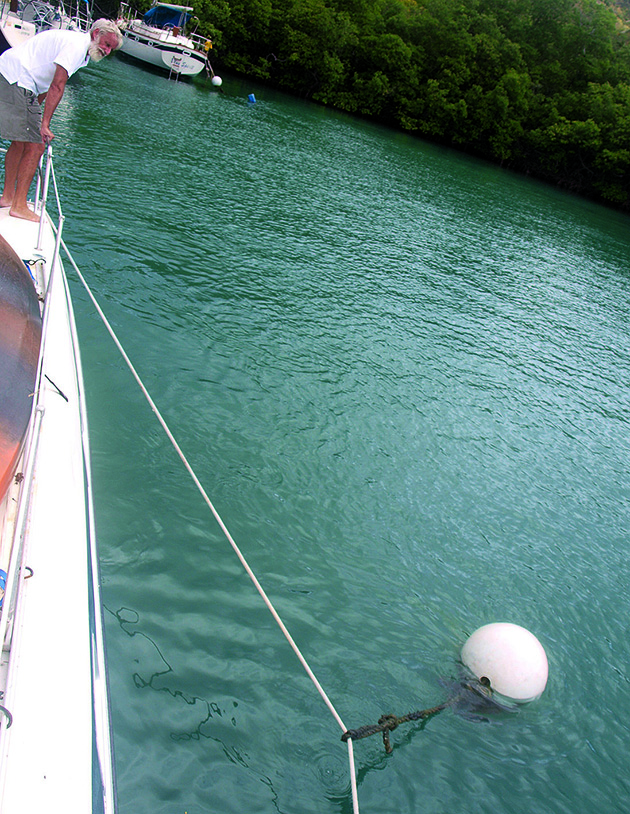
Credit: Chris Hitchins
7. Check your progress as the boat moves astern.
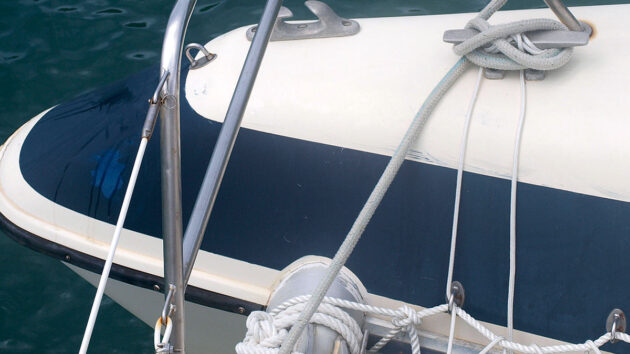
Credit: Chris Hitchins
8. The buoy is now forward of the bow and the line is secured to the starboard forward cleat.
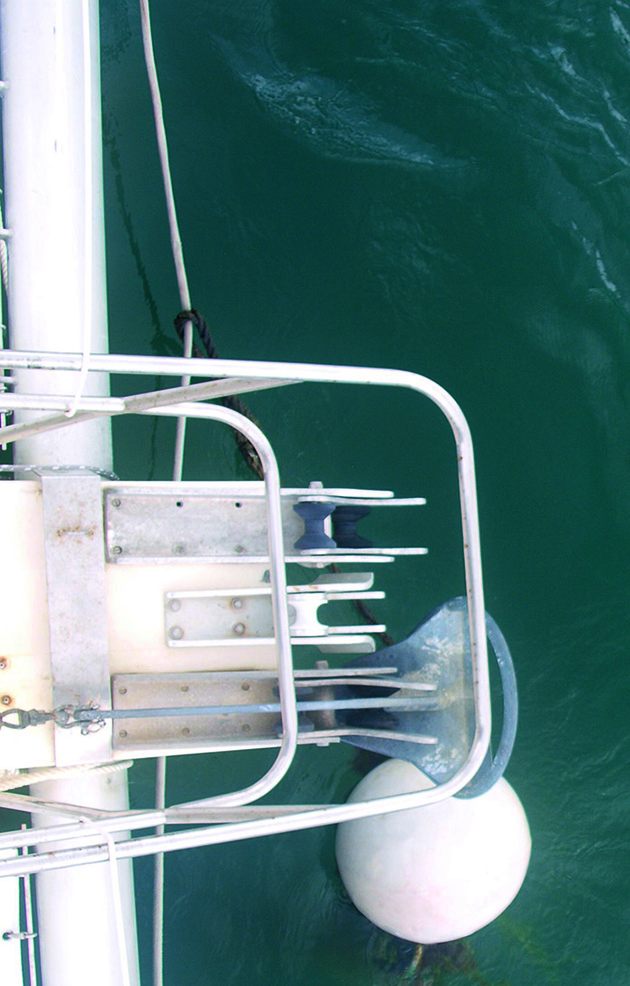
Credit: Chris Hitchins
9. Line secured amidships, ready for fine-tuning
Securing your boat
Once the boat is attached you may find yourself hanging off at an angle from near amidships, so the idea is to gently use the engine(s) to take the tension off the long line and allow you to move the mooring loop up to the bow, or to a position between the two bows in the case of a cat.
Depending on conditions this may take several small steps to achieve, but it will be relatively easy: just take your time and move the loop along the line at each slack period.
Also shorten the long line using the aft cleat as you move up on the buoy, ensuring there is no more than 6-8ft (about 2m) slack in it.
As your boat is attached, there’s no need to worry about drifting off. Once the loop is centred, power up to it and, while slack, lift up the loop and feed through your mooring lines (or attach a bridle, in the case of a catamaran).
It’s important not to let go of the long line. Keep it attached, but once you have the correct lines or bridle attached to the buoy, move the long end from the buoy-side aft cleat to the cleat on the bow on the same side. Keep it slightly slack as a back-up in case your main lines fail.
Time to leave
When it’s time to leave, motor up to the buoy and release the moorings, but keep the long line attached. Check the situation, then move forward again; release one end of the long line and haul it all aboard. You are now free and can move off in the desired direction.
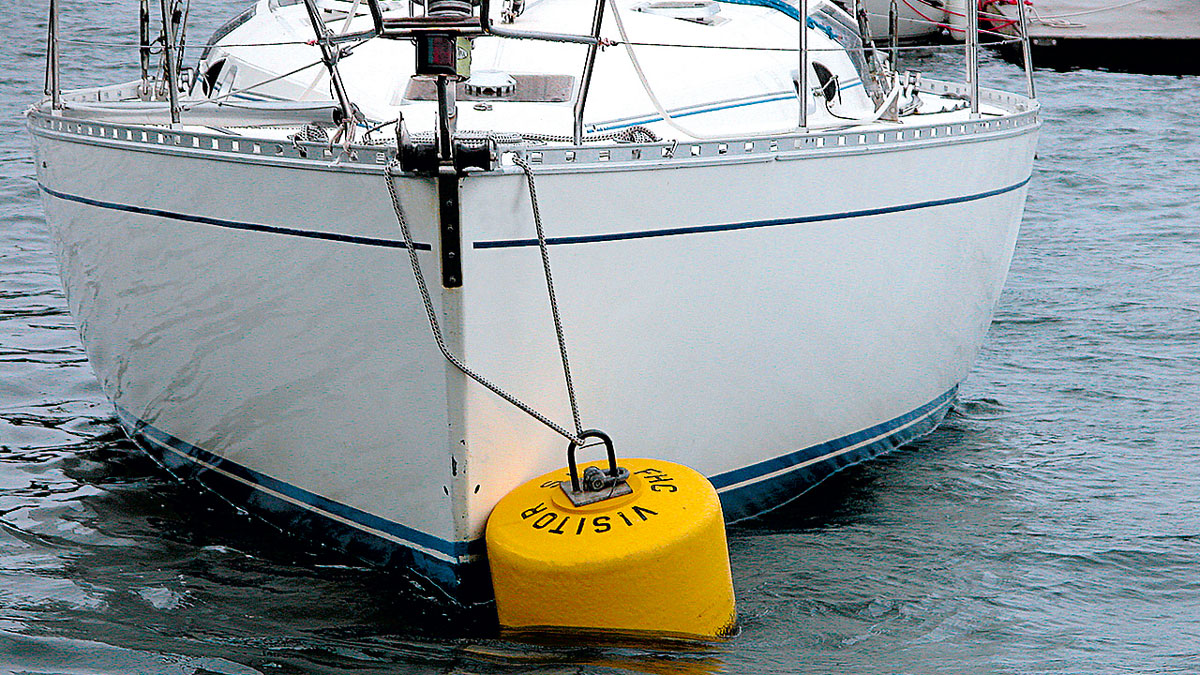
The simple mooring mistake that can chafe through your rope in 20 minutes
By following a few simple mooring guidelines, you can avoid the common pitfalls and make the process of securing your…
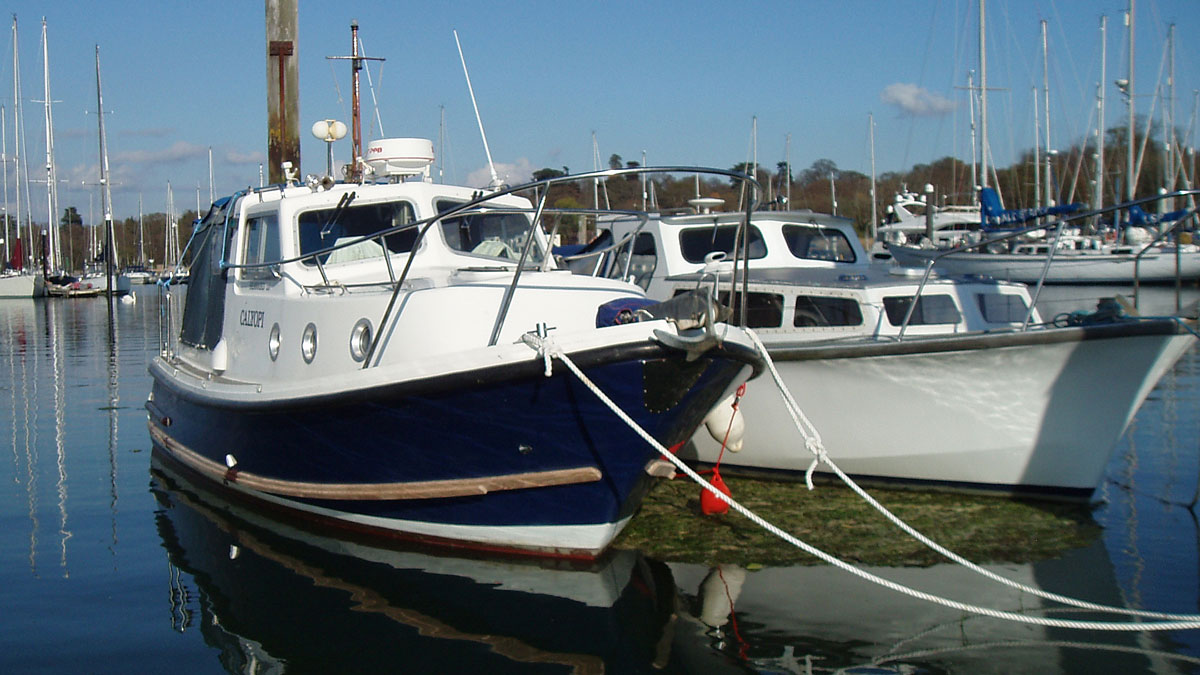
Rigging pile mooring pick-up lines
If you have a pile mooring, permanent and properly rigged pick-up lines will make life a lot easier. David Parker…

Can I trust this boat mooring?
Most sailors use traditional moorings without knowing about their condition or how they are made. Ben Sutcliffe-Davies explains
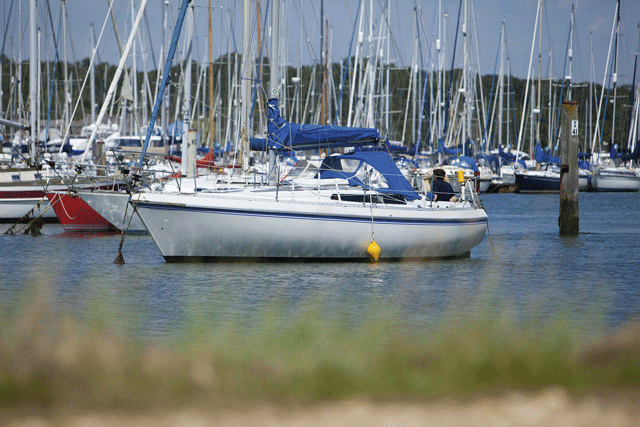
How to master fore and aft trot moorings
Fore-and-aft trot moorings are cheaper than marinas and have many advantages - but they can be tricky to pick up.…
What to read more seamanship articles like Is this the failsafe method for picking up a boat mooring single-handed?
A subscription to Practical Boat Owner magazine costs around 40% less than the cover price.
Print and digital editions are available through Magazines Direct – where you can also find the latest deals.
PBO is packed with information to help you get the most from boat ownership – whether sail or power.
-
-
-
- Take your DIY skills to the next level with trusted advice on boat maintenance and repairs
- Impartial, in-depth gear reviews
- Practical cruising tips for making the most of your time afloat
-
-
Follow us on Facebook, Instagram, TikTok and X