


"Now is the time for action" – the Marine Accident Investigation Branch (MAIB) is calling for legislation to introduce drink-drive limits for non-professional mariners, following a fatal rigid inflatable boat (RIB) crash in Portsmouth.
Marine accident investigators have criticised the ‘ineffective’ system of regulation, enforcement and education currently in place within the recreational boating community ‘with respect to alcohol consumption’.
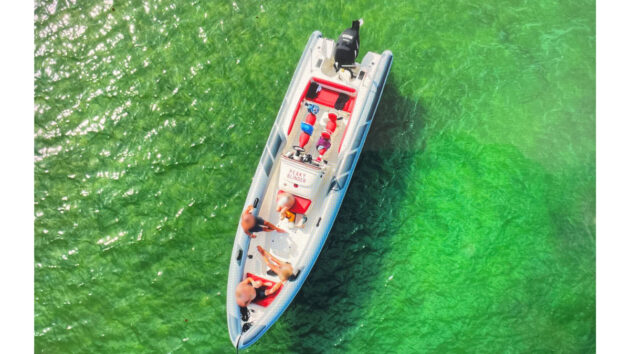
The renewed call for a drink-drive limit for leisure boaters is made in an MAIB report, published today, into the double tragedy of a rigid inflatable boat (RIB) Peaky Blinder in Portsmouth Harbour.
The owner of the vessel was under the influence of alcohol, which ‘substantially increased the likelihood of an accident.’
In the report conclusions, the Secretary of State for Transport is recommended to ‘make an order to commence the provisions on alcohol limits for non-professional mariners contained in the Railways and Transport Safety Act, 2003.’
Simon Graves, a principal inspector of marine accidents, who led the investigation, told PBO, that “we’ve pressed the trigger, and now the expectation is that the Department for Transport will take account of the recommendation being made by the Chief Inspector and start work to address what we’ve said in the report.”
The MAIB is recommending an alcohol limit for recreational boaters in line with regulations for professional mariners, and road users in Scotland and most of Europe: 50 milligrammes (mg) of alcohol in 100ml of blood – where one drink could put you over the limit.
The England, Wales and Northern Ireland limit is 80 milligrammes (mg) of alcohol in 100ml of blood for drink-driving on the roads.
“Now is the time for action”
Mr Graves said: “We’ve been investigating accidents like this for more than 20 years now, and on each occasion we have moved towards this.
“And actually, the Inspectorate is quite clear that now is the time for action.
“We hope that the messages and recommendations that we’re putting out in this report will be acted on, and the alcohol limits put in place.
“The whole intention is to try and stop these terrible accidents happening again in the future.”
Double tragedy – what happened?
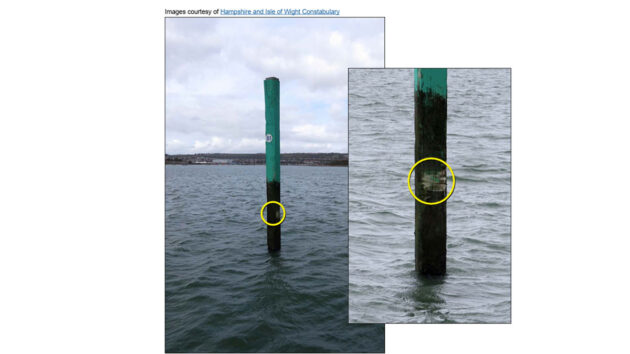
Navigation beacon 81 with inset detail of surface damage. Credit: Hampshire and Isle of Wight Constabulary
On the evening of 14 August 2025, the RIB Peaky Blinder was in allision (collision with a stationary object) with navigation beacon 81 in Portsmouth Harbour, causing the owner, William Blake, aged 61, who was at the helm, and the two passengers on board to be ‘ejected into the water.’
One passenger, Gary Huntington, aged 60, was recovered unconscious from the water and later declared dead; the owner’s body was recovered five days later.
The remaining passenger, aged 56, survived with minor injuries.
No one on board was wearing a lifejacket.
Mr Graves said: “There are two aspects to this accident. Alcohol being one, speed being the other.
“The boat was doing more than four times the 10-knot speed limit in Portsmouth Harbour. And one of the recommendations is to the Queen’s Harbour Master in Portsmouth to work with their partners to better enforce the speed limits in Portsmouth Harbour.
“At one point, the vessel was doing nearly 50 knots.”
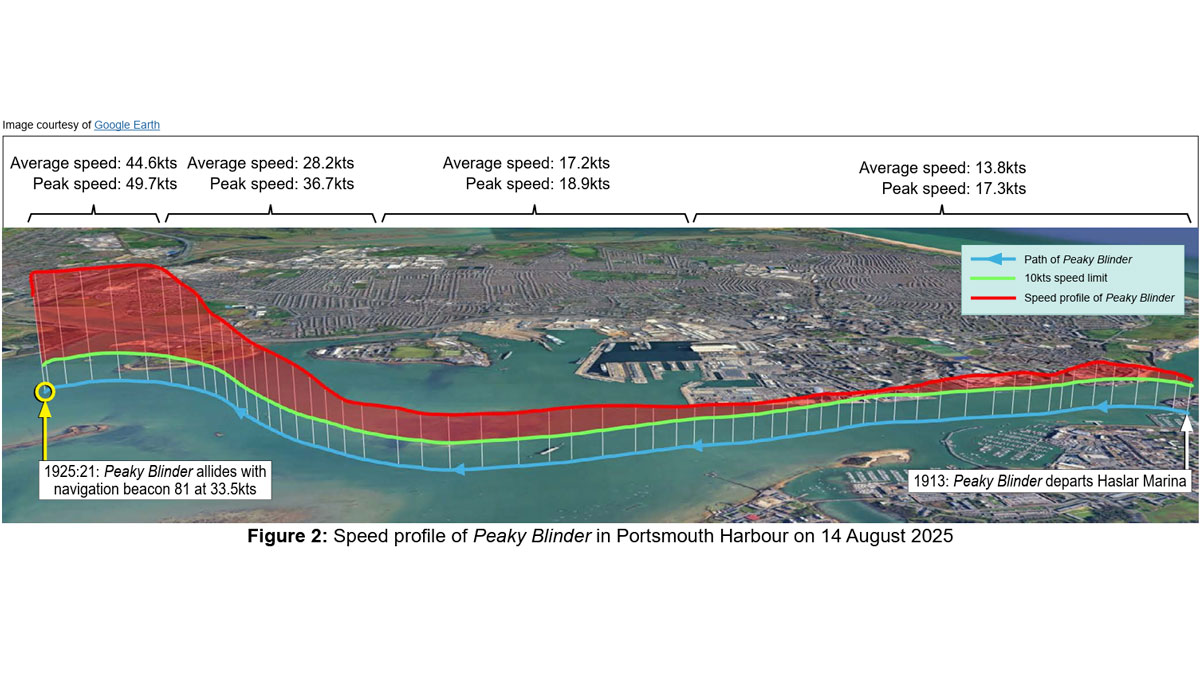
Speed profile of Peaky Blinder in Portsmouth Harbour on 14 August 2025. Credit: MAIB
He added: “It was a recreational voyage. It was three friends going out for a day’s enjoyment on the Solent – and alcohol was a factor of the day.
“They were sailing around, but they were drinking at the same time.
“So, the accident is a tragic consequence of the activities on the day.”
Key safety issues identified in the MAIB report:
- the vessel was being operated at an unsafe speed immediately before the allision, putting the RIB’s occupants and other water users at risk.
- the owner of the vessel was under the influence of alcohol, this ‘substantially increased the likelihood of an accident.’
- no one on board was wearing a personal floatation device (PFD), which meant they were ‘unavailable to reduce the consequences of entering the water’.
- the system of regulation, enforcement and education in the recreational community was ineffective in influencing on-the-water behaviours with respect to alcohol consumption.
The King’s Harbour Master, Portsmouth has been recommended to:
- Take action to improve adherence to the speed limits contained in the Dockyard Port of Portsmouth Order 2005.
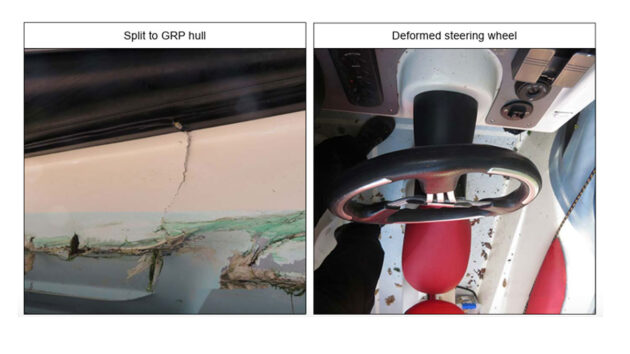
Post-allision damage to Peaky Blinder. Credit: MAIB
The Secretary of State for Transport has been recommended to:
- Make an order to commence the provisions on alcohol limits for non-professional mariners contained in the Railways and Transport Safety Act, 2003
- Develop and enact proportionate secondary legislation to define the scope of application of subsection 80(3) of the Railways and Transport Safety Act 2003 using the powers contained in subsection 80(4) of the Act.
- Develop a national strategy for the delivery of an effective educational and awareness campaign.
Mr Graves added: “We deal with the families of the bereaved, and this one, with two fatalities, is particularly tragic.
“But the report details a number of similar cases.”
Other boating tragedies with an alcohol factor
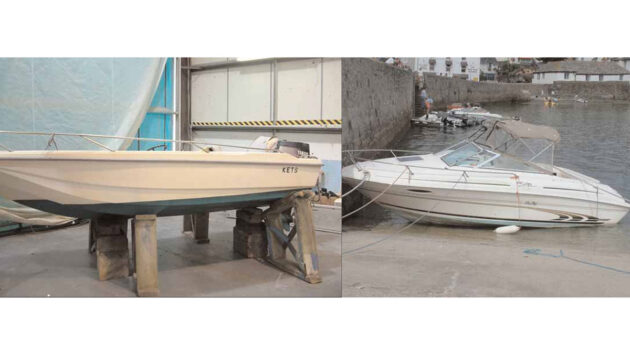
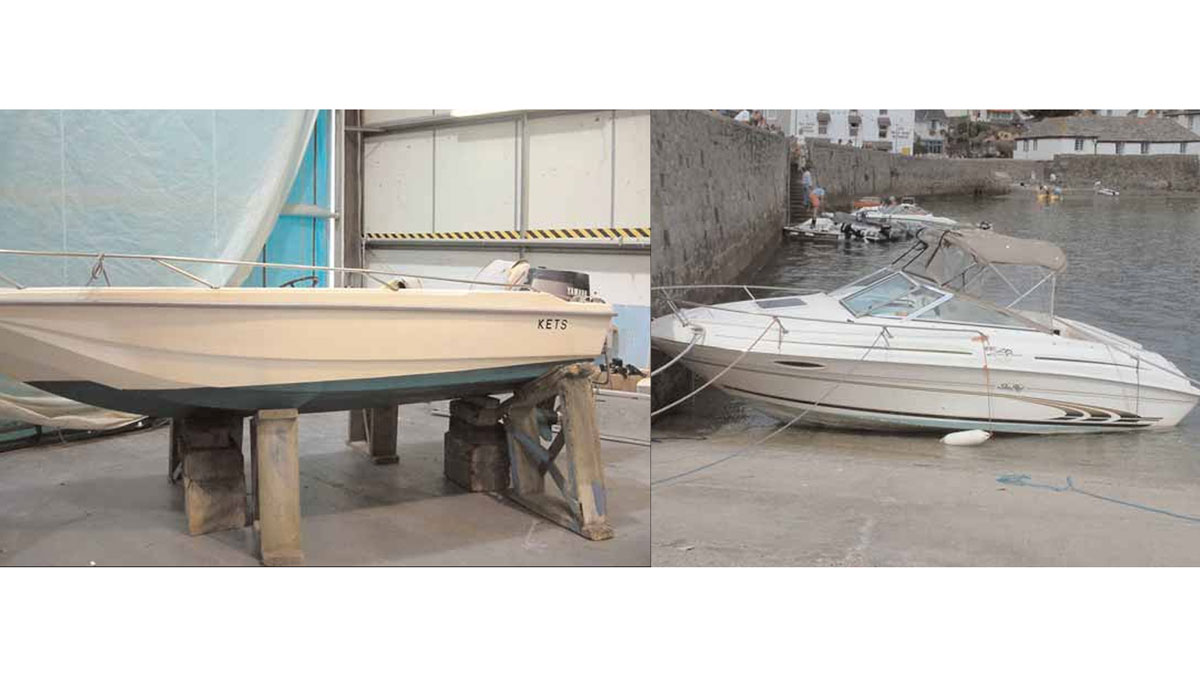
Kets (left) and Carrie Kate (right), which collided in July 2005, near Castle Point, St Mawes, resulting in the loss of one life, both had helmsmen ‘under the influence of alcohol’. Credit: MAIB
Several boating tragedies involving alcohol are highlighted in the report, including the Carrie Kate and Kets collision between two powerboats on 16 July 2005, near Castle Point, St Mawes, England, resulting in the loss of one life.
Both helmsmen were operating their vessels while under the influence of alcohol and were over twice the drink-driving limit for road vehicles.
The ‘main contributory factor’ of the powerboat Sea Snake crashing at high speed into a low cliff near the entrance to the inner harbour at Tarbert, Scotland on 10 July 2005, killing three people and seriously injuring three others, was ‘a combination of the effects of fatigue and excessive alcohol consumption.’
The grounding of the 6.3m RIB Sooty, with loss of one life on 18 May 2009, at Calve Island off Tobermory, Scotland at about 20 knots is also detailed.
One of the boat’s four occupants was thrown on impact onto the rocky shore, suffering fatal injuries.
The coxswain and the deceased were both found to be more than three times over the road drink-driving alcohol limit.
The report points to the coroner’s ‘prevention of future deaths report’ following the inquest of David John Haw who died following an allision between the RIB Fargo and a navigation buoy in Poole Harbour on 16 May 2022.
On 20 December 2024, the Senior Coroner for Dorset raised several concerns, including the lack of legislation prohibiting the use of alcohol or drugs by those who are helming a vessel for private or pleasure use.
Alcohol limits are needed – says the chief inspector of marine accidents
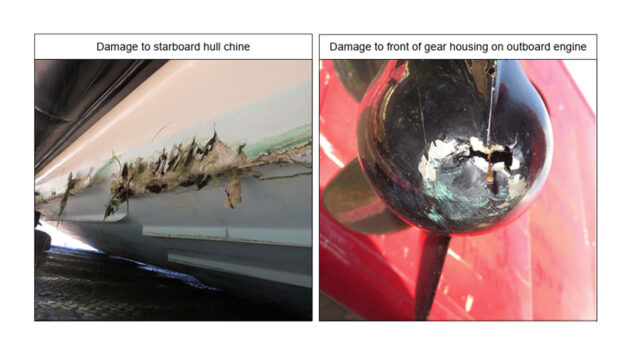
Post-allision damage to Peaky Blinder. Credit: MAIB
Rob Loder, chief inspector of marine accidents at the MAIB, said: “It is well understood that consumption of alcohol results in an elevated risk of having an accident.
“The introduction of alcohol limits for recreational boaters has been the subject of previous MAIB recommendations.
“It is to be hoped that action will now be taken, such that fatal accidents in which excessive alcohol consumption is a contributing factor become a thing of the past.”
Jan Smallwood, a spokesperson for the Westerly Owners’ Association, the largest yacht owners’ group in the world, said the report also highlighted the importance of lifejackets.
She said: “The wearing of well-fitted and safety-checked lifejackets increases the chance of survival by keeping your head above water although a terrible accident, as happened to the Peaky Blinder crew can be insurmountable.
“Do remember to check your lifejackets by either following online instructions yourself or searching for ‘Life jacket servicing near me’.”
What does the national governing body say?
In a statement, the Royal Yachting Association (RYA), the UK national governing body for sailing and boating activities, said: “The RYA is aware that the MAIB investigation report into Peaky Blinder has recently been released, and our thoughts remain with all those affected by this tragic incident.
“Being under the influence of alcohol or drugs while in charge of a vessel puts lives at risk and has no place in the boating community.
“Considering the available evidence and the evolving understanding of risks associated with boating under the influence, the RYA is not opposed to legislation that is practical, proportionate, and enforceable.
“The RYA continues to engage extensively with government and industry stakeholders on this issue.
“We also recommend that any proposed legislative changes should be accompanied by a targeted awareness campaign to help boaters understand the risks associated with operating vessels while impaired by alcohol or drugs.
A spokesperson for the Royal National Lifeboat Institution (RNLI) said: “Our thoughts are with the families involved and the RNLI offers its sincere condolences to them.
“There is clear evidence that alcohol impairs judgement and reduces reaction time, so the RNLI would encourage anyone going afloat to avoid alcohol.”
Mr Graves told PBO: “The message is that the people who are using boats recreationally should should treat driving a boat the same way that they treat driving a car, and steer clear of alcohol when they’re in control of a boat.
“I think we would agree that boating is about freedom, but it’s also about responsibility as well.
“And the number of fatalities that we have seen over the over the last 20 years where alcohol has been a factor, we think we need to address it.”
Coroner calls for boat law to deter drunk sailing
A coroner has raised concerns about the lack of legislation prohibiting the use of alcohol or drugs by those helming…
Man cleared of manslaughter in Truro as DfT plans alcohol limits for leisure mariners
Man cleared of manslaughter in Truro as DfT plans alcohol limits for leisure mariners
Beware becoming a man overboard (MOB)… in a marina
Everyone thinks about man overboard (MOB), but what do you do when you have a MIM, man in marina? Mark…
Want to read more articles like ‘Call for Government to introduce drink drive limits for recreational boaters’?
A subscription to Practical Boat Owner magazine costs around 40% less than the cover price.
Print and digital editions are available through Magazines Direct – where you can also find the latest deals.
PBO is packed with information to help you get the most from boat ownership – whether sail or power.
-
-
-
- Take your DIY skills to the next level with trusted advice on boat maintenance and repairs
- Impartial, in-depth gear reviews
- Practical cruising tips for making the most of your time afloat
-
-
Follow us on Facebook, Instagram, TikTok and X