



Removing old antifouling paint, preparing the hull, and selecting and applying the best fouling control may seem daunting for many DIY-ers. AkzoNobel’s Jason Hill shares his tips
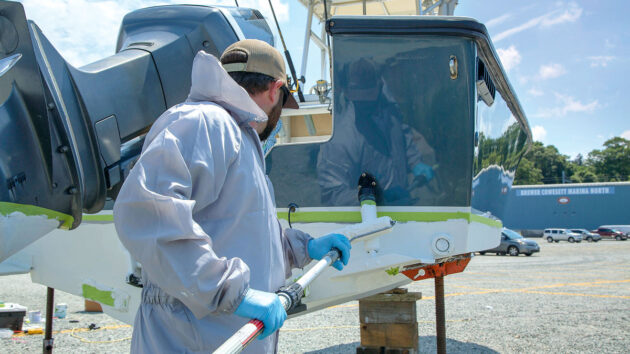
Whether you look forward to it as an essential part of pre-season preparation or consider it an unwelcome hassle, the process of antifouling your boat is arguably the most important painting job for boat owners.
It’s a task which involves overalls and other protective gear, appropriate tools, as well as meticulous preparation and application, but the rewards of effectively protecting your boat and preventing a fouled hull are immeasurable. A smooth, clean hull, which minimizes the attachment of fouling organisms, not only enhances
the boat’s value and extends lifespan, but also increases fuel efficiency by reducing drag, therefore improving vessel performance and reducing harmful emissions.
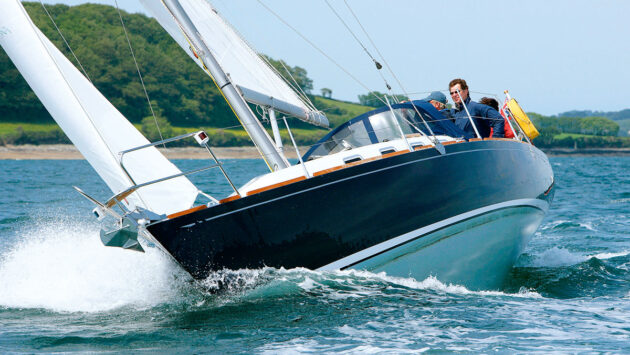
A smooth, clean hull improves your boat’s performance. Credit: Michael Austen/Alamy
In addition, modern advances in antifouling protection contribute to the health of our marine environment by limiting the transfer of invasive species. Prevention is much better than cure when it comes to the serious issues caused by barnacles, algae, mussels, weeds and slime adhering to the hull below the waterline, so the correct, well-applied protection is vital.
The good news is that with a few hours of dedicated effort on your boat’s antifouling after a winter ashore, you can feel safe in the knowledge that your efforts have resulted in a long-lasting sleek hull, which not only looks good but achieves that satisfying extra knot of speed. When the time comes to apply or reapply antifouling paint ready for a new season, the preparation, procedure and choice of products can be overwhelming.
The antifouling process and products that suit each vessel will vary depending on several factors, including the type of boat, the quality and material of the hull surface, the environment, the water quality and temperature, frequency of use and boating style, the periods between maintenance, and the priorities of the owner in terms of performance.

Inspect the hull for signs of osmosis – blisters filled with a sweet or pungent acidic liquid. Credit: Motor Boats Monthly
Antifouling paint: Preparation, priming and protection
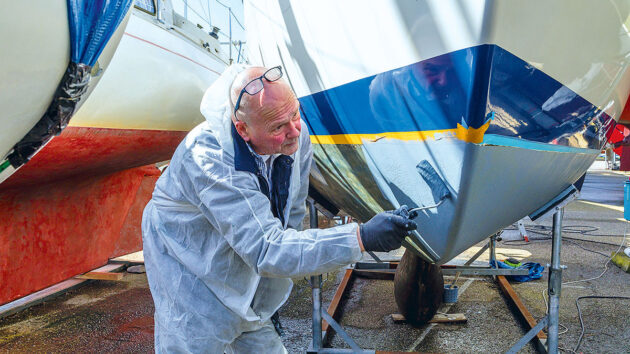
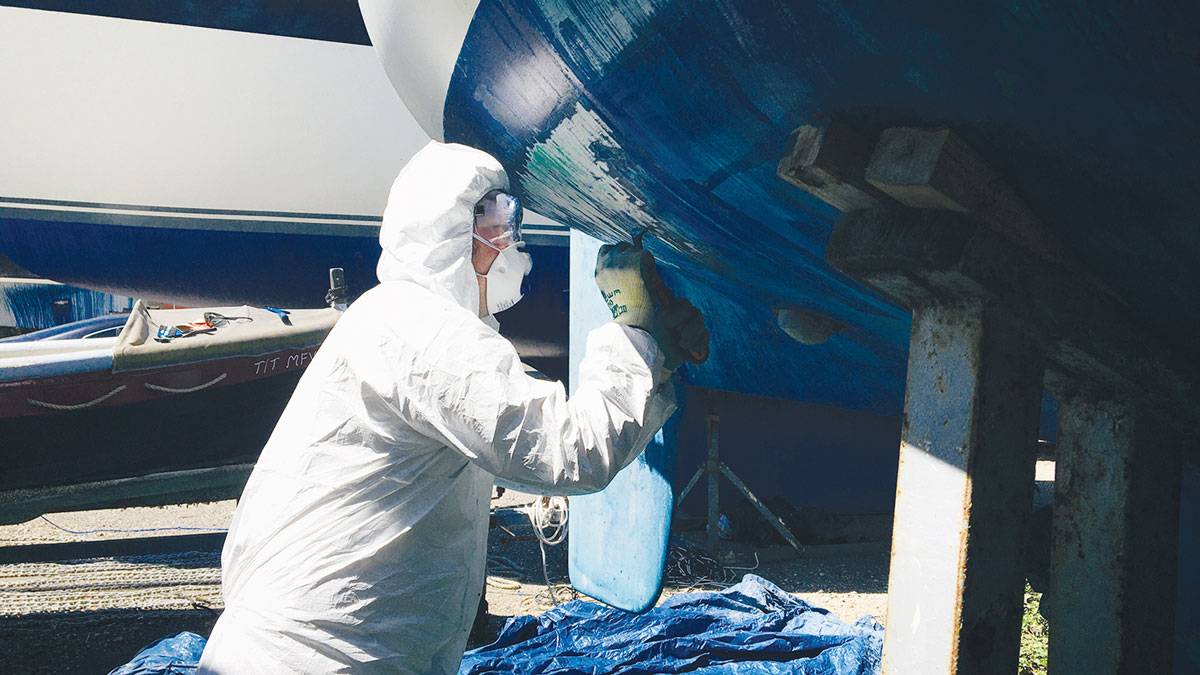
As the weather warms up, spring is the perfect time to rejuvenate your boat after a winter ashore. To give your boat the highest level of protection, thorough preparation is key. Before you tackle critical maintenance and the fouling control process, you’ll need appropriate personal protective equipment (PPE), including gloves, overalls with a hood and goggles or glasses, as well as a mask if you are removing old coatings. A tarpaulin is also recommended to place under the boat to collect scrapings and dust from sanding.
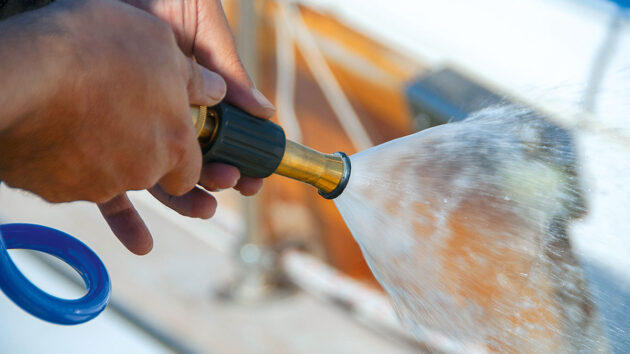
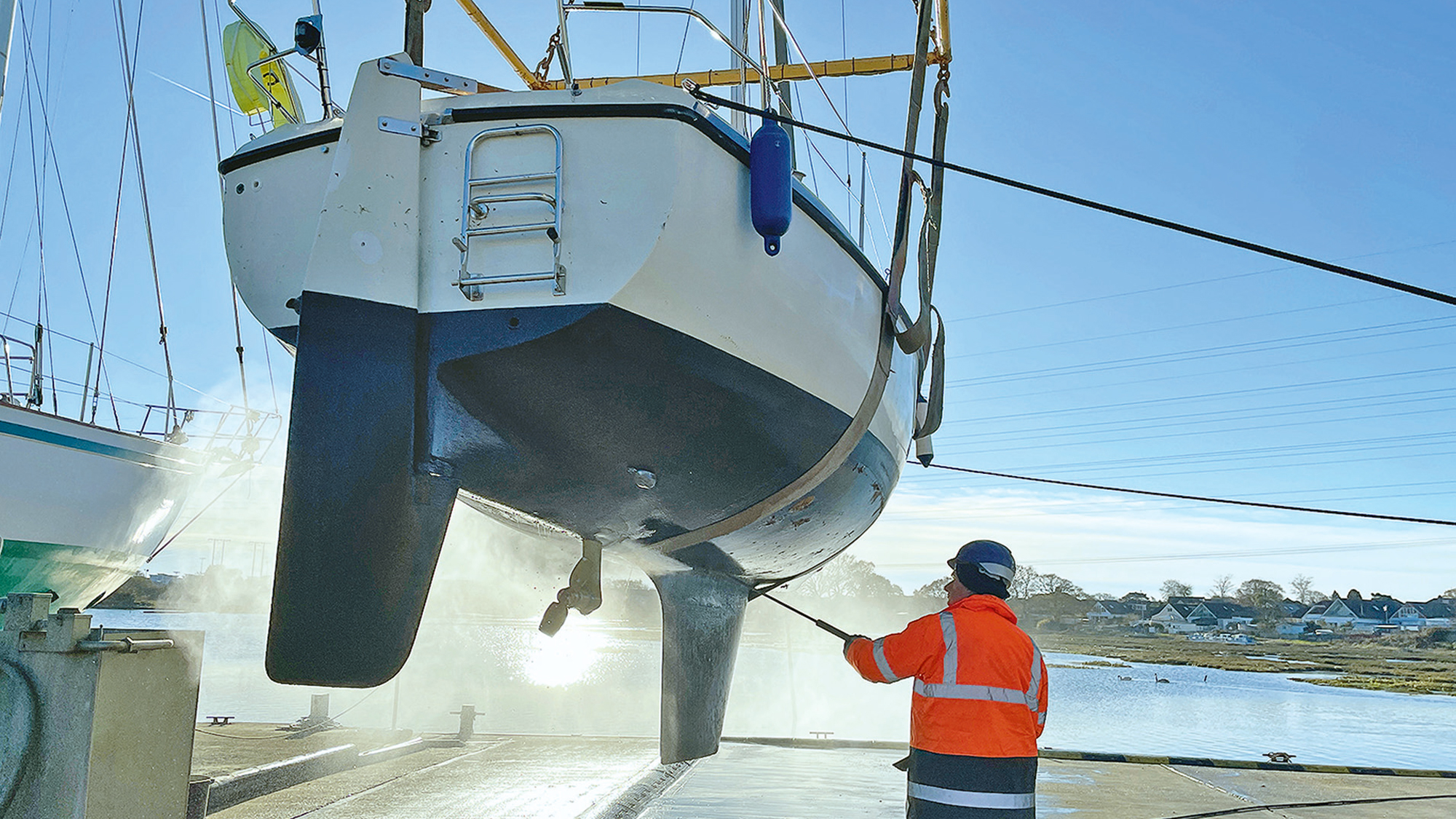
Thoroughly rinse the hull with fresh water before painting. Credit: Getty/AkzoNobel
Clean and inspect the hull before applying antifouling paint
A thorough cleansing of the hull with a specialized cleaning product will sweep off salt smears, as well as dirt and general grime. When flushing down with fresh water, you can tell when the surface is properly degreased because the water spreads across the surface without forming small droplets. It’s important to check the hull for signs of osmosis at this stage and treat any blisters that may weep a fluid resembling vinegar.

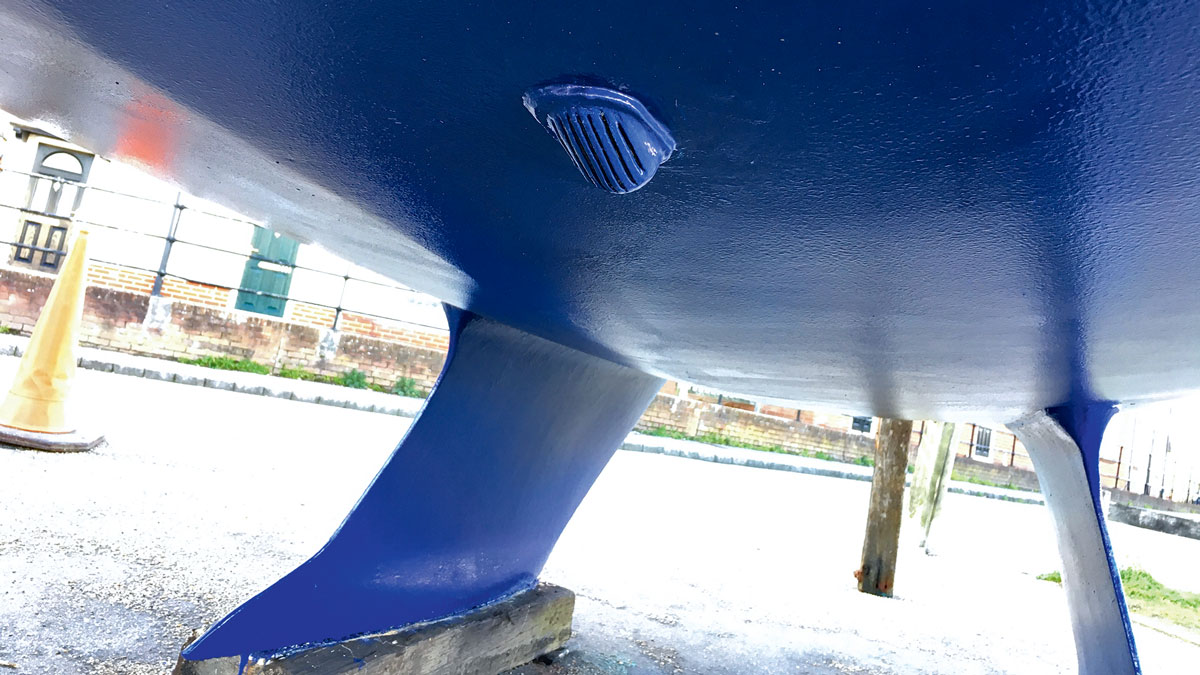
Examine the keel for damage, cracks or loose paint and rectify affected areas before applying this season’s antifouling paint. Credit: Graham Snook/Future
Also, examine the keel and rudder for impact damage, cracks, or where the coating may have become loose. Address and grind out the affected areas thoroughly and ensure they are fully dried out after treatment. It’s worth noting that if you’re working on small repairs, it is recommended to apply a layer of primer before the application of filler.
Evaluate the existing fouling control system
If there is any peeling and flaking paint, an excessive build-up or an uneven surface, it is time to scrape it away. This type of flaking is likely to be caused by using fouling control paints that are not compatible with each other, or when too much paint has been applied over several seasons. You can save any layers that are in good condition.
We suggest using 80- to 120-grit sandpaper to sand any existing primer, frequently changing the paper. Any bare substrate needs to be sanded with 80- to 120-grit to improve adhesion, unless it is aluminium or steel, which requires 60- to 80-grit sandpaper to remove oxidation. On wood, always sand along the grain to avoid scratches.
Select appropriate primer and fouling control paint
When changing brands of fouling control products, consult compatibility charts to confirm that the new paint will adhere correctly. We offer a vinyl-based primer that can be applied over most pre-existing coatings.
Priming is a vital part of the painting process as it’s the base on which the rest of the system will be applied. When selecting the right fouling control, it’s essential to consider your boat type and boating habits, as well as the specific fouling challenges and the local conditions in your area – including whether the water is brackish, fresh or sea water, and also taking into account water flow speed, tidal exchange and shading from trees or buildings.
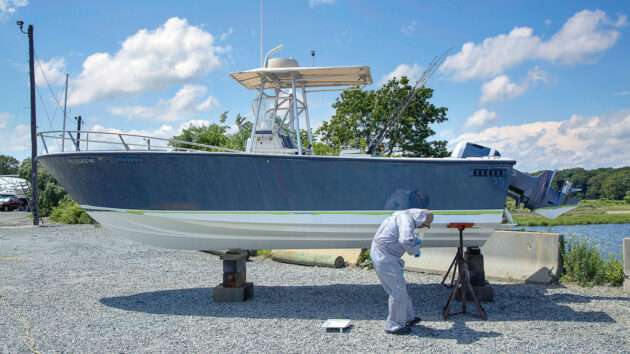
Make sure you wear appropriate PPE before starting work. It is also a good idea to put a tarp under the boat. Credit: Billy Black/AkzoNobel
A key question to consider is whether you need hard or eroding antifouling paint. If you have a fast boat or like to race, hard antifouling, which can be burnished or wet sanded to a smooth finish and does not wear easily, is a good option.
Eroding antifoulings, also known as soft or ablative antifoulings, slowly erode in sea water. They offer very good all-round performance in a wide range of fouling conditions and suit those who prefer a low maintenance option.
A sub-group of products known as self-polishing copolymer antifouling is suitable for the harshest fouling areas and is ideal for larger vessels that require longer periods between maintenance, as well as increased all-round performance.
International’s fouling control protects all types of boats in all waters and conditions to stop barnacles, worms, slime and algae from settling, which increases drag. The Micron range is specifically formulated to release just the right amount of active ingredients to keep the surface clean throughout the season, without the need to scrub your boat between applications.
When selecting the right product for your boat, consider if you need an advanced self-polishing copolymer suitable for the harshest fouling areas, or something effective against medium fouling or lighter fouling areas, or perhaps you are looking for a hard racing finish.
Applying primer and fouling control
On a still, windless day, mask off the areas that are not going to be painted, such as topsides on the waterline. Once taped, mix your paint following the recommendations on the label or technical data sheet, and add solvents where necessary to aid application or improve adhesion if applying your first coat of paint onto bare wood.
Ensure the interval time between the end of the application of the epoxy primer and the first coat of antifouling is no longer than stated on the datasheet or label. Antifouling paints are formulated to be applied as they are, so there is no need to add thinners. However, there are some occasions where a small amount of solvent can be added to aid application.
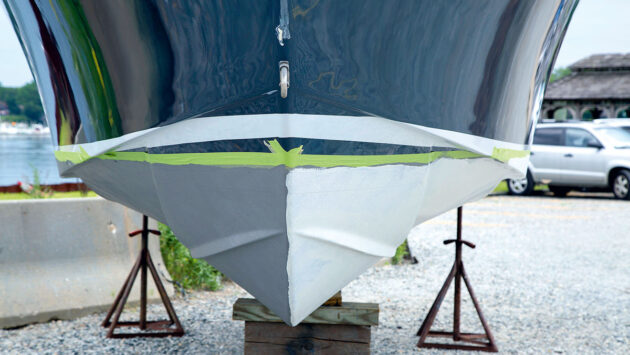
Mask off any area not being painted before starting to paint. Credit: Billy Black/AkzoNobel
Applying antifouling paint with a roller is a fast method of covering large areas, with brushes best used for small areas. If applying with a brush, a good technique is the criss-cross method with paint applied to the surface with diagonal brushing from left to right. Spread the paint further with horizontal strokes before finally laying off with light vertical strokes to ensure a uniform layer of paint.
Apply sufficient paint for the product to flow, but not so much to make it sag or run as it can be hard to remove later. In particularly hot or cold weather conditions, a small amount of suitable thinner can ease the application. Follow immersion times carefully to avoid detachment, blistering or cracking of the fouling control.
It’s good practice to apply an extra coat to leading and trailing edges such as the waterline, trim tabs, outdrives, keels and rudders, which experience more water flow and turbulence.
Don’t forget to antifoul your propeller. We offer a quick-drying one-part primer with excellent adhesion properties which works in combination with our recommended International antifouling, forming a unified coating system that resists dynamic and cavitation forces to protect propellers and underwater metals from fouling build up.
Seek support
Before you tackle the task of fouling control or other painting tasks, it is best to seek advice from trusted experts if you are in any doubt about how to proceed. AkzoNobel yacht coatings advisers are available to help you select the most appropriate solutions for hull protection and fouling control along with application guidance and technical support on coating application for both above and below the waterline.
The International Boat Paint Guides can also be consulted for choosing the right fouling control paint based on local conditions and boat type.
The Future of Antifouling Paint
The benefits of effective antifouling paint for boat owners are well understood, ranging from safety and less frequent repairs to fuel efficiency, increased speed, and enhanced vessel longevity and value. However, the key driver for antifouling coatings’ research and the development of a new generation of antifouling technology is now environmental.
Fouling control has a positive impact by reducing fuel consumption and subsequent emissions and by discouraging invasive species, but the coatings products themselves now need to answer the increasing environmental concerns of boaters and comply with regional regulations and future legislation.
B-Free Explore (available only in the EU) is a biocide-free silicone-polymer coating that needs a tie-coat. Credit: @zeilen.nl/AkzoNobel
Antifouling paint has traditionally relied upon the use of one or more biocides which are released gradually over time to prevent the microscopic fouling organisms from attaching to the boat. With more stringent restrictions coming into force and an increased focus on sustainable products, marine coatings suppliers are developing new solutions that answer international and regional regulations and provide a more environmentally friendly solution to controlling fouling.
As suppliers, AkzoNobel’s responsibilities include, for instance, the compliance of paints and coatings with REACH (Registration, Evaluation, Authorisation and Restriction of Chemicals), which is the EU regulation governing the approval of chemical substances, and the registration of antifouling products under the Biocidal Products Regulations (BPR), as well as an understanding of the different national approval boards in each country.
One of the most recent industry advancements is the development of biocide-free solutions that improve vessel performance and longevity by preventing fouling organisms from forming a strong bond with the hull surface, while reducing the coatings’ impact on the marine environment.
As regulations evolve and awareness of the marine environment grows, it is clear that it’s more important than ever for underwater hull coatings suppliers – and potentially boatyards and marinas – to provide a variety of options to boat owners to meet personal preferences and regional requirements.
Antifouling: Everything you need to know
Here’s PBO’s guide to preparing for, choosing and using antifouling paints
Your best biocide-free antifouling options
Can you protect your boat in UK waters using foul-release coatings, ultrasonic or biomimetic technology? Rob Melotti investigates the antifouling…
How Hempel’s Silic One silicone antifouling performed over two years on my 27ft boat
Stuart Guy shares the results of how Hempel’s hydro gel fouling-release system has performed on his Hunter Pilot 27 over…

Best antifouling paint: 8 leading options in head-to-head test
In June 2021 we coated the hull of a Hardy Commodore 42 with eight of the best antifouling paint products.…
Want to read more articles like Antifouling paint tips from the experts?
A subscription to Practical Boat Owner magazine costs around 40% less than the cover price.
Print and digital editions are available through Magazines Direct – where you can also find the latest deals.
PBO is packed with information to help you get the most from boat ownership – whether sail or power.
-
-
-
- Take your DIY skills to the next level with trusted advice on boat maintenance and repairs
- Impartial, in-depth gear reviews
- Practical cruising tips for making the most of your time afloat
-
-
Follow us on Facebook, Instagram, TikTok and X