


Jonathon Savill looks at the history of the Seagull outboard and why it still has a devoted following
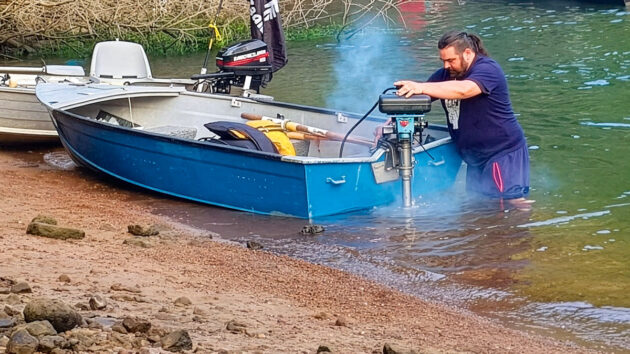
During the early part of the 20th century most boats were wooden, built by hand and largely propelled by sail or by rowing. Engines were diesel and internal.
Engineering in general was based around robust machines designed for longevity and the ability to be maintained by hammer and spanner.
In the UK two engineers worked for Sunbeam Motorcycles in the marine division: John Way-Hope was a former Evinrude employee and Bill Pinniger was a design engineer. Their original brief was to produce an industrial engine.
They designed a simple, lightweight, single-cylinder, water-cooled, 2-stroke workboat motor, aimed primarily at the inshore fishermen.
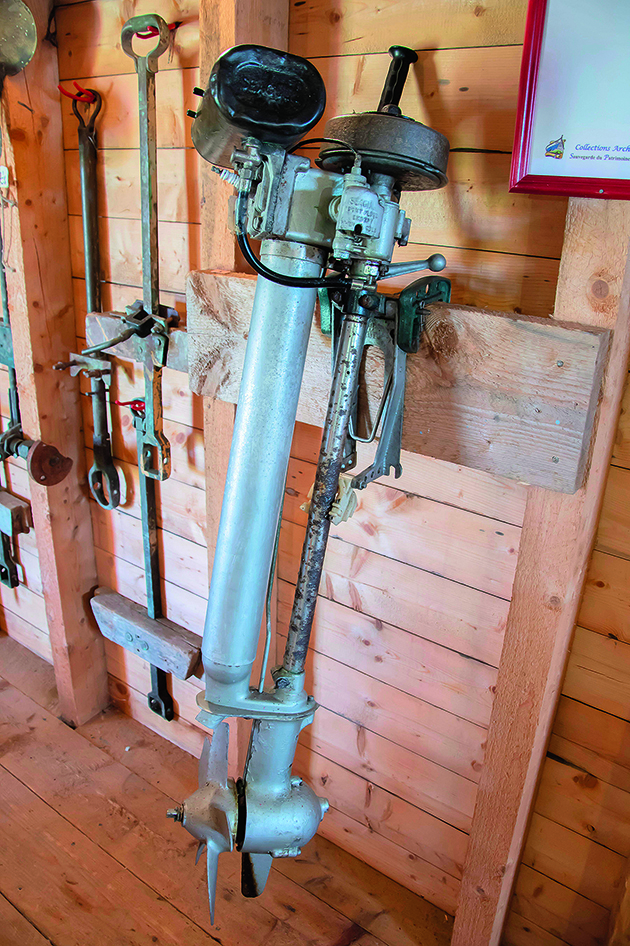
The simplicity of the British Seagull outboard – lightweight, single-cylinder and water-cooled – is one of the reasons for their enduring appeal. Credit: Paul Andreassen/Alamy
It was originally produced in industrialist John Marston’s ‘Sunbeamland’ factory in Wolverhampton and marketed as Marston Seagull. Production began in 1931 and it was priced at £26.00 (roughly £2,299 today).
Their slogan was ‘The best outboard motor in the world’, printed on each engine. Another outboard motor company challenged British Seagull on this statement and rather than face court it very cleverly changed one word: ‘in’ became ‘for’. The revised logo remained in use for decades. Later slogans included ‘Everlastingly British Seagull’ and ‘Simple Perfection’.
There were hundreds of other outboard engine makers in the 1950s; some produced thousands of units. A major competitor was British Anzani. Its outboards were considered more sophisticated but much less reliable and were noisy as they were air-cooled; production ceased in 1979.
Seagull outboard: Fighting fit
Way-Hope and Pinniger later bought the manufacturing rights from Sunbeam in 1937 and marketed the outboards as Bristol Seagull, under the name Bristol Motor Boat Company. They later moved to Poole in Dorset in 1938 and settled for the name British Seagull. They enlisted the help of Robert Harper with gear box design alterations.
Their timing was fortuitous. During World War II Seagull accepted the Admiralty’s request for a ‘rough and ready’ version of the ‘102’. They powered barges for pontoon bridge building and landing craft during the D-Day invasion. In a world of shortages, their simplicity and reliability were key.
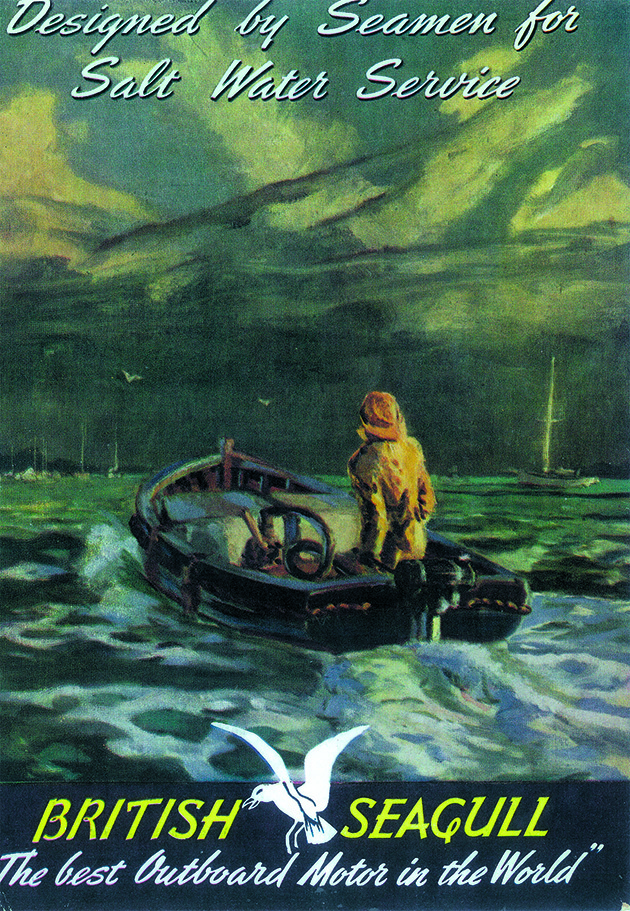
The famous tagline for the Seagull outboard: The best outboard in the World. Credit: British Seagull
Over 10,000 of the 102cc model engines were used during World War II. The Royal Navy demanded they be able to run for 24 hours nonstop and be operable in conditions from arctic to tropical.
Seagull outboards like a heavy boat and are relatively foolproof, key elements for the military. There are many stories of them being dropped overboard, being retrieved and started on the third go.
During the war the armed forces allegedly buried dozens of British Seagulls, and inflatable boats, on the D-Day beaches as a backup in case it all went wrong and to prevent the need for another ‘Dunkirk Little Ships’ armada.
The Allies never used them, but lots of Frenchmen ‘liberated’ them and some are still in use.
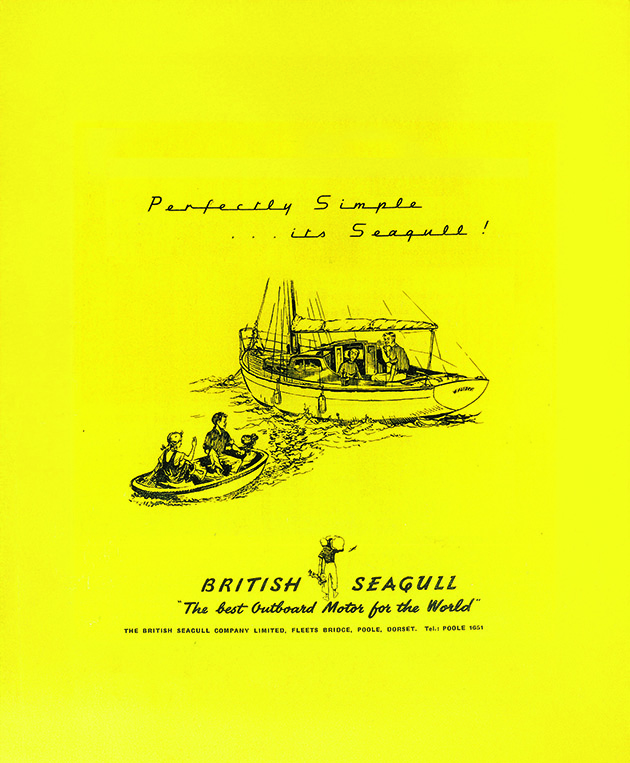
Spot the difference! A subtle word change in Seagull’s famous tagline. Credit: British Seagull
The military used outboards all over Europe; many were abandoned after the war. In about 1976 the Ministry of Defence released several hundred of its preserved and crated surplus engines onto the market.
John Williams runs Saving Old Seagulls, a supplier of Seagull spares and a world-class expert. He explains why the outboards have had such long success: “It’s largely due to the fact there are only three moving parts, the piston, con rod and crankshaft. They lack the springs, widgets and gizmos of other engines.”
Chris Croul of seagulloutboard.com in New Zealand agrees: “I think the efficiency is down to the hefty gearbox’s low gearing and the large four-bladed prop. They are a bit noisy and smelly but good reliable old tech with a magneto.”
Enduring appeal of the Seagull outboard
Part of the charm of Seagulls is their adaptability. There are two main engine block sizes, the first displaced 64cc and was known as the Forty Series. It produced between 1.5hp and 3hp. The second engine, displacing 102cc and known as the Century Series, developed anything from 4hp to 6hp.
There were many variants in outboard engines produced between 1930 and 1995. These include various gearbox, shaft and propeller sizes. The basic engine was a 102cc, single-cylinder power plant that would change little over the years, although the reverse gear on the early engines, which Way-Hope called “a rather sissy refinement rendered superfluous by efficient boat handling,” was eliminated.
Their patented ‘Positive and Self-Adjusting Free-Engine Clutch’ was considered by them to be so near perfection that no serious alteration to the 1938 design was contemplated until the mid-1960s. Way-Hope and Pinniger’s concept was to use the best materials possible for the punishing marine environment.
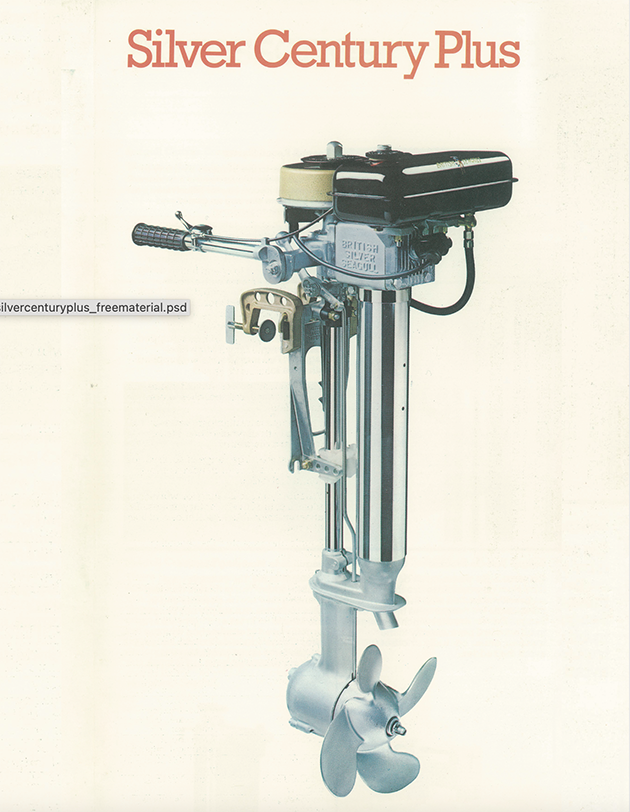
The Silver Century Plus could power yachts up to 22ft. Credit: British Seagull
The famous British Seagull logo featuring a sailor in a striped top and jaunty cap, is a design that has remained consistent since its introduction around 1950.
Post-war there was an explosion of leisure boating. In the 1960s Seagull was manufacturing around 80,000 units per year. Their slogan was ‘Every dinghy a motor dinghy’.
There was a massive expansion of glassfibre boats in the 1960s. The 1947 Paper Tiger yacht had introduced glassfibre to a sceptical public, but by the 1960s the advantage of low maintenance, low-cost mass-produced boats had taken a grip on the seagoing sector.
Another contributing factor was the massive expansion in car ownership.
It was approximately five or six million in 1960 and had risen to around 11 million by 1969. People had time and money, and the ability to tow their boats. In 1959 alone, roughly 450,000 boats were sold in the USA, which doubled the total number of existing boats at that time.
Over the next few years Seagulls would move from ubiquitous to iconic. Very few people who have messed about in boats don’t have a Seagull-shaped memory in their history. They got stored in garages and sheds. They were multi-generational; some owners shared engines with their grandfathers.
It was the product that would never die. It had been around since before the war and if the Royal Navy could get them to run for 24 hours straight it was a fair bet that it would get you back across Chichester harbour, or indeed Valletta harbour.
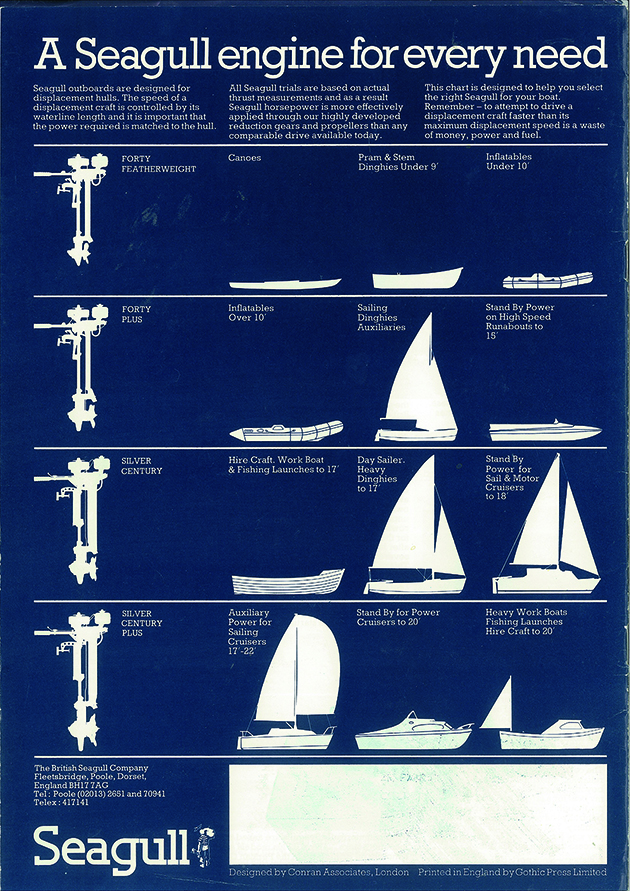
All Seagull outboard engines were designed for displacement hulls. Credit: British Seagull
British Seagull had opened its factory in Poole, the second largest natural harbour in the world. Not only that, it was part of the cruising ground from the Solent to Cornwall. The expansion in marina berths versus swinging moorings would also work in its favour.
In the 1990s there was a brief deal with an Italian company, Selva. British Seagull entered a marketing and rebranding deal with the firm to sell their more modern outboards. They were badged as ‘Seagull Sport’ and marked ‘Made in Italy’.
There was also a partnership with Queen’s University Belfast. Professor Gordon Blair, the leading engineer specialising in 2-stroke engine design, would design a more modern version of the Seagull. For possibly the first time he would use computer simulation to refine the design of the motor. New design features would include modified cylinders, water-cooled exhausts and quieter operation.
These motors also featured plastic fuel tanks, as the steel tanks that had replaced the original brass ones were superseded. Plastic tanks were fitted to all models built after 1987. Models included the 6hp Kingfisher engine, a 5hp Osprey and the 4hp Curlew. The engines were introduced at the 1987 London Boat Show.
Trouble on the horizon
British Seagull had a problem though.
It was selling a 45-year-old design in an environment where novelty was increasingly a factor. It had approximately 200 staff in its Poole factory. It also had the problem that once it had sold someone an outboard it was very hard to sell them another one.
Also, the ethos of the country had changed. People were more fickle and valued permanence less. And in the East, there was the emergence of a new doom for the 2-stroke engine.
The Seagull had emerged from the Sunbeam Motorcycle factory and ironically, the new technology would destroy both the motorcycle and outboard industry. It was the 4-stroke engine.
Honda introduced the first 4-stroke engine on a motorcycle in 1951. The Japanese had been developing 4-stroke outboards since the 1950s and by the 1980s these were filtering into the British market. They looked sleek and modern.
Eventually the smell of 2-stroke oil would be consigned to motorcycle speedway tracks, classic Vespa scooters and old British outboards. Most men over the age of 50 will remember mixing oil and petrol together to make their engine run; many would mix the fuels with some trepidation.
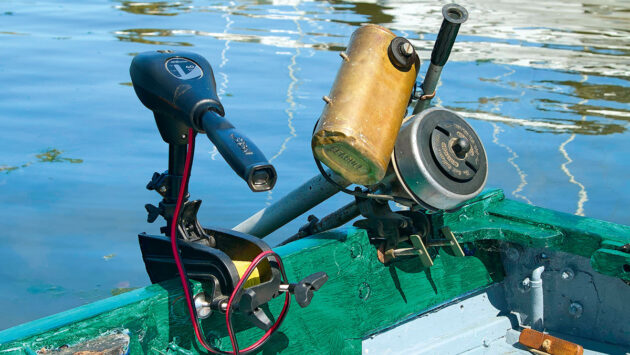
Although there are more modern and cleaner outboards available, the British Seagull outboard engine is still preferred by a certain sector of boat owners. Credit: LecartPhoto/Alamy
Original models used an 8:1 mix which made the mixture very oil heavy and smoky. From 1942 models specified a leaner 10:1 mix which remained until 1979, when a 25:1 mix was specified. A 50:1 mix was tried for the introduction of the models 125 and 170, but these engines with such a lean mix proved unreliable and British Seagull returned to the 25:1 ratio.
Chillington Marine took over British Seagull in the early 1980s. The production of outboards was stopped in 1996. In 1999 Chillington decided to exit the marine market; it put up Seagull and another division making marine toilets (Blakes Lavac) and diesel heaters (Taylor’s) for sale.
Chillington offered British Seagull as a going concern to John Freeman (Sales), operating and trading as Sheridan Marine, based in an idyllic boatyard on the River Thames in Moulsford, Wallingford, Oxfordshire.
But the offer was priced as a going concern and too expensive.
A spokesperson for Sheridan Marine explains: “Eventually we arrived at a sensible price, sometime later. And became the owners of the brand and several containers full of spares.”
It estimates there are over a million engines still in existence with about 100,000 still in use. But this is no dusty enclave. Training colleges have begun to use the outboards in engineering tuition, their simplicity ideal for encouraging engineering curiosity. There are Seagull clubs in South Africa, New Zealand and Australia among others, and these clubs feature race meetings and regattas.
Enthusiastic owners
But business is getting harder, as the Sheridan Marine spokesperson explains: “The current geopolitical landscape makes exporting difficult and expensive. For example, we face Government restrictions shipping to certain countries, like Russia, and face uncertainty on import charges owing to trade tariff issues to the US etc. We recently exported a £60 part to Brazil. By the time it arrived it cost the customer £160.
“Fortunately we have dedicated customers all around the world calling us for spares and buying online. We always tell them to start the engine. If it starts it can be mended. If it doesn’t start after three pulls check the spark plug, HT lead, fuel mix and age of the fuel.”
Sometimes the waterways are blocked and though it may start, it will seize if the problem is not cured.
According to British Seagull, the most important thing to know is the engine number, a stamped code on the crankcase or the top of the cylinder. That way staff can identify any subsequent alterations that can be accounted for. Also a much overlooked factor is the exact positioning of the engine on the hull.
Seagulls tend to stop working long-term when the engine block rots away, especially when the engines have been used in salt water over a long period of time. British Seagull does not produce new blocks ‘owing to the cost of production, meaning a retail price would be too high’, but, apart from that, most other spares can be provided. The logic here is that there are enough donor engines in the world to be able to retrieve engine blocks.
The first part to fail in 90% of cases is the cylinder, and there are so few cylinders available second-hand. After all, if the cylinder is still good the motor is still in use and not going to be broken for parts.
So will Sheridan Marine still support Seagulls into the future?
“As long as there is demand there will be a supply to cover it. In the beginning we worked with Seagull’s suppliers many of whom have retired or passed away, so organising the manufacture of spares with new suppliers is necessary. This takes time and significant investment.”
A new website is about to be launched that will identify your Seagull engine using the engine number and highlight spares. New technology will help prolong the life and availability of spares; some parts are now being 3D printed.
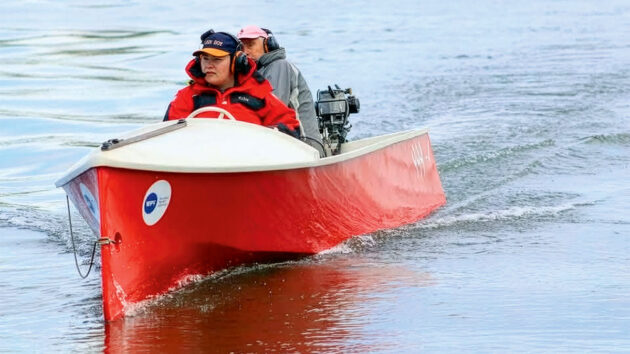
There are active Seagull clubs all over the world; the one in New Zealand holds adventure flotillas for enthusiasts. Credit: Simply Seagull
Sheridan Marine has many customers who visit from around the globe to buy Seagull spares including those from France, Australia, and South Africa.
It does not actually repair motors because of the prohibitive cost of labour, but their expertise in parts ensures customers get what they need. It also owns the rights to the famous British Seagull manual, which explains how to recover an engine that has been sunk.
The profile of customers has changed; there are two ends of the spectrum. Either they are after the cheapest most reliable motor regardless of looks, noise and smoke etc, or they have a polished and restored beauty on the back of a classic boat.
Every British Seagull owner loves their outboard, preferring their personality to the more modern and convenient 4-stroke engines. They are a tight-knit community of fans; one Australian owner went further, he was actually buried with his British Seagull on top of his coffin.
It is, incidentally, perfectly legal to use your Seagull for as long as you can keep it working, unless you are trying to use it on a reservoir, where 2-stroke engines are generally banned.
Seagull was quite pontifical in its approach. One of the first paragraphs in the handbook states: ‘The world of engine owners is divided into two classes… the vast majority are those who never get any trouble, and get heaps of pleasure, both for themselves, their families and friends, day in and day out… whilst the second class is a very small minority which is always in trouble, causing misery to itself and constantly drawing on the kindness and good fellowship of other people for aid and assistance’.
One user observed: ‘The official manual implies if you can’t get it to work, the problem is likely it’s your mental attitude and not a cantankerous engine’.
The engines have been variously described as ‘The Vespas of the Sea’ and slightly more rudely as ‘the cockroaches of the sea’. It is likely that a Seagull will be earning its living somewhere in the world for maybe the next 60 years or longer – but only if it is religiously flushed out after use in salt water.
Ron Battistonis used to own the British Seagull Shop in Victoria, Canada. He adds, “I have also found that Seagull people are just excellent. I have never met a nicer bunch and they seem to come from all backgrounds and occupations too.”
■ British Seagull Outboard Motors www.britishseagull.com
■ Saving Old Seagulls www.saving-old-seagulls.co.uk
Seagull outboard owners of some note
Famous Seagull owners include Sir Francis Chichester and John Profumo, the minister involved in the Keeler affair. Sir Edward Elgar, renowned English composer, was a customer of the parent company, John Marston Ltd, using their early products which ultimately led to the development of the Seagull outboard.
A Seagull outboard appeared in the film The Talented Mr Ripley – purists spotted the engine featured was out of the correct date period!

Your guide to the outboard engine: troubleshooting common problems
Whether it be a small outboard engine to drive our dinghy or a bigger one to drive our fast ‘toys’,…

How to service an outboard engine: step by step
Stu Davies shares useful maintenance tips on how to keep your 2-stroke and 4-stroke outboard motors running sweetly

Why is my outboard so unreliable?
Colin Staple's unreliable outboard is spoiling his sailing. Stu Davies suggests how to improve its performance
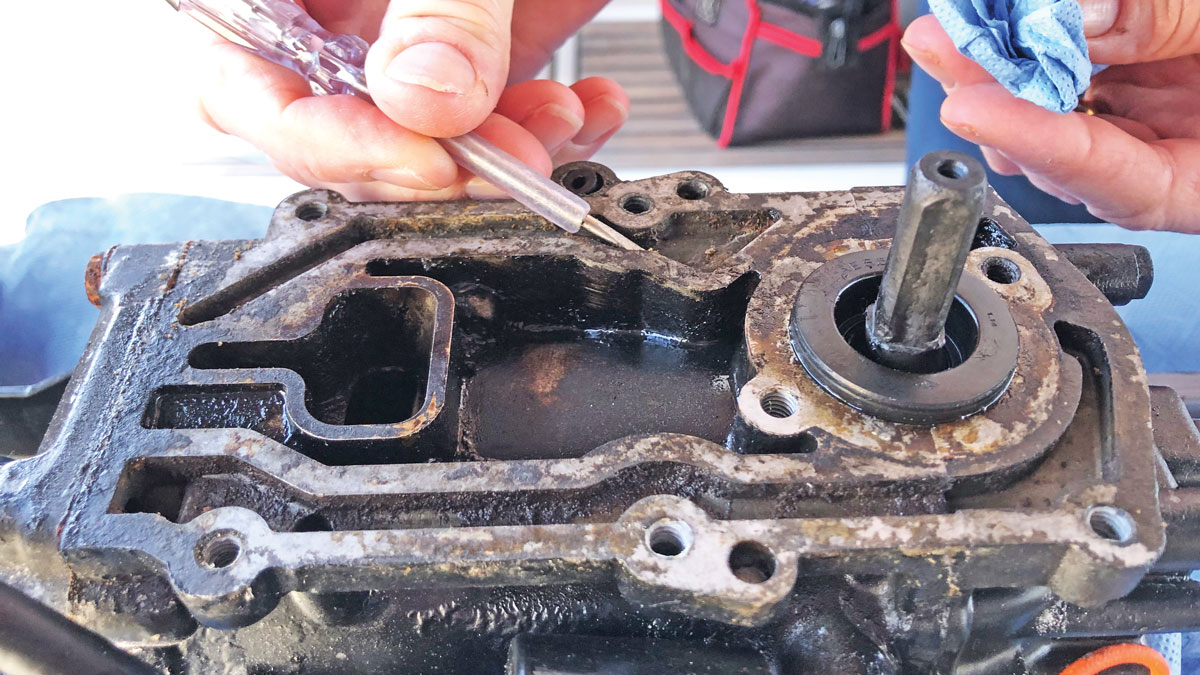
Why a simple bucket of fresh water is the secret to making a small outboard engine last
If your outboard engine is struggling with salt build-up, follow these essential maintenance steps to keep the cooling channels clear
Want to read more articles like Seagull outboard: the best in the world?
A subscription to Practical Boat Owner magazine costs around 40% less than the cover price.
Print and digital editions are available through Magazines Direct – where you can also find the latest deals.
PBO is packed with information to help you get the most from boat ownership – whether sail or power.
-
-
-
- Take your DIY skills to the next level with trusted advice on boat maintenance and repairs
- Impartial, in-depth gear reviews
- Practical cruising tips for making the most of your time afloat
-
-
Follow us on Facebook, Instagram, TikTok and X