


To expand their sailing horizons David and Melanie Lewin found the perfect solution – a compact trailer-sailer that would fit nicely on the ferry over to France
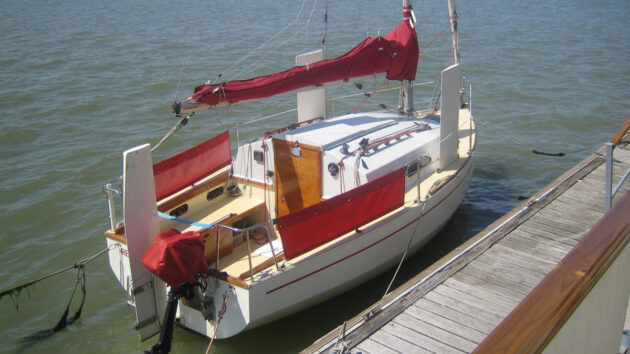
We’ve all done it – wanted a bigger boat. Big is beautiful. Big is faster, more comfortable and will allow us to cruise further. Except it doesn’t which is what we realised after buying our 20ft Red Fox.
I’m as guilty as the next man. After a succession of boats starting at 4.5m (15ft) we finally ended up with a glorious 12.8m (42ft) Alan Hill-designed ketch, Wild Thyme that we cruised every year for 17 years. The basic problem is that most normal working mortals only get two weeks off at a time in the summer, perhaps managing to tack a day or two onto each end, but at an average speed of 6 or 7 knots, you eventually run out of places you can get to within that timescale.
Having been based on the South Coast we have cruised pretty well everywhere from the East Coast and Holland to Concarneau in Brittany and the south coast of Ireland. The trouble is that the moment you get there you’re worried about coming back. The initial ‘delivery trip’ to reach a destination invariably requires crossing a bit of open sea, and my crewmember wife, while delighting in drifting up wooded rivers looking at other people’s houses and gardens, would simply veto a bash across the Channel and book something else. The other alternative is to keep your boat closer to the favoured cruising ground, but that negates any chance of spending a spur-of-the-moment weekend on board if the weather looks nice.
Finding the Red Fox
So we decided to look for a trailer-sailer that we could pull behind a two-litre car, had very shallow draught (as we have a drying mooring where we lived in Burnham-on-Crouch, Essex), yet had good performance and was big enough for two people to live aboard, quite comfortably, for two weeks or more – and we had to be able to launch and recover it ourselves. The answer came in an early (hull No6) Red Fox 200 which has totally delighted us with its versatility and performance. We paid £10,000 and have perhaps spent another £2,000 on upgrades to both the boat and trailer.
Being only 6.15m (20ft 2in), it is no longer than a caravan, fits on the ferry and is always in the lowest charging band in any marina or port. However with a beam of 2.5m (8ft 2in) and no centreboard case, the interior is a veritable Tardis.
The twin bilge-boards are a revelation in terms of performance due to their asymmetric aerofoil shape and each being ‘toed in’ by 2°. The entire internal ballast is always to windward of the lateral resistance which gives surprising stability, and with all the boards pulled up she only draws 20cm (8in).
Launching and recovering a Red Fox
When we bought Red Magic we were told it was easy to launch and recover her using the trailer’s ‘break-back’ feature and that we wouldn’t have to get the hubs wet on retrieval as she could be winched up the rollers. Wrong!
First this method means you have to get in the water to hold the boat straight over the rollers, and secondly if there’s a crosswind you’ve got no chance.
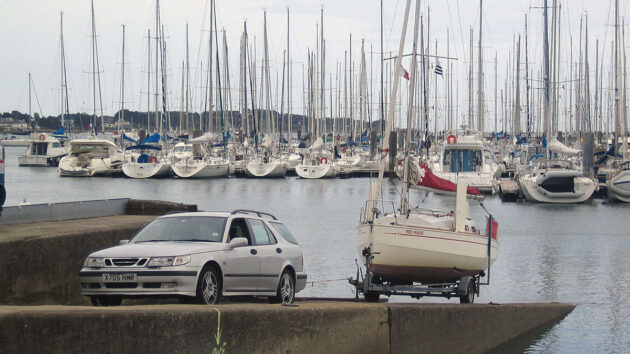
Manoeuvring the Red Fox 200, Red Magic on the slipway at La Trinité-sur-Mer. Credit: David and Melanie Lewin
The answer, we’ve found, is to fit sealed wheel bearings, a hub wash-through kit and docking arms.
To launch we now back the trailer down to the water, chock the wheels, release the trailer from the car, attach a tow rope from the car to the trailer, pull forward slightly to remove the chocks and drop the trailer back into the water until the boat floats.
When recovering it’s only a matter of getting the bow between the docking arms so you can drive the boat forward and it will centre on the trailer.
We never get a foot wet these days, and a quick wash through the hubs with fresh water keeps the trailer in good order.
Let’s get trailer-sailing
Now to prove the idea. I’d sailed past the Golfe du Morbihan and Quiberon Bay a few times but never had time to stop and explore this great cruising ground, so this year we booked ourselves onto Brittany Ferries out of Portsmouth for two weeks in southern Brittany. Instead of bashing to windward for 36 hours to L’Aber Wrac’h, we booked a table in the ferry restaurant, had a very good meal and woke up next morning just off St Malo. The crossing wasn’t particularly cheap but it was very efficient with only a 2½-hour trail across the peninsula to La Trinité.
Once we’d booked in with the marina in La Trinité and understood how the system worked, it was just a matter of energy to raise the mast, fix the boards and rudder before asking the yard manager to unlock the gate to the slipway so we could drop Red Magic back into the water.
La Trinité was the most expensive marina that we came across in the area, but the facilities were first class and they only charged us a reasonable amount to use the slipway and to store the trailer in a secure compound.
There is a supermarket very close to the marina and restaurants a-plenty. Just don’t try and get anything done during lunchtime. Give in gracefully, relax and go and enjoy the Plat du Jour.
Speed of delivery
We had left Burnham-on-Crouch at 1500 on Wednesday. Now it was Friday morning and we were cruising out of La Trinité in our Red Fox 200, having already spent a night there, en route for the Golfe du Morbihan and Auray. Coming by sea we would probably still be in Eastbourne!
We had a wonderful sail up the Rivière d’Auray – it’s so much easier in a small handy boat that can tack its way out of trouble and not worry about the depth. We were accompanied much of the way by a large sailing cruiser that had to motor to keep out of trouble and then had to peel off when the going got shallow. With Red Magic it’s almost a case of, ‘If it’s wet, we can go there.’
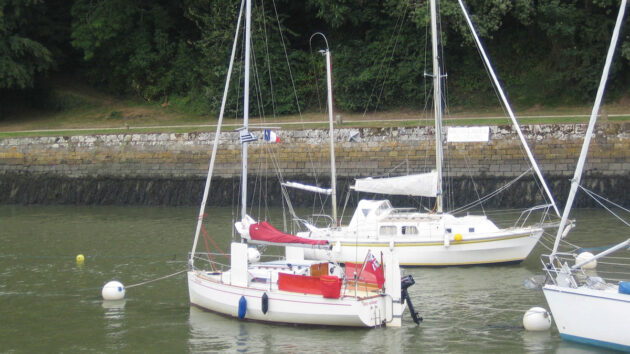
Room for a little one – Red Magic tucked up nicely on the trots in Auray. Credit: David and Melanie Lewin
Being small had its advantages in Auray – we were able to squeeze into the best (but shallow) berth on the trots for the night. After that, the days started rolling into each other, as any good cruise should. Good sailing interspersed with anchoring in bays, or in our case almost up the beach, sheltered overnight moorings well tucked up in a harbour (the weather was too unsettled to spend many nights in exposed areas), and Bastille Day right up at the head of the harbour in Vannes to see the procession and fireworks.
Again, the Red Fox 200’s small size and shallow draught enabled us to be the first into Vannes and the last out before the sluice gate was closed.
The Golfe du Morbihan is a truly special cruising area and is not nearly as difficult to navigate as the charts and tidal streams might suggest, but it is a case of, literally, going with the flow. After a week or more of sailing round the islands (we just loved cycling round Ile aux Moines) we returned to Port de Crouesty and then sailed out to Ile d’Houat and on to Le Palais, on Belle Ile, to ride out a westerly gale. We had thought that we might need to lock through to the inner harbour, but again we squeezed right up near the quay, pulled the boards up and had another quiet night.
After a day driving round the island in something hardly larger than a go-kart (rented on the quay and huge fun) and waiting for the wind to subside, we had a short but lumpy sail to the very pretty port of Sauzon, where again we managed to stay afloat in the inner harbour when all around were high and dry. We had a lovely time there, dancing in the square to a Breton band, but we found it expensive so decided to sail back to the mainland.
Wonderful holiday
The moral of the story is that trailer-sailing really works.
We had a wonderful holiday, the majority of it spent in the cruising ground of our choice – and of course we had the car with us too, so we were able to spend one day touring the standing stones and the Côte Sauvage on the Quiberon Peninsula.
Small shoal-draught cruisers, like the Red Fox 200, have just as much fun as larger boats. They require less water, can park up beaches, arrive and leave anchorages earlier/later, use drying harbours and all the costs are less.
It can be surprisingly comfortable when going back to basics. Instead of struggling with hot water systems and calorifiers, a black solar shower bag on the foredeck (occasionally topped up with a kettle full of hot water on dull days) works perfectly. The eternal struggle for volts is forgotten if you don’t have anything that needs them. The engine is pull-started and an insulated locker filled with chilled water bottles (available everywhere) makes an excellent fridge. You can buy a lot of ice for the price of a fridge and the wherewithal to run it! Our only current drain is a chartplotter, depth gauge and some lights.
All the comforts of home on the Red Fox
As nearly all cruising, apart from the delivery trip, ends up in a nice anchorage every night, and as we trail our boat to the cruising ground, we don’t need to get all ‘hair shirted’ about sea berths and rugged sleeping bags, so we have a large mattress pad from IKEA and take along our favourite duvet. In the mornings we simply roll the whole lot up and stow it in the forepeak. We also have a lifting flap on the back of the toilet door with a cut-out for a plastic bowl, so we can stand in the companionway with our heads out, reviewing the scene while we take care of our ablutions.
Small boat, small cares
With a little forethought and preparation, small-boat sailing doesn’t have to be uncomfortable or frightening. Certainly it’s more reactive and you have to be ready to reef earlier and play the mainsheet if the wind gets up. Your average speed will be a bit less but if you pick the right boat, you can still crack along. We reached back from Belle Ile to La Trinité at a steady 6.5 knots and enjoyed every minute of it.
But the unexpected joy is the overall reduction in running costs and worry. Because we already live on a house-boat, Red Magic lies alongside at no extra cost (we have water 21∕2 hours either side of high water), we launch and recover the boat ourselves, trail the boat to a local factory yard for over-wintering (free) and do the annual fit-out in a garage (dry, warm and free). I still remember, in a former life, the two-hour trips to the boatyard in winter with a list of jobs and the worry that the week’s winds had trashed the tarpaulin or chafed through the warps. It’s surprising how little stress there is these days. The only problem we have is deciding where to go next year… the Swedish Archipelago or Croatia?
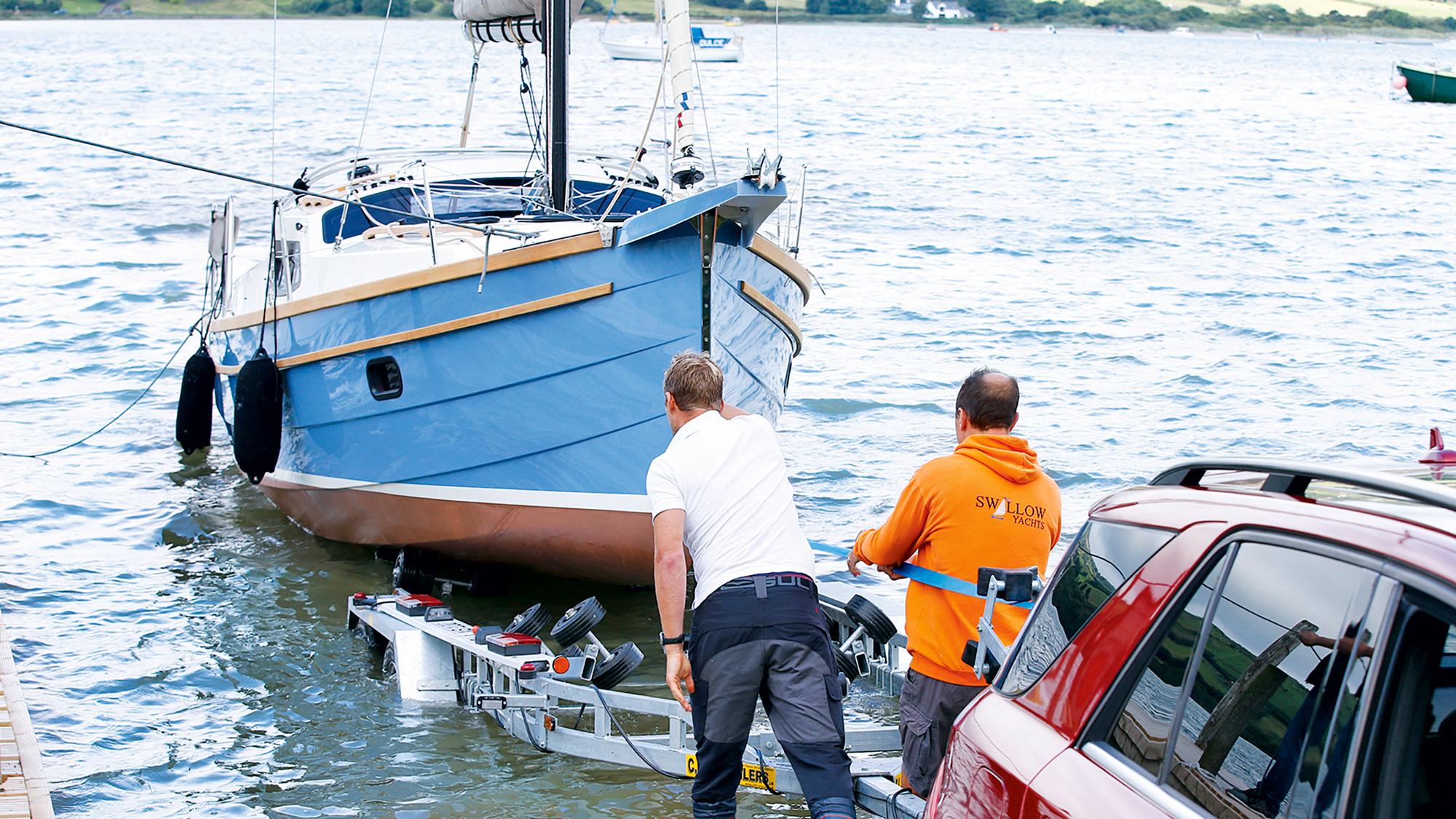
How to get started with a trailer-sailer: Everything you need to know
Ever considered getting a trailer-sailer? Some think they might just be for pottering around harbours, but they couldn’t be more…
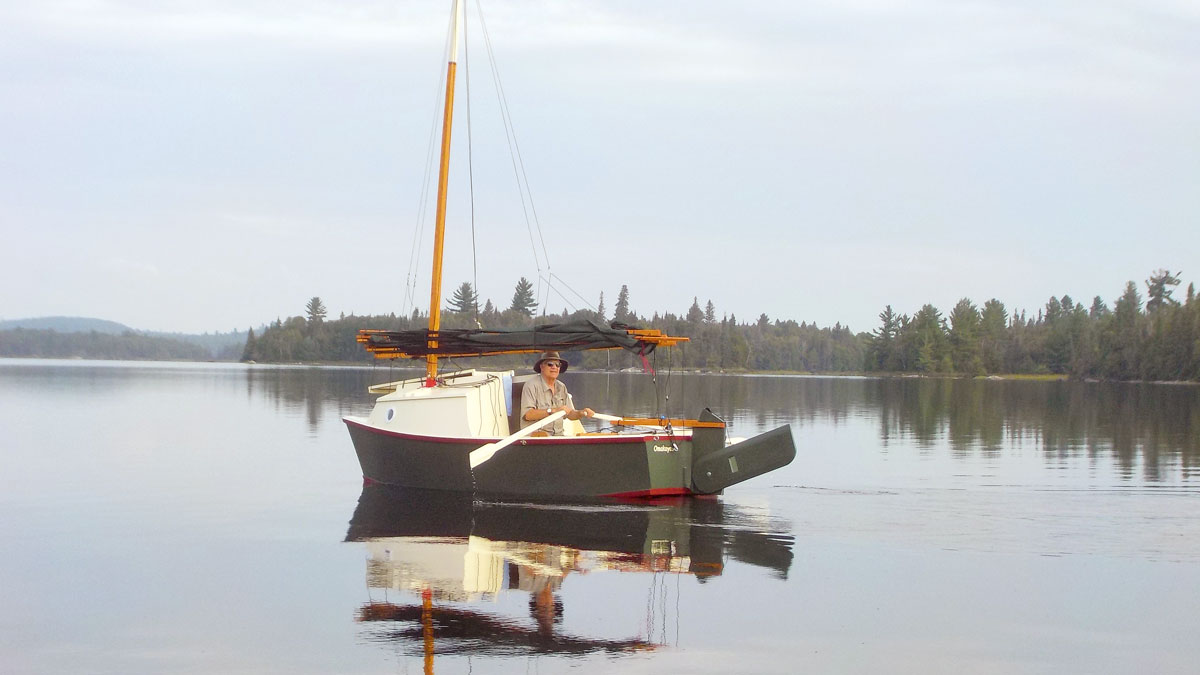
How I built my dream minimalist trailer-sailer to navigate the Canadian wilderness
Herb McLeod explains how he designed and built his flat-bottomed 3.6m Omakayas

Best trailer sailboats: Our trailer sailing expert offers his recommendations
Paul Adamson from the Isle of Man, writes: “My wife and I are looking to buy a trailer sailboat, mainly…
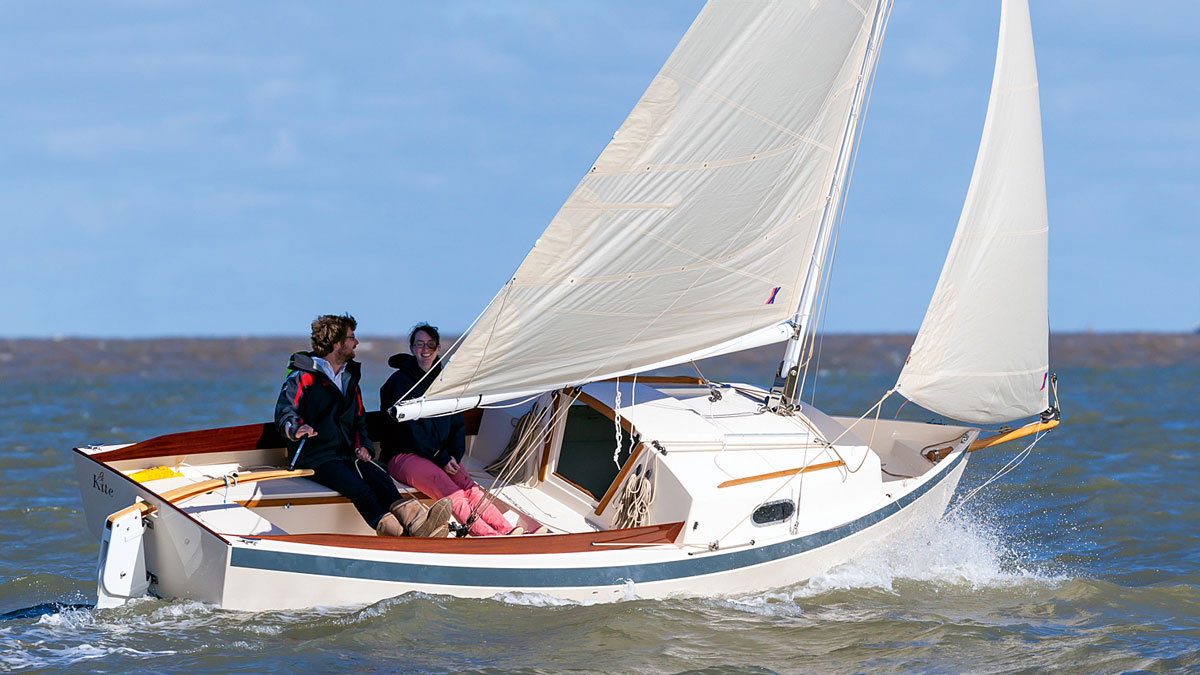
Kite: the lightweight trailer-sailer with heart
David Harding tests this simple and efficient trailer-sailer gaffer which doesn't hang around
Want to read more articles like “Giving up a 42ft ketch for a 20ft Red Fox sounded crazy until we realised how much money and time it saved us.”?
A subscription to Practical Boat Owner magazine costs around 40% less than the cover price.
Print and digital editions are available through Magazines Direct – where you can also find the latest deals.
PBO is packed with information to help you get the most from boat ownership – whether sail or power.
-
-
-
- Take your DIY skills to the next level with trusted advice on boat maintenance and repairs
- Impartial, in-depth gear reviews
- Practical cruising tips for making the most of your time afloat
-
-
Follow us on Facebook, Instagram, TikTok and X