


Launching a boat off a trailer should be a piece of cake, but tricky slipways can easily turn your dream day out into a disaster. Ben Meakins pulls on a pair of waders to show how it is done
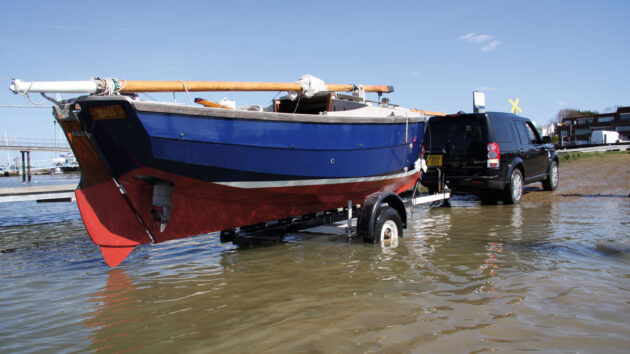
Launching a trailer-sailer off the back of its trailer into a glassy sea should be a piece of cake, shouldn’t it? But anyone with experience of a muddy, slimy, vertiginous slipway, some wind and tide and an uncooperative boat knows that a dream launch can very easily turn into a boating nightmare.
Fortunately, like most things nautical, if you take your time and prepare well, you can make it look as easy as pie. Assuming that you’ve hauled your trailer-sailer to the sea without drama, what happens next?
To show how it’s done we used Land Rover’s Discovery 4 TDV6 to tow a PBO reader’s Cornish Shrimper from his home to the nearest public slipway and launch her for a new season’s sailing.
Boat launching: First things first
The main thing to remember is to take your time. If you hurry there’s a chance you could forget something important. Park somewhere close to the slipway – but not blocking it to other users – so you can plan your launch and prepare your boat in your own time.
Credit: Anthony Butler and Sarah Norbury
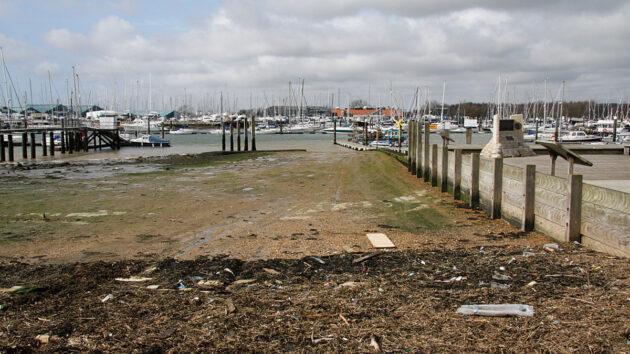
1. Visually inspect the ramp in advance, preferably at low tide, to check for hazards. Make sure you know where the hard slipway ends and soft mud begins – many a driver has found themselves up to the axles in soft, smelly ooze on a rising tide.
Credit: Anthony Butler and Sarah Norbury
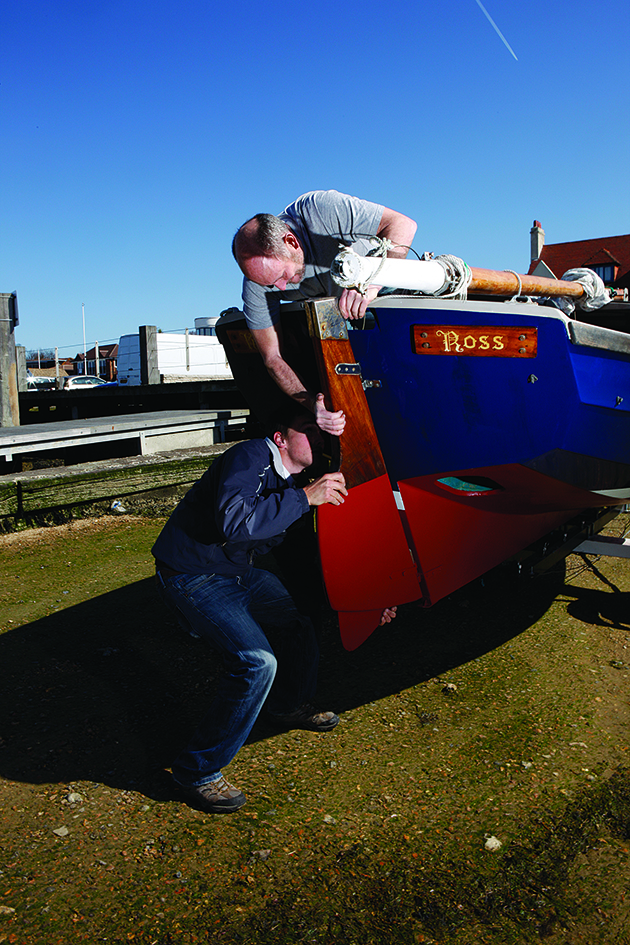
2. Prepare the outboard and rudder. This depends on the boat – our Shrimper’s long keel protected the rudder and propeller, so that they could be shipped before the boat went down the slipway. In boats with unprotected appendages, to avoid damaging them you’ll need to cock the outboard or lift the rudder until the boat is afloat.
Credit: Anthony Butler and Sarah Norbury
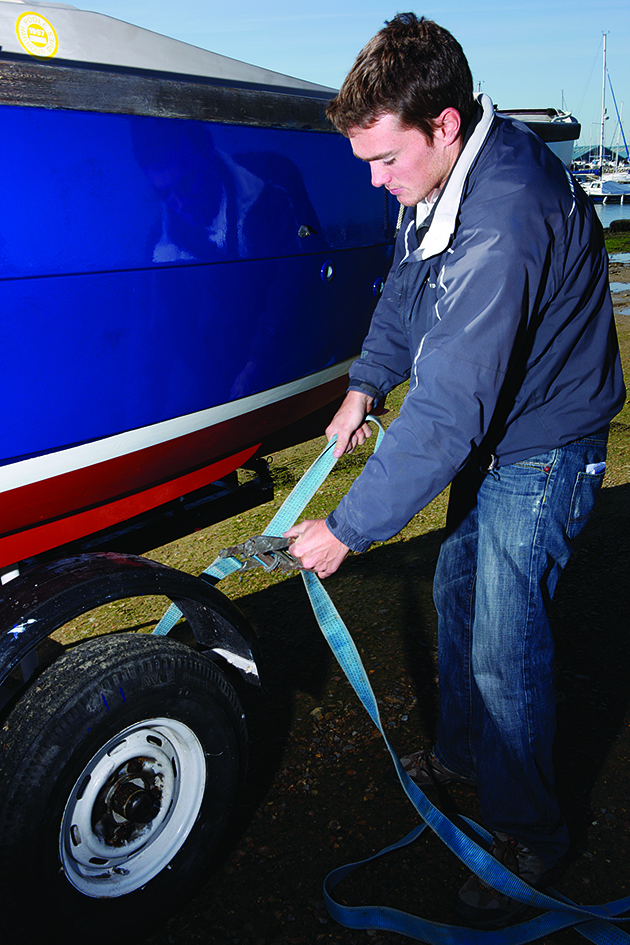
3. Untie the boat from the trailer, checking that no damage has been caused while on the road. Remove the towing lightboard and make a point of replacing bungs. Make sure you’ve untied everything, including the winch strap. Tie the boat’s bow to the trailer with the painter – if needs be it’s easier to undo in a hurry than unclipping the winch line.
Credit: Anthony Butler and Sarah Norbury
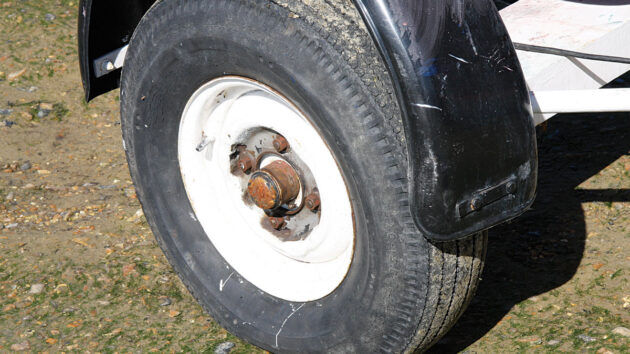
4. Check the temperature of the wheel hubs. Warm is OK, but don’t launch if they’re still hot from a road journey. Dunking hot hubs into cold water could risk them cracking through thermal shock.
Credit: Anthony Butler and Sarah Norbury
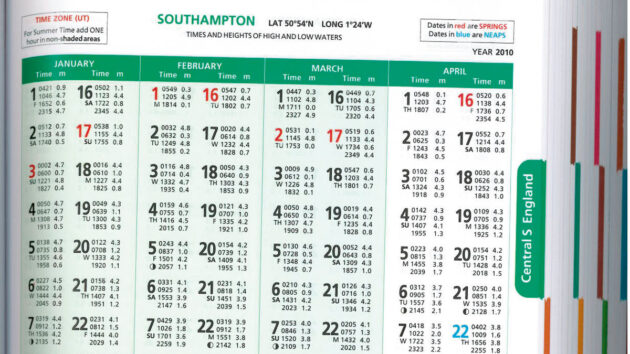
5. Check wind, tide and waves. Know what the tide is doing, which way the wind is blowing, and if there is any swell. Plan around this – for instance, check that the boat won’t be blown straight ashore or into danger once afloat.
Launching the boat
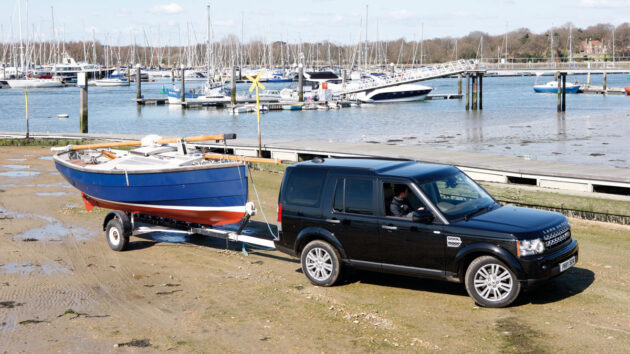
The boat is prepared for the water, the slipway is clear and you’re ready to go. Take your time.
Credit: Anthony Butler and Sarah Norbury
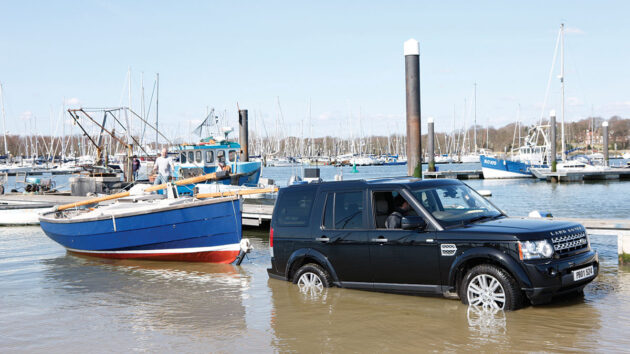
1. Begin to back the boat down the ramp, bearing in mind any hazards. If you haven’t launched on this slip before, stop to make a check of the depth before your car’s wheels reach the water.
Credit: Anthony Butler and Sarah Norbury
2. Some people prefer not to fully immerse their trailer wheels to avoid the bearings filling with water, but some trailers will have to go right under water to get deep enough to launch the boat. Always try to keep the car’s exhaust and trailer electrics clear of the water.
Credit: Anthony Butler and Sarah Norbury
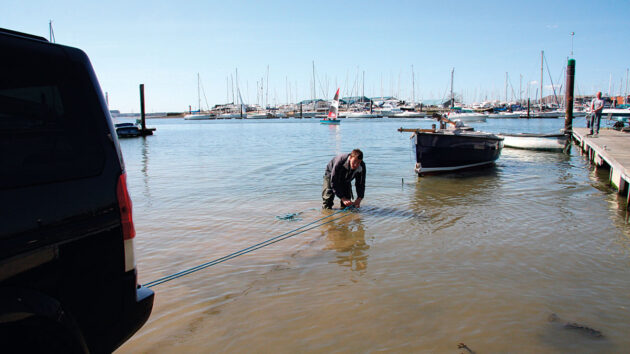
3. If it’s a shallow slipway and your trailer needs to go deeper than the car can take it, you can achieve this and keep the car out of the water by attaching the trailer to a strong rope. Tie the rope to the trailer drawbar, deploy the jockey wheel and take a turn around the car’s hitch or towing loop with the rope before you unhitch. You can pay out the rope to keep things under control as the trailer rolls away from the car
Credit: Anthony Butler and Sarah Norbury
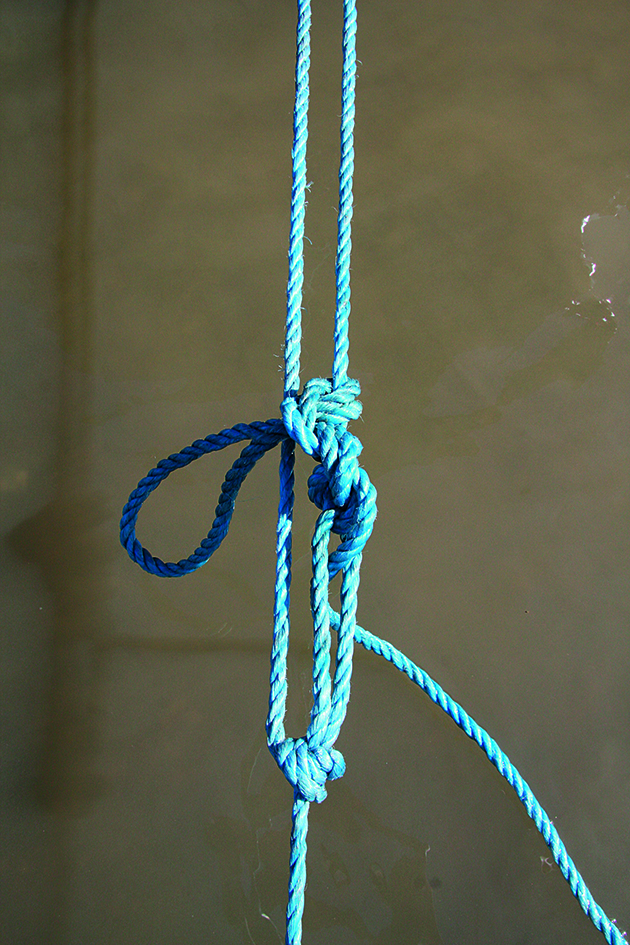
Another option is to secure the trailer using a trucker’s hitch, which lets you control the line’s length from in the water.
Credit: Anthony Butler and Sarah Norbury
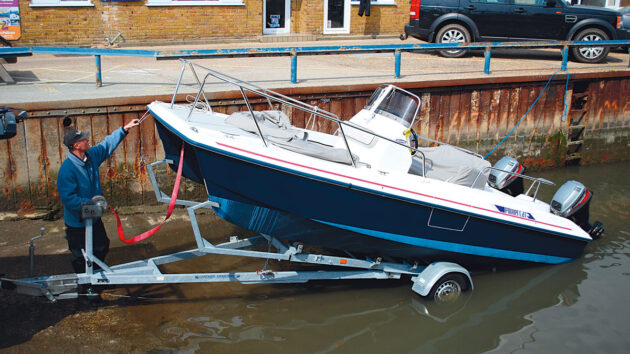
If you have a break-back trailer, now’s the time to tip it up and allow the boat to float off. Remember to have the boat secured with another line to stop it from
floating away uncontrolled.
Credit: Anthony Butler and Sarah Norbury
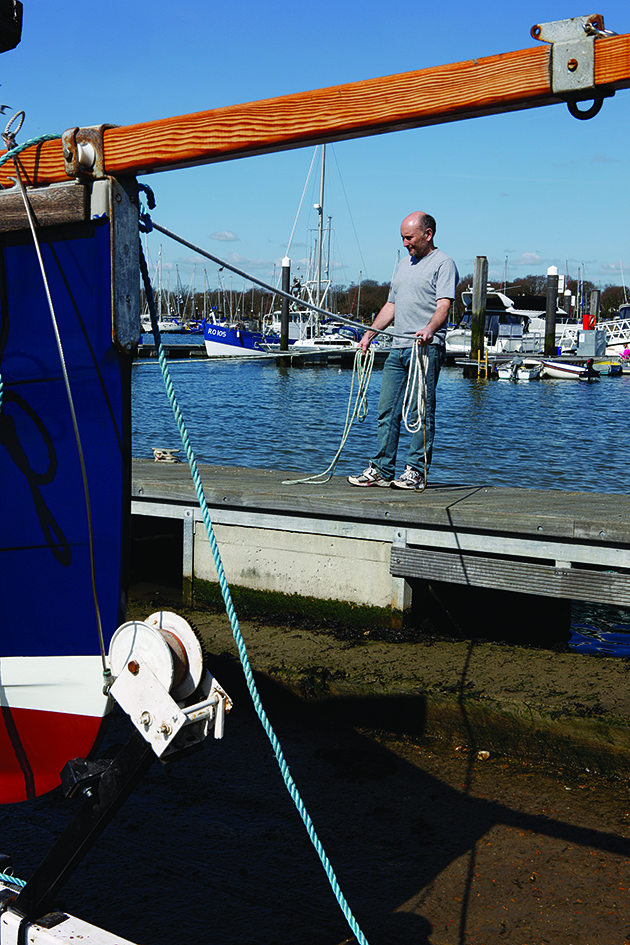
4. If there’s a pontoon running alongside the slipway, like this one, you can have someone on hand to catch the painter once it’s released from the trailer.
Credit: Anthony Butler and Sarah Norbury
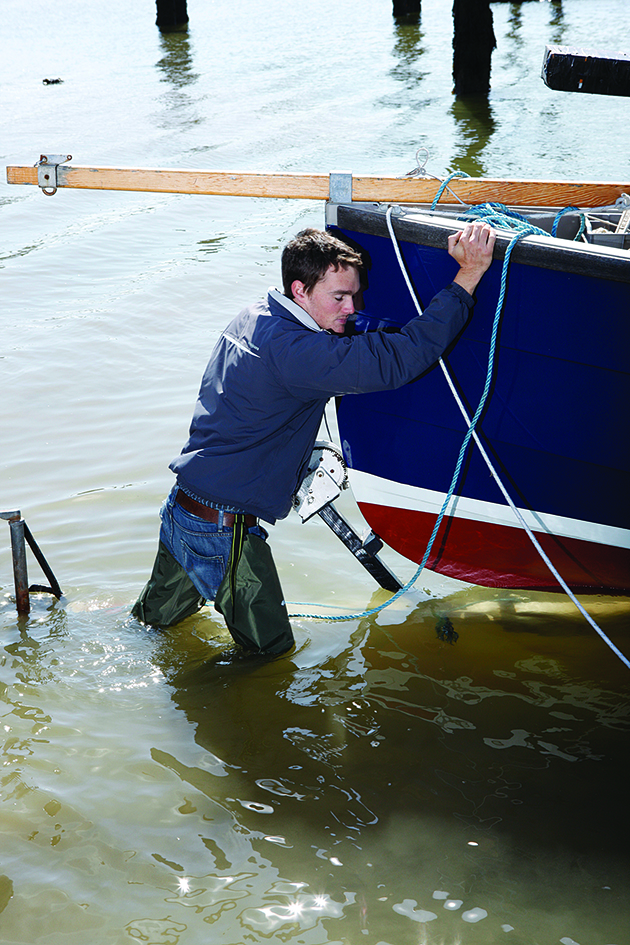
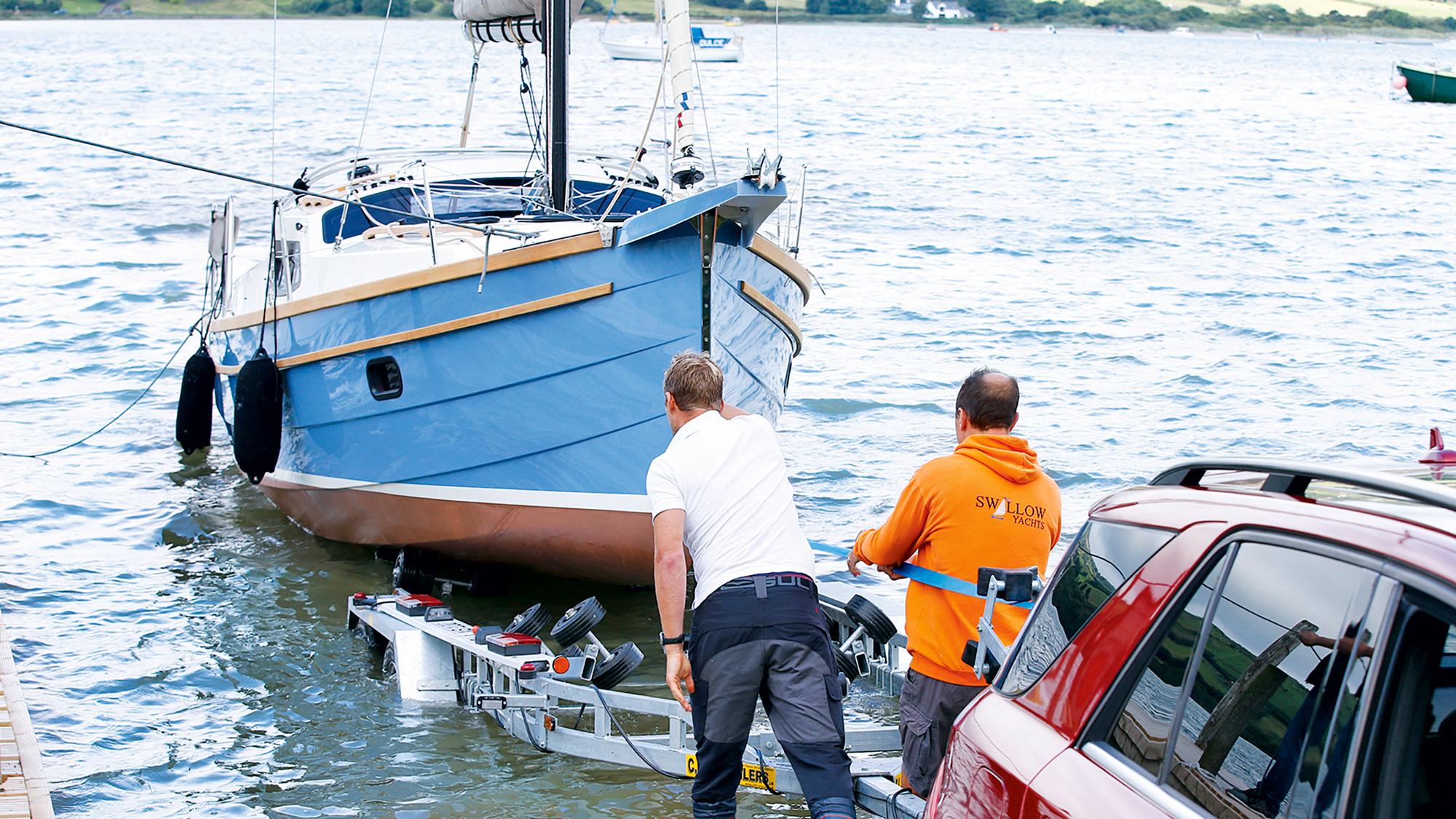
5. Untie the painter from the trailer and gently ease the boat into the water. Push the boat back slowly to prevent the winch handle from spinning too fast – hospital A&E departments have seen many a boater who’s come a cropper when trying to stop an out-of-control spinning handle.
Credit: Anthony Butler and Sarah Norbury
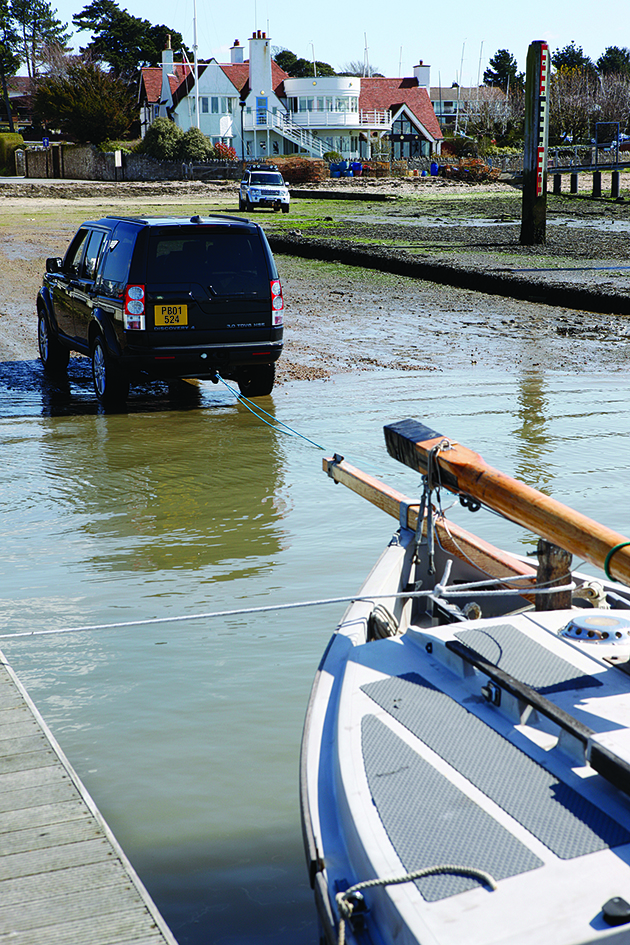
6. Secure the boat if you can, but many slipways don’t have a pontoon nearby. If this is the case climb aboard, lower the outboard if the water’s deep enough, and start her up so you can have some control over the boat. Otherwise, get ready with a paddle or have somebody ashore hang on to the painter.
7. Now you can drive the trailer back up the slipway. If using a rope, stop as soon as the trailer emerges from the water, put chocks behind the wheels and reverse the tow car back to it. With the trailer re-hitched you can drive away to park somewhere safe and secure.
Retrieving the boat
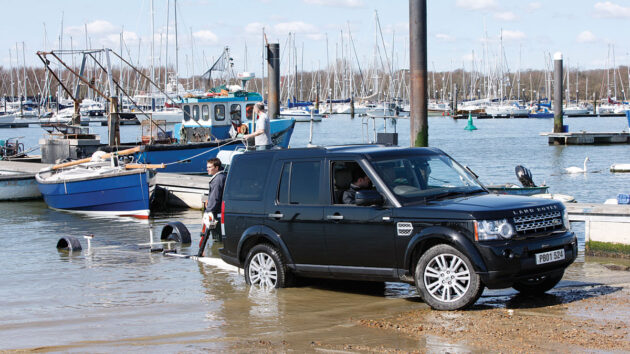
The process of retrieving a boat is, on paper at least, simple: it’s just the reverse of launching. But there are a few extra things you need to consider – not least that you’re working against gravity when winding your heavy boat back onto the trailer.
Credit: Anthony Butler and Sarah Norbury
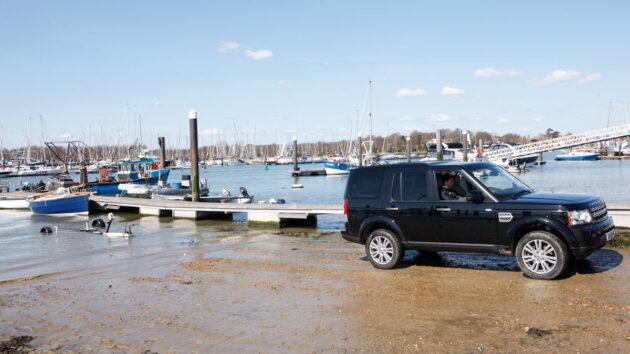
1. Reverse the trailer to the water’s edge. Remember how deep the trailer needed to be to launch the boat – for retrieval it may need to be deeper still. Ensure the car’s handbrake is on, and, if the tide is coming in, keep the engine running.
Credit: Anthony Butler and Sarah Norbury
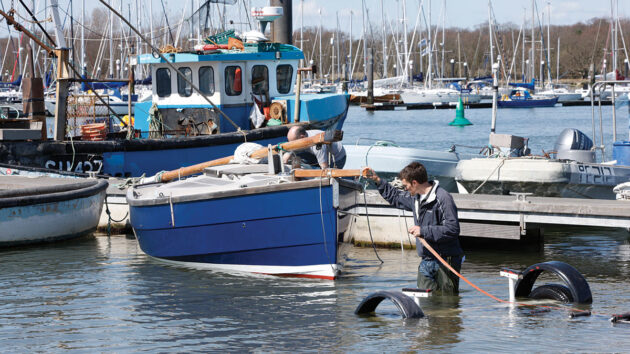
2. As with launching, you may need to let the trailer go deeper by attaching it to the car with a strong rope. Without the boat’s weight on it, you may need to push the trailer deeper yourself unless it’s a very steep slipway.
Credit: Anthony Butler and Sarah Norbury
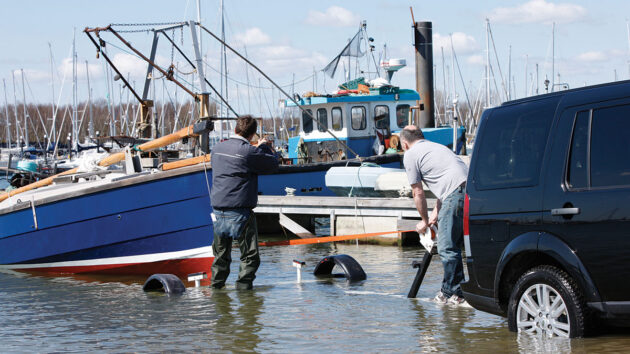
3. Manoeuvre the boat so it’s ready to load onto the submerged trailer. It helps to wear waders or shorts and waterproof shoes. Beware of wind and tide that can slew the boat round. It may help to get a transit ashore, to make sure you’re not being blown sideways as you approach, and in some cases to drive the trailer into the water at an angle, to keep the boat head to wind.
Credit: Anthony Butler and Sarah Norbury
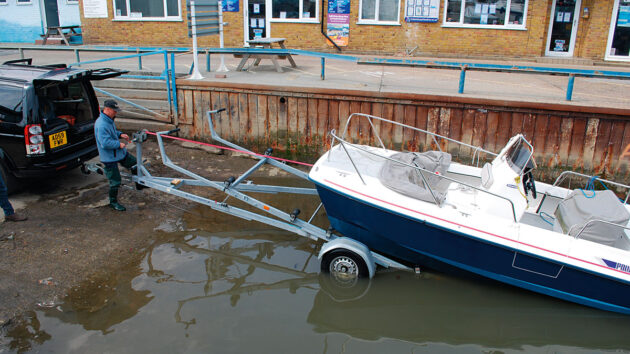
4. Attach the winch line and winch the boat on to the trailer, checking the alignment as you do so. If you have a retractable bowsprit, make sure it isn’t still deployed or you could end up making the expensive mistake of winding it through the car’s rear screen! Also remember to raise engines, rudders or any other appendages to avoid damaging them as the boat tips.
Credit: Anthony Butler and Sarah Norbury
If you have a break-back trailer, release the clamps before clipping the winch line on.
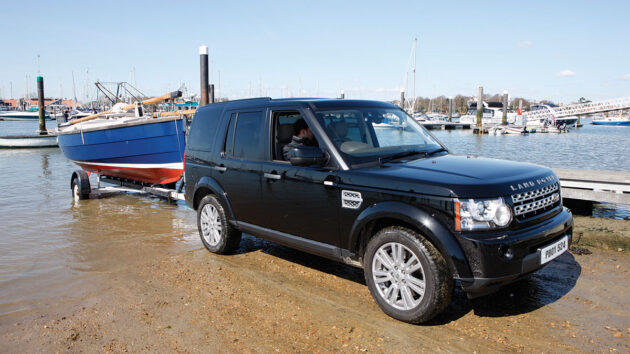
Credit: Anthony Butler and Sarah Norbury
5. When the bow reaches its buffers on the winch pillar, secure the boat by locking the winch off and cleating the painter. Drive carefully forward, until the car and trailer are clear of the water.
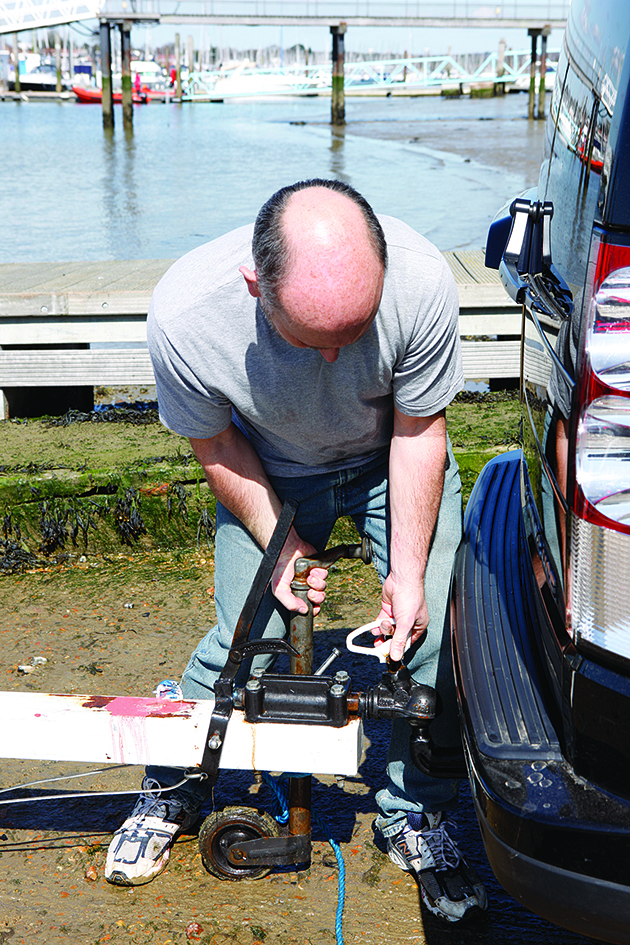
Credit: Anthony Butler and Sarah Norbury
6. If you used a rope, now is the time to stop the car, chock the trailer wheels and reverse back to the hitch. Technology can help – our Land Rover’s Tow Assist function gave us an in-car video view of what was happening – although the time-honoured solution is to get a helper to signal the hitch position to the driver.
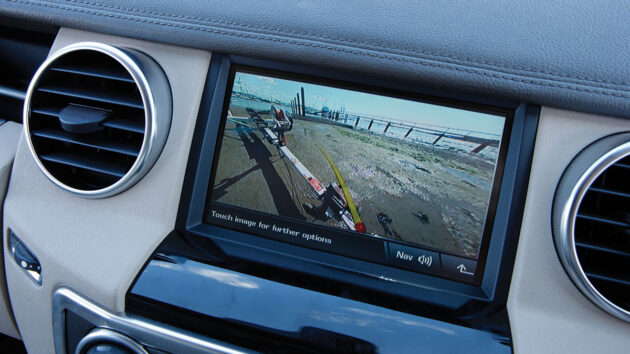
Credit: Anthony Butler and Sarah Norbury
Once you’re hitched on, raise the jockey wheel and drive slowly to safe ground away from the slipway for the next step in securing the boat.
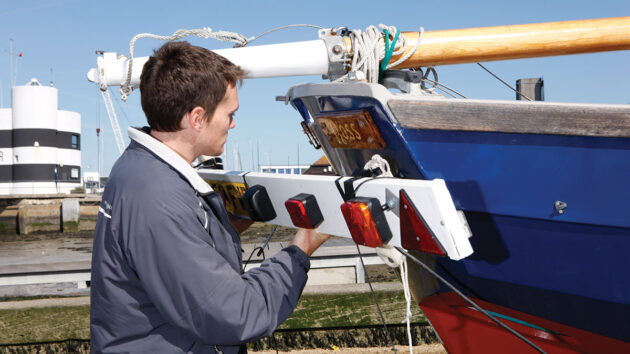
Credit: Anthony Butler and Sarah Norbury
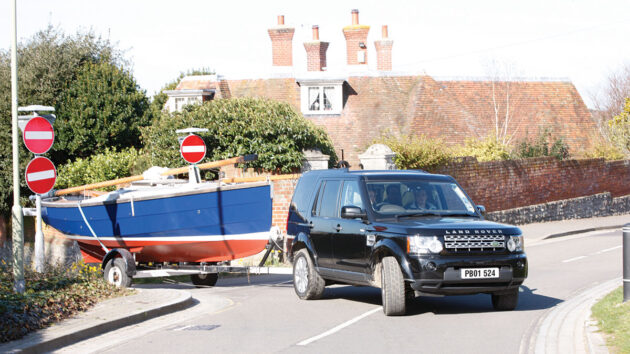
7. Now it’s time to prepare the boat, trailer and car for the road. Remove bungs and open any drains to allow water to escape. Lock engines down, tie the boat on well, and don’t forget to install the lightboard and any warning markers. Secure the jockey wheel in the up position, and attach the breakaway cable to the tow bar or another strong point.
Credit: Anthony Butler and Sarah Norbury
8. Now you’re good to go. Five or ten minutes after you’ve set off on your journey it’s worth pulling over and stopping somewhere safe to check lashings, straps and connections. Resecure any ropes that have worked loose or become detached. Stopping to make these checks is especially important if your route will involve motorway driving.
The new BayCruiser 21: Is this the best trailer-sailer ever built?
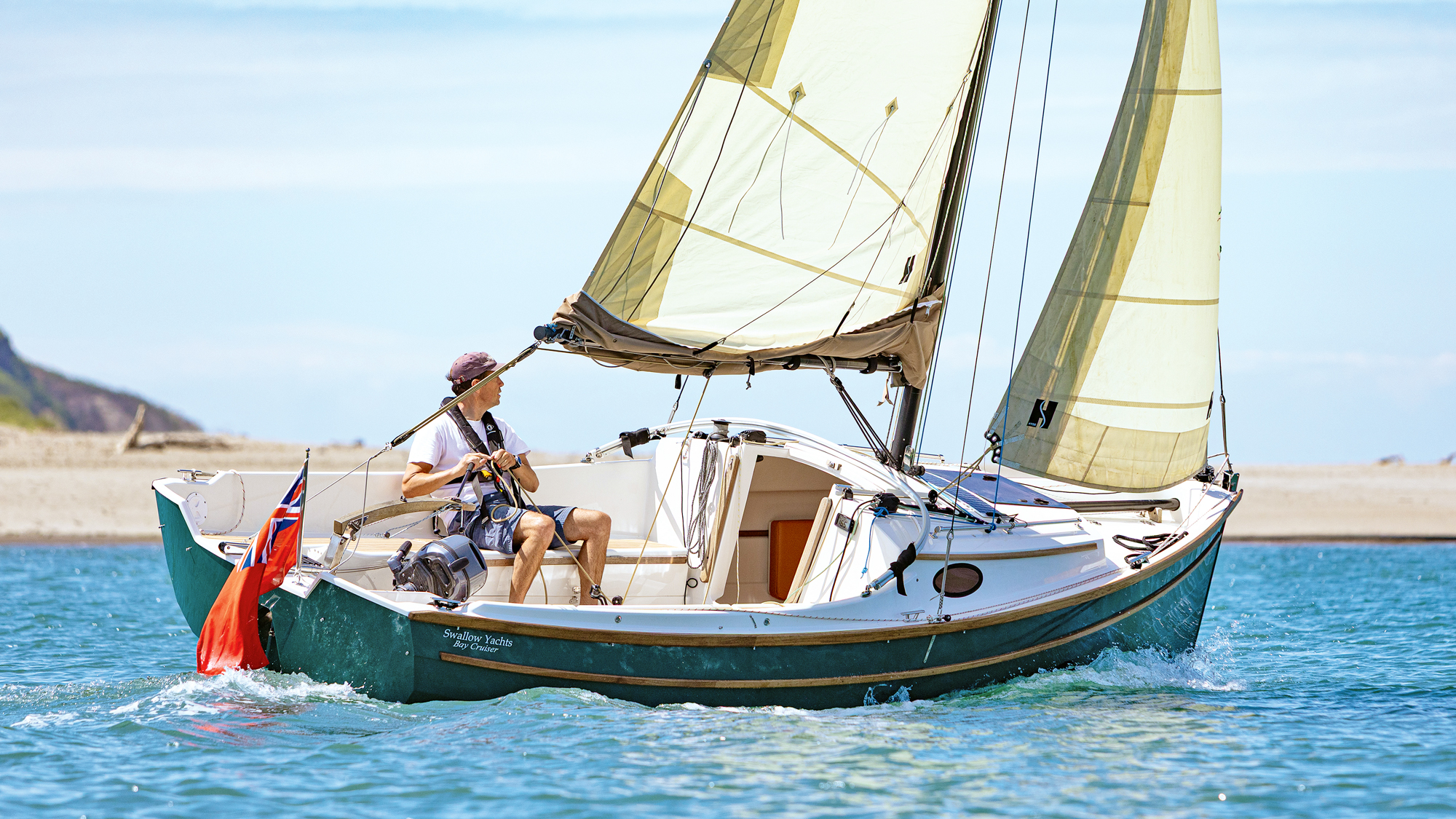
17 years after kick-starting a revolution in trailer-sailing, Swallow Yachts has launched the BayCruiser 21. The new model is light,…
Hawk 20 Cruiser: fast, fun and functional trailer-sailer
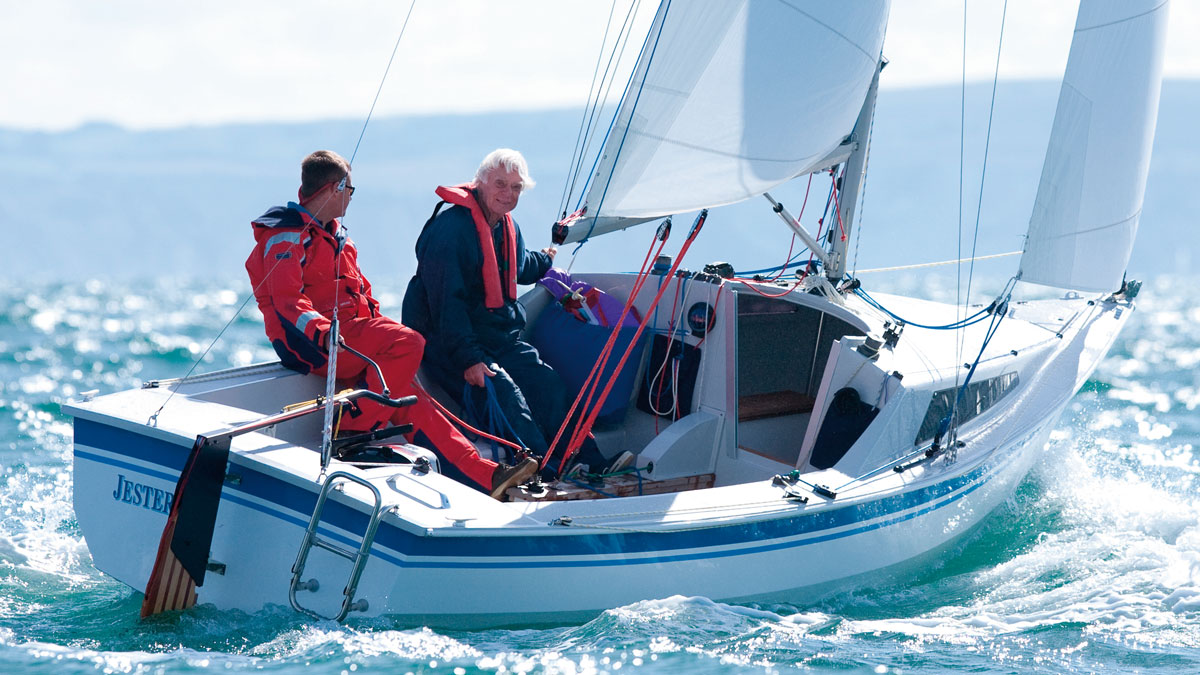
When the Hawk 20 appeared she was hailed as the dayboat that did everything. This model was later followed by…
Reversing a boat trailer: a quick guide
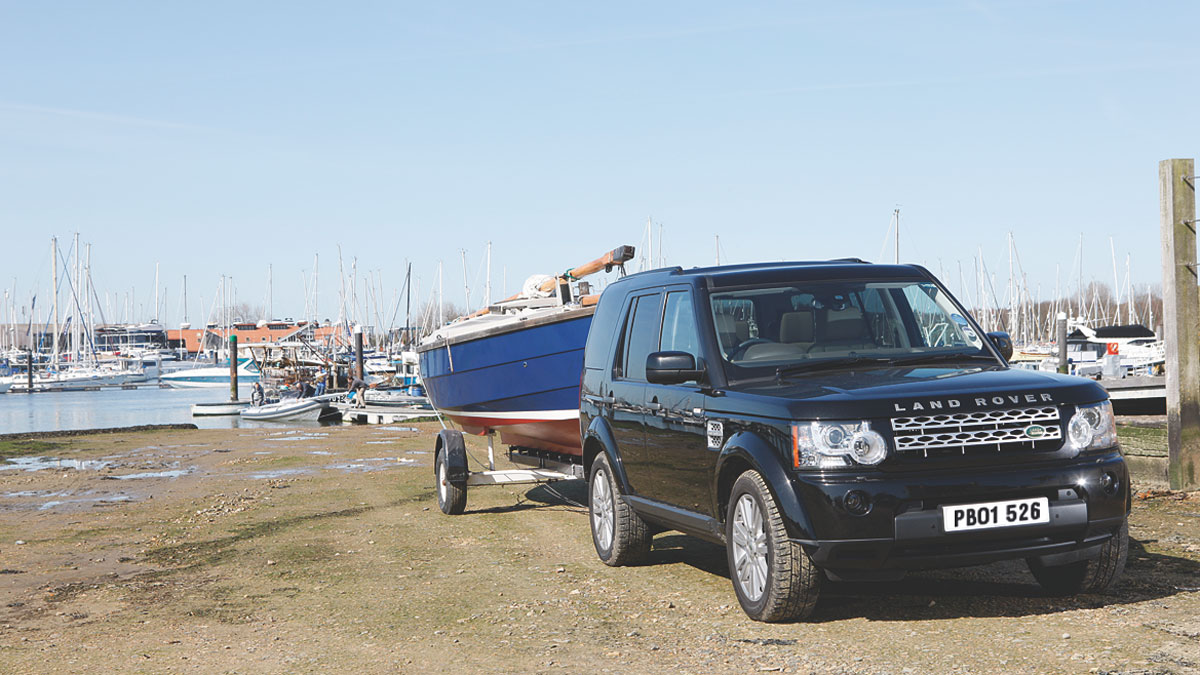
Reversing your trailer is daunting, but with practice can be satisfying. David Pugh explains the knack
How to get started with a trailer-sailer: Everything you need to know
Ever considered getting a trailer-sailer? Some think they might just be for pottering around harbours, but they couldn’t be more…
Want to read more articles like Boat launching and recovery without the drama?
A subscription to Practical Boat Owner magazine costs around 40% less than the cover price.
Print and digital editions are available through Magazines Direct – where you can also find the latest deals.
PBO is packed with information to help you get the most from boat ownership – whether sail or power.
-
-
-
- Take your DIY skills to the next level with trusted advice on boat maintenance and repairs
- Impartial, in-depth gear reviews
- Practical cruising tips for making the most of your time afloat
-
-
Follow us on Facebook, Instagram, TikTok and X