


Pilotage is a tricky yachting skill for a skipper to master, but also one of the most satisfying. James Stevens has the inside track on picking up the techniques
Pilotage is one of the hardest areas for the new skipper to master and is essentially a practical skill.
There is a limit to how much you can learn from a book, so the more practice you can get the better. Entering and leaving harbours as skipper is an ideal preparation for an RYA exam – or, for that matter, for would-be skippers wishing to improve their skills. It’s enjoyable and interesting too.
The difficulty with pilotage is relating the information on the chart to the real world. In daytime this can be tricky even with the pictures in the pilot book, but at night you need to be well prepared because it is possible to go astray even with a good GPS chartplotter.
At night, neither chart nor pilot book will prepare you for the background of house and street lights which surround every harbour. Against these, navigation marks with their dim bulbs are notoriously difficult to find.
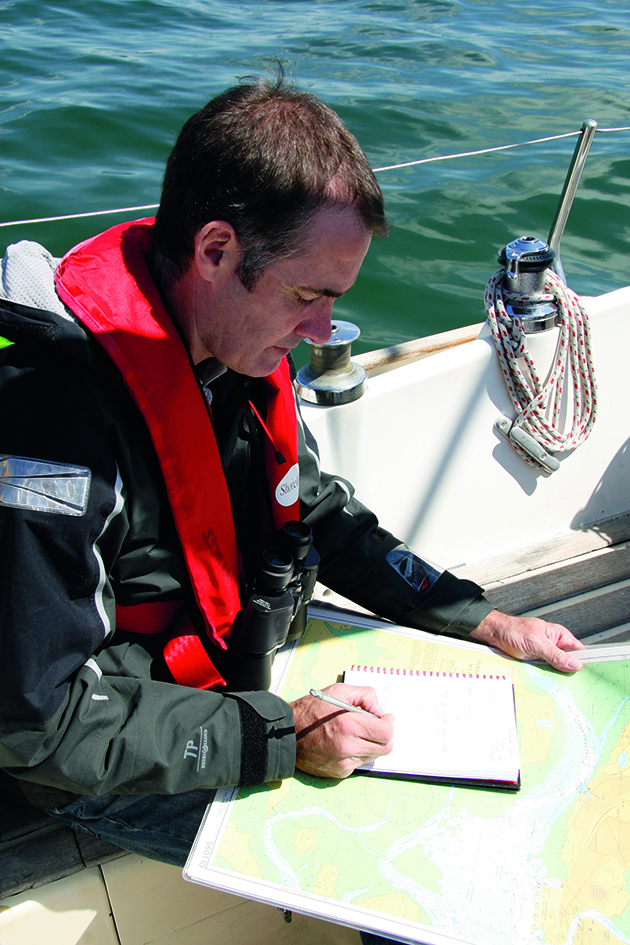
Your pilotage plan should show bearings to each turning mark and major features and hazards
Poole Harbour is very attractive, but it can be pretty confusing in the daytime, and at night it is a challenge which can catch out even the most experienced sailor. It is one of the largest harbours in the world, with two main channels and several minor ones separated by mud banks lurking just under the surface.
The tidal stream stays benignly slack for hours, then the plug is pulled and it rushes out, leaving the unwary sailor who has just slid aground with an unpleasant two or three hours until it floods back in.
The Thames Estuary is equally difficult, with sandbanks well offshore and a strong tidal stream in between.
A good pilotage plan is essential.
A quick way of failing a Yachtmaster exam is to get lost. During the exam candidates are expected to be able to navigate and know where they are, both with and without GPS. In fact, however many electronic aids you have on board, you still have to navigate by eye.
GPS is really effective at getting you to the harbour entrance, but once you are in really confined waters you need to know your position even more accurately than the information on the screen is able to tell you.
The first principle is to look where you are going. This sounds obvious, but a surprising number of Yachtmaster candidates try to control the yacht from the chart table.
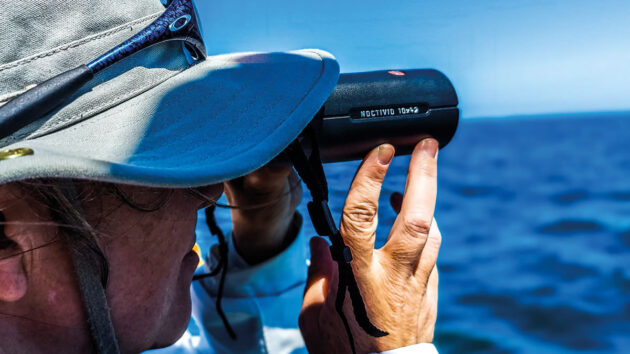
The ideal pilot has gimlet vision and a photographic memory, but for normal people a good pair of binoculars and a notebook containing a plan are essential.
Pilotage plan
The appropriate pilot book is essential reading, preferably well before you set off or take the exam. Along with pictures and often some entertaining text, it will tell you a great deal about the port including where ot moor and what to avoid. During an exam, the examiner may ask you to go to a specific mooring or may ask you to decide upon one.
A small notebook is handy, and a waterproof one even better. You need to keep a track of where you are, and equally importantly, where to go next. The plan should show bearings and distances to each turning mark and major features and hazards on the way. There are certain moments, usually next to a navigation mark, when you know your position precisely without having to look at the GPS.
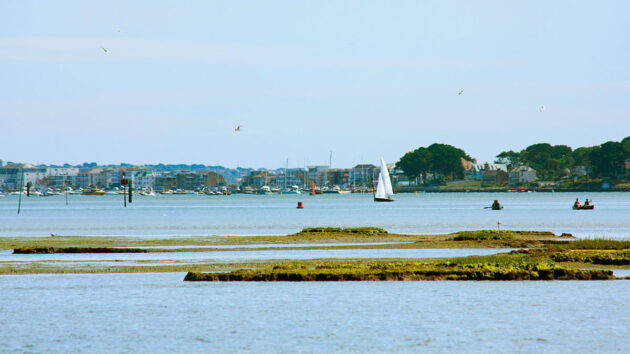
When navigating your way around somewhere like Poole Harbour – or anywhere else with shallow waters and innumerable other hazards – you’ll need the full range of pilotage skills to keep you and your boat safe
At these points, with a bit of preplanning and a compass, you can identify any charted feature such as buoys or buildings. Using the yacht’s compass, you can point towards the next mark. It is very important to aim for the next mark from these known positions: pilotage goes wrong when the navigator looks around for a red or green buoy and steers for it without confirming its bearing from a known position.
It is all too easy to miss one, as anyone who has seen yachts dried out on the Winner Bank in Chichester Harbour will confirm.
What looks like the harbour breakwater from two miles away might also be a row of houses on the seafront. If you know where you are, a chart, a compass bearing and a pair of binoculars will clear the confusion. At night, the plan needs to include not just bearing and distance but also light characteristics.
Tidal height calculations are important, both to clear the bottom in shallow water and also to ensure you know how much the tide will drop from the time you moor to low water. It is worth getting this done well before the pilotage gets intricate.
Transits
A strong cross tide can send you off course. On the north coast of Brittany, for example, the pilotage into the harbours can start several miles offshore with off-lying rocks and several knots of cross-tide. The unwary sailor can end up aground still pointing towards the destination, the tide having set the yacht sideways on to a rock.
As soon as you have identified your next navigation mark, look for a fixed object behind it, a tree, a house or other feature, and keep it there as you approach. Going the other way to seaward, use a back transit to keep on course. Use the same technique in areas such as the Solent when crossing tidal streams: line the buoys up with a land feature behind and transit your way across.
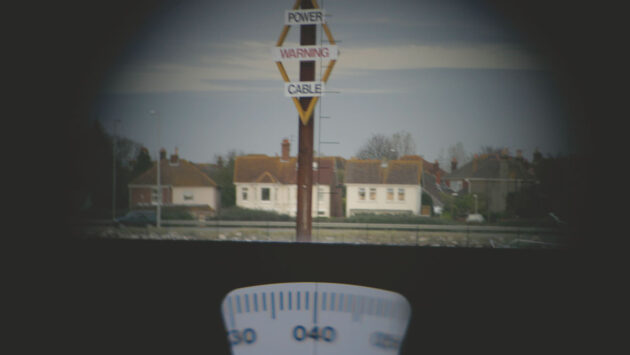
A chart, a compass bearing and a pair of binoculars will clear confusion
If you want a lesson in how to do it, simply watch one of the local ferries.
Transits are really effective – they keep the navigator on deck and are far more accurate than GPS. Look out of the window at a tree or lamppost and see how little you have to move to take it out of line with the object behind.
The way in
It is impossible to navigate and steer at the same time, so put someone else on the helm. Make sure they understand your instructions: after each course alteration, a good skipper will stay on deck to check the yacht really is going where it should. Under sail, the crew need to know what is going to happen at each corner, particularly if a gybe is likely. A small headsail such as the working jib helps improve visibility ahead.
Don’t hesitate to change sails if you need to. It is safer to enter on a flood tide in case the keel touches the bottom, but it has the disadvantage of increasing the speed over the ground with the following tidal stream. If you are beating to windward, use clearing bearings and the echo sounder to avoid hazards either side.
The most helpful action for the crew is to do exactly what they are told by the skipper as competently as they can.
Good skippers are always one jump ahead. They are well prepared and know what is going to happen at each alteration of course: where the next mark is, and the sail trim required. They are not flustered by the unexpected: a ship appearing, a missing navigation mark, a wrapped jib sheet. They put the yacht into safe water while the problem is solved.
They can put their finger on the chart to indicate their position and have thought through the trip right up to the berth or mooring.
Weak skippers navigate the yacht about 10 minutes behind where it actually is. The helmsman isn’t sure what course to steer and historical positions are put on the chart.
Accident statistics show that yachts are much more likely to founder in pilotage waters, usually by striking the bottom, than to be lost at sea.
One of the problems with pilotage is that it often comes at the end of a voyage when skipper and crew are tired and anxious to get ashore.
It is one of the hardest skills of yachting, but in my view one of the most satisfying.
For me, the best part of cruising is arriving in a new port – it is one of the great joys of sailing.
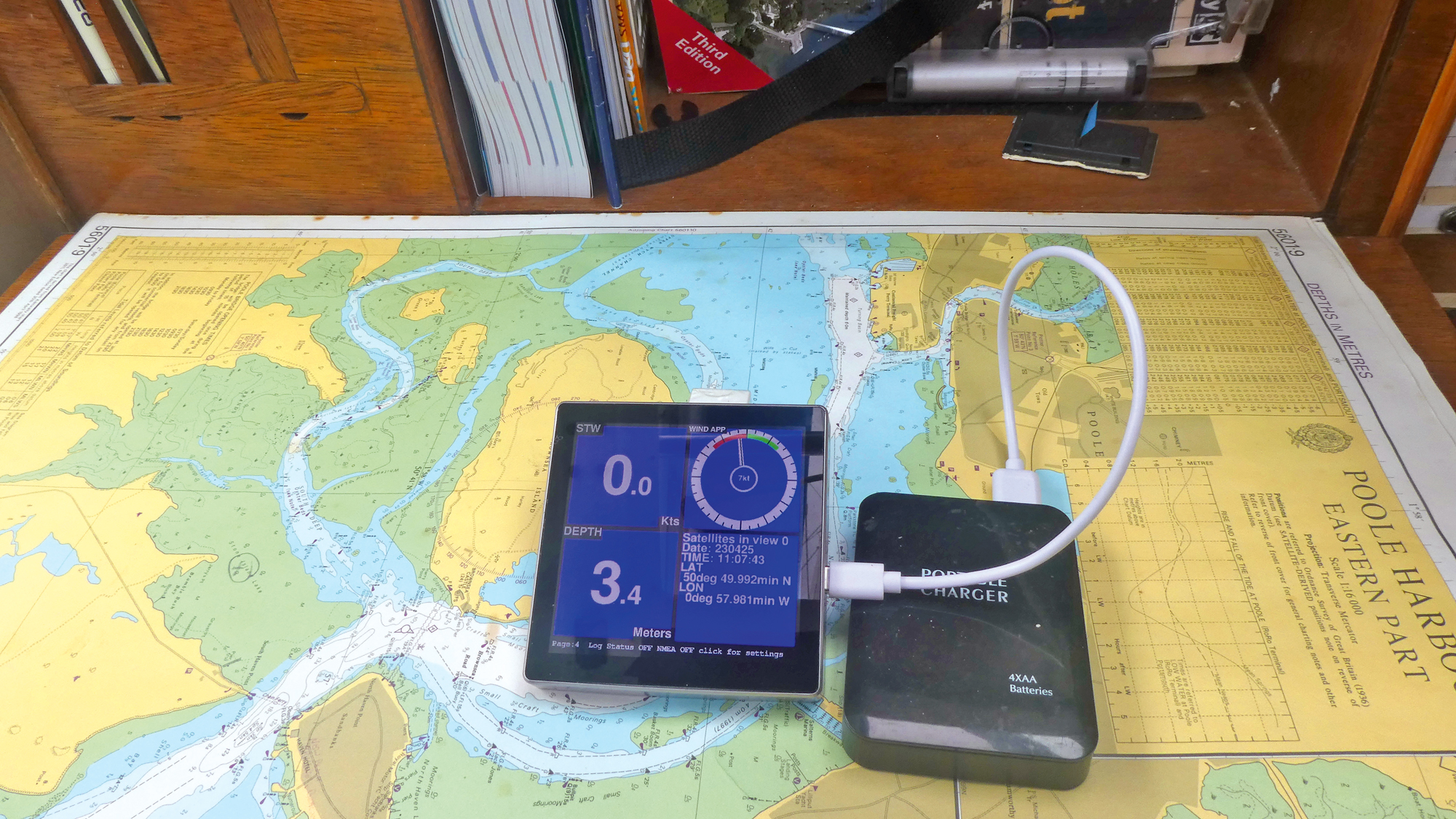
How to link your smartphone to your navigation system
Considering a smart navigation system? The advance of electronics, and especially home automation, have given rise to a range of…

When your electronic navigation autoroute settings go wrong
Gilbert Park helps a fellow motorboater achieve his first voyage to the Channel Islands and gets a lesson in the…
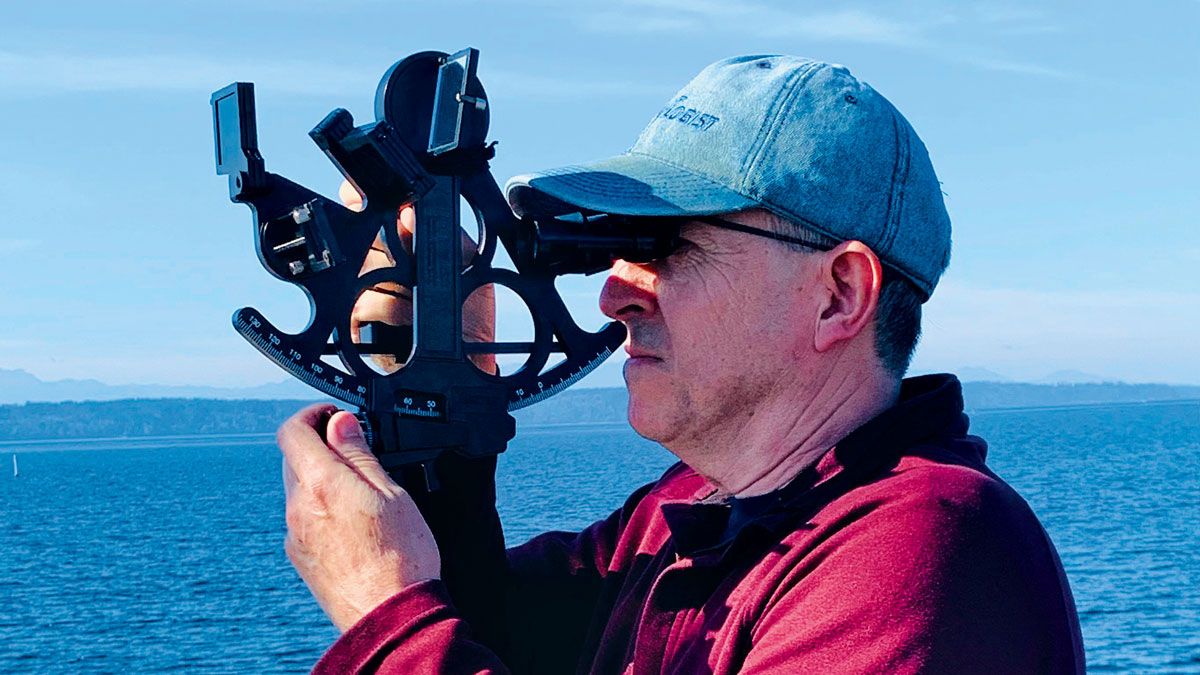
Basic survival celestial navigation
Making a ‘mer pass’ observation is one of the simplest, yet most useful navigation tools for sailors to possess, explains…

Blind navigation: how to find your way in restricted visibility
Is blind navigation a foggy notion for Yachtmasters, or a useful seamanship skill? PBO investigates
Want to read more seamanship articles like Learning the skills of pilotage?
A subscription to Practical Boat Owner magazine costs around 40% less than the cover price.
Print and digital editions are available through Magazines Direct – where you can also find the latest deals.
PBO is packed with information to help you get the most from boat ownership – whether sail or power.
-
-
-
- Take your DIY skills to the next level with trusted advice on boat maintenance and repairs
- Impartial, in-depth gear reviews
- Practical cruising tips for making the most of your time afloat
-
-
Follow us on Facebook, Instagram, TikTok and Twitter