



In a quiet Norfolk backwater a fleet of classic yachts is still fished out of the water and slipped the traditional way – with chip fat – writes Richard Johnstone-Bryden...a story from the archives
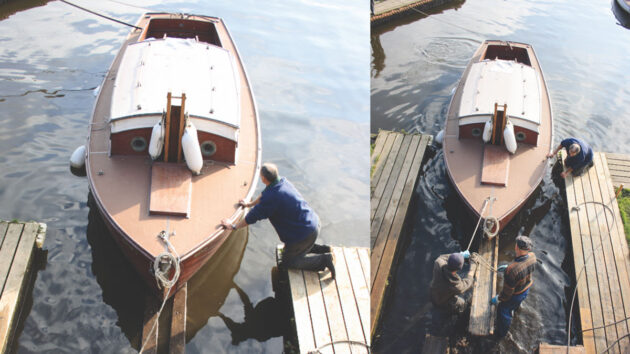
Travel hoists and cranes are how most boatyards launch and lift boats nowadays, but taking a look round Hunter’s Yard in Ludham is just like stepping back to the 1930s: tradition simply oozes out of every corner.
The sight of the yard’s fleet of impeccably maintained classic Broads yachts and half-deckers cruising the Broadland rivers has become synonymous with Norfolk. But to ensure these craft are up to scratch for hiring requires a carefully planned programme of winter maintenance and storage.
The Monday morning after the last hirers leave the boats in the first week of October the maintenance team starts a fortnight of work to prepare the fleet for slipping.
The range of tasks for each boat includes the removal of the awning, rigging, sails, bedding, mattresses, cooker, crockery and the mast.
Once ashore these are cleaned and packed away for safe winter storage. Loose boards are then removed prior to cleaning the cabins and bilges.
Externally, the cabin sides and cockpit wells are rubbed down with pumice powder. Once this work is completed the two-day process of hauling out the fleet can begin.
Hauling out the traditional way: step-by-step
Credit: Richard Johnstone-Bryden
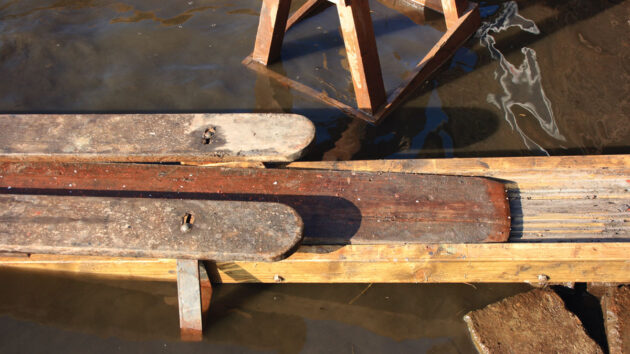
1. This pair of shaped wooden planks is attached to a greased way (a wooden U-section channel) and ensures the boat is centred on the way. The boat’s keel sits on the dark plank, the slider, which slides along the wooden channel on solidified fat commonly used by fish and chip shops. Liberal amounts of the fat are applied to the wooden channels.
Credit: Richard Johnstone-Bryden
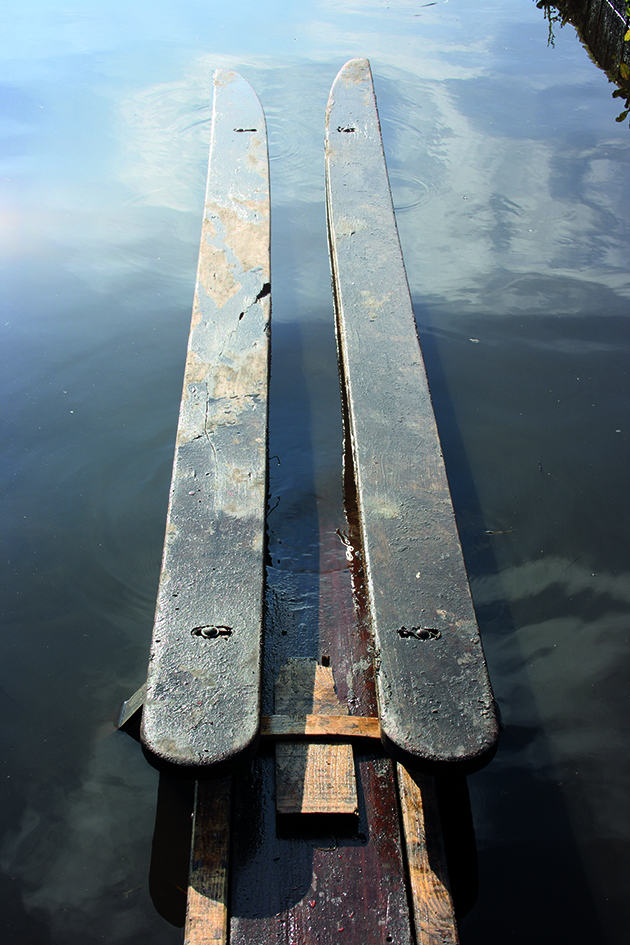
2. A wedge holds the slider in place until the boat is manoeuvred into position so its keel sits on the slider.
Credit: Richard Johnstone-Bryden
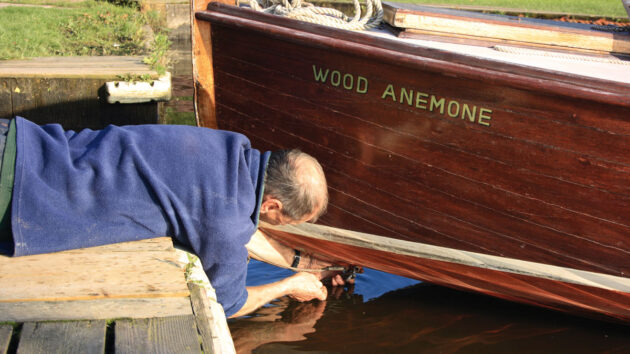
3. A wire strop is now attached to an eye underneath the stem on to which the wire from the winch will be attached for hauling out.
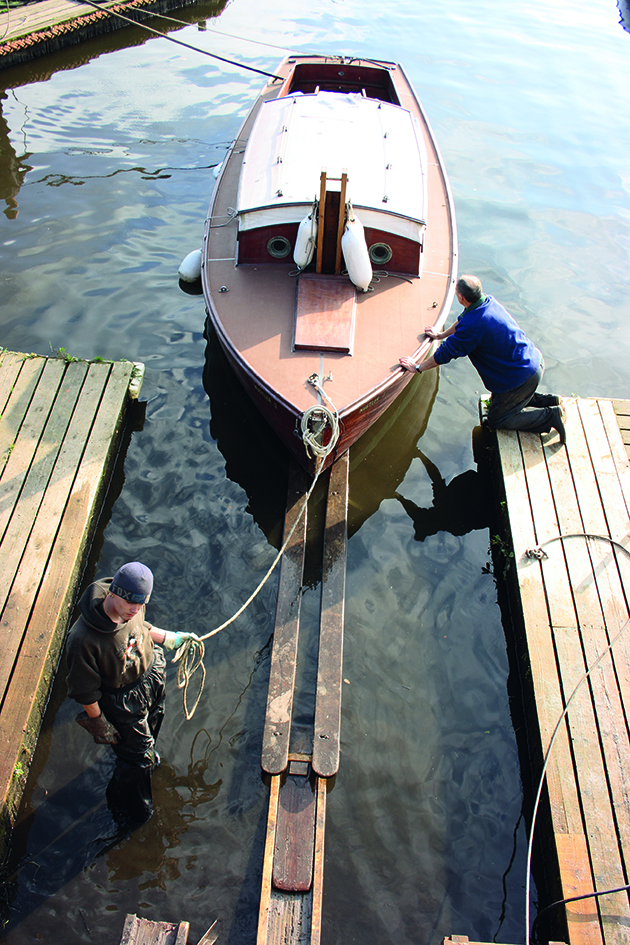
Credit: Richard Johnstone-Bryden
4. The yacht is lined up on the slip in readiness for the greased way and slider plank to be pushed underneath the keel.
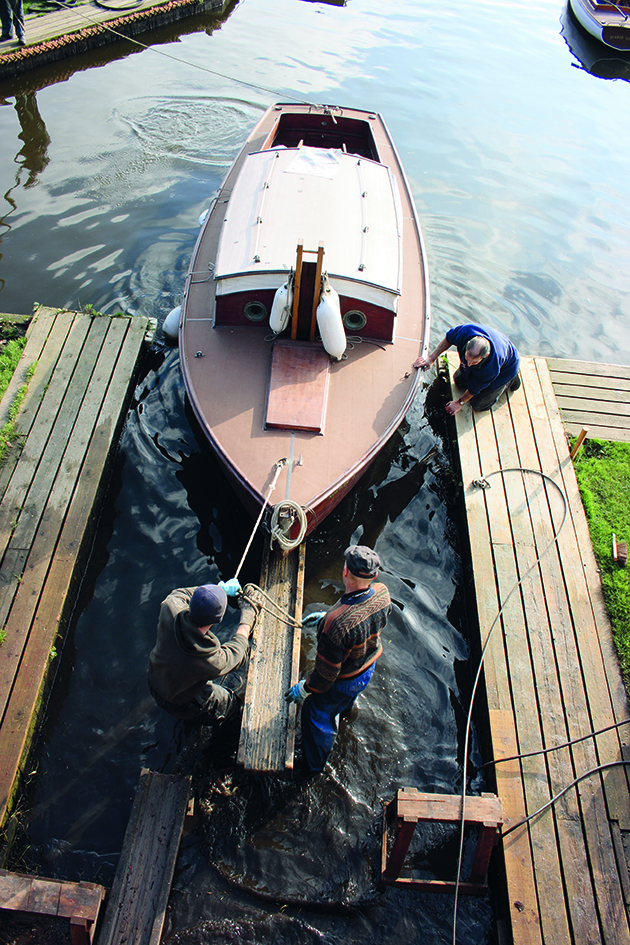
Credit: Richard Johnstone-Bryden
5. The greased way is pushed under the boat as far as possible and kept tight against it with a bow line until the wire strop has been brought under tension by the winch.
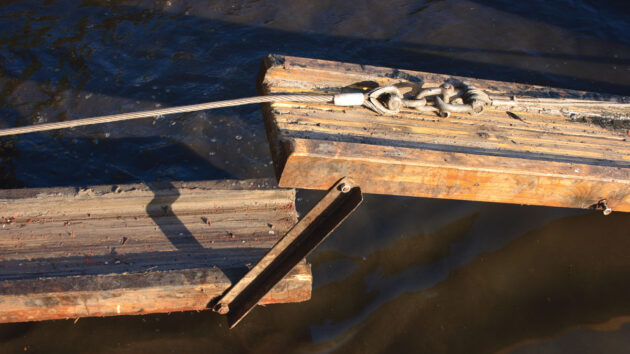
Credit: Richard Johnstone-Bryden
6. Iron brackets connect the first and second greased ways to allow a hinging movement for the changing angle as the boat is pulled from the water onto the slipway at the entrance to the boat shed.
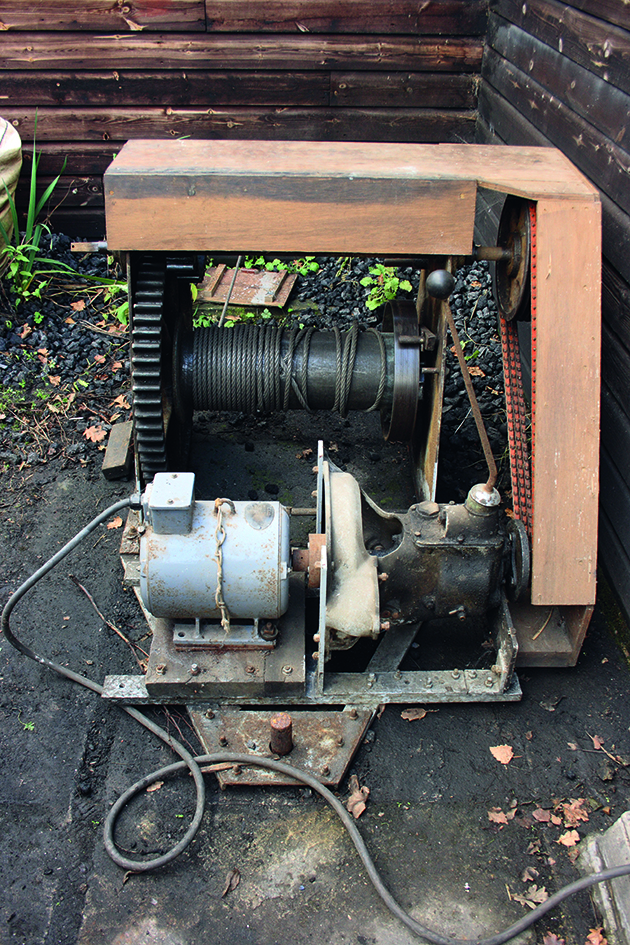
Credit: Richard Johnstone-Bryden
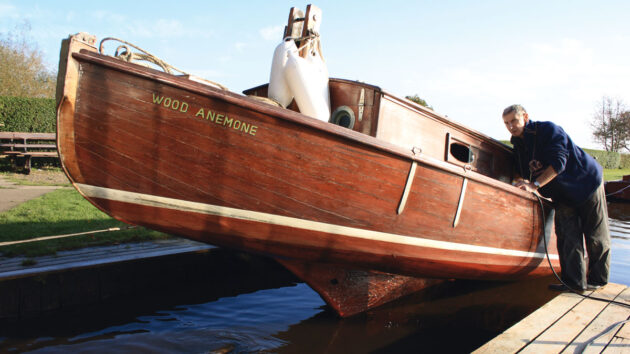
7. The winch was originally hand-operated when Hunter’s Yard was built in the 1930s, but was adapted in the 1950s to be driven by an electric motor via an Austin 7 gearbox.
Credit: Richard Johnstone-Bryden
8. The winch remote controls are used to get the boat moving and hauling out. As she emerges from the water he balances her to keep her upright. Safety stools are placed under the boat hull to stop her from toppling, just in case.
Credit: Richard Johnstone-Bryden
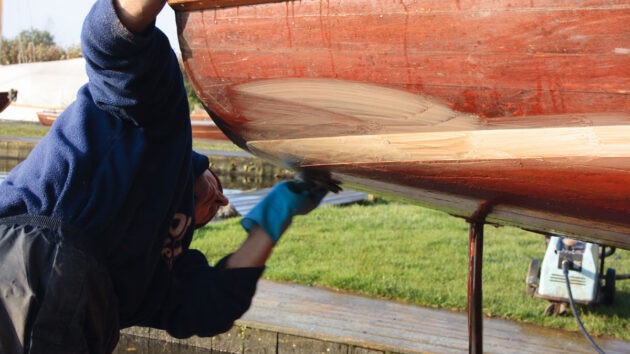
9. The boat hull is now scrubbed and pressure washed while the white boot top is rubbed down with pumice powder – a good cleaning material when used in conjunction with a scouring pad. This removes the shine, grease and green algae from the boot topping to leave a sound surface for repainting.
Credit: Richard Johnstone-Bryden
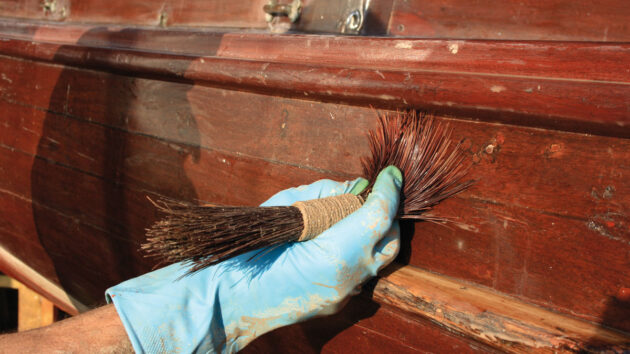
10. A bassine brush is used to scrub all the hard-to-reach places under the toe rails etc. The yard buys in 22cm (9in) lengths of bassine (which is produced from the leaf sheaths of the palmyra palm) and whips it into bundles to create the brushes. They have tried using modern nylon scrubbing brushes, but find the traditional bassine is more effective.
Credit: Richard Johnstone-Bryden
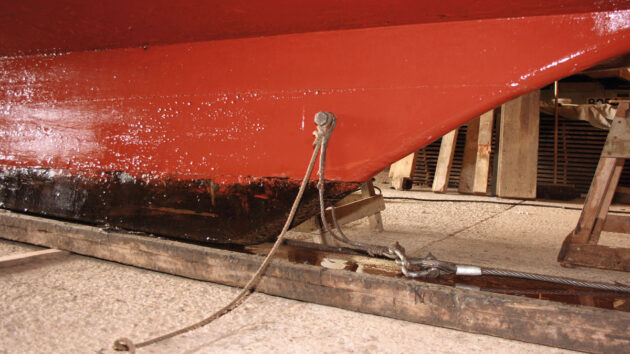
11. Once the boat is on level ground within the shed the wire strop is reconnected on either side of a metal bolt placed through a hole just above the lead section of the keel.
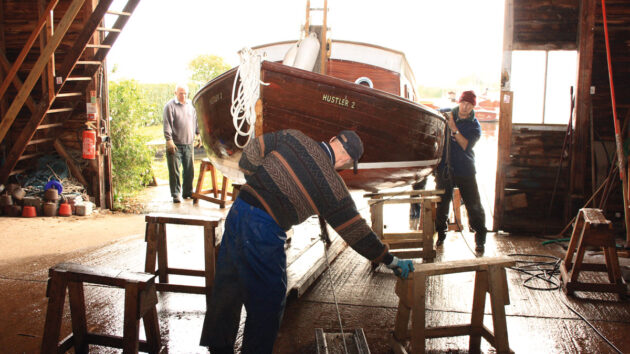
Credit: Richard Johnstone-Bryden
12. The greased ways in action: the weight of the boat sits on the slider plank which moves from one greased way to the next. As the boat moves clear of one set of safety stools, the team of helpers quickly moves them forwards to a new position in front of the boat hull to ensure there is no risk of the boat falling.
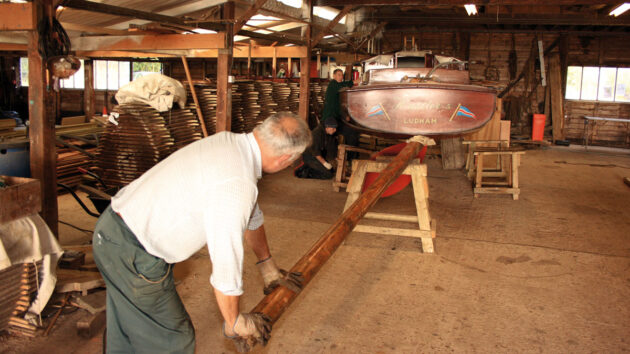
Credit: Richard Johnstone-Bryden
13. Once the boat has been manoeuvred into her winter berth she is lifted off the greased way and onto blocks by using an old mast section as a lever.
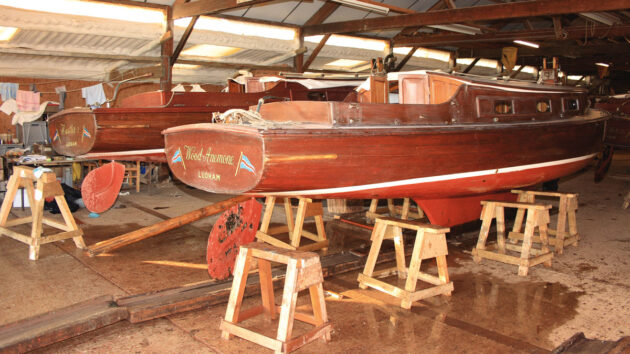
Credit: Richard Johnstone-Bryden
14. By the end of the day the Hunter’s team will have filled one of the yard’s two sheds. At the start of next season the team will go through the procedure again to get the fleet back afloat.
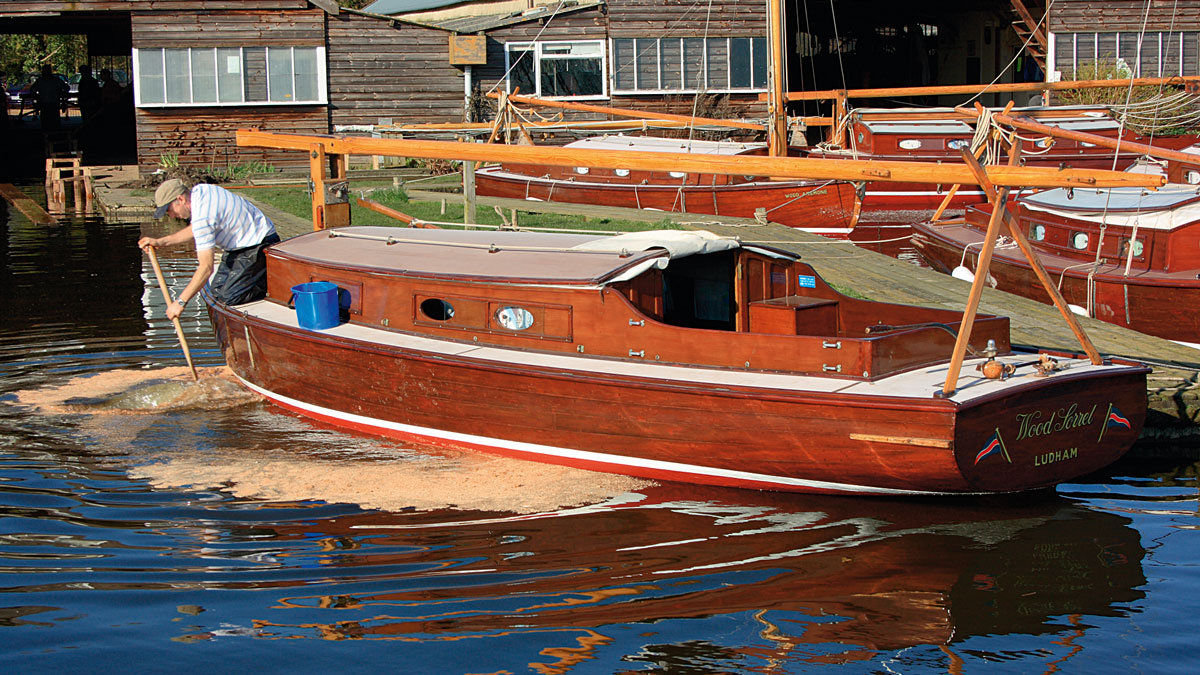
Using sawdust to plug leaks on wooden boats
Sawdust can be used to stem leaks between the wooden planks of a boat that’s been out of the water…

The art of veneering: step-by-step
Face up to the task of applying veneer with the help of boatbuilder Tony Davies

Hull plank repair on a boat: step-by-step
With a few practical woodworking skills anyone should be able to replace a plank on a carvel-built wooden hull, as…

Clinker-built boat repair: step-by-step
Richard Johnstone-Bryden explains the basic principles of clinker construction and the method of replacing damaged hull planking

What to read more practical articles like Hauling out the traditional way?
A subscription to Practical Boat Owner magazine costs around 40% less than the cover price.
Print and digital editions are available through Magazines Direct – where you can also find the latest deals.
PBO is packed with information to help you get the most from boat ownership – whether sail or power.
-
-
-
- Take your DIY skills to the next level with trusted advice on boat maintenance and repairs
- Impartial, in-depth gear reviews
- Practical cruising tips for making the most of your time afloat
-
-
Follow us on Facebook, Instagram, TikTok and X