



Aye, there's the rub: Alex and Daria Blackwell warn of the inherent dangers of rope chafe and advocate a simple method of protection
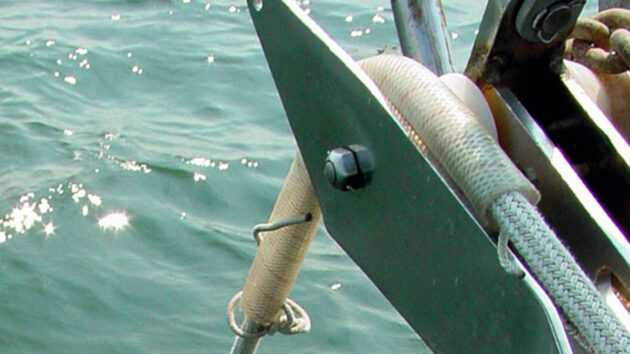
Now is the perfect time to check all your lines and halyards for chafe.
Chafe can occur very quickly with rope rodes. We saw a boat break its rode when a raft-up was suddenly subjected to choppy seas. The wind had turned against the current and the rode started moving against the metal toerail. In a matter of minutes, all three boats in the raft-up started drifting towards a reef.
In another instance, with a raft-up of multiple vessels of different descriptions, a catamaran tied between a sloop and a trawler started surging forward and back when the waves kicked up across a broad fetch. That motion against the motion of the sloop and trawler on either side acted like a saw blade. Luckily we noticed this, but watched in horror as the first of the ropes parted like a shot. In this instance we were able to quickly disengage the raft-up before any further damage occurred.
Any rope that touches edges or is exposed to objects that can rub – including other ropes – runs the risk of chafing through. Adequate protection against chafe is therefore essential.
Plan ahead to beat rope chafe
With a little attention to detail and some advance planning, protecting your rode or dock line from chafe is quite easy. Look for any place your rope may potentially come into contact with something else: these are the places where you need to add a chafe protector.
We use reinforced plastic hose split along its length to allow us to place the chafe guard anywhere on the rode. We secure it to the rode with some line that we’ve tied through holes at either end of the length of hose.
The reason for this is that we do not want the rope to move inside the hose: this causes friction, which causes chafe and we’re back to square one. Instead, we want the
sacrificial hose to move against the opposing object and be subjected to the abrasion.
Your chafe protector should be positioned so that it protects the rode anywhere it might rub against something: note the protector extending beyond the bow of the boat in the picture above. It must also be long enough to protect the rode when the rode stretches under load.
Chafe is caused by friction as a result of the following:
- boat movement
- rope/rode stretch
- rope/rode movement
- if there are objects the rope may touch
- if it bends around objects –cleats, bollards, quay edges etc
- if it moves against chocks, toerails, etc
A home-made chafe protector
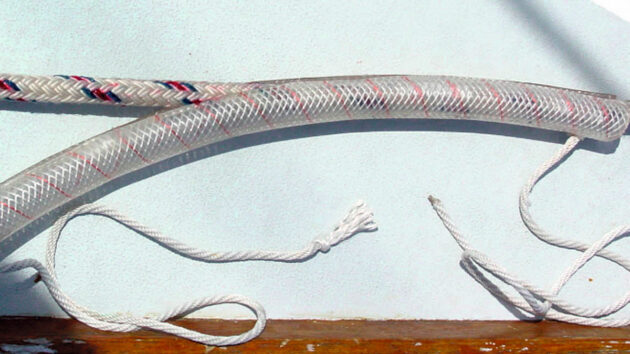
Credit: Alex and Daria Blackwell
Appropriately-sized reinforced plastic tubing is slit along one side and holes are drilled in either end to accommodate lanyards. The tube is then slid over the rope and secured with the lanyards. You can also buy commercial chafe guards, usually made of similar plastic or leather.
The simple mooring mistake that can chafe through your rope in 20 minutes
By following a few simple mooring guidelines, you can avoid the common pitfalls and make the process of securing your…

15 boat fixes at sea: sailors share how to deal with torn sails, rudder damage, chafe & more
Transatlantic sailors tell Ali Wood how they used their ingenuity – and sometimes bravery – to cope with emergencies on…

Basic sewing skills for boat owners to protect sails from chafe
Chafe damage has always been a problem on yachts, and owners are generally advised to preserve their sails by adding…

How to use a shore line to secure a boat at anchor
Genevieve Leaper explains why, in some circumstances, using a shore line to keep the boat secure makes perfect sense
Want to read more practical articles like How to protect against rope chafe?

A subscription to Practical Boat Owner magazine costs around 40% less than the cover price.
Print and digital editions are available through Magazines Direct – where you can also find the latest deals.
PBO is packed with information to help you get the most from boat ownership – whether sail or power.
-
-
-
- Take your DIY skills to the next level with trusted advice on boat maintenance and repairs
- Impartial, in-depth gear reviews
- Practical cruising tips for making the most of your time afloat
-
-
Follow us on Facebook, Instagram, TikTok and Twitter