



Gilbert Park shares how he safely gets on the water with limited crew
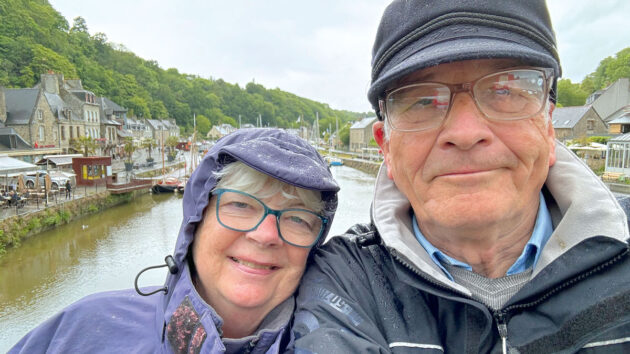
When I used to write papers for medical journals one of them had a heading ‘A man should write of only what he knows’. In this article I will only write about boating shorthanded with my wife, Máire, and my friend, James, who spends one to two weeks each year sailing with me.
I will also talk a little bit about sailing by myself as this is where I’ve developed some of the techniques for sailing shorthanded. At other times I do have my family on the boat and occasional crew and things may be different in these circumstances.
It’s fair to say Máire is not a keen sailor, but she tolerates it. She will keep watch while I visit the heads and helps with mooring. James, on the other hand, is enthusiastic and helms the boat most of the time, apart from when he has his afternoon nap or is preparing lunch.
I usually moor up when sailing with James. The primary concern must be safety. This starts with careful passage planning.
I still use the mnemonic I previously published in Practical Boat Owner:
Mr Ramsgate
M= meteorology;
R= route plotted
R= radio channels for coastguard and marinas
A= alternative ports
M= mooring details
S= special hazards
G= gas
A= alimentation or food for the voyage
T= Tides and tidal streams
E=emergency details with shore contact.
I usually share this data with my shore contact. If I am sailing with Máire then I’ll send a copy to James and vice versa. I previously used SafeTrx but this has disappeared now, so I’ll send free messages to my shore contact using my Spot X satellite communicator at various stages through out my voyage. As I approach my mooring I also send a check-in message (one button to push) so they know we have arrived. I will then phone them later.

Gilbert uses his Spot X satellite communicator to easily check in with his shore contact. Credit: Gilbert Park
Before leaving, I explain the passage plan to the crew; I now have two screens one for the helm and one for the crew which allows me to clearly go through the plan, showing them, for example, where the black water will be dumped, turn back points, escape ports etc.
Having the additional screen allows the crew to monitor progress throughout the voyage. Next comes the safety briefing if they haven’t been on the boat for a while, including where all the safety equipment and the like is.
There are a few rules on my boats. One is no alcohol on the boat underway or before leaving, such that crew may be intoxicated. Data from the UK suggests that 70% of boating accidents involve alcohol. Another rule is that lifejackets are worn all the time underway, both inside and outside of the boat.
The use of lifejackets inside is controversial. Data from the Marine Accident Investigation Branch (MAIB), in which death from entrapment was examined, reveals motorboats had the highest rate. Lifejackets contributed in some cases, preventing the person from exiting the cabin if it floods. Self-inflating lifejackets will have the greatest risk of this, but are safer outside should the person fall overboard.

Gilbert always wears an auto inflating lifejacket, but has a knife to deflate it if he becomes trapped inside the boat. Credit: Gilbert Park
Manual lifejackets will not inflate unless activated, but won’t auto-inflate if you fall overboard. So what do we do? You could argue that there’s no need to wear them inside, just remember to put them on when going outside – except you forget. In an emergency on your boat, such as a windscreen wiper falling off in rough weather going around Cap Corse, the urgency may lead you to forget.
Alternatively, you can decide between the two. I wear an auto-inflating lifejacket because I’m the one who will go outside. It has a knife on the belt so if I’m trapped I can puncture the lifejacket. It also has a back tow facility as there are circumstances where I may use a tether. Máire wears a small, manual lifejacket (as she does not work on deck) but does have an automatic lifejacket as well.
Boating shorthanded: mooring up
Mooring up is often a time of great stress, especially if the wind and or current is making life difficult. Good communication is not just limited to the passage plan – mooring up and leaving a mooring also needs calm conversations, not yelled instructions and lost tempers when instructions can’t be understood in windy conditions or when the bow-thruster is working overtime.

Inexpensive headsets make mooring less stressful when short-handed. Credit: Gilbert Park
For this we use small radio transmitters and receivers that can go in a pocket or hang around your neck inside of your jacket with inexpensive headsets that, if they fall into the water, won’t break the bank to replace them. Alternatively, you can use your mobile phone and Bluetooth ear pieces using your mobile network.
When both Máire and I were new to motorboating we had to learn how to moor. For me at the helm, it was using twin engines and a bow-thruster. For Máire it was learning to step ashore, not jump, and carefully tie us up.
Unless I’m doing a long voyage (going across Channel, for example) I usually have fenders and ropes prepared for mooring up as I put them away. Because of the relatively low freeboard, most of the fenders don’t need height adjustment for a pontoon berth and underway live tied on the deck. There’s a separate clip that stops them from deploying in a rough sea.

All mooring warps have a spliced loop at one end that goes onto a bollard or cleat. The stern and midship warps are both brought back into the cockpit, while the bow warp is secured at the front. Credit: Gilbert Park
One side fender is right at the stern and the mooring bollard it is tied to is difficult to access with the canopy up, so it sits on the side deck with a small rope going from the bottom of the fender to a clam cleat inside. A similar arrangement exists for the bathing platform fender when coming in stern-to.
Ropes have eyes spliced in them and are fixed onto respective cleats. The midship and stern ropes are brought into the cockpit and secured there. The bow ropes are coiled and fixed to additional handles fixed to the bow. This avoids having to get ropes out of lockers when preparing to moor – invaluable when alone and easier for Máire.
My current boat, a Seaward 29, came with bow- and stern-thrusters that make alongside mooring stress free. More than that, they are proportional thrusters which allows them to be locked on, pinning the boat to the pontoon while a member of the crew steps ashore and ties a line off. I was sceptical of these at first on a twin-engined boat, but now I wouldn’t be without them.

Gilbert has his bow fenders and mooring warps prepared and ready to go to make mooring easier short-handed. Credit: Gilbert Park
Anchoring poses no difficulties, apart from the initial release of the securing hook, as it can all be done from the helm with a chain counter. Once dug in it only requires the snubber and anchor ball to be deployed. I have always picked up mooring buoys from the safety of the cockpit. I have a long line from the forward mooring bollard that has a clip on the end.
The buoy is brought alongside and the line is clipped onto the mooring strop. The boat drifts back until the long line is taught. The boat is then moved forward using the engines and the line pulled in until the clip is on deck. This is then released and the mooring strop dropped over a bollard.
More recently I’ve used a Buoycatcher which makes it even easier to place a line through the buoy ring.

Note the four blue fenders. The three midships are secured by a fender rope and clipped to the wire of the lifelines. Credit: Gilbert Park
In all boats, but especially my current one and my previous Mitchell 28, space is limited due to their size. Both of these boats were designed for a couple. There is another rule that only one person can move around at a time. The old saying ‘too many cooks spoil the broth’ is especially true for my boats.
Both Máire and James are excellent cooks, so I have to stay out of the cabin while food is being prepared. Usually, I sit in the cockpit or in the forward cabin out of the way. I never interfere with the choice of food or restaurants; I choose the diesel, they choose the food.
James sleeps in the wheelhouse in one of the bunk beds. It has been carefully modified for him with an all-around curtain hanging from the top bunk and lighting underneath the top bunk. The top bunk does not stay empty.
James is not known for travelling light. It did take a while for him to realise that arriving with semi-rigid suitcases made stowage difficult and that soft bags were easier.
Keeping watch when boating shorthanded
One of the advantages of having two people is that the second person can help keep a good lookout, especially in congested water. At first I used to get irritated by Máire pointing out a port hand buoy I’d seen some time ago, then realised it was better she did this than me hitting the buoy, so now I’m much more relaxed about it. James now gets the same warnings from me. I have tried several times to use the wifi from my chartplotter to provide a second screen for the crewmember to see what’s going on.

Two screens are better than one. The second screen allows the crewmember to see what’s going on. Credit: Gilbert Park
Unfortunately, in all the boats I’ve tried it hasn’t worked and the tablets and phones I have tried this with have lost connections frequently. I did install a chart on a tablet (such as the inexpensive ones from Visit My Harbour) and these proved reliable, but didn’t show the identical route I was taking.
I eventually installed a second screen when I fitted a thermal camera so I could have one for the camera and one for the chart. It was fitted so the crew could also see it and it has proved invaluable for them to be able to see what the helm is seeing and anticipate turns etc as well as setting up their own screens.
Rest and recuperation
An afternoon nap is a great thing on a long voyage. Although it is best to nap for no longer than 20 minutes, both James and I have been known to break this rule. It struck me that if one of us fell overboard while the other was sleeping the boat (which would be on autopilot) could be miles away before the person woke up and found the other missing.

An afternoon nap is a great part of a holiday, but poses potential problems if the helm falls overboard unnoticed. Credit: Gilbert Park
So one of the essentials I have fitted is an OLAS MOB device. You wear a Bluetooth transmitter and if it becomes separated from the receiver it sounds an alarm, puts a waypoint on the chartplotter and switches off the engines.
The last thing about having a second person on board is the ability to learn. There hasn’t been a trip where I haven’t learnt something and sometimes it comes from teaching. Both Máire and James are enthusiastic learners and the ability to discuss topics and rehearse various scenarios while underway is a great way to teach and learn.
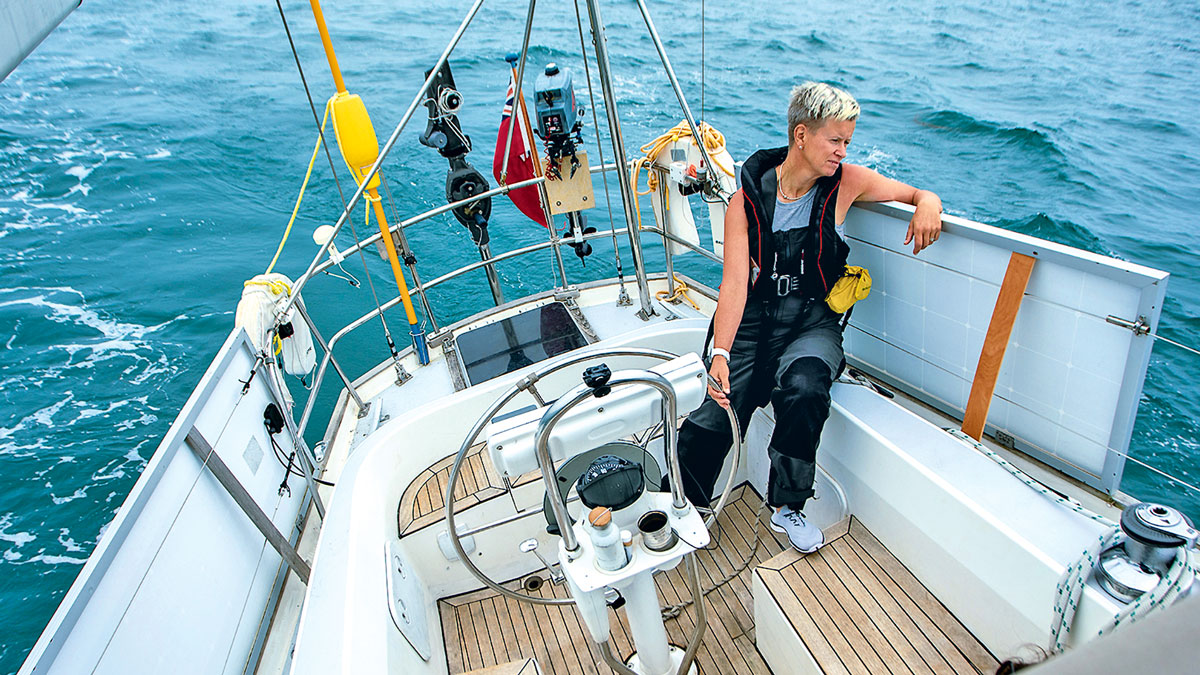
Sailing solo: how to go from crewed to single-handed
Round the world sailor Ian Herbert-Jones shares valuable advice on how to transition from crewed to single-handed sailing

14 tips for single handed anchoring
Ben Meakins tries out some methods for dropping and recovering the anchor for singlehanded sailors in crowded anchorages

How to sleep sailing shorthanded
John Apps stresses the importance of sleeping sufficiently on long-distance single-handed passages, and explains how to snatch safe naps without…

Coming alongside – essential skills for shorthanded crews
Coming alongside can be tricky for singlehanded and short-handed sailors. Øyvind Bordal has some sailing skills that will come in…
What to read more seamanship articles like Going boating shorthanded?
A subscription to Practical Boat Owner magazine costs around 40% less than the cover price.
Print and digital editions are available through Magazines Direct – where you can also find the latest deals.
PBO is packed with information to help you get the most from boat ownership – whether sail or power.
-
-
-
- Take your DIY skills to the next level with trusted advice on boat maintenance and repairs
- Impartial, in-depth gear reviews
- Practical cruising tips for making the most of your time afloat
-
-
Follow us on Facebook, Instagram, TikTok and X