


Phil Clandillon looks at the best second-hand yachts for sailing popular cruising grounds; this month, the Dutch inland seas and waterways
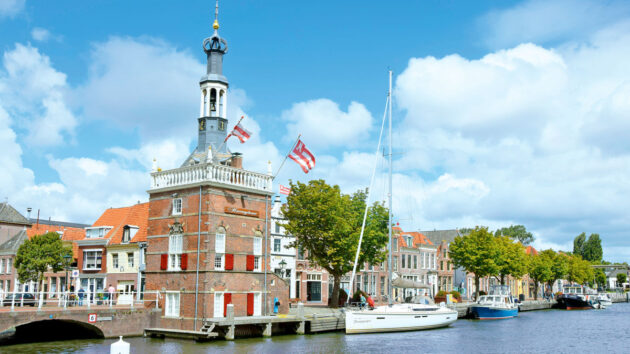
The Netherlands offers thousands of miles of sheltered inland cruising among beautiful towns and countryside. Yachts can travel, mast up, from the cosmopolitan city of Groningen near the German border, to history-steeped Middelburg, taking in cities like Amsterdam and Rotterdam along the way.
There’s a huge area of canals, lakes and inland seas to explore, with something for everyone, from nature and history, to modern art and Michelin star dining. The unique Staande Mast Route makes this possible for sailing yachts of moderate draught, stretching over 600 miles from north to south. But which boat is best?
Suitability of boats for the Dutch Inland Waterways
Vessels longer than 15m are subject to additional regulations, and boats longer than 12.8m are restricted in where they can stop. Accordingly, all the models I’ve picked for the Dutch Inland Waterways are comfortably under 40ft long.
Exploring the Staande Mast Route inevitably means lots of motoring, so good handling under power is a must, as is being able to remain on station while queuing for locks, along with manoeuvrability in the marinas of those picturesque towns like Enkhuizen and Hoorn. To make the most of sailing on inland seas like the IJsselmeer, you’ll need to be able to beat upwind and tack easily.
Most of the yachts I’ve selected have fractional rigs with smaller headsails, some have self-tacking jibs, and all have their major controls led aft for easier short-handed control. Shallow depths are a fact of life, so I’ve picked out yachts with shallower than average draught, usually a shoal keel version of the standard boat.
Hanse 370
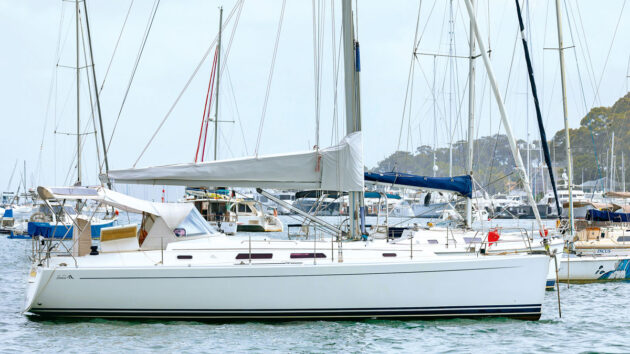
The Hanse 370’s fully-battened main and self-tacking jib suit tacking upwind. Credit: Martin Berry/Alamy
This Judel/Vrolijk-designed fast cruiser has a reputation as a sweet sailer, with a light helm and good form stability. A fractional rig, fully-battened main with stack pack and small self-tacking jib makes her easy to short-hand, ideal for tacking up the Markermeer like a local. All 370s also include deck gear for a genoa, making it possible to rig one in lighter airs if needed.
Her hull features an almost plumb bow and broad sections aft, typical of the period, but her coachroof styling lends her a modern classic feel. Later boats had the windows redesigned with a black-tinted, bonded style, giving a more modern look. Teak decks were an option, and if buying in the Netherlands, there’s a good chance the boat has been wintered indoors, meaning the decks can still be in good condition.
Her deck layout is well organised, with lines led undercover to winches on the coachroof. Midship cleats were standard – handy for the many locks.
Her T-shaped cockpit layout works well, with the aft cutout allowing for easy passage without requiring climbing to reach the wheel, and benches that are long enough for lounging. There are two primary winches for the headsail, and two secondaries for the main, just in front of the helm. A German mainsheet was standard, but it was possible to specify a traveller. Steering is via a single wheel, with JEFA’s rod link system, praised for its sensitivity and lack of play.
A 1.95m T-keel was standard, but we’re interested in the shoal draught version, drawing a handy 1.6m. A 29hp Yanmar 3YM30 was standard, good for a cruising speed of 6 knots. An upgraded 39hp, four-cylinder unit was also available. Handling under power is reported to be good, but with a slight lack of initial prop wash as the sail drive is a fair distance from the rudder.
Her interior came in two- or three-cabin versions. The two-cabin version benefits from a longer galley, and a very large cockpit locker on the starboard side, also accessible from a door behind the galley. The aft cabins in either version are decent but not palatial, meaning most owners will choose the more spacious forecabin as their main berth.
In the saloon, on the port side there was a choice of a single settee or two single seats, either side of a table which doubles as a nav station. All versions have dinette seating to starboard. The single, large heads compartment is situated aft to port, and has a stand-up shower, ideal for sprucing up and eating out in pretty towns like Almere or Kortgene.
Prices range from around £70,000 to £100,000 depending on age, spec and condition. Owners report no major issues specific to the 370, but there are some general watch-outs. Check the rudder shaft for corrosion and the lower bearings. The saloon windows and deck fittings can leak with age. The original skin fittings should have been replaced by now, and if not, should be dealt with as a priority. Otherwise, the 370 is a nice option for anyone looking for a short-handed cruiser with decent performance, good interior space and excellent handling.
Dehler 36 CWS
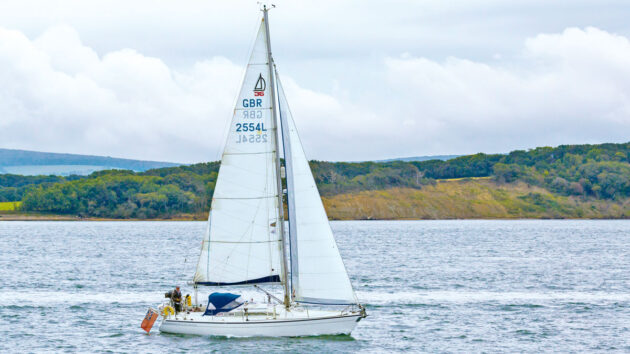
The Dehler 36 CWS wing keel option drew just 1.5m, ideal for the Dutch Inland Waterways. Credit: Carolyn Jenkins/Alamy
Dehlers of the Van de Stadt era were renowned for their tough build quality and for feeling like a much bigger boat under sail – stiff, with a wide groove and great manners. The 36 CWS has a comfortable interior, a tall fractional rig with a big mainsail, a self-tacking jib, and a party trick that makes her ideal for sailing short-handed in the restricted waters of the Dutch inland waterways and seas.
CWS means Central Winch System, where all lines are routed to two banks of clutches and a single electric winch in front of the wheel. This provides easy control of the mainsheet, halyards, reefing lines, kicker and the sheet for the self-tacker. Her cockpit is a good size with high coamings giving a secure feel, but you’ll need to climb over or around the beam for the CWS system to access the helm. Some boats are fitted with a slightly ugly optional bathing platform, sticking out from the bottom of the transom.
Standard draught was 1.85m, but she also came with a wing keel drawing just 1.5m, ideal for our purposes. In each case, she has a single spade rudder with the prop swung on a P-bracket just in front, meaning plenty of prop-wash to get the rudder working at low speeds, ideal for staying on station when jostling in the queue for a lock or bridge.
Every example I’ve seen has the ‘Nova’ interior, mostly white with small amounts of wood trim. This may be too clinical for some tastes, but it does provide a bright feel, and most seem to have aged well.
Her interior layout was unconventional at the time, with a long linear galley with twin sinks, a front-opening fridge on the port side of the saloon, and a huge dinette eating and seating area to starboard. There’s lots of built-in stowage, particularly in the galley, and in a series of lockers between the galley and the door to the forepeak.
The trademark Dehler side-facing navigation station with folding seat is behind the dinette, and two doors aft lead to the heads on the starboard side, and a generous aft cabin to port, where the double bunk can be divided with a lee cloth to provide a sea berth. There’s another double berth in the forepeak, preceded by a small area with a wardrobe to port and a sink to starboard.
Decks were covered in a non-slip material which can start to peel. Sanding and replacing with modern deck paint takes years off the boat’s appearance. Double check the stainless steel spreader mounts for signs of corrosion, as ultimately this could lead to mast failure. Most boats will have this remedied. Outside these points, the usual older boat ageing caveats apply, and it’s worth spending extra time finding an example that’s been well cared for and updated with modern equipment.
Prices start from £30,000 for boats that need some love, and rise to around £55,000 for examples that have been well maintained and upgraded. Around 800 were built, so there’s usually at least a few for sale at any one time.
Jeanneau Sun Odyssey 35
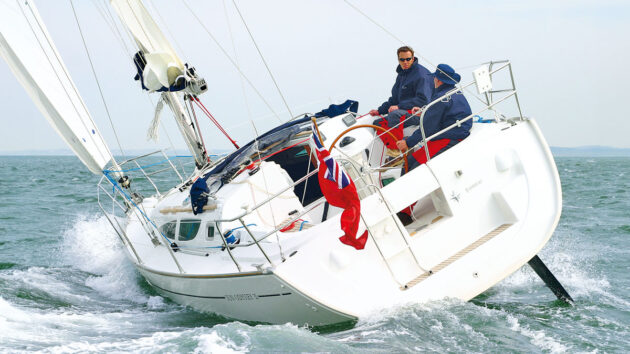
Boats for the Dutch Inland Waterways: Three keel options – standard fin, lifting keel, shoal fin – were offered on the SO 35. Credit: David Harding
All boats are a compromise. It’s a cliché for a reason, because it’s hard to find a single model that does everything well. There are exceptions, though, and this 2003 Marc Lombard and Eric Levet design is one of them. Her versatility made the Sun Odyssey 35 a huge success for Jeanneau, with over 1,400 built between 2003 and 2006. She’s fast, easy to handle, rewarding to sail, and the two-cabin version has a particularly good interior layout.
Today, cruising boats with their maximum beam carried almost to the transom are commonplace, but in the early 2000s, the 35 seemed futuristic. The hull is cleverly designed to minimise wetted area, so she’s still relatively easily driven upwind. The trade-off is an increased tendency to slam in a chop, but that’s not a huge concern in the flat expanses of water we’re considering.
There were three keel options available: a standard fin drawing 1.85m, a lifting keel version with twin rudders, and the shoal fin. At 1.45m, this is the best option for our sailing area, retaining a single rudder and useful prop-wash from the shaft-driven propeller sitting just in front of it.
On deck, her tall masthead rig provides a healthy amount of sail. Primary winches are in reach of the helm, making it easy to tack the jib single-handed. The mid-boom mainsheet is handled via the coachroof winches, keeping the wide cockpit clutter-free, but meaning single-handers will have to leave the helm to trim the main.
Below, two- and three-cabin versions were available, with the former the most popular. In the saloon, there is a C-shaped dinette to starboard, and a linear settee to port, with a clever nav station that slides away when not in use. The saloon table can be dropped to create an infill for an additional double berth.
Moving aft, there’s a decent L-shaped galley with twin sinks to starboard. Both layouts have an aft cabin to starboard, but in the two-cabin version it is much wider, with the remaining space to port devoted to a large cockpit locker. This also allows for a larger heads compartment with a dedicated shower area. Both layouts have the same good-sized double forecabin.
The standard engine was a 29hp Yanmar 3YM30, but some boats were fitted with a Volvo Penta MD2030. Both deliver a cruising speed of 6 knots, and handling under power is reported to be predictable in both ahead and astern.
The 35 was one of the last Jeanneaus to be built with her bulkheads and floor grid glassed in, making repairs easier compared with later boats with an internal liner. Vinylester resin was used in the two outer layers of her layup to prevent osmosis. Owners don’t report any particular problems specific to this model, but the youngest boats are now almost 20 years old, so care is needed to find one that has been well-maintained and updated.
Prices range from around £40,000 for examples which may need some updating or TLC, to around £85,000 for the best maintained boats.
Beneteau Oceanis 34
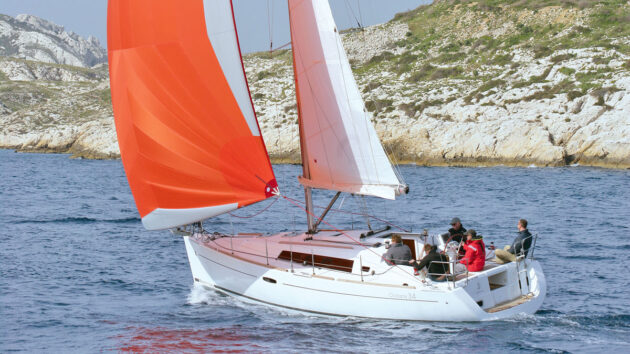
A single balanced rudder gives the Oceanis 34 good close quarters manoeuvring. Credit: Graham Snook/Future PLC
Good looks aren’t always a given when it comes to broad-sterned cruising yachts, but the Oceanis 34 proves it can be done. Designers Groupe Finot and interior architects Nauta Design pulled off an impressive feat, combining sharp looks, good sailing performance and a spacious, well-planned interior, in a boat that was also very good value when new.
The 34 has a sufficient, but not huge fractional rig, making her easy to manage short-handed. The winches for the 105% headsail are right next to the wheel, but this is another layout where the mainsheet is trimmed at the coachroof. The standard keel draws 1.85m, but the 1.35m shoal keel version suits our shallow canals and meers perfectly.
Her wide side decks and midship cleats are ideal for tying up in locks, and the spacious cockpit with a single wheel provides good-sized lockers and a flip-up rear helm seat that gives access to the bathing platform. There’s also a compartment for a liferaft under the port quarter, where part of the rear moulding lifts.
Power is from a 29hp Yanmar 3YM30, mated to a shaft that exits via a moulded skeg. Like the Sun Odyssey 35, this means prop-wash over the single balanced rudder, and the ability to steer the boat at very low speeds – ideal for manoeuvring in tight marinas and busy locks.
Her hull is solid glass, with a moulded glassfibre liner transferring loads from the rig and keel. The deck is cored with resin-infused end-grain balsa, and has two opening hatches and a decent-sized anchor locker. A single washboard slides up to stow under the companionway hatch garage, a simple but clever feature.
Down below, the interior seems huge for a 34-footer. In many recent designs under 35ft, it’s common for the saloon seating area to feel cramped. Not so here, with spacious seating and an enormous drop-leaf table.
Two- and three-cabin versions were available, but the two-cabin version was more popular, and should suit most buyers of second-hand boats better. The two-cabin version has a large transverse double berth aft, whereas the three-cabin layout has two identical, smaller cabins. Each has the heads aft to starboard.
It’s much larger in the two-cabin boat, but it doesn’t have a stand-up shower like the Jeanneau. The two-cabin version also gets a longer settee on the starboard side of the saloon, and the navigation desk on the end is slightly bigger. In both, there’s a decent-sized L-shaped galley to port, where there’s space for a front-opening fridge.
The newest boats are 11 years old, and models from 2013 and older should have their standing rigging renewed by now. Original through hulls on all boats should have been replaced. The mirrors in the heads go rusty around the edges, but are easily replaced. Acrylic windows can become crazed from UV, and in rare cases, the sealant securing the forward windows can let go. Otherwise, owners report few major issues. Expect to pay between £65,000 and £85,000 depending on age, spec and condition.
Etap 32s
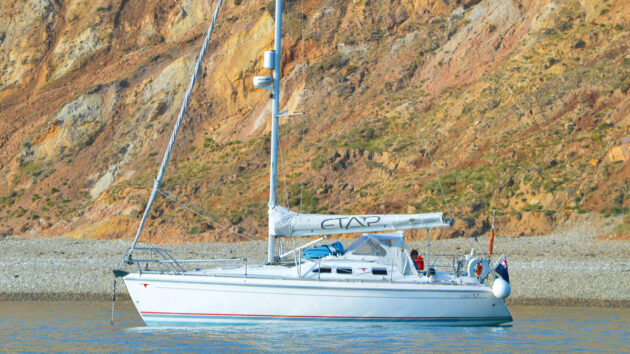
The Etap 32S came with the choice of tiller steering or Etap’s vertical tiller EVS system which works in a similar way to a wheel. Credit: John Guess
Belgian builder Etap was famous for its unsinkable construction, achieved by a double-skinned GRP hull with closed-cell foam between. In reality, very few recreational yachts sink, but the design creates a stiff boat, and has the benefit of increasing insulation, ideal for extending the season to explore the further flung canals and rivers.
The Mortain & Mavrikios-designed 32s was one of the brand’s most successful later models, combining sporty sailing with sure-footedness and a raft of clever features. She has a tall fractional rig, enough form stability to stand up to her canvas, and a roomy, well-protected cockpit.
A wing keel drawing 1.8m was standard, but the shoal draught version that suits our purposes has a 1.3m tandem keel, an unorthodox but reportedly very effective design in which two, shallow, inline fin keels are joined together with a single bulb at the bottom. Etap offered a choice of tiller steering or their EVS system, a kind of vertical tiller you use like a wheel. This saves a lot of cockpit space, and receives broadly favourable reviews, but it’s possible to replace it with a conventional stick if you really don’t get on with it. The mainsheet traveller is placed perfectly for the helm, but it can also be detached completely when in port.
Below, the coachroof has panoramic windows on three sides of the saloon. Headroom is 6ft 3in in the aft area, dropping to 5ft 9in in the forward part. She has a compact L-shaped galley with twin sinks to port, and a side-on nav station to starboard, with a Dehler-style flip-out seat. Aft to starboard, there is a spacious heads, with a door into the large cockpit locker. The aft cabin is a surprisingly good size for this class of boat, accessed by a door behind the galley. The twin settees can double as sea berths, and there’s another decent double berth in the forepeak.
Power is from a Volvo Penta D1-30, mated to a saildrive, good for 6 knots at a shade under 3,000rpm. The engine is well insulated for noise, and the large single rudder means handling under power is predictable in forward and reverse. The saildrive isn’t particularly close to the rudder, however, meaning there won’t be as much useful prop-wash compared with shaft-driven boats.
Etap had a good reputation for build quality, and it’s common to see used models in very good condition. Owners don’t report any serious issues specific to the 32s, but the TBS anti-slip deck material on older boats can look tired and start to lift at the corners. Like the Dehler 36, replacing this with a deck paint such as KiwiGrip can transform the boat’s look.
Original through-hull fittings should be replaced, rudder bearings should be inspected carefully, as should the engine and saildrive. The quirky nature of the 32s means it can be good value, with used prices ranging between £40,000 and £58,000 depending on spec and condition. Around 800 were built, so there’s usually at least a few for sale at any one time.
Cornish Crabber 26
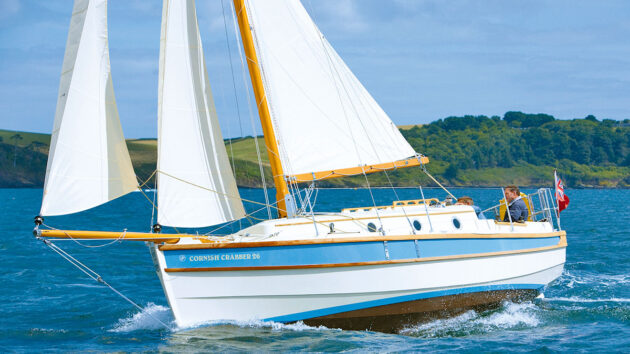
The Cornish Crabber 26’s high-peaked gaff main is more like a Bermudan sail with a sliver cut out. Credit: David Harding
In a group of boats selected for their ability to tack up a narrow channel, you may be surprised to see a gaff cutter. All is not what it seems with the Cornish Crabber 26, however. This pretty, traditional cruiser was penned by the late David Thomas, famous for competitive cruiser-racers, and more than one retro design hiding modern underpinnings.
The 26’s rufty-tufty chine disguises a beamy hull with a plumb bow and a relatively straight run aft. A jib and staysail on modern furlers spreads the loads between two smaller headsails, making sheets easy to manage, and allowing the staysail to be rolled away in stronger winds. Her gaff main has a very high peak, making it surprisingly efficient to windward, more like a Bermudan sail with a sliver cut away.
She draws just 0.8m with her galvanised steel centreplate up, and her long, shallow keel and bilge runners mean she can dry out relatively flat. Sailing is possible to windward with the plate up, ideal for making the most of the shallow lakes and meres. Her draught increases to 2m with the plate down, and she pivots around the foil, speeding up tacks. Ballast is encapsulated lead, cast in three separate lumps, and situated low in the bilge.
The cockpit is deep and safe, with two large lockers and plenty of room for the tiller to swing. All major lines are led aft to a pair of winches on the coachroof, with the throat and peak halyards for the gaff together on the starboard side. The traveller is on the transom, keeping the centre of the cockpit clear.
Below, the wide saloon makes her feel like a much larger boat. The centreplate box is incorporated into the drop-leaf table, with settees on either side doubling as berths. There is a compact galley aft to port, with a full-size cooker, sink and a top-loading fridge.
The heads is aft to starboard. It is not palatial, but it does incorporate a hanging locker for wet gear. There’s a decent-sized vee-berth in the forepeak, with an infill to turn it into a double bunk.
Power is from a 20hp Yanmar 3YM20, giving a cruising speed of 5.5 knots. The engine is a bit squeezed in, but multiple access hatches are provided. Thomas cleverly created a very large aperture between the end of the shallow long keel and the rudder, reducing the excessive prop walk associated with traditional long keelers. For manoeuvring and to reduce chargeable length in marinas, the bowsprit can be raised and retracted.
With typical asking prices for used Crabber 26s between £60,000 and £85,000, this yacht is not cheap, but residual values are very strong. Build quality is reported to be excellent, and owners report few major problems, although minor issues with plumbing (corroded galley or heads taps) have cropped up.
UK sailor Charles Erb took his Crabber 26, Molly of Mylor, to the Netherlands as part of the Dutch Old Gaffer Association’s 20th Anniversary Tour. He has made a series of excellent videos on the trip which are available on YouTube youtube.com/@erbster200.
Practicalities of cruising the Dutch Inland Waterways
There are no formal license requirements for sailors of yachts under 15m that travel at displacement speeds, but skippers should understand the CEVNI waterway rules. It is, however, mandatory to carry an up-to-date copy of certain Dutch regulations. Keeping a copy of the Dutch language Wateralmanak 1 on board will cover this need.
For navigation and planning, the Waterkaarten Netherlands app is available for iOS, Android and Windows, can be used in English and includes charts, information on bridges, locks and marinas, route planning tools and pilotage updates.
Further Reading on the Dutch Inland Waterways
■ Cruising Guide to The Netherlands & Belgium (1st edition) by Kieran Flatt and Hilary Keatinge, Royal Cruising Club Pilotage Foundation/Imray, £37.50
■ Inland Waterways of the Netherlands by Louise Busby & David Broad, Imray, £30
■ Through The Netherlands via the Standing Mast Routes by Andy Mulholland and James Littlewood, The Cruising Association, £17.50.
Note: We may earn a commission when you buy through links on our site, at no extra cost to you. This doesn’t affect our editorial independence.

Want to cruise the waterways of France? Here are the best sail and power boats for a memorable trip
The French inland waterways are an attractive route to the Med. Duncan Kent shares his pick of sub-40ft sail and…

Inland boating in the UK: a beginner’s guide
Rupert Holmes and Jonathan Mosse look at boats, seamanship skills, planning and destinations in their guide to inland boating in…

Slow boat around Wales – coastal and inland circumnavigation in a Vivacity 20
When we first moved to Deganwy I saw a programme on Welsh television with a couple of guys from Aberaeron…
These six legendary boats defined modern sailing: from the Optimist to the Mini 6.50
The history of sailing is not just a story of wind and water – it is also a story of…
Want to read more articles like Dutch Inland Waterways: The best second-hand yachts for the Staande Mast Route?
A subscription to Practical Boat Owner magazine costs around 40% less than the cover price.
Print and digital editions are available through Magazines Direct – where you can also find the latest deals.
PBO is packed with information to help you get the most from boat ownership – whether sail or power.
-
-
-
- Take your DIY skills to the next level with trusted advice on boat maintenance and repairs
- Impartial, in-depth gear reviews
- Practical cruising tips for making the most of your time afloat
-
-
Follow us on Facebook, Instagram, TikTok and Twitter