



After his boat executes an unexpected hard-over turn, Paul Newell diagnoses and repairs a problem with his tiller pilot
I enjoy sailing my 1981 Virgo Voyager Mary Lou around the coast of Northumberland and am often single-handed, so my Raymarine ST1000 tiller pilot is an essential member of the crew. He came with the boat when I bought her, and I christened him ‘Lee’ (as in Lee Helm).
Last October, I motored out of the River Coquet and set Lee to work steering while I went up to the mast to raise sail. Suddenly, the boat made a sharp and unexpected turn off the wind.
Returning to the cockpit, I expected to find that the autopilot had jumped off the spigot on the tiller.
To my surprise, the push rod was still attached but at full extension, causing the sharp turn. I reset everything and put the autopilot back on auto. Everything seemed normal, so I went back to the mast, only to have a repeat of the hard-over turn.
Obviously, Lee wasn’t feeling his usual, dependable self, and I sent him down below for the rest of the day.
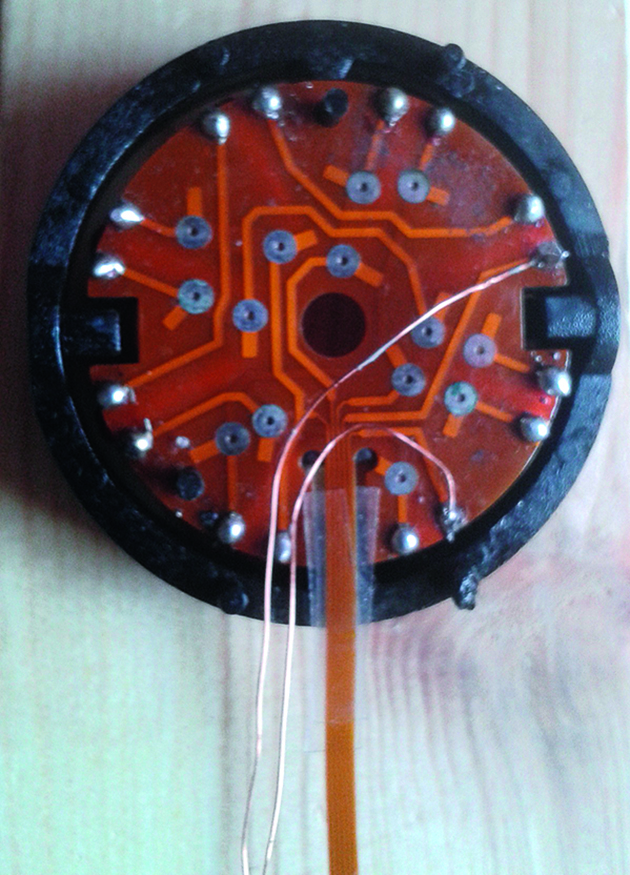
The ribbon cable on the tiller pilot had chafed. Credit: Paul; Newell
When I got him home, some time later, it became obvious that there was a problem with the internal flux gate compass. If I held the autopilot at certain angles to the horizontal, it would display the correct compass heading, but as I tilted it gently from side to side, it would suddenly jump to a heading of 233° and freeze.
Presumably, this was causing the wild turns.
Unlike most modern equipment, and despite the ‘no user-serviceable parts’ warning in the manual, the ST1000 does seem to have been built with the reasonable expectation of DIY repairs.
I have certainly had mine apart previously to replace the motor – a relatively straightforward job. There are eight crosshead screws that hold the two halves of the case together, and then a few more screws to release the main circuit board that sits over the top of the lead screw/push rod mechanism. With the push rod carefully lifted clear, there is access to the fluxgate compass that sits in the lower half of the case in a plastic gimbal mount.
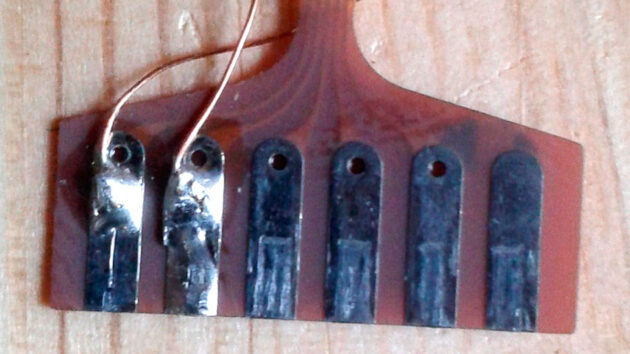
The compass is connected to the main circuit board with a flat ribbon cable, and I noticed this had a suspicious-looking mark across it where it passes over the plastic gimbal mount. Inspection with a magnifying glass confirmed my thoughts. As the compass swung in its gimbal, the ribbon cable had chafed on the edge, and over the years, this had eventually broken some of the thin copper tracks in the cable.
A bit of Googling convinced me that repairing the ribbon cable itself was a non-starter. I could obtain a replacement compass unit for around £90 from eBay, but being a Yorkshireman, I was reluctant to lay out hard brass just yet. Casting around the workshop scrap bin, I found an old dimmer switch that had gone pop some time ago. The circuit board had just what I was looking for: a coil of thin, enamelled copper wire. I could use this to ‘piece out’ the ribbon cable conductors, but it would still be thin and flexible enough not to interfere with the compass movement.
I carefully unrolled about 30cm (12in) of the enamelled copper wire and cut a few lengths that would reach from the compass to the connector at the other end of the ribbon cable. Using some very fine emery paper, I removed the enamel from the ends of the wire and, with a fine-tipped soldering iron, I soldered the wire to the compass at one end and the connector at the other. I used another length of the wire to piece out the second broken connector.
Plugging the compass back into the main board and powering up, I was relieved to see that the display was showing the compass heading correctly. I then put everything back together and tested that the compass was still working and didn’t lock any more as I tilted it.
Before reassembly, I also put a piece of clear plastic tape over the site of the chafing to prevent any further damage to the remaining copper tracks. I am pleased to report that on my first trip of the new season, Lee steered the boat faultlessly for eight hours, both under sail and using the engine.
As mentioned earlier, my ST1000 tiller pilot came with the boat when I bought her, so it is at least 12 years old. It tends to have a hard life in the cockpit, but its simple design seems to stand up quite well. I am hoping that my compass repair will allow Lee to carry on crewing for me for a few more years at least. Oh, and the cost of the repair? Zero!
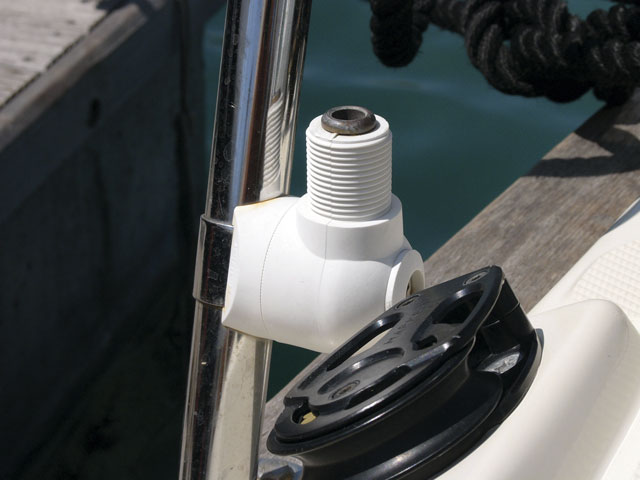
Clever socket for mounting tiller pilot
Robin Benjamin goes on a one-man mission to eliminate unnecessary holes, starting with mounting his tiller pilot using an antenna…

Tiller to wheel conversion: step by step
If you have a tiller-steered boat and would rather have a wheel, how would you go about converting it? David…

Windvane self-steering: a complete guide for sailors
Ali Wood explains how you can harness the power of the wind and sea to steer efficiently

Keep yacht maintenance simple to spend time sailing
Rupert Holmes on the realities of long-term boat ownership and how he manages maintenance to spend more time on the…
Want to read more articles like My tiller pilot went rogue: the surprising DIY repair that saved my Raymarine ST1000?

A subscription to Practical Boat Owner magazine costs around 40% less than the cover price.
Print and digital editions are available through Magazines Direct – where you can also find the latest deals.
PBO is packed with information to help you get the most from boat ownership – whether sail or power.
-
-
-
- Take your DIY skills to the next level with trusted advice on boat maintenance and repairs
- Impartial, in-depth gear reviews
- Practical cruising tips for making the most of your time afloat
-
-
Follow us on Facebook, Instagram, TikTok and Twitter