



Peter Poland recounts the story of the Contessa 26, one of the most able, famous and popular compact long-keeled cruiser-racers to come out of the UK
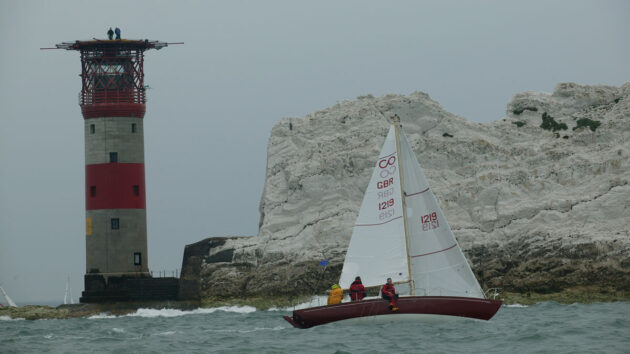
The ubiquitous Nordic Folkboat, designed in the 1940s, set a trend for sporty and compact long-keeled cruiser-racers. Of the many derivatives, perhaps the most famous of all – especially in the UK – is the Contessa 26.
This grand little yacht has become part of sailing folklore since she was first launched in 1966, a date celebrated by a 60th anniversary bash this year.
Contessa 26 – the early years
The Contessa story started in the imagination of two men: Jeremy Rogers and David Sadler. Rogers had always been a keen sailor, and in his early years he set about turning his passion into a way of life.
Where better to serve his boatbuilding apprenticeship than under the wing of the great Jack Chippendale? Under his guidance, Rogers joined the team that produced such exotica as International 14 dinghies – and Folkboats.
Rogers then launched his own business in Lymington in the early 1960s. His first yacht was, surprise surprise, a Folkboat. Rogers built the hull with carvel instead of traditional clinker planking, having procured oak for the timber frames in the New Forest. Because he couldn’t afford a building shed, the boat took shape in the garage attached to his Lymington house.
Once complete, it was slipped out in the dead of night on an unbraked WW2 bomb trolley, hitched up to Rogers’ Morris Minor and trundled – hazardously, no doubt – down the road to the harbour. Imagine trying that trick today!
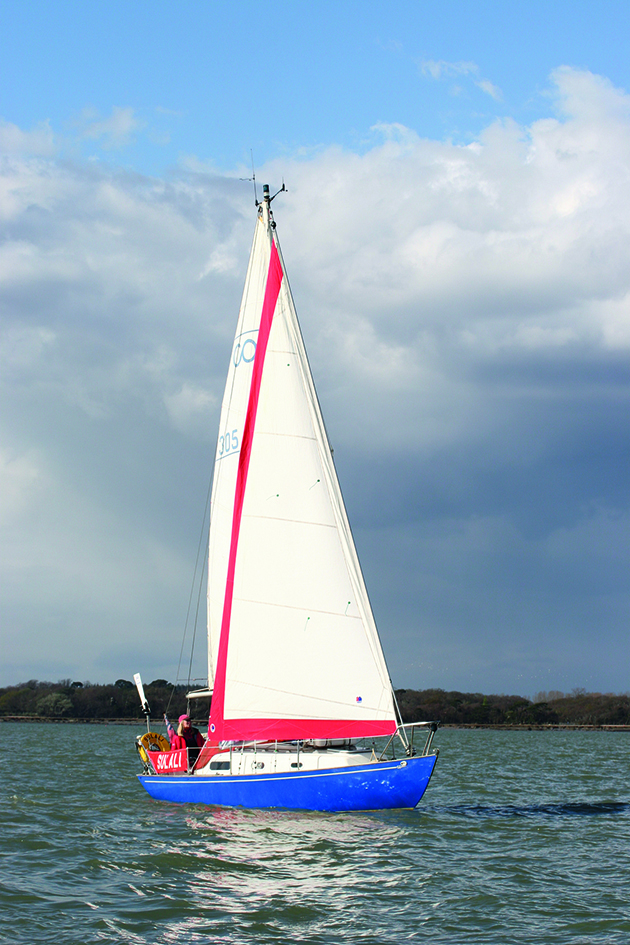
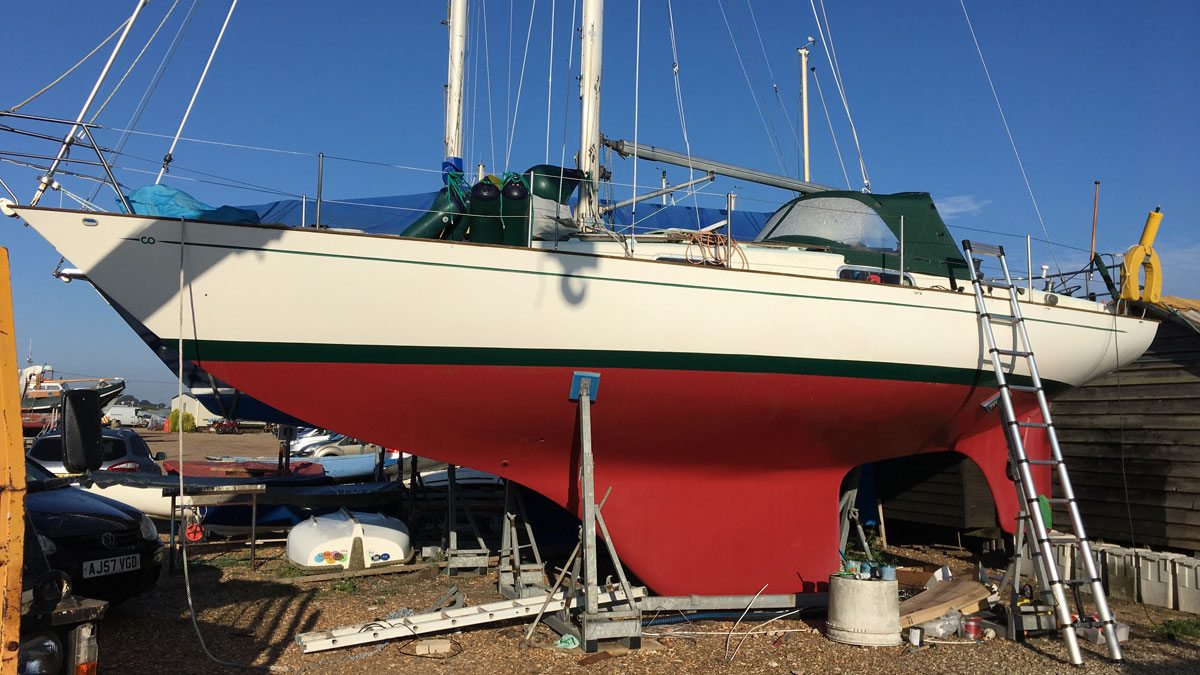
Around 800 Contessa 26s were built. Credit: David Harding
Cold-moulding
To avoid getting the 1960s equivalent of an ASBO, Rogers figured it would be a good idea to find a proper shed instead of hammering and chiselling away in a residential area. It was now that the seeds of the Contessa saga were sown as Rogers experimented with the new cold-moulding methods.
Thanks to this robust and rigid triple-skin hull, made up of two layers of 4mm ply and one of 4mm veneer, Rogers could also save weight by reducing the number of frames and stringers. His wife Fiona remembers with a grimace the brain-numbing and nail-breaking game of pulling out all the staples that had fixed each layer as the glue hardened.
Because it had a standard Nordic Folkboat rig planted on top, Rogers’ new baby was then accepted by the Folkboat Association as being ‘in class’, and duly went on to finish second overall in the Round the Island Race.
Martin Sadler recalls that at around the same time his father David had been racing Serenus, a timber Folkboat. ‘Her hull was to the original lines, but carvel (rather than the original clinker) and she had an extended coachroof and a doghouse.
After two seasons, it was clear that considerable improvements could be made to increase comfort and speed.’ So David Sadler visited Jeremy Rogers to discuss a ‘custom-built’ boat evolved from the Folkboat hull that he had already cold-moulded.
Martin Sadler explains that his father’s wooden Contessa of Parkstone was built on Rogers’ mould for standard Folkboats, but with increased freeboard. Sadler says the flexibility of the cold-moulded wooden hull meant the beam could be increased to 2.3m (7ft 6in) by jacking out the sides.
Fiona Rogers tells me this was in fact the 17th cold-moulded Folkboat derivative built by Rogers, but the first to have a rating-friendly masthead rig. The coachroof was new, Sadler says, ‘and combined extra internal accommodation with a streamlined appearance.’
Martin Sadler adds that Contessa of Parkstone (named after his mother Tessa and owned by his father) proved to be a vast improvement on their previous Folkboat. ‘We achieved 42 firsts in two seasons, the most memorable winning the Woodbine Trophy, a night race around the Isle of Wight and Poole Bar Buoy, in a fleet that included a number of Admiral’s Cup boats. We did that two-handed, my father and I, and in those days there was prize money; 25 guineas for the class win and 100 guineas for the overall prize. I was allowed to keep the class win prize money – great for a young articled clerk earning £2 10s a week.’
At much the same time, another Folkboat aficionado, Chippy Davey, decided to go ‘out of class’ and cleaned up on the race circuit. His Fenya had a varnished carvel Folkboat hull but a masthead (as opposed to fractional) rig.
With a small mainsail, large masthead genoa and far bigger spinnaker, Fenya benefited from a low handicap, under the old RORC rule, and high performance. And she won, frequently.
Birth of the Contessa 26
Meanwhile, Rogers was now using new-fangled GRP to build dinghies, so it was logical that his mind should turn to building a ‘plastic’ Folkboat. At the Rogers family home he and Sadler pondered the possibilities. Initially, there was no money to put these plans into effect and fund the GRP tooling.
However, Vernon Sainsbury of the grocery clan was much taken by the idea and offered to lob in £2,000 to help fund the tooling. This act of faith made everything possible: without Sainsbury, there would have been no Contessa 26.
Rogers says that he never lofted the boat in the traditional way, but basically butchered one of his cold-moulded Folkboat hulls to make the plug. He whipped out the transom, inserted wedges into the open hull and shoved the sides outwards. The hull creaked and widened, and when it looked right, he stopped. Then he levelled and lifted the sheer slightly, also making allowance for small moulded bulwarks, thereby raising the freeboard and increasing the overall length.
What about the pretty roof? ‘It evolved,’ he says. ‘I liked the coachroof that van de Stadt put on the Invicta, especially the keyhole companionway with a raised blister on top, and I also liked its general line. But by and large, we did it by eye, using long, bendy battens.’
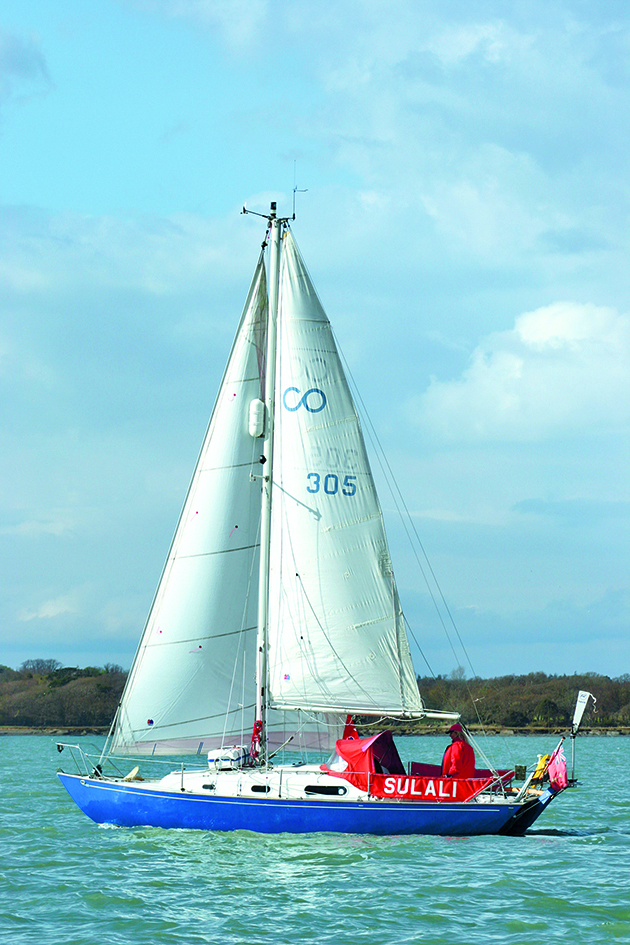
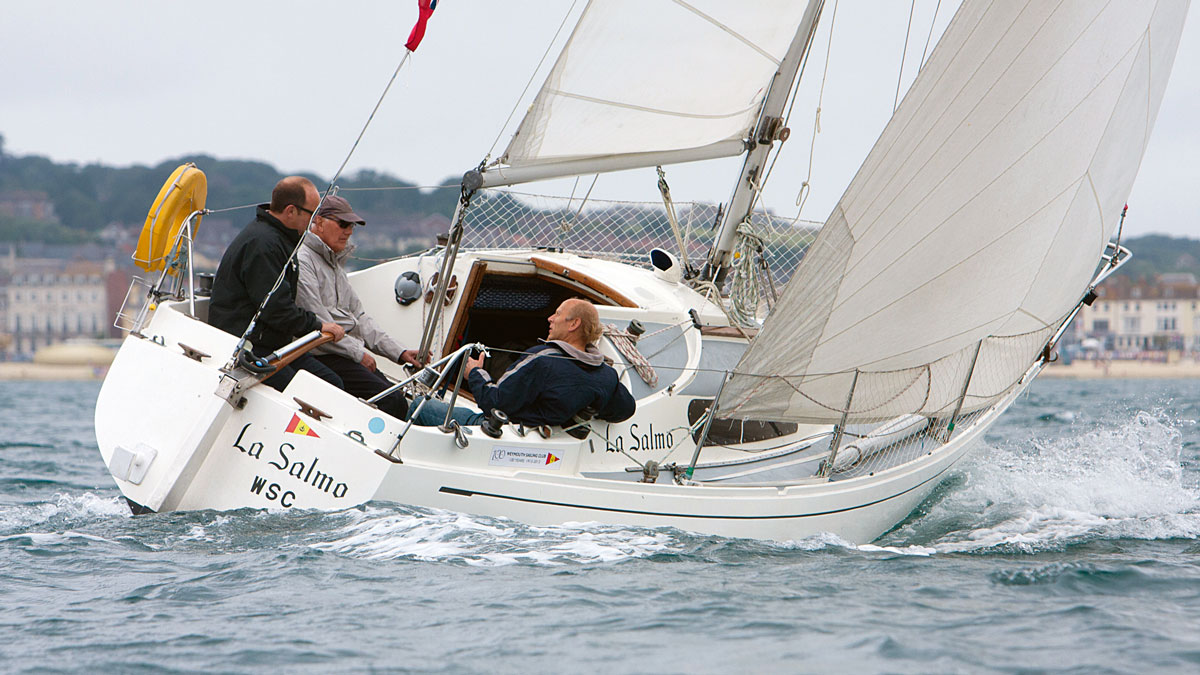
The Contessa 26 heavier than the Folkboat, but the extra sail area via her masthead rig compensates. Credit: David Harding
Keel design of the Contessa 26
The Contessa’s GRP construction also dictated the keel design. A ‘bolt-on’ casting was not practical, so the hull ‘plug’ took in the whole keel shape. At the same time, Rogers sensibly lowered the leading edge by about 150mm (6in). This way, the keel base became straight and level.
As a result, the Contessa 26 can stand upright when dried out. The keel’s lower leading edge would also move the centre of gravity forward, thereby counteracting the added weight of an inboard engine at the back of the boat.
When it came to the rig, Rogers and Sadler reckoned the performance and beneficial RORC handicap rating enjoyed by the masthead-rigged Fenya and Contessa of Parkstone made this a no-brainer, so masthead it was.
A prototype interior was then mocked up, but in the end production boats were offered with three slightly different layouts. The results might look a bit minimalist now, but offered practical comfort in the 1960s when compared to a Nordic Folkboat.
So how did the vital statistics of the Contessa 26 finally measure up against her Folkboat forebear?
The Contessa 26 is a smidge longer overall and around 100mm (4in) longer on the waterline at 6.1m (20ft). When it comes to beam, Rogers’ widening exercise added 75mm (3in) to the Folkboat’s 2.2m (7ft 3in) and the keel developments added 25mm (1in), giving the Contessa 26 a draught of 1.2m (4ft). The extra freeboard and longer roof of course also piled on some weight, so the Contessa – at a typical 2,540kg (5,600lb) – is around 500kg (1,100lb) heavier than the Folkboat, but the extra sail area afforded by her masthead rig compensated.
When it comes to the Displacement/Length (D/L) ratio, the Contessa’s extra weight and longer waterline give her a ratio of 301, which is higher than the typical Folkboat’s 267.
A new name
Now the new baby needed a name. It could not include the word ‘Folkboat’ because the International Class refused to recognise it as such. Rogers says: ‘We thought the name David had given to Contessa of Parkstone was nice, so we went for Contessa.’
The first Contessa 26, Contessa of Lymington, cost her owner the princely sum of £2,416 and 10 shillings. David Sadler took No5 and called her Contessa of Mell while Vernon Sainsbury, the business angel who funded the project in the first place, bought No6, named Grayling.
At its first boat show, the Contessa 26 was an instant hit, and orders flooded in. On the water, the early boats made their presence felt in racing circles as indeed they still do – Contessa 26 Sundowner won the Round the Island Race Gold Roman Bowl in June 2011.
However, the Contessa’s appeal stretched way beyond a race course. Many sailors wanted a pretty and seaworthy small cruiser offering good looks, easy handling, ample speed, outstanding stability and adequate accommodation. And much as a varnished hull might appeal, they wanted the economic and low-maintenance convenience of GRP.
The Contessa 26 hit the spot perfectly. In a market bursting with bulky bilge keelers, she had star appeal. In the years that followed, almost 400 MkI and MKII Contessa 26s were built in the United Kingdom. A similar number were also built under licence by JJ Taylor in Canada under the name of Taylor 26s
Thereafter, Jeremy Rogers went on to build a whole range of Contessas. David Sadler set up Sadler Yachts, which over many years produced the perennially popular Sadler and Starlight marques.

Contessa 32: the second-hand classic + 6 alternative boats
Rupert Holmes analyses this extremely seaworthy classic and suggests a dozen other viable lower-cost alternatives
How to install a Halyard Aquadrive in a Contessa 32
A boat owner installs a Halyard Aquadrive antivibration system for smoother, quieter cruising and reduced wear on his marine engine…

Electric engine conversion on a Contessa 32
Norman Rubenis gets ‘Thunderstruck’ when he ditches the diesel and converts his Contessa 32 to run on a 10kW electric
Hustler 25.5: why this Holman & Pye classic still beats modern cruisers
Not only is Holman & Pye’s Hustler 25.5 one of the prettiest boats on the water, but she also provided…
Want to read more articles like Contessa 26: a true legend?
A subscription to Practical Boat Owner magazine costs around 40% less than the cover price.
Print and digital editions are available through Magazines Direct – where you can also find the latest deals.
PBO is packed with information to help you get the most from boat ownership – whether sail or power.
-
-
-
- Take your DIY skills to the next level with trusted advice on boat maintenance and repairs
- Impartial, in-depth gear reviews
- Practical cruising tips for making the most of your time afloat
-
-
Follow us on Facebook, Instagram, TikTok and Twitter