


Kerry Pears and husband John have rescued many an errant tender in their years afloat, so Kerry has advice to prevent yours from going walkabout
The neighbouring skipper was beckoning us with a note of urgency in his voice one morning: ‘It’s gone! My dinghy broke free in the night – can you help?’ After some searching we found the inflatable tender in a reed bed. It had been left secured on a short painter during the overnight blow, and the constant snatching had broken the towing eye which wasn’t up to the job.
I also discovered that this skipper habitually towed his tender on passage and left it in the water at anchor – things we try to avoid.
Towing your inflatable tender
The stresses on a towed dinghy are enormous, especially with the outboard engine still mounted, and small dinghies can get airborne in large gusts. If you have to tow it, make sure that you remove the engine, and tie everything else in.
Underway, we lift our infaltable tender up onto chocks on the forecabin roof with a halyard: it just fits between the cutter stay and the mast. For long and/or offshore passages we deflate, invert and cover it so it doesn’t foul the staysail and isn’t subject to prolonged exposure of the sun’s UV rays.
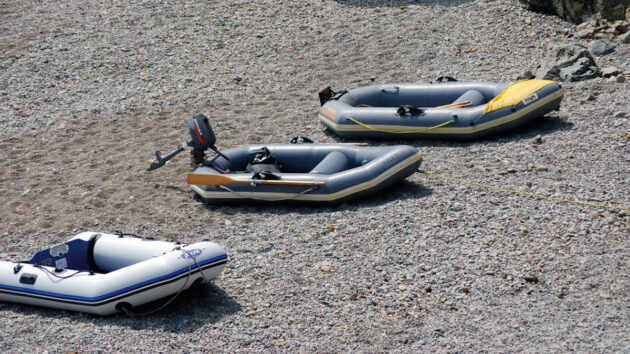
It makes sense to pull your inflatable tender well up above the expected high water mark
Keeping your inflatable tender secure
Outboards are popular with thieves because they have a good resale value. Inflatables are easily and frequently stolen – quickly rolled up and thrown in the boot of a car, often taken just for their engines and deflated by slashing with a knife.
Hard tenders are more recognisable, more difficult to spirit away and therefore much less attractive to thieves.
Marking your inflatable tender with your yacht’s name unfortunately, signals that, if the dinghy is ashore, the yacht may be unattended – an invitation to unwanted ‘guests’.
An alternative is to make both the inflatable tender and outboard distinctive by marking with jazzy paintwork or a large number on each: this makes it easy to see if your dinghy is being used without your permission.
We always padlock our outboard onto the dinghy transom and, in high-risk areas, loop a long wire strop through the padlock hasp, run it through a stainless eye in the tender and padlock the other end to a strongpoint onshore.
However, it can be infuriating when we return to load our shopping into the dinghy to find another secured on a very short strop in the same way, making it impossible to get close enough in to get aboard.
Painters for securing an inflatable tender
Our tenders have two painters; one long, one shorter and each secured to a different strongpoint on the dinghy. At anchor, we use both if leaving the inflatable tender in the water overnight, or in windy conditions. That way if one comes undone or a fixing point breaks, the inflatable tender is still attached by the other.
At busy dinghy docks we tend to use the longer line so that other boats can come in close to the dock to land their crew.
Pontoon courtesy
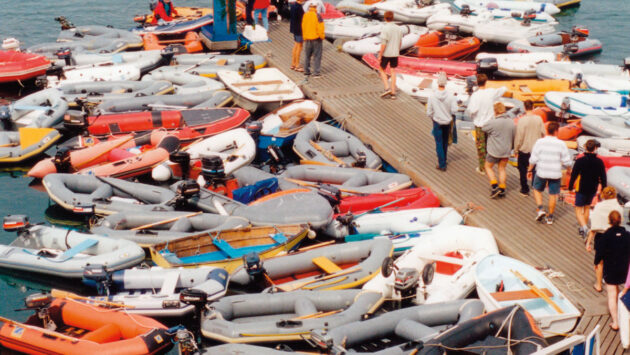
Tilting your outboard engine at a crowded dinghy pontoon may reduce weed fouling, but can rub reduce weed fouling, but can rub holes in neighbouring inflatables and cause unmentionable tangles with other painters, especially floating ones.
We have settled for non-floating lines as we can sink them under any obstacles – but when manoeuvring under power while towing the dinghy, you’ll
need to keep it on a short leash to avoid a prop wrap.
Anchored ashore
One dinghy that we rescued had been washed off the foreshore by a ferry’s wake: it’s best to pull the tender well up above the high water mark. An alternative is to carry a small anchor ashore and dig it in before going for that drink.
A small anchor is also useful to keep a dinghy clear of a lee-shore pontoon – but always remember to allow for the rise of tide, or you might be faced with the question of whose turn it is to swim out to retrieve the dinghy!
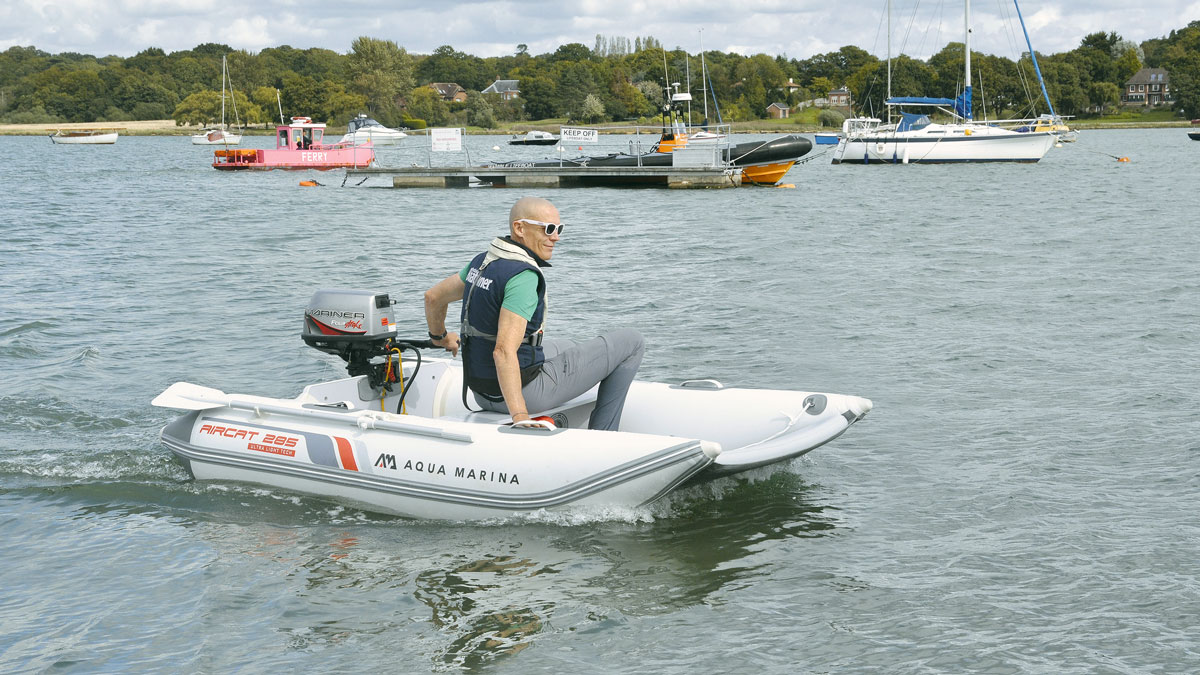
Aircat 285: does this inflatable tender offer a stable, high-performance alternative to traditional designs?
Choosing the best inflatable can be tricky, but the catamaran-style Aircat 285 promises to offer a stable, high-performance alternative to…
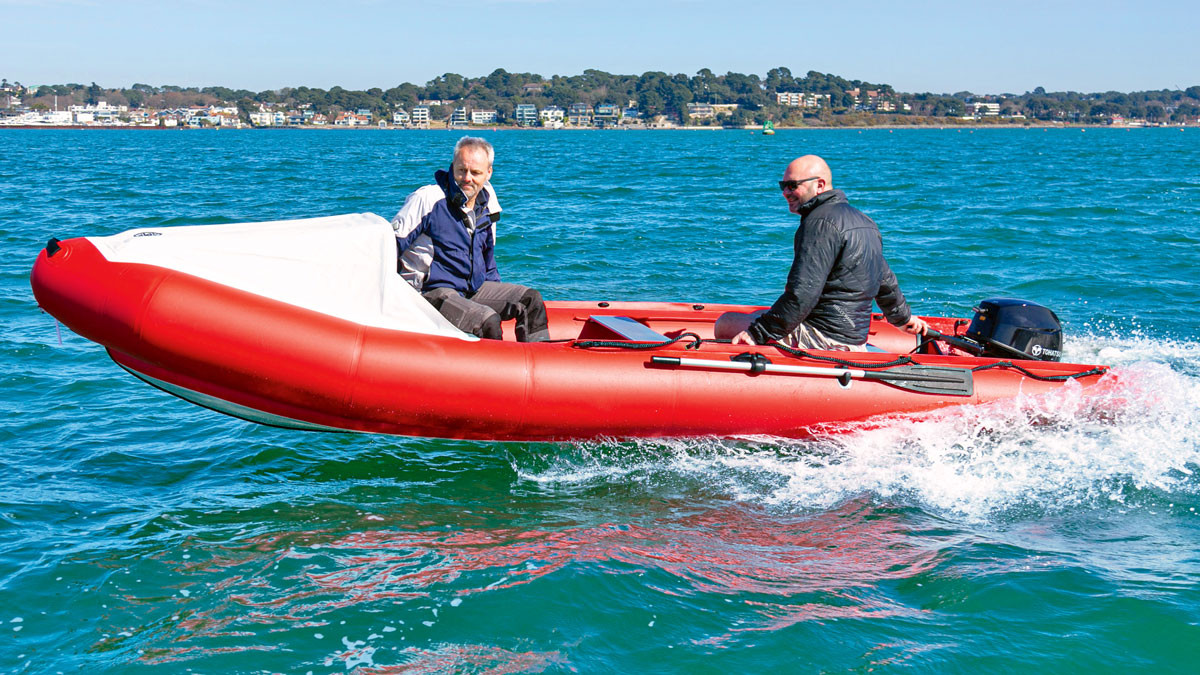
SpearFish 520: fast, efficient inflatable
What’s the point of the ‘long and thin’ as opposed to the normal ‘short and fat’ with a small inflatable?…
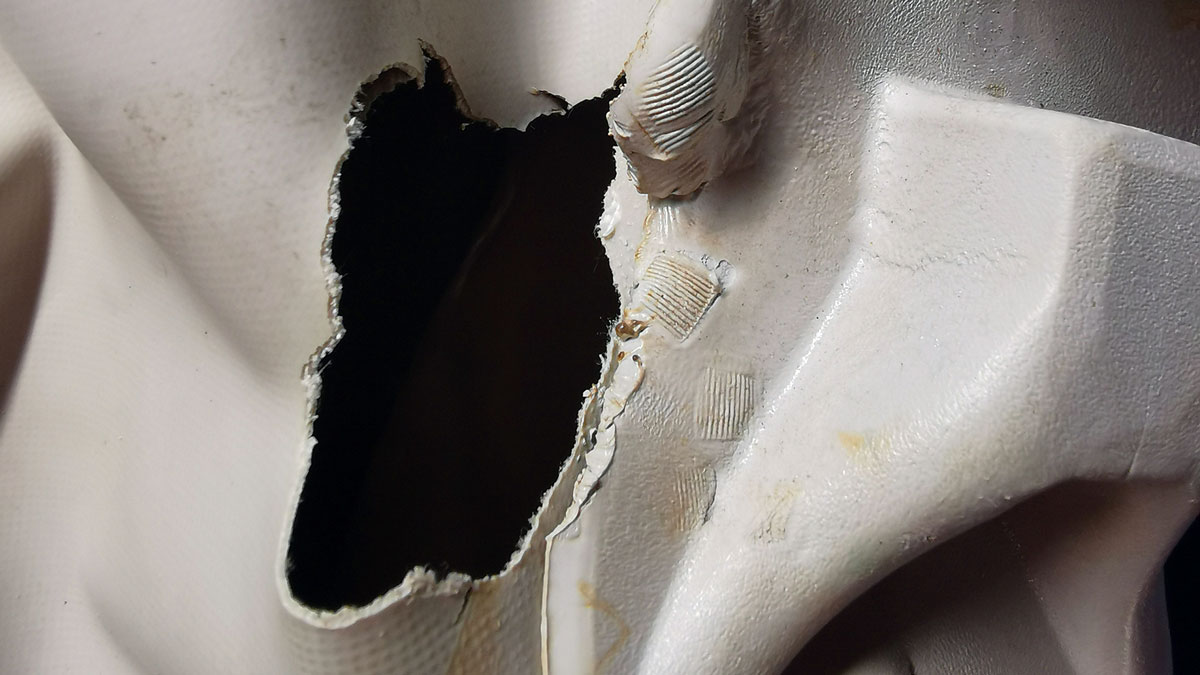
Repairing an inflatable dinghy: fixing holes
Paul Diamond repairs a dinghy that was chewed by rodents

Best inflatable boat: 9 compact tenders put to the test
Inflatables are everywhere: paddleboards, canoes, kayaks, tents, kites and wings – and inflatable boat technology has long been a practical…
What kit has impressed you the most?

Follow Practical Boat Owner on Facebook, Instagram, TikTok and X