


Ben Meakins contorts himself terribly in a bid to demonstrate which tools work best when working on your boat in confined conditions

Let’s face it – boats are not the easiest of things to work on. It’s the unique combination of odd angles, awkward mouldings and the need for them to stay watertight that means the nut you need to shift is usually all but inaccessible – and the end result is often a cricked neck, bleeding knuckles and a lost temper. This is why you need tools for tight spaces.
A dribble of rust still marks the spot on my parents’ boat where I once lost not one, but two 13mm spanners in a vent in a vain attempt to tighten up a loose companionway ladder fixing. To misquote Lady Bracknell, to lose both certainly looks like carelessness. I had even tied the second one to a retrieval line, but the knot came undone at the critical moment and now a rusty dribble and a rattle at specific engine revs is all that bears witness to my error.
With this cautionary tale in mind, we collected together 16 different tools for tight spaces and tried them out on a variety of awkward and inaccessible fixings.
Tools for tight spaces onboard: screws
Often bits of interior trim would have been installed on the deck moulding before it was attached to the hull, so on many boats there are seemingly inaccessible screw heads. We tried a few products…
NaRo confined space ratchet driver
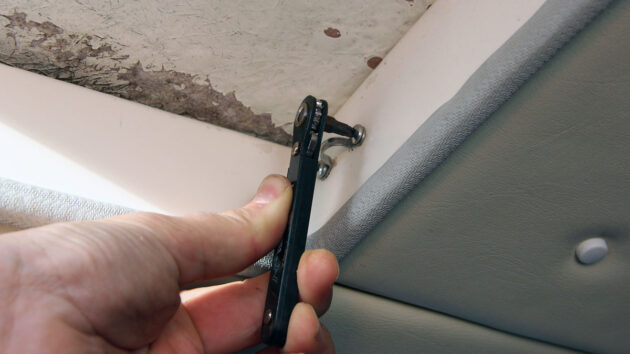
Bought from Axminster tools, this Naro driver is a cheap and basic ratchet which holds and drives screwdriver bits. As such it can be used in a channel as little as 32mm wide. It comes with a selection of standard driver bits, or you can use your own. I bought it to undo the bolts holding on my wind transducer, which were constrained by the overhead tricolour bracket.
Socket driver
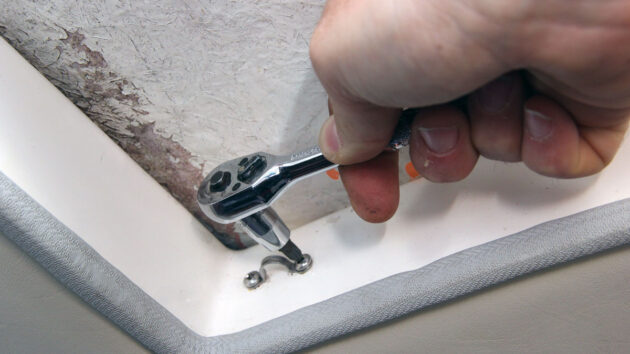
Some ¼in socket sets come with a suitable adaptor for holding screwdriver bits. This was part of a Stanley set, and while it takes up more space than the Naro driver, it was nonetheless effective and provided more torque
Stubby screwdriver
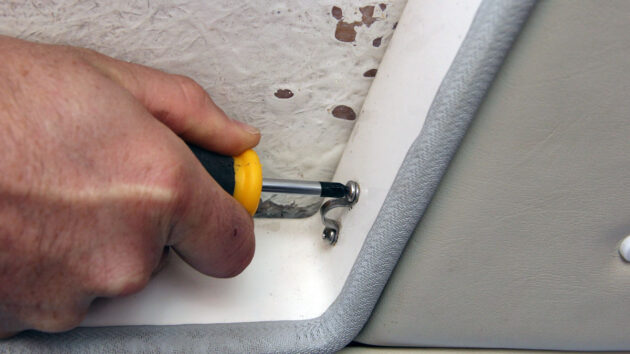
This is the obvious solution – and ours came as a pack of four from Screwfix. These require little introduction, but are a cheap and simple way to access screw heads in narrow channels.
Thumb ratchet
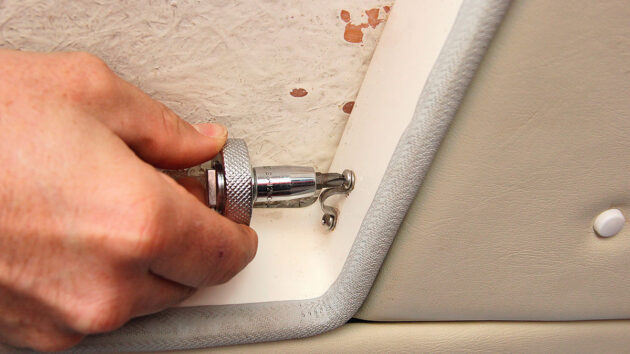
We have used this (also mentioned below) for undoing screws, and it worked effectively
Offset screwdriver
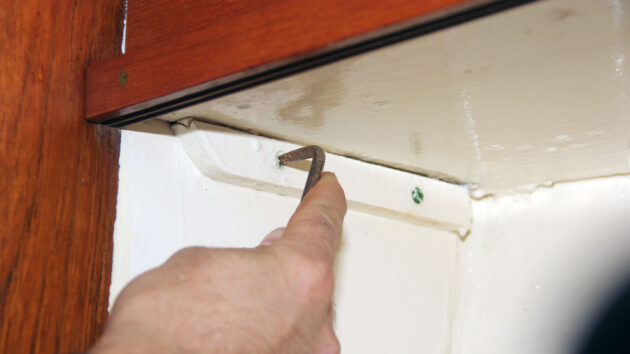
Stubby screwdriver too long? These cranked screwdrivers are available from various outlets online and are a slow but effective way to shift a stubborn screw head.
Tools for tight spaces: awkward nuts
Nuts and bolt heads are usually the worst offenders – but there’s a wide range of potential solutions on sale for spaces and voids of all sizes. Here is a selection.
Thumb ratchet
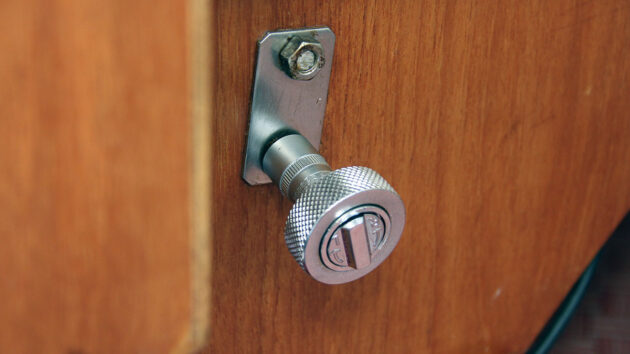
As the name suggests, this is a ratchet without the handle. We found it useful for getting the nut to bite and taking up the excess thread, and it worked well in narrow channels and confi ned spaces. It was hard to firmly tighten the nut due to the lack of leverage, but the knurled ratchet edge was a useful grip
Swivel head ratchet
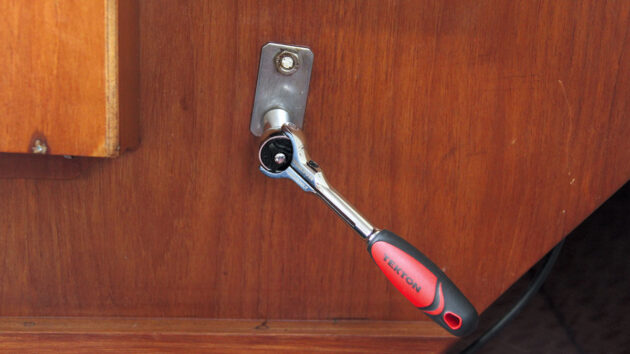
This variation on a ratchet has a swivelling head, allowing you to use it at any angle. That makes it particularly useful on the inside of a coaming, for example, where you can use it in line with the bolt to catch the thread and take up any slack, before swivelling it for more leverage on the final tightening
Long extension bar on a ratchet
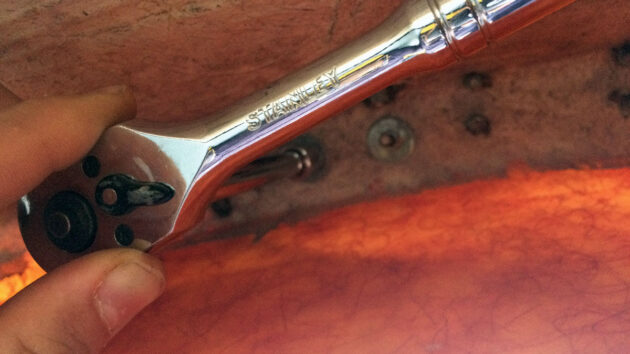
Most socket sets come with one of these extension bars. We found an extra-long one particularly useful for recessed bolts and fi xings inside coamings, as the extra clearance allows you to swing the ratchet in plenty of room.
Box spanner
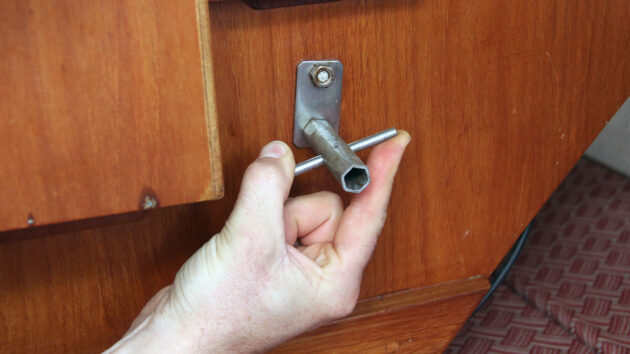
Box spanners are particularly suited to driving nuts which are recessed. While you can use a socket for this, you’ll often fi nd that the socket walls are too thick for many recesses – which is where these box spanners come in. Most come in a set with a short length of bar for leverage. These were a hand-me-down from a long-lost family member, but similar box spanners are available to buy from most tool shops.
Stubby spanner
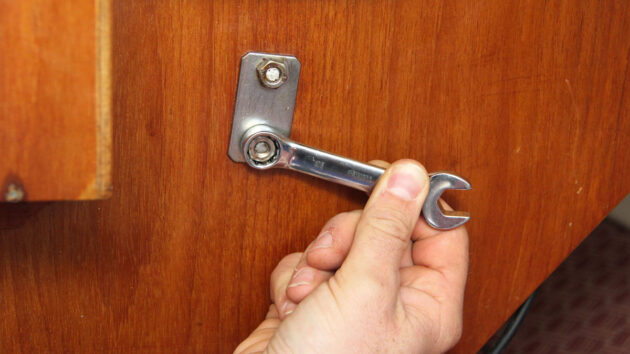
These are simply short spanners. Ours came as part of a full set from Amazon, and they worked well in areas without the space to swing a full spanner.
Swivel head ratchet
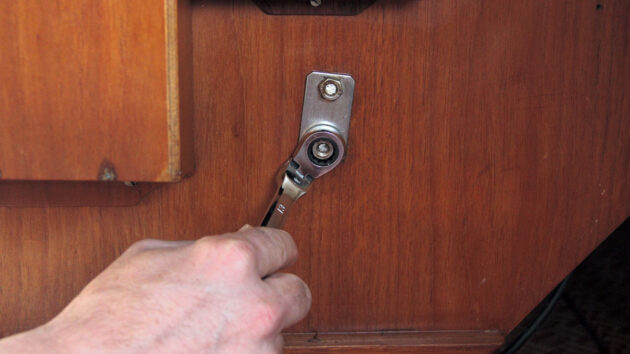
Ratchet spanners are really useful for tight spaces – and this is an excellent variation on the theme, which lets you use the spanner a bit like a nut driver or at any angle you like. The tricky thing on many awkward nuts is if you have to take the spanner off to reposition it for the next swing – and that’s where ratchet spanners come into their own.
Nut driver
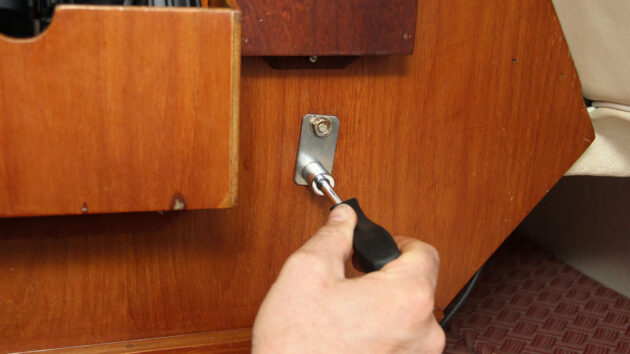
These often come included in a socket set and basically comprise a socket on the end of a screwdriver – particularly useful if you’re trying to access a bolt that’s end-on down a narrow channel. Two types are commonly available, one that uses a standard socket via a ¼in or 3⁄8in square, and another that uses a hex shank socket.
Crow’s foot spanners
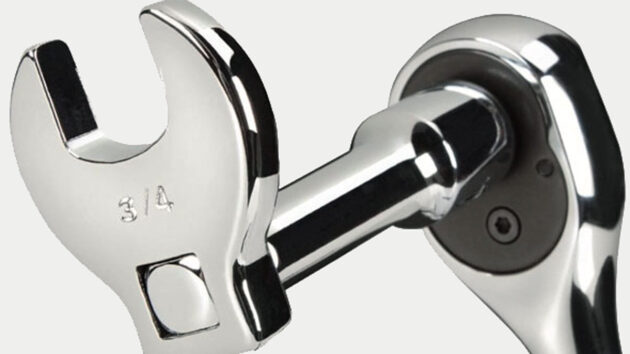
These are designed to fit onto a socket extension bar and are designed for awkward plumbing fittings. On a boat, that often means seacocks, which sometimes are too close to bulkheads and other fittings to allow a big spanner to swing. They slot sideways onto the fitting and can be driven with as long a ratchet as you wish. You can also buy adjustable ones if that suits.
Ways to get errant nuts started
Getting a nut to catch the thread of a bolt can be one of the hardest things when you can’t even see the thread – but there are some tools and techniques which can help…
Finger spanners
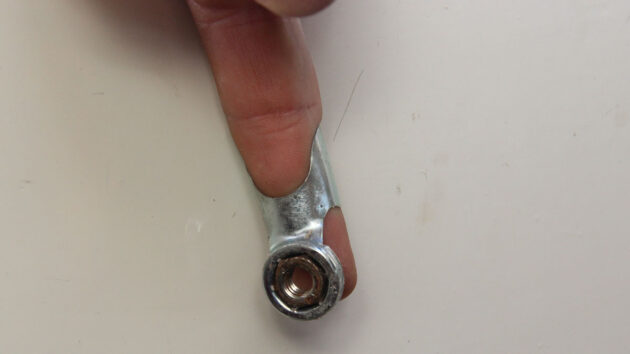
These, made by HexHold, are designed to fit over your finger and hold a nut or bolt head in a confi ned space for just long enough to catch the thread. They are made from pressed steel, and have some spring in them – and thus aren’t suitable for taking any great load, as you’d hurt your fingers! Nonetheless, we found them to be really useful for the initial catch of a nut in a confi ned area as they held the nut securely, allowing you to position it out of sight with ease.
Duct tape
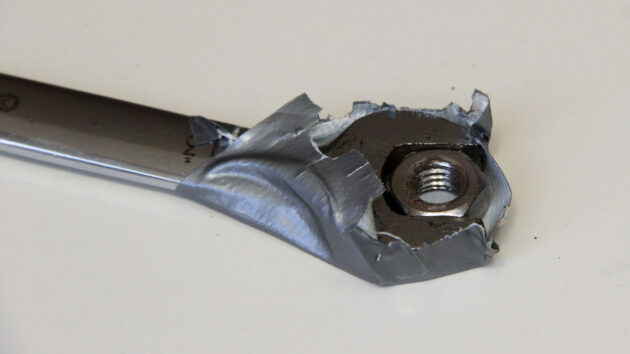
Another solution is to use duct tape to temporarily attach the nut to the spanner. It didn’t hold it as securely as the finger spanners, and didn’t give the same control, but it is a useful aid to catching the thread for negligible cost.
Blob of mastic
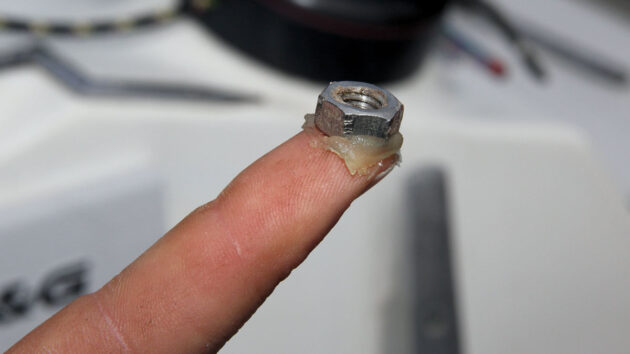
A similar (if far messier) way is to put a blob of sealant, the stickier the better, on the end of your finger, and use it to place the nut in the right place while someone above decks slowly spins the bolt head. Blu Tack, chewing gum, grease and Vaseline also do the trick!
Tools for tight spaces: drilling holes and cutting
Boats specialise in areas that are too conf ned to get the drill in – lockers, bunks and coamings, to name but a few. There are a few tools out there to help you…
90° drill
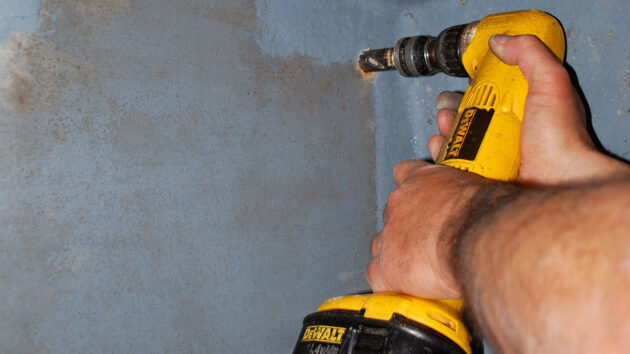
These are used by many in the trade as boats are notoriously cramped. They’re available from all the usual tool companies – this one is a DeWalt – and they let you swing a holesaw or drill bit in a quarter of the length of a standard drill.
Dremel flexible drive
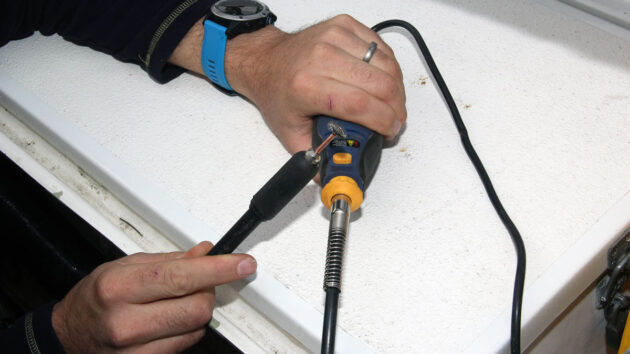
In a very similar vein to the flexible drive, many Dremels and other multitools (this was a Lidl special) come with a flexible drive to allow you to use the many tool attachments in confi ned spaces. We’ve found this to be really useful with cutting discs, being much easier to control in a tight space than the whole tool.
Flexible drive
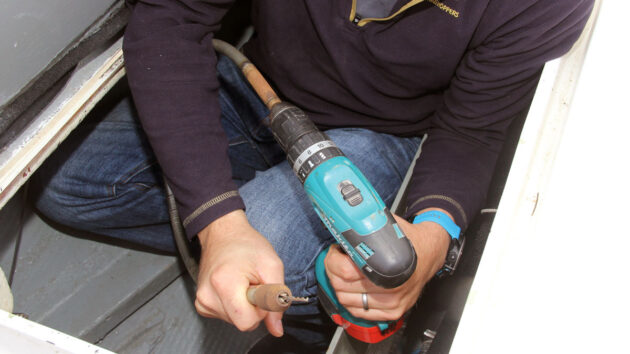
This flexible drive is of unknown age, having found its way into the editor’s garage by routes unknown. Nonetheless, similar things are available online, and it takes up far less room than the Milescraft Orbiter, below. It’s not as accurate – it depends upon you holding the chuck at right angles – but is much less bulky and worked well.
Reciprocating saw
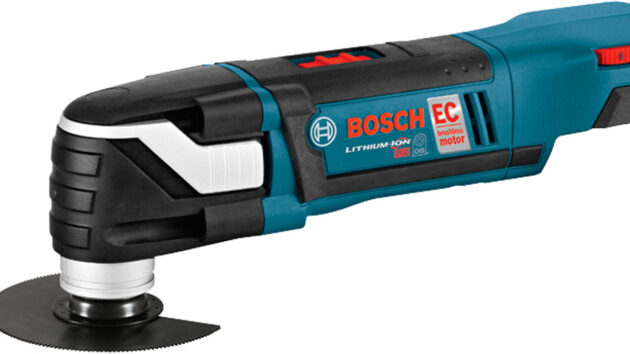
These make short work of cutting detached glassfibre tabbing or unwanted trim that’s in a locker or somewhere similarly inaccessible. The bimetal blades are well worth investing in as they will last longer than the standard blades.
Milescraft orbiter
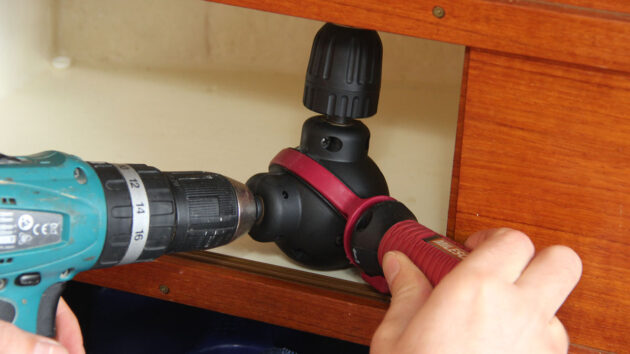
This US-made device has a delightfully over-the-top YouTube instruction manual, but nonetheless allows you to change the angle at which you drill to anything you could possibly want. We found it useful for drilling in a small locker – but you may need a shortened drill bit, especially as the device itself does take up quite a lot of room.
In summary
Which tool you need will depend upon your own boat’s idiosyncrasies – but hopefully the tools for tight spaces that we’ve listed will help out. If we’ve missed one, let us know what works for you!
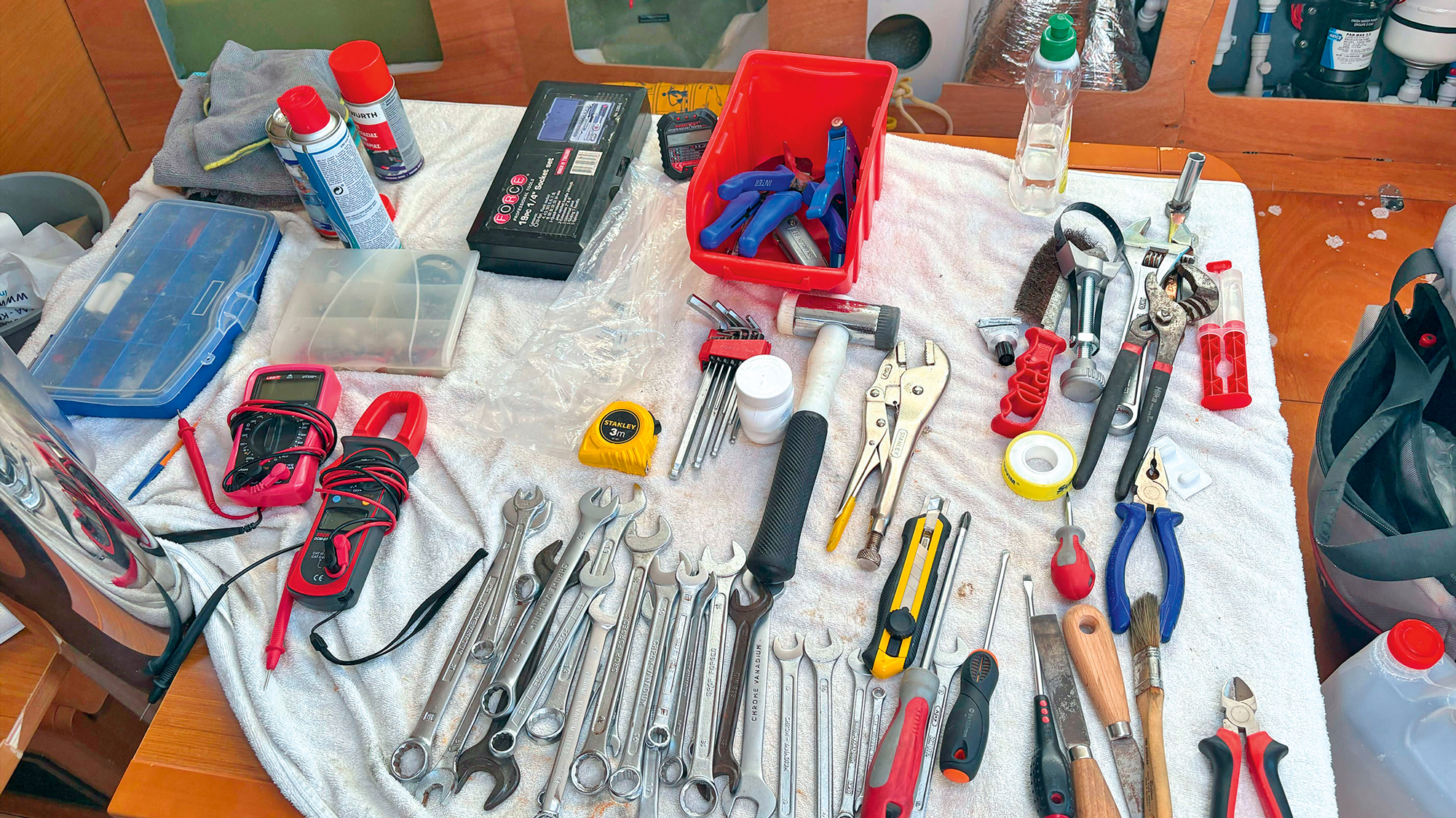
The essential tools to keep on your boat
What tools do you really need for a boat? Say you now own a new or new-to-you boat, and you’re…
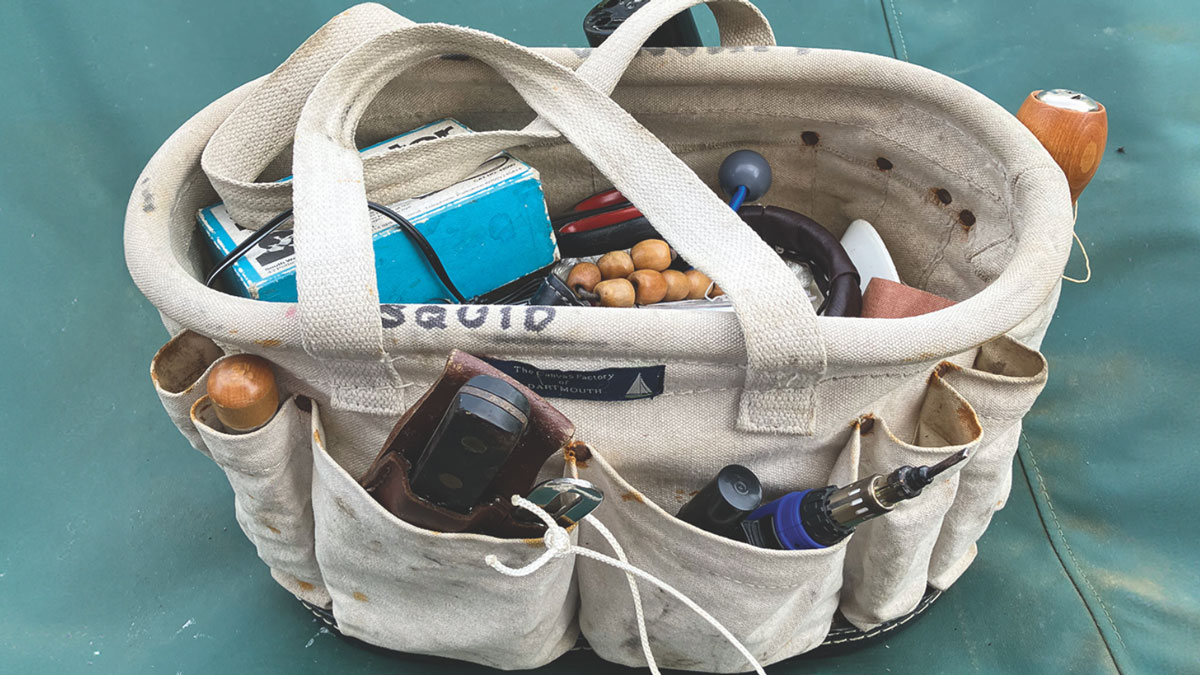
Why you should consider the weight of boat tools
Minimise the need for weighty tools on board by swapping metal parts with wood and rope, and muffling those you…

Woodworking tools – a DIY boat owner’s guide to getting a professional finish
It’s not difficult to achieve a professional finish using woodworking machines and there are bargains to be had every day…

Sharpening tools
Chisels and planes
Want to read more articles like Tools for tight spaces on a boat?
A subscription to Practical Boat Owner magazine costs around 40% less than the cover price.
Print and digital editions are available through Magazines Direct – where you can also find the latest deals.
PBO is packed with information to help you get the most from boat ownership – whether sail or power.
-
-
-
- Take your DIY skills to the next level with trusted advice on boat maintenance and repairs
- Impartial, in-depth gear reviews
- Practical cruising tips for making the most of your time afloat
-
-
Follow us on Facebook, Instagram, TikTok and Twitter