


Dick Everitt passes on a few tips about alternative ways of using your anchor
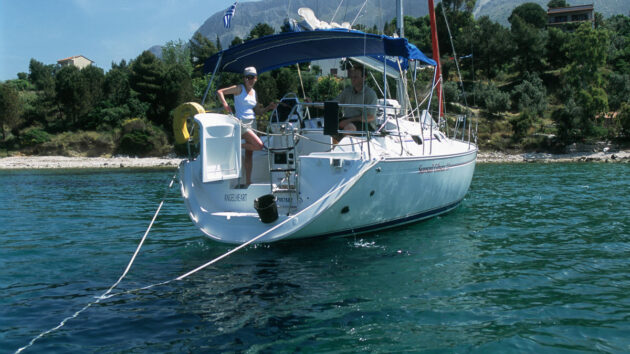
In the olden days when there were no engines, sailors used anchors in all sorts of ways to stop, or manoeuvre, their vessels. The skill is almost a forgotten art today, but it could be something that’s worth adding to your arsenal of ‘ideas worth trying when things start to go wrong’.
The stern kedge anchor is the obvious choice if we have to come in alongside under sail, downwind or downtide, and can’t get the way off her by any other means.
Provided the kedge is big enough to dig in easily, and there are no power cables on the bottom, just drop it in good time and surge out the line until you come to a stop alongside.
When kedge anchors aren’t man enough
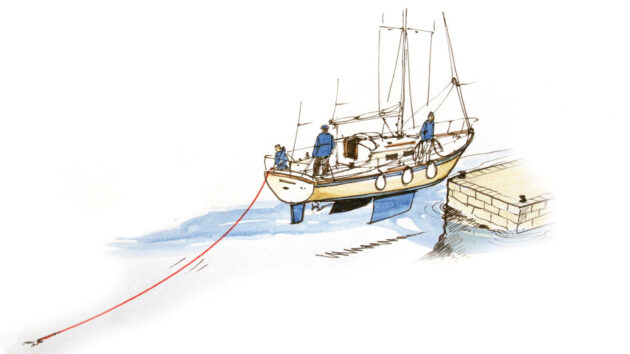
Using Anchors: Tip 1: Provided the kedge is big enough to dig in easily, just drop it in good time and surge out the line until you come to a stop alongside. Credit: Dick Everitt
If your kedge isn’t very big, you’ll have to use the bower anchor from the bow. This means that, once you’ve dropped the anchor, you’ll continue sailing over it until you put a bit of helm on and the cable snubs to swing the boat around – she should end up lying gently against the wall.
An old Thames barge skipper told me how they used to do this on a regular basis, but then they did have years of experience and massive hull timbers to absorb the occasional bump. I have seen a modern boat do the same trick, however. Again the skipper was very experienced and flipped the boat around in nearly her own length.
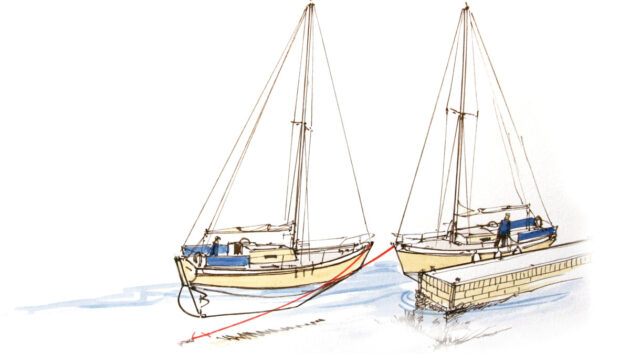
Using anchors: Tip 2: Drop your anchor, sail over it, and swing her round until she gently stops against the wall. Sounds simple? Credit: Dick Everitt
The water was quite shallow so he took the bower aft, secured it there and ran the cable outside everything before securing the bitter end at the bows. The length of the boat gave him the correct scope for the cable, so when he kicked the anchor off the stern, it went down, bit in, and the boat slowly turned around and lay alongside – it was a beautiful bit of seamanship.
If you don’t quite get alongside, and there’s enough tide running, you can often sheer across the current by putting the helm over.
Chuck a bucket
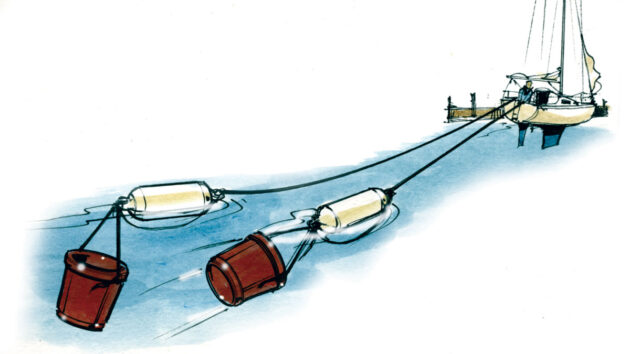
Using anchors: Tip 3: Stream a bucket and fender behind and when you want to brake, pull on the fender line to tip the bucket – it will drag you to a stop. Credit: Dick Everitt
Another way to bring a modest-sized boat to a stop alongside is to chuck a bucket over the back to act as a drogue anchor. Obviously the bucket needs to have a strong handle, otherwise you’ll need to add a rope one. But getting a bucket over at just at the right moment can be fraught with problems.
So a neat trick, shown to me by RYA examiner John Goode, is to stream the bucket astern on a long line, but keep the bucket hanging vertically in the water by adding a floating fender to the handle. Then they’ll bob along quite nicely and when you need the brake, just yank the line so the fender comes forward, the bucket tips up and drags the boat to a stop. It really works well, so practise in your own boat – just in case you need it someday.
The drudging technique
Old sailors often used the current by ‘drudging’ into harbour, when there was no wind. They drifted in but kept the bows into the current by dragging the anchor from the bow on a very short scope. Provided the boat moved slower than the current there was enough water flow over the rudder to maintain steerage.
Modern sailors can do the same thing – I know one instructor who ran a whole week’s course like this, but he used a big bight of chain as a drag weight instead of an anchor.
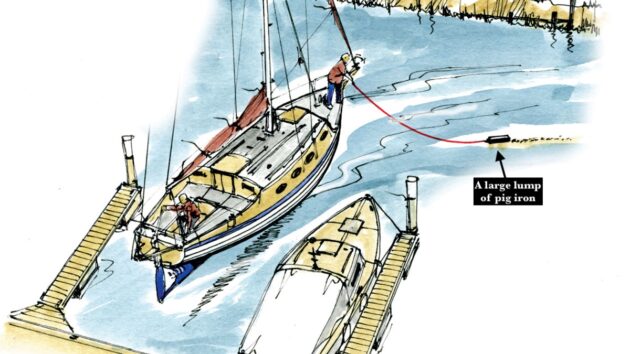
Using anchors: Tip 4: ’Drudge’ in, swinging from your anchor or weight dragged close from the bow, to take advantage of the current. Credit: Dick Everitt
Even modern ships can drudge. In small harbours, where the channel is not wide enough to turn around, they often need a tug to tow them out backwards. But in windy weather they can lower their bower anchor, on a short scope, so it drags along the bottom to resist any tendency to get swept sideways.
I’m sure this technique influenced Denny Desoutter, PBO’s first editor, who had a large lump of pig iron on a line that he used to stop his bow blowing off when he reversed into his tight marina berth.
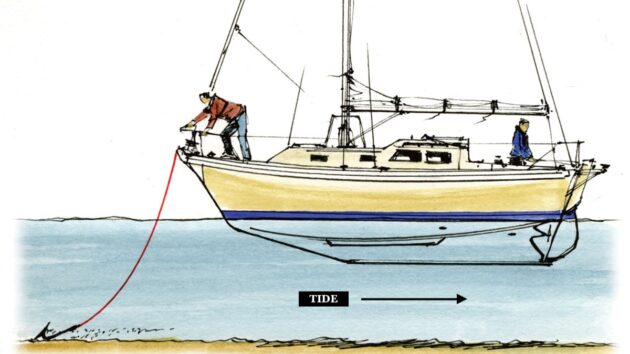
Drag the anchor from the bow on a very short scope. Credit: Dick Everitt
His old long-keeled boat didn’t like going backwards at the best of times, and turning a corner in a crosswind made it all a bit hairy. So his wife simply dropped the weight in up forward, as he swung the boat back into her berth, and it worked a treat.
As with anything to do with boats, it’s always worth practising these techniques on a quiet stretch of water, when nobody is watching!
The best boat anchor types for different types of cruising & their pros and cons
Rupert Holmes looks at the different anchor designs and how to choose the right one for your type of cruising

Anchoring a boat: Top tips from a scuba diving sailor
Drifting in a hot air balloon over variable terrain and needing to drop an anchor, you’d surely try to select…
Estimating anchor scope: how to get it right
Alex and Daria Blackwell reveal a simple way to check anchor scope when determining the correct amount of rode to…

14 tips for single handed anchoring
Ben Meakins tries out some methods for dropping and recovering the anchor for singlehanded sailors in crowded anchorages
What to read more articles like Forgotten seamanship: How to use anchors to manoeuvre without an engine?
A subscription to Practical Boat Owner magazine costs around 40% less than the cover price.
Print and digital editions are available through Magazines Direct – where you can also find the latest deals.
PBO is packed with information to help you get the most from boat ownership – whether sail or power.
-
-
-
- Take your DIY skills to the next level with trusted advice on boat maintenance and repairs
- Impartial, in-depth gear reviews
- Practical cruising tips for making the most of your time afloat
-
-
Follow us on Facebook, Instagram, TikTok and X