



Colin King saves himeself £1,500 by building his own carbon fibre spinnaker pole for his Contessa 32
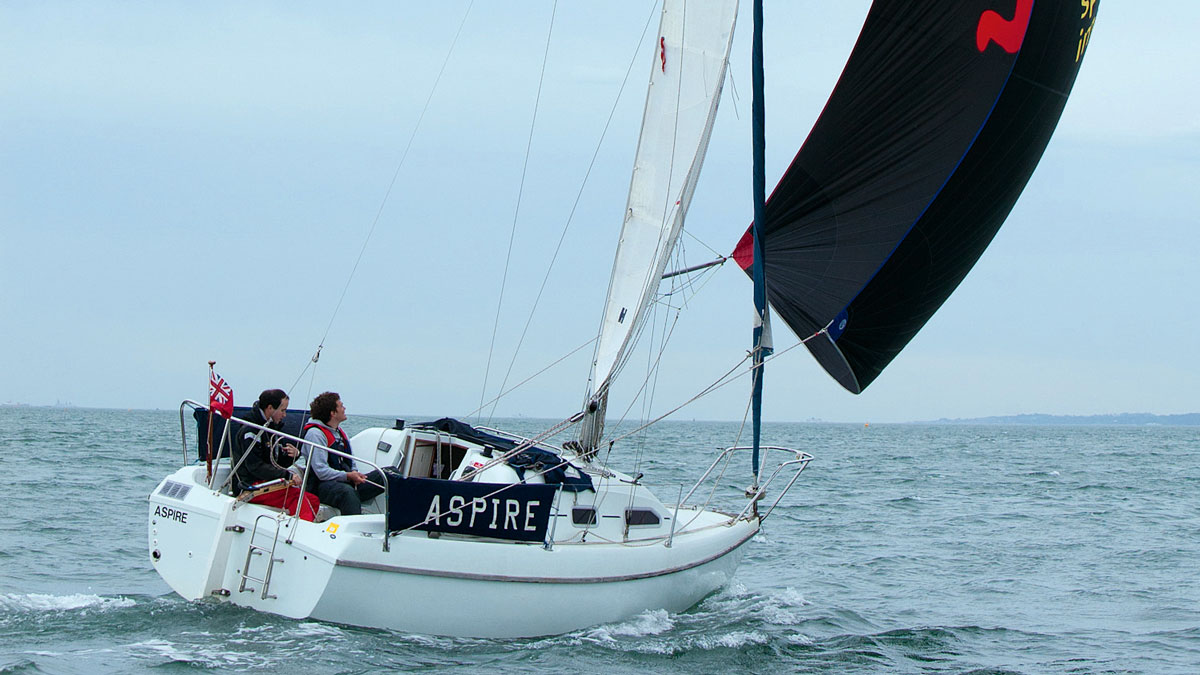
The trend for asymmetric cruising spinnakers is growing but there are still a great many boats up to 35ft in length – like my Contessa 32 – that use symmetrical sails for cruising or racing, and you’ll need a spinnaker pole for these and to pole out a genoa.
So why use a carbon fibre pole? Contessa 32 Class Rules for racing stipulate a maximum pole length of 3,868mm, and other boats of similar length are likely to have poles of approximately the same length. Traditional aluminium poles are quite heavy, but carbon fibre poles would typically be 40% lighter – not all of us have a gorilla on our foredecks to move a heavy pole around!
Why build your own carbon fibre spinnaker pole?
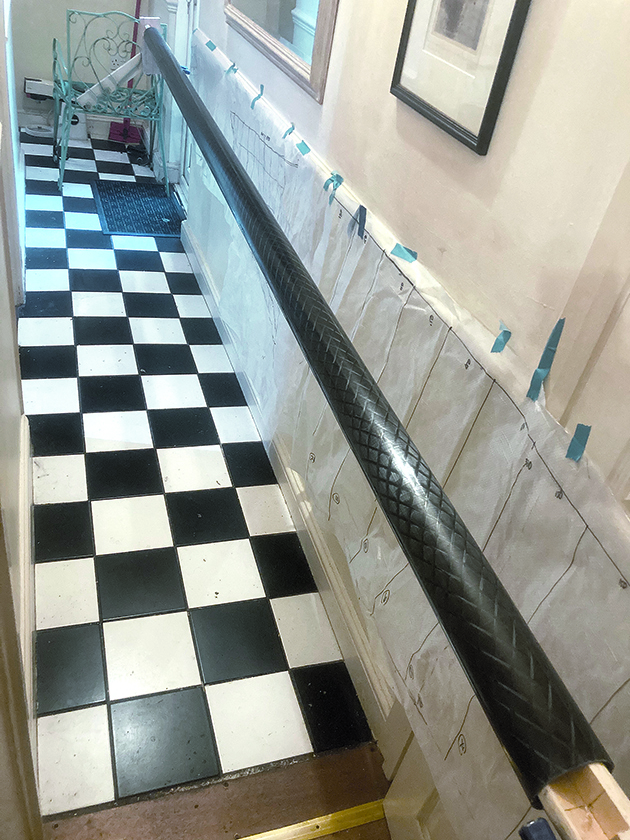
The spinnaker pole slung up indoors for painting. Credit: Colin King
A bit of research showed that typical carbon fibre poles up to 4m long would cost around £2,500, whereas the cost of purchasing a bare pole plus end fittings and other items such as lines for bridles, release line and protective lacquer would typically be no more than £1,000. And it looked like assembly could be undertaken by anyone with some DIY skills and a basic tool kit.
Materials
- Carbon fibre tube (in my case 80mm OD/74mm ID)
- 2x end fittings
- Adhesive
- Set screws (3mm) for secondary fixing of end fittings
- Dyneema line for release & bridles
- 2K clearcoat lacquer
At the time I built the pole the tube came from Prince Composites in Holland. Since Brexit I’ve found other companies in the UK including Carbon Fibre Profiles, where I now buy carbon fibre tube.
Several spar makers sell end fittings, eg Seldén and Forespar, but my preference, despite Brexit, were those made by Carbon Sailing EU in Holland.
When I was looking for end fittings I really liked the look of theirs which are fabricated using CNC machines from solid billets of aircraft-quality aluminium, have loops for the attachment of the pole up and foreguy bridles and ‘plastic’ adaptors between the ends and the tube. Ipswich-based Z Spars UK also do a range of end fittings.
Building the spinnaker pole
Of necessity you need a big enough space to accommodate something as long as the pole. I didn’t then have the space or a garage and so had to resort to doing the cutting work in the garden.
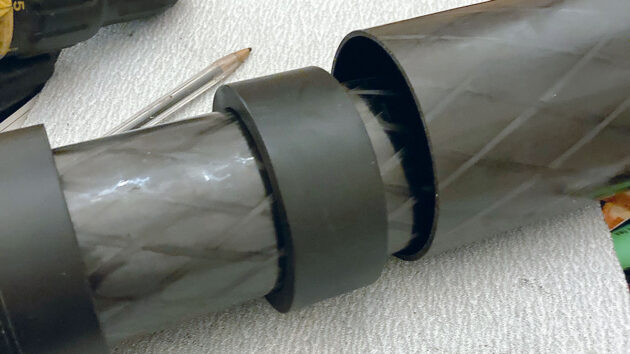
The overall length of the spinnaker pole, including the end fittings, should be measured and the length of the tube calculated before cutting it to length. To ensure the cut is square to the tube wrap masking tape around it or use a mitre box. Cut with a fine-toothed hacksaw – coarse blades will tear the carbon fibres.
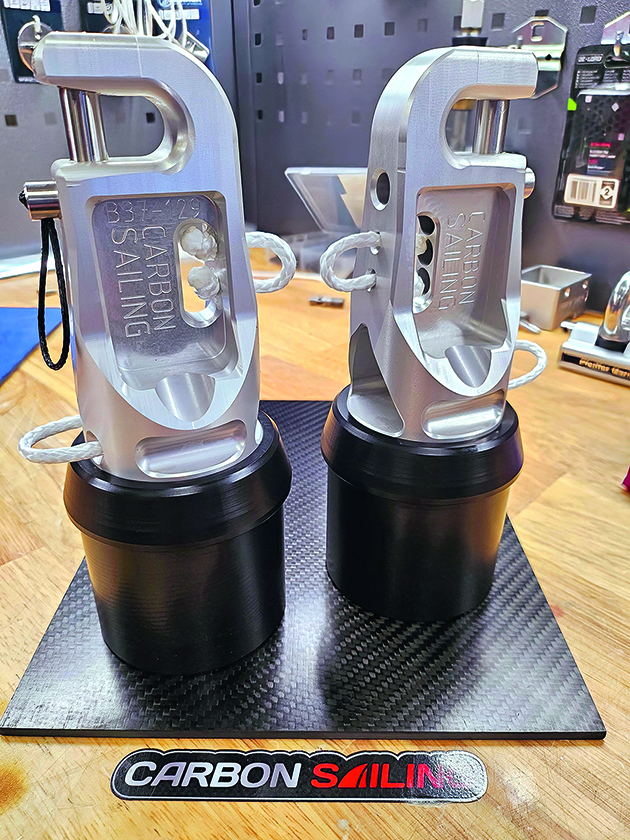
Pole ends showing release lines and pole up/sewn attachment loops. Credit: Colin King
Dry fit the end fittings and adaptors and drill and tap through the pole and adaptors for the machine screws (two per fitting, diametrically opposed). Take great care that the orientation of the fittings at both ends is the same.
Apply the adhesive to the adaptors, insert the fittings and adaptors and fit the retaining screws.
Mask off the end fittings and adaptors and apply two coats of 2K lacquer to the pole. If possible support the pole horizontally. Not everyone wants to see ‘black’ carbon and it’s possible to use a coloured paint before applying the clear 2K lacquer. Lacquer and paints are readily available from automotive suppliers.
With the pole completed you can fit the uphaul and foreguy bridles. I fitted the pole with a temporary uphaul to determine the optimum length of the bridles before splicing Dyneema lines with stainless steel rings in the middle to the loops on the end fittings. I also spliced a release line between the end fittings.
Optional extras
By its very nature a lacquered carbon pole is slippery so I fitted a suede leather sleeve that gave a good grip but also gave protection from abrasion where the pole met the forestay – the sleeve was very similar to the covers that people fit to steering wheels, fitted using strong twine and a pair of needles.
Taking precautions
Carbon fibre is rather nasty to work with so it’s essential that when cutting it you should wear eye protection and a mask. The same precautions should be taken when undertaking the gluing and lacquering processes.
Carbon fibre is susceptible to UV damage so when not in use the pole should be fitted with a protective cover or it should be stored in the cabin out of the sun. Care should also be taken not to drop the pole end into the water when underway as this could cause it to snap!
How to avoid spinnaker broaching
Spinnakers and cruising chutes can make downwind sailing fun and faster – as long as you don’t let them take…
How to make a spinnaker snuffer
John Connell keeps his spinnaker in check by devising and constructing a home-made spinnaker snuffer
How to make a last-minute home-made dinghy spinnaker pole
Ben Lowings cobbles up some pole jaws to make a make-shift dinghy spinnaker pole

How to rig a spinnaker on a small yacht – what you need and where to fit it
If you want a spinnaker, but don’t have the necessary fittings or equipment on your boat, where do you start?…
What to read more practical articles like How to make a carbon fibre spinnaker pole?
A subscription to Practical Boat Owner magazine costs around 40% less than the cover price.
Print and digital editions are available through Magazines Direct – where you can also find the latest deals.
PBO is packed with information to help you get the most from boat ownership – whether sail or power.
-
-
-
- Take your DIY skills to the next level with trusted advice on boat maintenance and repairs
- Impartial, in-depth gear reviews
- Practical cruising tips for making the most of your time afloat
-
-
Follow us on Facebook, Instagram, TikTok and X