




Spinnakers and cruising chutes can make downwind sailing fun and faster – as long as you don’t let them take over. David Harding offers some tips on safe handling
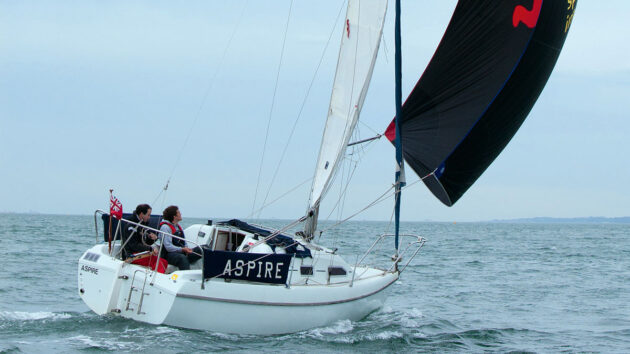
Those of us who race can get a bit gung-ho when it comes to spinnakers. Most of the time, if conditions are such that we can race, we fly the kite. Occasionally things reach a point where we decide we’d be faster without it, because boats tend to go better with the keel in the water and the mast in the air rather than the other way round. It might take a broach or two to help us reach that conclusion, but on the racecourse, you have to explore the limits and weigh up the gains against the possible losses.
Cruising sailors tend to look at spinnakers – and downwind sails in general – from a different perspective. More often than not, the default mode downwind is to stick to white sails. Plenty of concerns are cited: getting the spinnaker up, flying it, gybing and getting it down again. Another area that often causes concern is spinnaker broaching and how to avoid it.
How spinnaker broaching happens
Downwind sails – spinnakers especially – are free to swing, rotate and generally move around far more than white (upwind) sails. Whether ‘white’ sails are actually white – or grey, black or brown, as many are these days – they’re firmly attached at three corners. The headsail is also attached to the forestay or headfoil and the luff of the mainsail to the mast, while the movement of the mainsail’s foot is controlled by the boom.
With a spinnaker, by contrast, you have a large sail swinging from a halyard, with unsupported foot and leeches. One clew is often well outboard and connected to the boat by a sheet; the other by the guy that’s fed through the pole. Bear in mind that a spinnaker can easily be 30% bigger than the mainsail and genoa combined, and that it’s a full-cut, powerful sail with a centre of effort a long way up, so it’s easy to see why it can start throwing its weight around unless subjected to firm discipline.
If the boat rolls, the spinnaker tends to roll also, moving the centre of effort a long way from the boat’s centre of buoyancy and centre of gravity and exerting a substantial rounding-up moment (or ‘rounding down’ moment in the case of a roll to windward).
In case this makes spinnakers sound like unruly beasts, bear in mind that you don’t have to fly them in demanding conditions. Stick to light and moderate winds and you’ll be fine. If the breeze picks up, or you’re doing some club racing and are tempted to push things a little, the chance of spinnaker broaching increases.
There’s no need to be put off, though: unless you’re very unfortunate, the worst that usually happens is a bit of heeling and some noisy flapping before normal service is resumed. As is so often the case, the best way to learn is to get it wrong a few times.
Cruising chutes are generally easier to keep under control than spinnakers because the tack is attached to the stem (or a short bowsprit), but they’re also big, powerful sails. You’re less likely to get into difficulties with them because there are fewer opportunities to fly them: whereas a spinnaker can be flown with the wind anywhere from forward of the beam (depending on the wind strength) to dead astern, a cruising chute often becomes useless when the apparent wind comes abaft about 160° because it’s blanketed by the mainsail.
Spinnaker Broaching
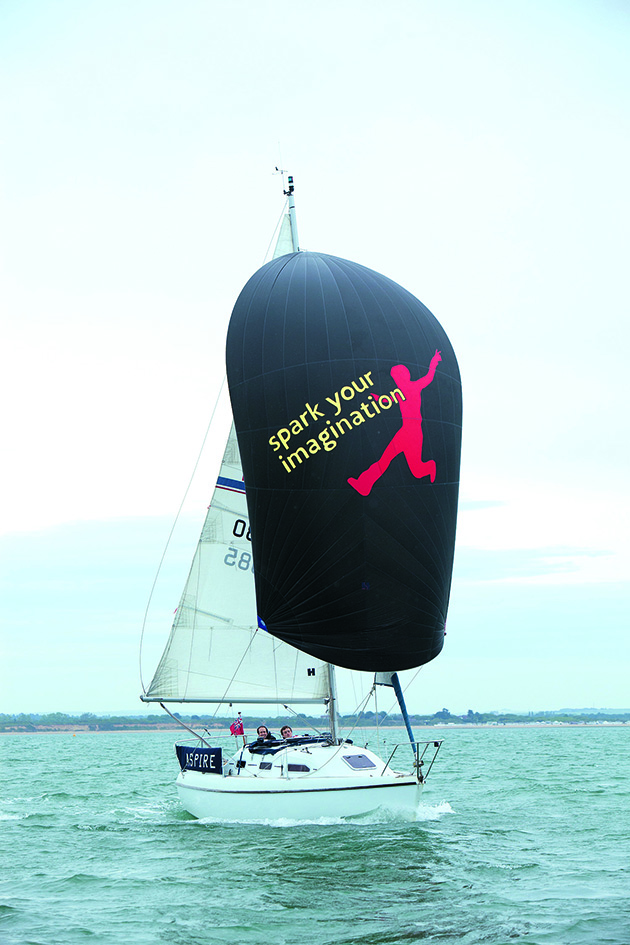
Credit: David Harding
1. The crew of a Hunter Ranger 245 sail on a broad reach with the spinnaker filling nicely.
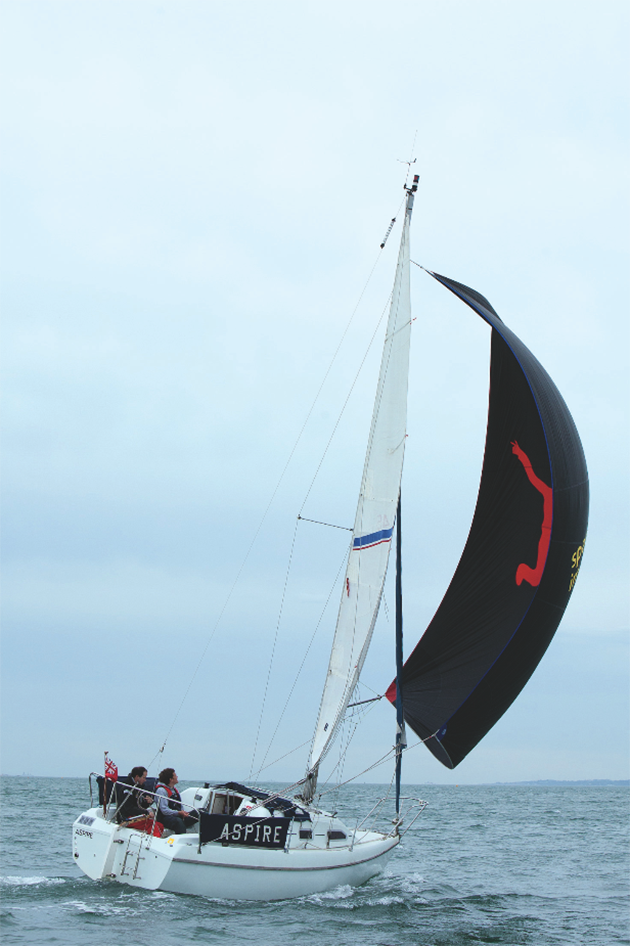
Credit: David Harding
2. The skipper has hardened up to bring the wind closer to the beam. So far, so good…
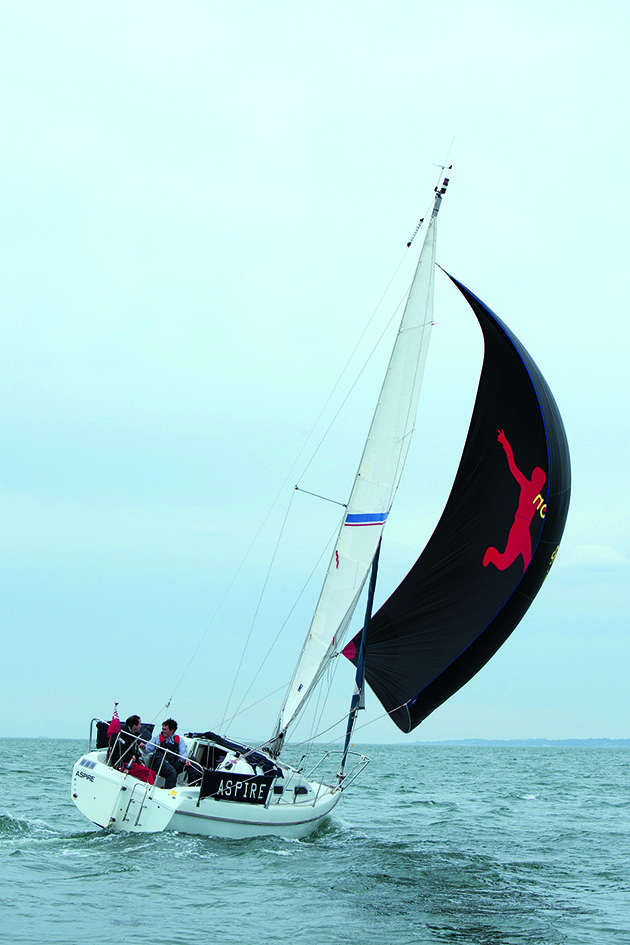
Credit: David Harding
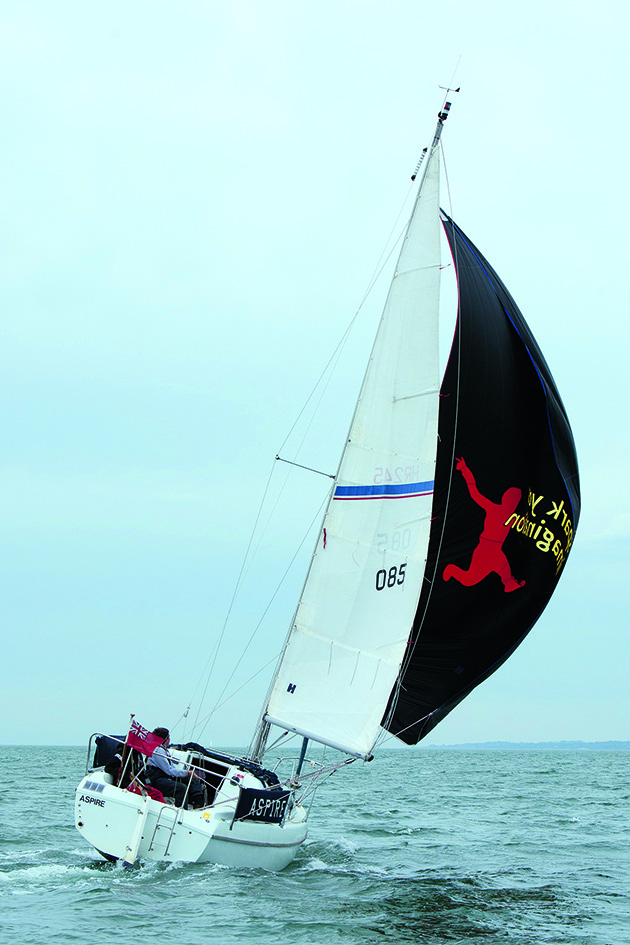
3…but closer to the wind means more heel, and the rudder’s angle tells a story. The rudder has to work hard.
Credit: David Harding
4. The rudder loses grip, the boat rounds up and the spinnaker collapses.
How to avoid spinnaker broaching
Credit: David Harding
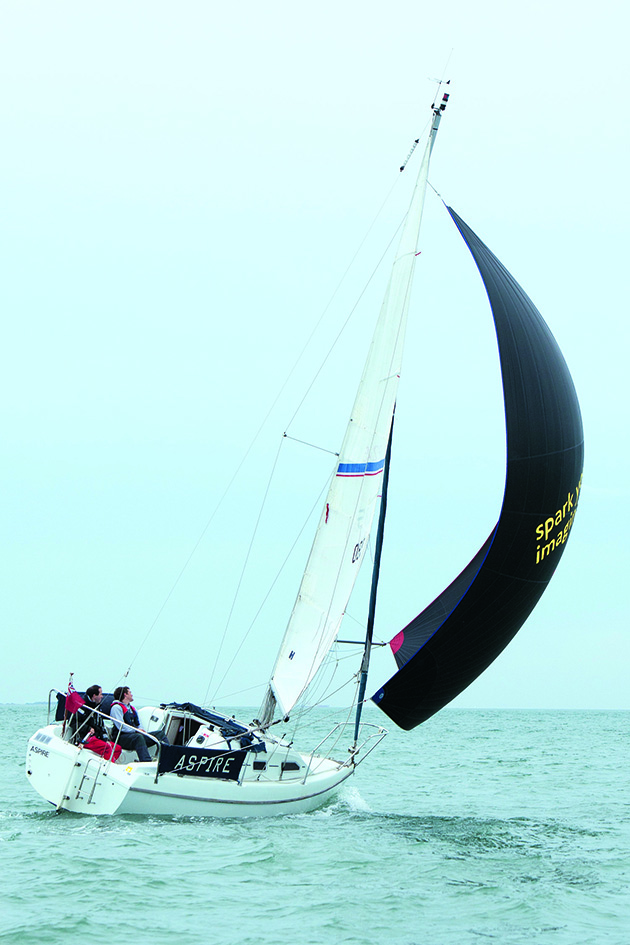
1. Here, it’s a similar situation to the start of the above sequence, but the mainsail is eased further and the kicker is loose. Consequently, the top of the mainsail is back-winding.
Credit: David Harding
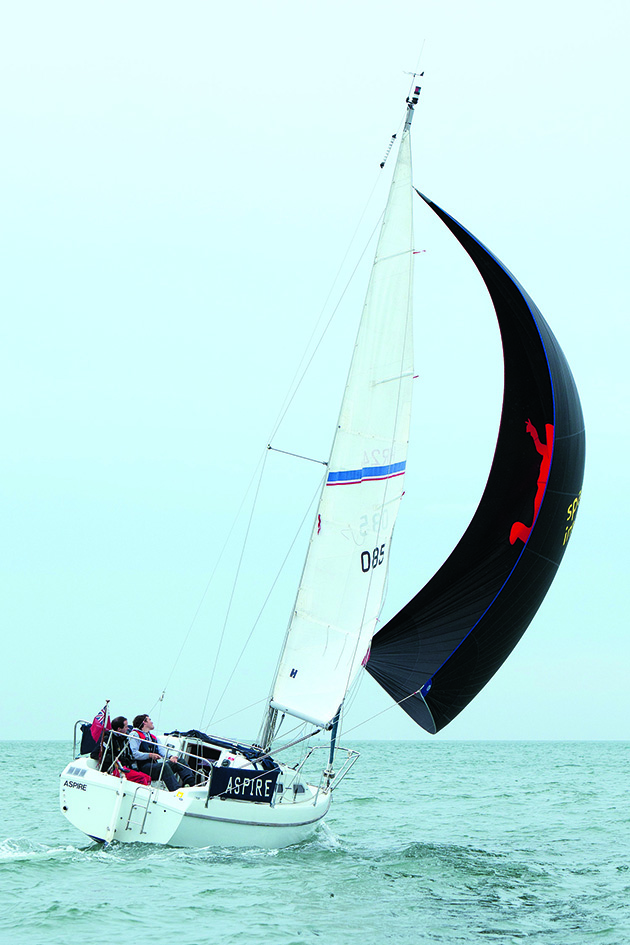
2. The skipper is having to apply plenty of rudder, but with the mainsail providing little drive and another crew member easing the spinnaker sheet, it looks as though a broach might be avoided.
Credit: David Harding
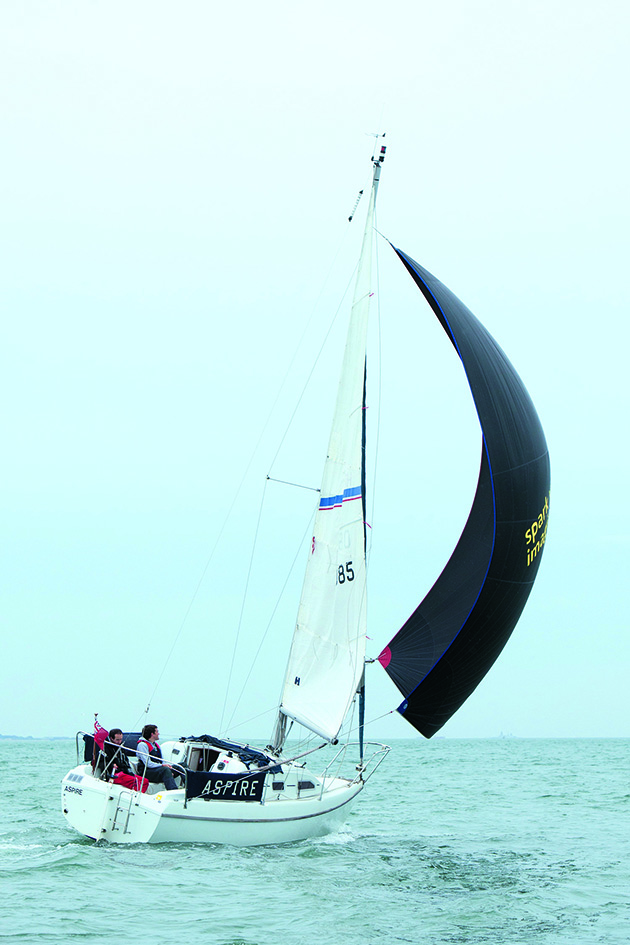
3. With the mainsail providing no drive, the boat is close to the edge but still under control.
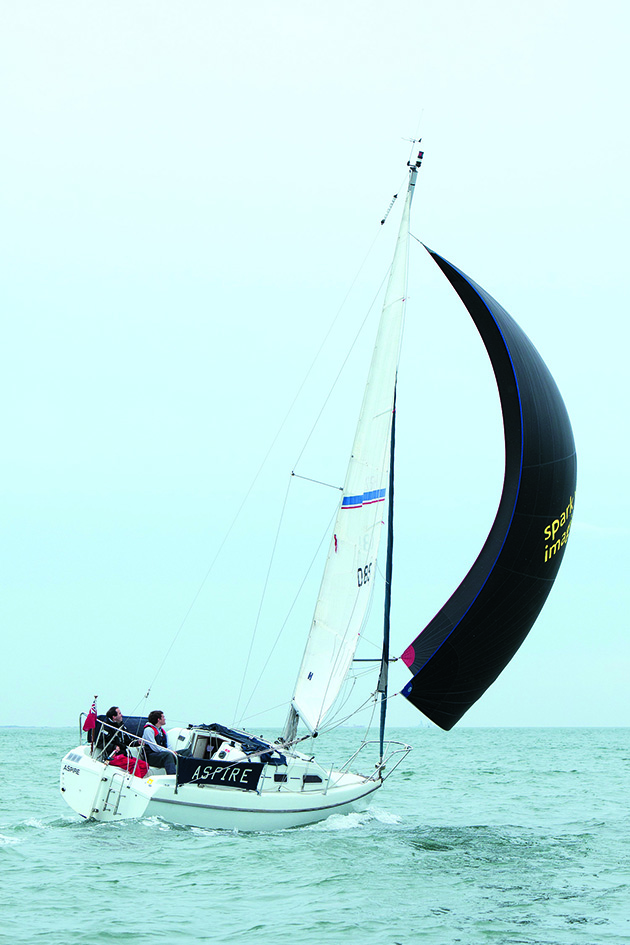
Credit: David Harding
4. We’re back on track. This time, the rudder never lost grip, the spinnaker remained filling and the boat kept moving in the right direction.
Broaching: the cruising chute
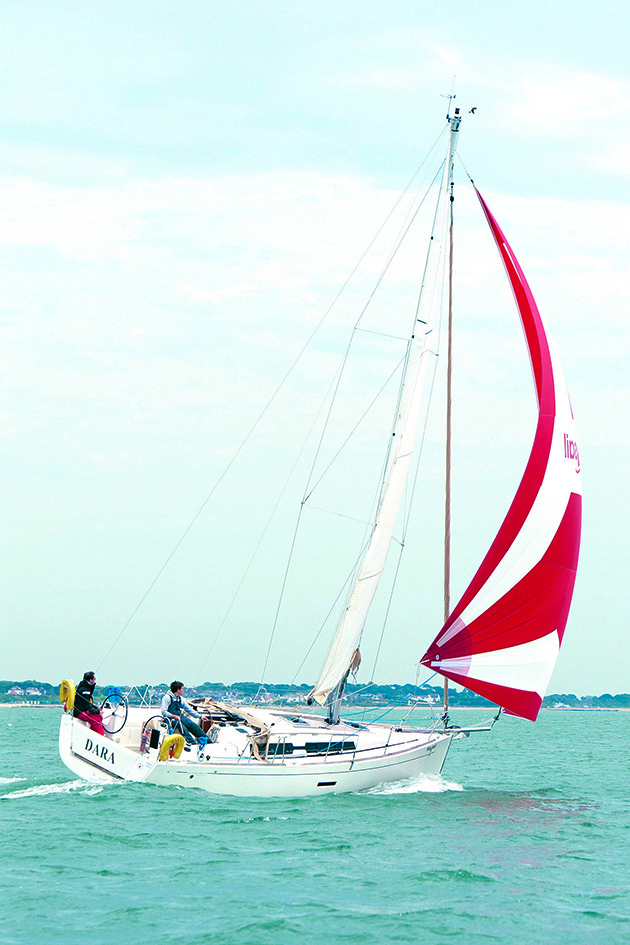
Credit: David Harding
1. This time, we’re sailing a Dufour 325, the cruising chute is filling on a broad reach and the boat is going nicely.
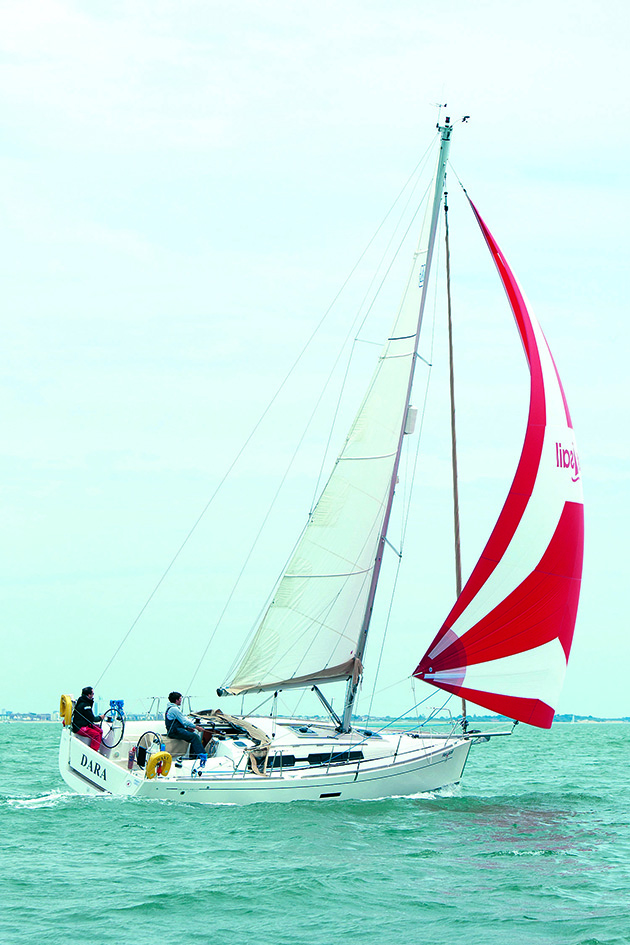
Credit: David Harding
2. As a gust comes through, the sheet is eased to depower the main, but it’s not enough.
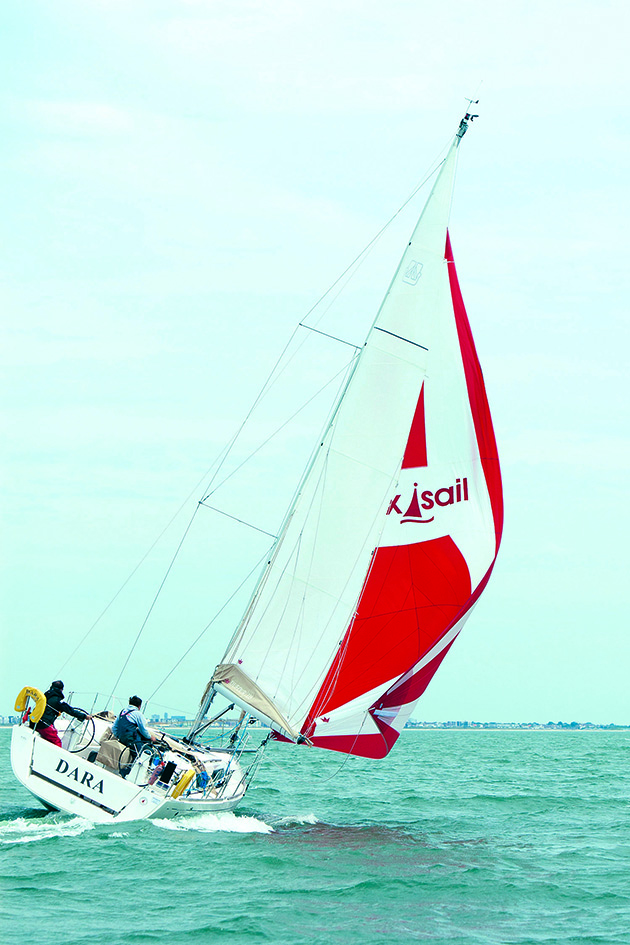
Credit: David Harding
3. Although the heel isn’t great, the rudder has lost grip and it’s clearly broach time.
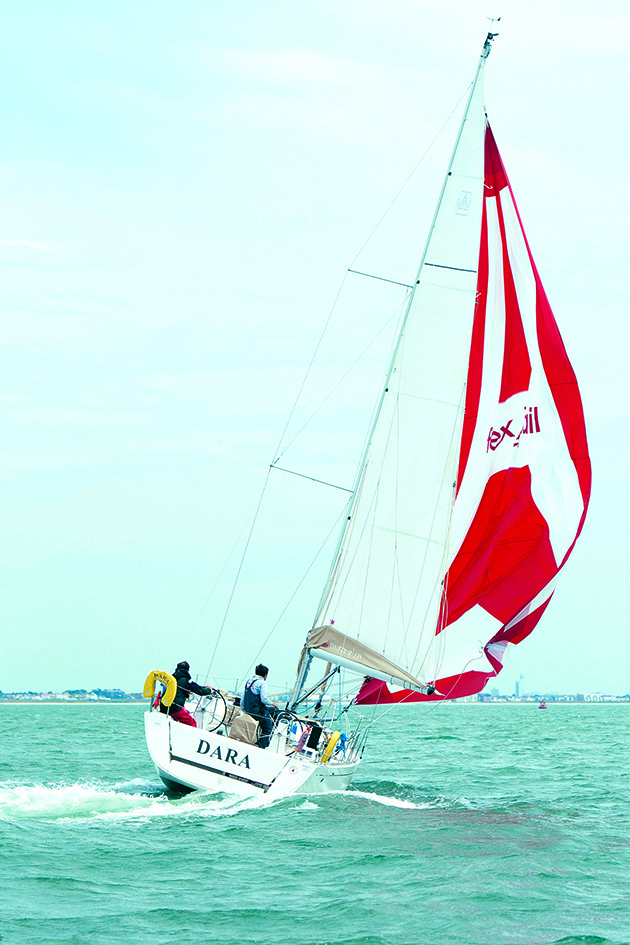
Credit: David Harding
4. The turbulence from the rudder can clearly be seen as the boat rounds up….
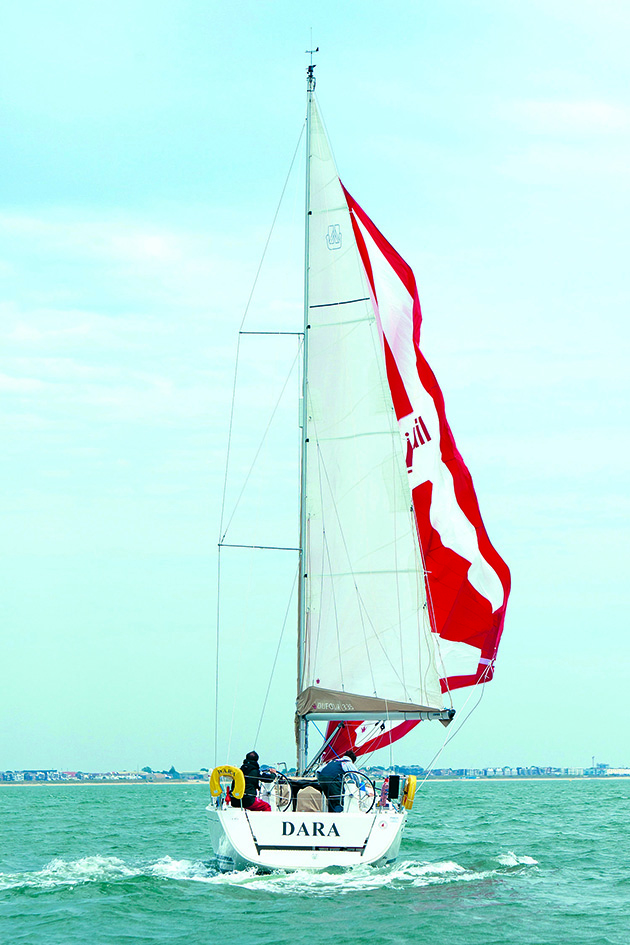
Credit: David Harding
5…and ends up almost head-to-wind with the chute flapping in the breeze.
How to avoid broaching with the cruising chute
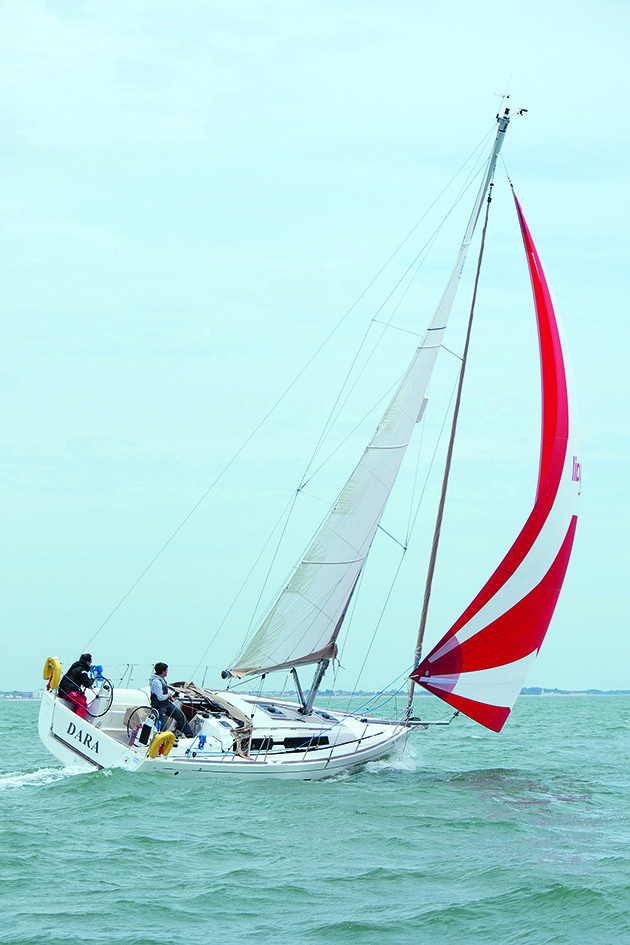
Credit: David Harding
1. With many boats like this, there is a fine line between having control and losing it. Here, the rudder turbulence shows that a broach is imminent.
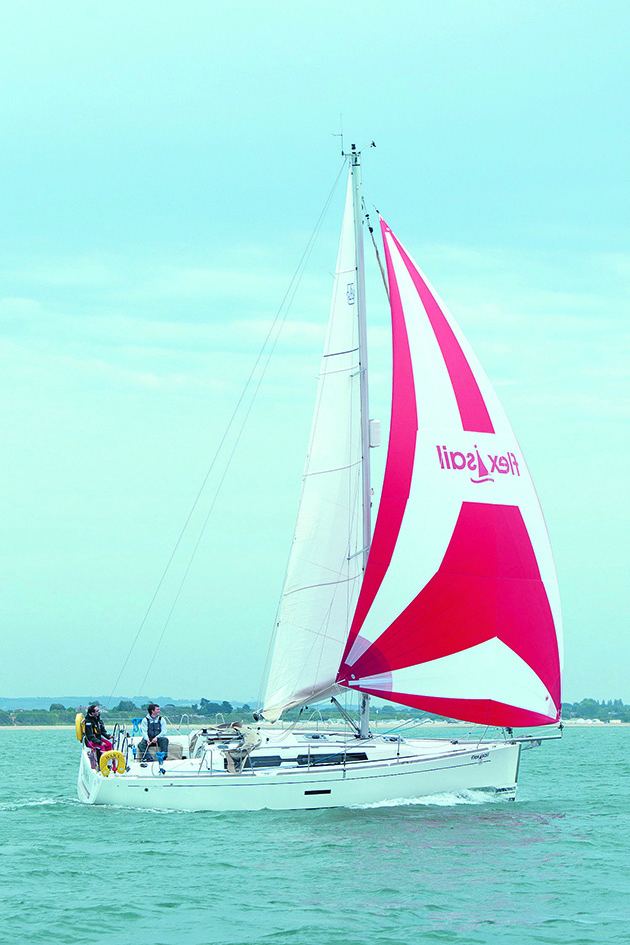
Credit: David Harding
2. The first step to control a broach is to ease the main. Dumping the kicker would also help – the aim is to depower the mainsail, which should allow the boat to come back on course.
Credit: David Harding
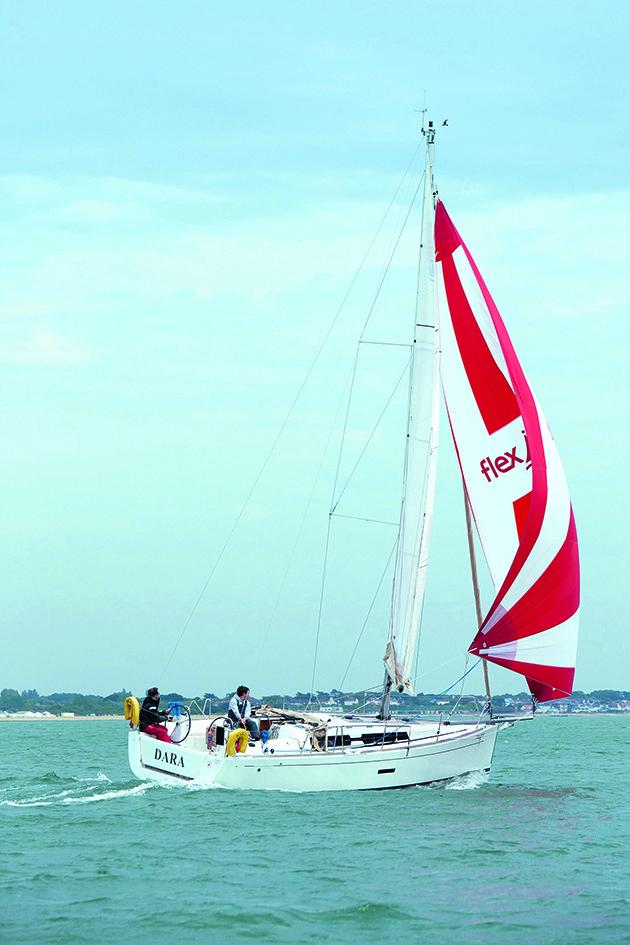
3. If releasing the mainsheet and kicker doesn’t work, to avoid a broach you can ease the sheet of the cruising chute, let it collapse and get the boat back on her feet.
Tips for success
The best way to stay under control with a spinnaker or chute is to fly it efficiently. Here’s a summary of the basics:
- Hoist it all the way. You often see spinnakers flying from several feet of halyard at the hounds or masthead. That can make them unstable and inefficient, so check aloft.
- Make sure the leeward tweaker (barber-hauler) is slack or, if you’re using lazy sheets and guys, that the lazy guy is slack. Unless you’re running downwind in heavy weather, the leeward clew needs to be sheeted directly to its block, usually near the stern. If you pull the leech down too hard the spinnaker doesn’t work as well and you’re more likely to find yourself in a broach.
- Use the guy to bring the pole as far aft as the wind will allow. As a very rough guide, the pole should be at 90° to the apparent wind on downwind legs. Neither the pole nor the spinnaker should make contact with the forestay.
- Keep the pole horizontal and the clews level. Don’t over-sheet: ease the sheet until the luff begins to curl/collapse, then sheet in.
- If the boat is beginning to get pressed on a reach, ease the mainsheet and the kicker to depower the mainsail – you want an open leech to spill the wind. It doesn’t matter if the main isn’t driving. Running in a breeze, tensioning the kicker to keep the leech tight will help prevent rolling.
- If the boat feels as though it’s close to a broach, ease the spinnaker sheet smartly. That will depower the sail and it might collapse for a moment. The trimmer must be conscious of when the boat is approaching broach-point, and communicate with the helmsman so he or she knows when the helm is loading up and it’s time to ease the sheet.
- If you use these pointers as a guide, and have a sail that’s both the right size and not too far past its prime, you should be off to a good start. With a cruising chute, make sure the sheet is led far enough aft and that the sail is the right size. Cruising chutes ask less but give you less in return – it’s your choice.

How to rig a spinnaker on a small yacht – what you need and where to fit it
If you want a spinnaker, but don’t have the necessary fittings or equipment on your boat, where do you start?…

Sail trim: Sailing downwind without a spinnaker
Sailing efficiently when the wind comes astern doesn’t mean you have to fly a spinnaker or cruising chute. David Harding…

Cruising chute or spinnaker? We compare both sails on the same boat on different points of sail
Many cruising sailors favour a cruising chute over a spinnaker – but how do the two sails compare on different…

Broaching on a boat and how to prevent it
When the breeze picks up, how do you stop your boat taking charge and going where it wants? David Harding…
Want to read more articles like Avoiding spinnaker broaching: Keeping the kite under control?
A subscription to Practical Boat Owner magazine costs around 40% less than the cover price.
Print and digital editions are available through Magazines Direct – where you can also find the latest deals.
PBO is packed with information to help you get the most from boat ownership – whether sail or power.
-
-
-
- Take your DIY skills to the next level with trusted advice on boat maintenance and repairs
- Impartial, in-depth gear reviews
- Practical cruising tips for making the most of your time afloat
-
-
Follow us on Facebook, Instagram, TikTok and Twitter