



"Eye opening" with "life-saving insights", the Cruising Club of America (CCA) has published the most comprehensive examination of yacht to yacht rescues ever produced.
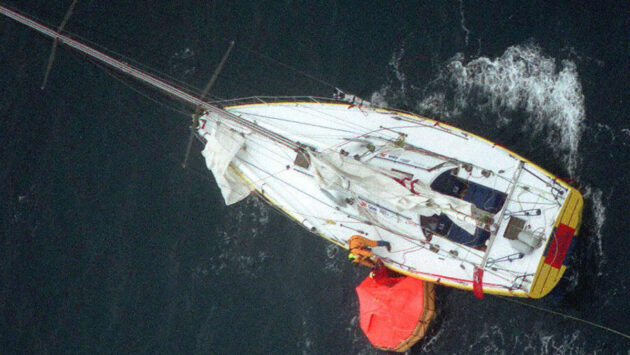
Gripping accounts by sailors who have found themselves honouring the age-old law of the sea to assist others in distress have been published in the most comprehensive examination of yacht-to-yacht crew rescues ever produced.
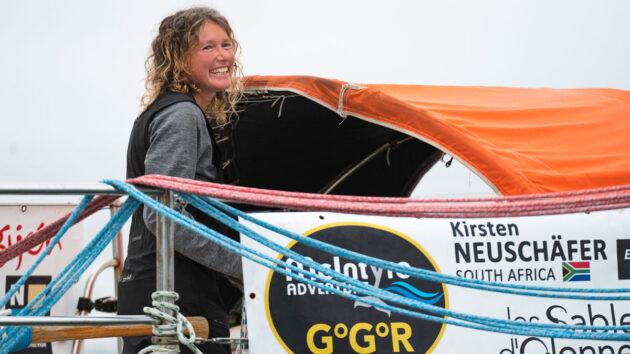
The invisibility of flares in daylight was “an eye opener” – says South African skipper Kirsten Neuschäfer in the report, which includes detail of her 2022-2023 Golden Globe Race rescue. Credit: Olivier Blanchet/ALeA/Getty Images
The 63-page Report of the Yacht-to-Yacht Crew Rescue review team by the Cruising Club of America (CCA), in conjunction with the Bermuda Race Foundation and US Sailing, follows a year of research and provides advice and illustrative case studies.
Five stages of rescue have been identified to help prepare boaters of all craft, whether near-shore and offshore, for the reality of a yacht-to-yacht or liferaft-to-boat crew transfer:
1. Communications and determining location and status:
The report found that ‘effective communication is the foundation of every successful rescue’.
Best practice includes:
- Establish regular, two-way very high frequency (VHF) communications between the vessel in distress (VID) and rescue vessel (RV) as soon as possible.
- Treat the first communication as if it may be the last, and log the VID’s position and time.
- Equip ocean-going vessels with the best available communication systems, such as satellite-based voice and messaging systems, emergency position indicating radio beacons (EPIRBs), automatic identification system (AIS), and Digital Selective Calling (DSC); ‘operator skill is equally important’.
- When one or more RV are near the VID but have yet to make contact, agree on a search pattern and hold regular coordination calls on VHF Ch16 or another designated frequency. During the abandon-ship process, transfer all portable communications equipment, position-fixing electronics, and flashlights to the liferaft, plus extra batteries.
- If multiple crew members have portable AIS units aboard the liferaft, use one at a time to extend the lifespan.
2. Vessel responses and preparations for rescue:
Ensure a plan is communicated, agreed upon, and prepared for by both vessels—before any action is taken. Including:
- That the VID’s status will determine the RV’s immediate role –whether to stand by or to proceed with the rescue plan.
- Conduct an all-crew briefing on both vessels before steps such as inflating the liferaft.
- For both vessels, ensure the boom is secure. At night, prepare lighting such as spreader lights that will assist if they will not blind the crew. Prepare the deck and remove hazards, eg lines, sails.
- The VID should review supplies not known to be in the liferaft and augment supplies of water, food, and first aid. Gather a throw rope and VHF, and, unless the RV is nearby, a VHF remote antenna, satellite communications equipment, spare batteries, signalling flag and mirror, fishing pole, and clothing to load into the raft. Ensure the liferaft or dinghy is securely tied to the VID.
- Upon RV arrival at the scene, if the VID is inverted, alert the crew by throwing a hard object (hammer or winch handle) at it.
3. Vessel abandonment and approach processes:
‘Errors here – a raft deployed in the wrong position, a RV approaching from the wrong side, a painter cut too soon – and a controlled situation can escalate into a life-threatening one’.
- Attend a safety at sea course; in 67% of transfers, the liferaft was the vehicle of choice.
- Do not attempt direct vessel-to-vessel transfer if other options exist.
- Do not elect to have the crew intentionally go into the water.
- Beware: the tension on the painter may be high due to wind and seas, the weight of the water ballast and crew as they embark, and it is difficult to grab onto the slippery painter line with bare hands.
- Knowing how to right a capsized liferaft is essential.
4. When bringing rescued crew onto the RV:
- Select the recovery location (alongside at the rail or over the transom).
- Secure the RV to the liferaft. Determine how to bring VID crew aboard and assist them.
- Manage both crews throughout the evolution.
5. Post-rescue experiences and issues:
The job isn’t over when the abandoning crews board the RV. Consider:
- The care and feeding of unplanned overnight guests.
- Communications to search and rescue and families.
- Medical assessments; rationing of food and water.
- Watch assignments.
- Possible leadership issues (with skipper of VID).
- Impact of additional passengers and weight on vessel systems.
- Insufficient liferaft capacity.
- The need for other vessels to accompany the RV.
Reading glasses and orange smoke ‘would have helped’
Neuschäfer, who rescued fellow Golden Globe Race skipper Tapio Lehtinen in 2022 after his Gaia 36 sank and he spent over 24 hours adrift in the southern Indian Ocean, writes in the foreword, “despite the most thorough preparations, unforeseeable events outside our control remain possible: extreme weather, collisions with semi-submerged objects, medical emergencies, or material failures.
“In such moments, quick and accurate decisions rely on our seamanship skills and theoretical understanding of the unforeseen.
“Because it is nearly impossible (and highly undesirable!) to gain practical experience in every type of emergency, the most valuable source of information is the hard-earned experience of others.
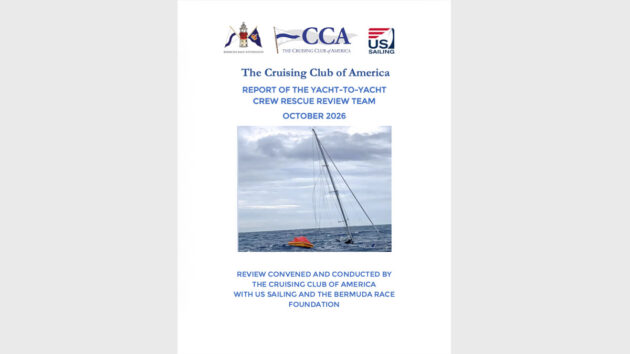
The Cruising Club of America (CCA) Report of the Yacht-to-Yacht Crew Rescue Review Team cover. Credit: CCA
This trailblazing report on yacht to yacht rescues is a ‘real eye opener’
Round-the-world sailor Kirsten Neuschäfer encourages all mariners to learn from the “life-saving insights” and prepare for the possibility of being in distress or called upon to assist another vessel, whether you sail near-shore or offshore.
She writes in the CCA report foreword: “While it is certainly more enjoyable to daydream about far horizons or racing tactics, preparing for the unforeseen is a fundamental responsibility.
“We do this not only to save ourselves and our crew but also to honor the age-old law of the sea, which requires assisting others in distress.”
Neuschäfer’s own heroic experience is included and she added: “While the rescue was ultimately successful, there are critical lessons I wish I had known beforehand as well as specific items that would have made the rescue easier and quicker.
“I’m sure Tapio would concur; seeing his raft drift away as it was deployed undoubtedly added unnecessary shock and adrenaline to an already life-threatening situation.
“A minor addition—an extra pair of reading glasses in his grab-bag—would have made it much easier for him to send YB3 [satellite text messaging] messages and to read instructions for deploying his flares.
“Furthermore, smoke flares for daytime signaling would have greatly facilitated my efforts to locate him as he drifted in his life raft with the bright, rising sun behind him.”
She urged all sailors to read the ‘gripping accounts’ in the report, which can be found at: https://cruisingclub.org/news/yacht-yacht-rescue-report
Why was a report on yacht to yacht rescues necessary?
An incident review after the sinking of the 61-year-old, wooden 50ft sloop Solution in the 2024 Newport Bermuda Race, and the rescue of her five crew by a United States Coast Guard helicopter, included a recommendation to further study the challenges of yacht-to-yacht crew rescues (YTYCRs).
The incident report was conducted under the aegis of US Sailing, the Bermuda Race organising committee and the Cruising Club Of America (CCA), and the three organisations duly established a YTYCR review team in November 2025.
This global team of safety-at-sea experts identified 28 documented incidents, which involved 23 sinking and five disabled vessels, and conducted research including interviews with the crews involved.
While each YTYCR was unique, the team identified capabilities and key decisions common to the rescues, actions that contributed to success or posed challenges, and five stages of each rescue.
Most YTYCR incidents were beyond the range of shore-based assets.
But four involved vessels near the coast that suffered catastrophic damage necessitating immediate assistance from a nearby vessel when rapid sinking did not allow sufficient time to mobilise shore-based assets for rescue.
“Effective communication by all means, from flares and VHF to sophisticated satellite communications, was critical to the success of each rescue,” states the report’s executive summary, “it is sobering to consider reports of other vessels that were never heard from again.”
Intended for information only, the reports emphasises that ‘mariners should be aware that their circumstances may, and probably will, differ from the scenarios described in the report in significant ways that will impact how they need to consider any transfer of a person from one vessel to another’.
Most incidents involved the use of a liferaft with various transfer techniques.
Few, if any, skippers or crews were trained in yacht to yacht rescues.
The varied case studies included:
- The Peterson 44 Raindancer, which hit a whale while on a 3,100-mile passage to the Marquesas from the Galápagos, with about 1400 miles left to go.
- The 2006 Sydney Hobart Yacht Race yacht Koomooloo, which began taking on water approximately 70 miles offshore.
- Veteran skipper Jean Le Cam’s rescue of rival Kevin Escoffier in the 2020 Vendée Globe, after his IMOCA 60 PRB suffered a catastrophic structural failure and ‘snapped in half’ some 840 miles southwest of Cape Town, South Africa. The report said: ‘Escoffier barely had time to send a frantic text message to his shore team before his electronics died, saying: “I am sinking. This is not a joke. MAYDAY.”’ Le Cam found him floating in a life raft for 11 hours in the South Atlantic, following an extensive, coordinated search.
- The rescue of 2021 Atlantic Rally for Cruisers (ARC) Hanse 588 Charlotte Jane III by Magic Dragon, after the mechanical linkage on the starboard-side steering of the twin-wheel failed.
- The report states: “Pete Goss’s Aqua Quorum’s 1996 rescue of Raphaël Dinelli on Algimouss is recognized as one of the most demanding rescues in the Southern Ocean; sailing upwind in a gale was the first accomplishment!”
Goss suggests that without the help of the Royal Australian Air Force (RAAF) aircraft he probably have never been able to find the liferaft in the sea conditions.
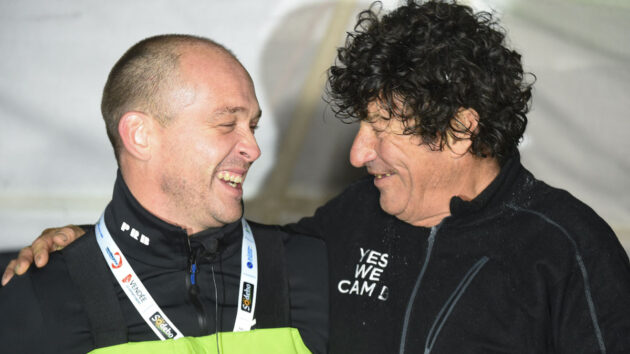
French skipper Jean Le Cam (right) finished fourth in the 2020-2021 Vendee Globe round-the-world solo race after deduction of the compensation obtained for the rescue of Kevin Escoffier (left), following the sinking of his boat. Photo credit: JEAN-FRANCOIS MONIER/AFP via Getty Images
About the Cruising Club of America
The CCA is a group of accomplished recreational offshore sailors bound together by friendship and the desire to foster the responsibilities, expertise, and skills needed for the adventurous use of the sea.
The review team now plans to collaborate with leaders in safety-at-sea training, race management, and the media to make these conclusions available to offshore sailors.
US Sailing SAS Course Chapter 1, Giving Assistance, states: “For as long as mariners have been going to sea, helping others in need of assistance has been a key element of seamanship.
“While a number of philosophical and legal arguments can be made for assisting another sailor, crew, or vessel, the fundamental reason is that other boats are often the most likely sources of rescue.
“And the boat you help today may well help you in the future.
“Distances at sea can be enormous, and due to the frequently hostile nature of the ocean, quick response by nearby vessels is key to reducing loss of life, especially in cold water.”
The report describes how Rob McAlpine, skipper of Sparky, who came to the assistance of stricken 48ft wooden sloop Restive, which was returning from the 2015 Marion Bermuda Race, said: “When you do this kind of sailing, you know the cavalry isn’t always coming. So, when you get the chance, you try to be the cavalry.”
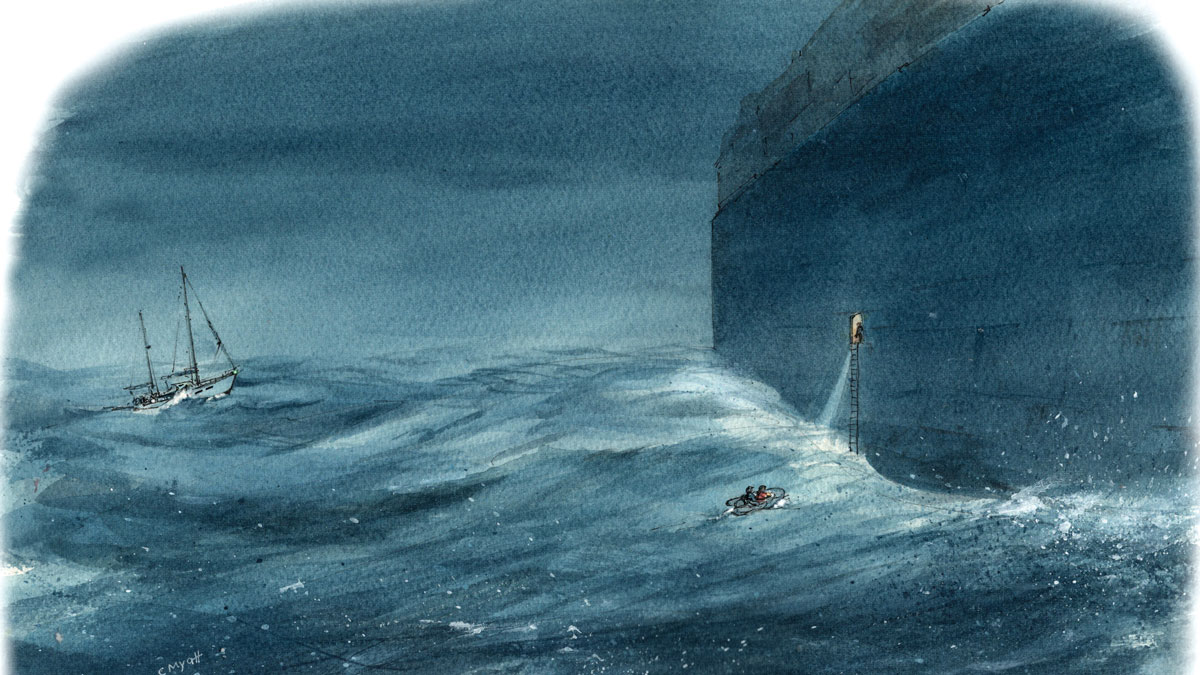
Brain haemorrhage and rudder loss at sea
Alex Carter survives a medical emergency at sea, only to suffer rudder failure during a recovery sail
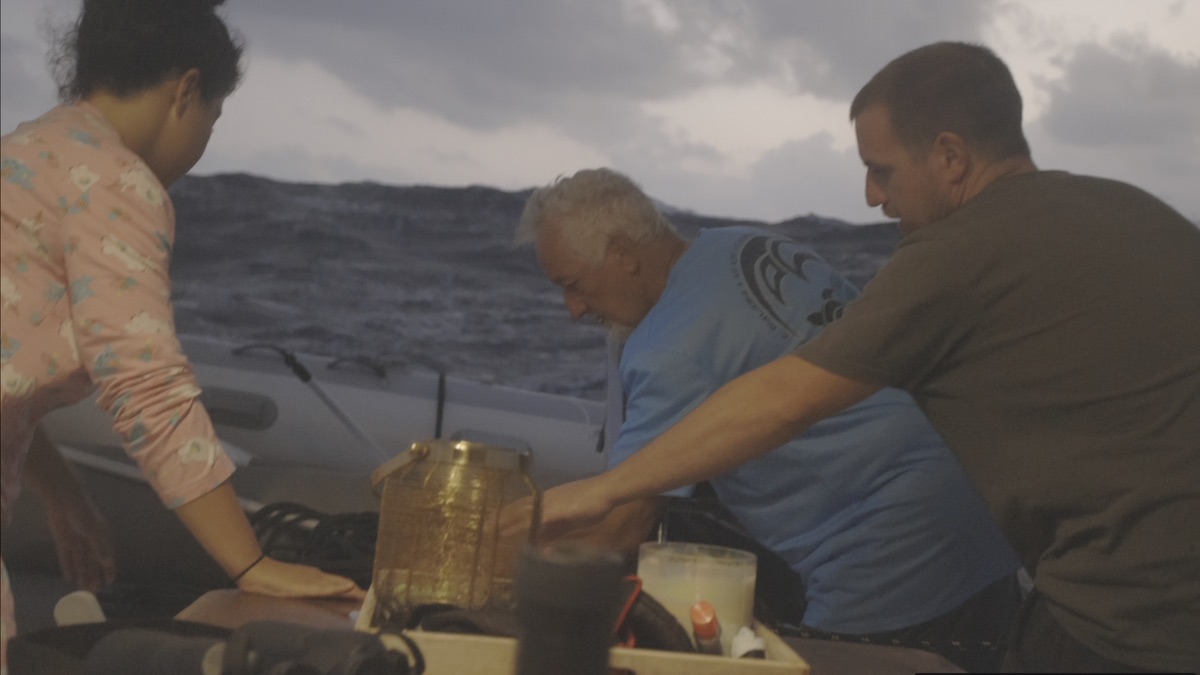
Dramatic footage shows moment tow-line snaps in rescue of dismasted yacht
The 28ft French vessel was spotted on Sunday by Alfie and Ceylan Moore, who were sailing across the Atlantic on…

Kirsten Neuschäfer tops awards for adventurous use of the seas
Golden Globe Race history maker Kirsten Neuschäfer has been named Cruising Club of America (CCA) 2023 Blue Water Medal winner,…
Want to read more articles like Groundbreaking report on yacht to yacht rescues?
A subscription to Practical Boat Owner magazine costs around 40% less than the cover price.
Print and digital editions are available through Magazines Direct – where you can also find the latest deals.
PBO is packed with information to help you get the most from boat ownership – whether sail or power.
-
-
-
- Take your DIY skills to the next level with trusted advice on boat maintenance and repairs
- Impartial, in-depth gear reviews
- Practical cruising tips for making the most of your time afloat
-
-
Follow us on Facebook, Instagram, TikTok and Twitter