


Alex and Daria Blackwell reveal a simple way to check anchor scope when determining the correct amount of rode to let out
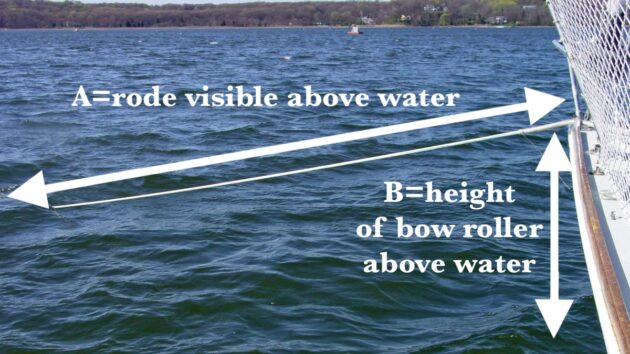
There is always much discussion about how much rode to let out for a given depth of water. The consensus is always ‘more is better’ – but how do you actually know how much rode you have already let out?
A rode counter is the obvious answer but other methods are to mark your rode using coloured whipping line at regular intervals, use cable ties, plastic ribbons, chain markers or even paint on a chain rode.
Alternatively, you can employ a little trick, as demonstrated in the photo (above). All you need to know is approximately how high off the water your bow is (B). Multiply this by five for a 5:1 scope, and you should see that much rode, when it is fully stretched out and taut, between your bow and where it enters the water (A).
The basis for this is some simple school geometry (intercept theorem): The ratio between two sides of a triangle stays the same regardless of the size of the triangle as long as the angles do not change.
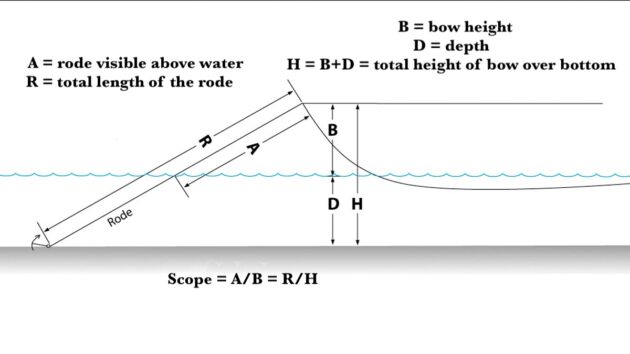
The ratio of the amount of rode you see above the water (A) to the bow height (B) is equal to the ratio of the length of rode you have let out (R) to the total height of your bow above the bottom (H), and either of these are equal to the scope. So, if A/B = 25ft/5ft = 5/1, then you indeed have a 5:1 anchor scope!
Viewing the vertical depth and the outstretched rode (stretched taut) as two sides of a triangle, all you need to know is how high off the surface of the water your bow is. Say it is 5ft: multiply this by five if you want 5:1 scope, and you should see the resultant length of 25ft of rode stretched out between your bow and where it enters the water. This means that you will actually have 25ft visible above water and enough scope underwater regardless of the actual depth.
Now you finally have a practical application for the maths you were required to learn in school.
There are a couple of things to be aware of. This method works best, of course, for a rope rode. An all-chain rode with lots of weight tends to sag unless conditions stretch it taut.
The other point is that this model supposes that the seabed is horizontal. Naturally, the depth of the water under your boat is likely to vary to a lesser or greater degree as you move away from the anchor’s location. However, this does not affect the scope as it relates to the height of your bow over the seabed at the point where your anchor is: hence the validity of using a horizontal seabed in this model!
The best boat anchor types for different types of cruising & their pros and cons
Rupert Holmes looks at the different anchor designs and how to choose the right one for your type of cruising

How to use a shore line to secure a boat at anchor
Genevieve Leaper explains why, in some circumstances, using a shore line to keep the boat secure makes perfect sense

Anchoring a boat: Top tips from a scuba diving sailor
Drifting in a hot air balloon over variable terrain and needing to drop an anchor, you’d surely try to select…

Anchoring a boat: 6 tips to keep you safe
If space is tight or the weather looks unsettled, it’s worth having a few skills up your sleeve to make…
Want to read more articles like Estimating anchor scope: how to get it right?
A subscription to Practical Boat Owner magazine costs around 40% less than the cover price.
Print and digital editions are available through Magazines Direct – where you can also find the latest deals.
PBO is packed with information to help you get the most from boat ownership – whether sail or power.
-
-
-
- Take your DIY skills to the next level with trusted advice on boat maintenance and repairs
- Impartial, in-depth gear reviews
- Practical cruising tips for making the most of your time afloat
-
-
Follow us on Facebook, Instagram, TikTok and Twitter