


Sponsor Content created with The Maritime and Coastguard Agency
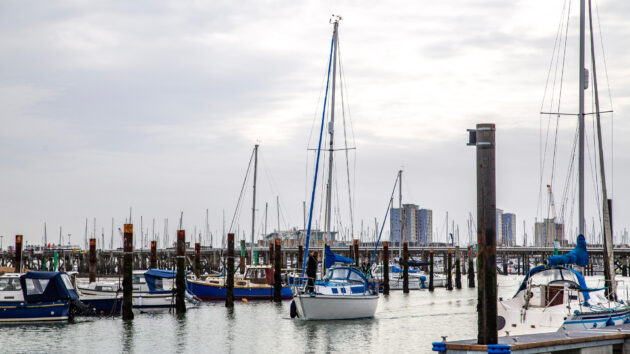
With spring on the way, now’s the time to get yourself, your craft and your crew season-ready and refresh your skills. Whether you’re an experienced cruiser or a relative newcomer to the joys of boating, advance preparation can help banish those niggling worries so you can make the most of your time on the water.
No one sets out to get into difficulties, but we all know it can happen to even the most experienced of people. Has it been a while since your lifejackets were checked and serviced, and your emergency plan reviewed? What about the vessel – are the electrics working, has it been serviced, are pipes and hoses checked? Are you truly satisfied it’s seaworthy?
Safety kit is always evolving and best practice changes with it. So HM Coastguard, part of the Maritime and Coastguard Agency (MCA) has teamed up with the Royal National Lifeboat Institution (RNLI) and Royal Yachting Association (RYA) in the ‘Reduce the risk, boost your skills’ boating safety campaign.
Tom Barnett, Network Commander for HM Coastguard, said: “As a boater myself, I recognise the importance of effective preparation and planning – it’s absolutely part of how boaters best equip themselves and others for a safe and enjoyable day out on the water.
“Created in collaboration with partners at the RNLI and RYA, our campaign provides tips, advice and a helpful set of free Boating Checklists, designed to help boaters carefully consider the safety of those on board and the vessel.”
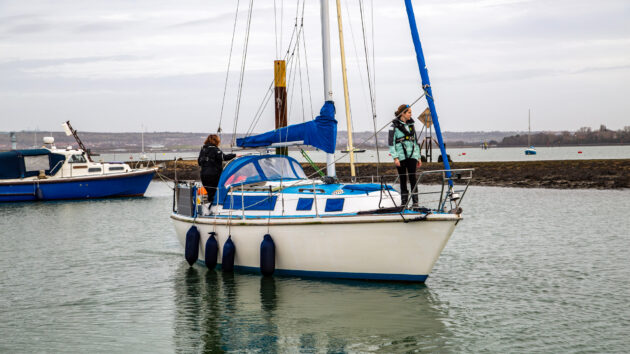
Being well prepared for the season can boost your boating enjoyment
Practical emergency tips
In an emergency, every second counts. A clearly visible script by the vessel’s VHF radio gives anyone on board simple step-by-step instructions for a Mayday call to the Coastguard.
MOB alert and recovery
If someone ends up in the water, it can be hard to see them. LED strobe lights, sea dye, horseshoe buoys, and danbuoys are all designed to help indicate the person’s location.
Recovery systems such as throwlines and emergency ladders can help get someone back on board. Guidance about recovery equipment is in Marine Guidance Note (MGN) 544, sections 5 and 6.
You can also buy devices for both individuals and pets that activate a Man Overboard (MOB) alarm on the boat and on people’s mobile phones when the wearer is separated from the device.
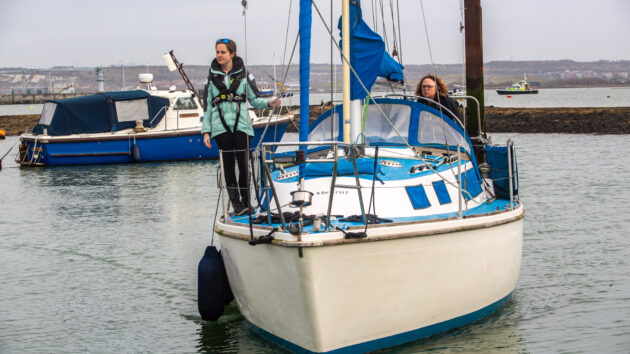
A personal flotation device can save your life
Personal flotation devices
A Personal Flotation Device (PFD), can save your life. Although all lifejackets must meet ISO standards, designs and features vary including spray hoods, lifting strops.
Try on different styles before you buy. Comfort matters because an uncomfortable lifejacket is more likely to be left in the locker and therefore useless. Consider whether a manual or automatic lifejacket suits your type of water use. Ensure inflatable lifejackets are serviced annually as corroded gas cylinders or worn straps and buckles can cause failures.
Check if lifejackets can accommodate a Personal Locator Beacon (PLB) and/or an Automatic Identification System (AIS) beacon.
Take steps to avoid becoming separated from the boat. If not already installed, consider fitting jackstays or dedicated attachment points. A lifejacket fitted with a D-ring can be used to tether yourself to the vessel. It’s important to practice how to get back into the boat if you find yourself overboard.
Depending on the risk level of the activity, consider features such as back-tow technology that allows the tethered person to be towed backwards. This reduces the risk of drowning by turning the wearer’s face away from the oncoming water.
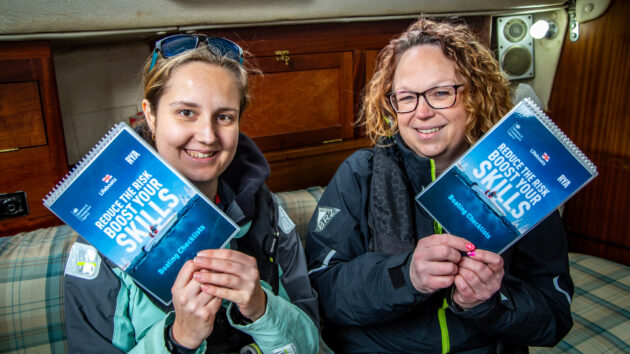
Reduce the risk, boost your skills boating checklists
Distress Beacons
A more considered alternative is a 406 MHz beacon. Personal Locator Beacons (PLBs) are registered to an individual while Emergency Positioning Radio Indicating Beacons (EPIRBs) are registered to a vessel.
When activated, UK-coded 406 MHz beacons transmit a distress signal via satellite with the beacon’s Global Navigation Satellite System (GNSS) position to HM Coastguard at the United Kingdom Mission Control Centre (UKMCC) in Fareham. The information can then be used by the relevant authorities to dispatch rescue teams.
It is important that 406MHz beacons are registered with the UK Beacon Registry. Registration provides rescuers with vital information that helps confirm an alert and identify who is in distress. Registration details need to be kept up to date, and if a beacon is sold or passed on, it must be re‑registered to the new owner so the correct information, such as next of kin is available in an emergency.
An EPIRB is typically mounted on a bracket on a vessel and depending on the type, it can be activated either manually or automatically when released into the water.
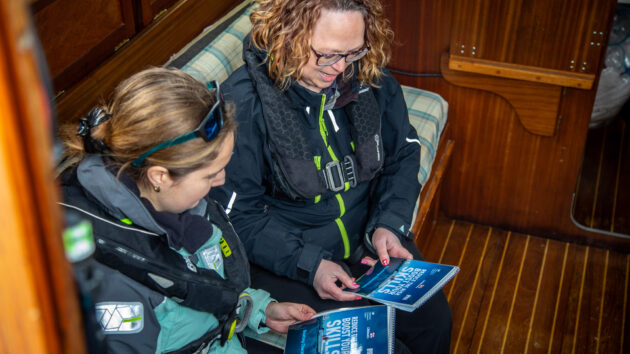
Detailed reading of any checklist is vital
Personal AIS MOB
Once activated, a personal AIS Man Overboard (MOB) beacon will alert vessels within a 2 – 4 mile range. The wearer’s location will appear on chart plotters and the crew will be alerted via the vessel’s VHF if it is enabled with Digital Selective Calling (DSC).
While a 406MHz PLB will alert the Coastguard of your location, an AIS MOB helps your vessel’s crew and nearby craft pinpoint your location. There are now products on the market that combine both 406MHz and AIS into one single device.
Other considerations
Carrying a suitable flare on board remains an important safety measure for recreational boaters, helping to improve visibility and alert others in an emergency. On offshore journeys, you may be out of radio range. Many boat owners opt for a satellite phone or a tracking/texting device which requires a monthly subscription. More information: pbo.co.uk/satcomms.
Boost your skills
If there are gaps in yours or your crew’s knowledge, the RYA runs multiple courses. The more knowledge you acquire, the more confident you’ll be.
Preparation builds confidence. Confidence supports better decisions to help keep everyone safe on the water – so you can focus on enjoying the season ahead.
Free MCA/ RNLI/ RYA checklists are available from hmcoastguard.uk/