


Experienced ocean sailor Tim Cassidy advocates lying to the wind with no sail set in heavy weather, but stresses the importance of hull shape
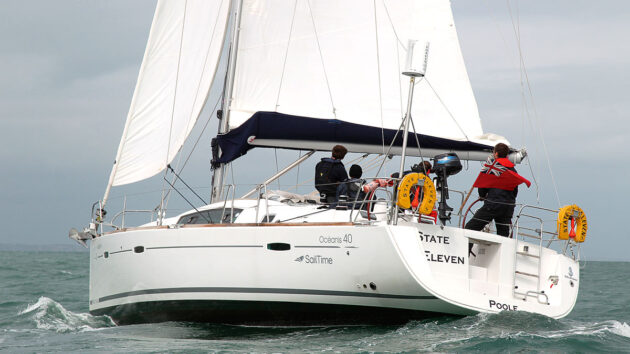
I prefer lying ahull over heaving to, which influenced an evolution in hull design for offshore racing, writes Tim Cassidy. In 1972 I crewed on Kintama, a 40ft GRP Sparkman & Stephens design built in Taiwan, under skipper Rob George. The race was the 308-mile Brisbane to Gladstone ocean yacht race off the south Queensland coast. Meteorology was nowhere near as accurate back then, and after an uneventful start we settled down for a quiet first night at sea.
Radio skeds (prearranged contacts) were compulsory in offshore racing, but due to error we had missed a crucial sked at 1800 on the Friday night: it was crucial because the weather authorities had recorded Cyclone Emily near Noumea taking a sharp turn towards the Queensland coast. They indicated the cyclone crossing the coast at Gladstone early on the Sunday morning, coinciding with our arrival. Because of the missed radio sked, we didn’t know of the changed forecast.
There did seem to be a problem at dawn on the Saturday when the sea presented itself innocent of sails. Where was the fleet? Once notified of the danger on the Friday night, the fleet had in fact taken refuge in Mooloolaba, a port roughly 50 miles into the race. Kintama and a pair of other yachts, MakareTu and Pilgrim, were now 50 miles north of the harbour with a pale sky and increasing south-easterly conditions negating any chance of beating back to this refuge.
We were now offshore from Fraser Island, a sand island approximately 90 miles long. At the northern end is a lighthouse, the last glimpse of land, but continuing as a mix of coral, broken coral and sandy shallows. This area, the Breaksea Spit, terminates in a lightship marking deep water and the ability to head westward once more to the Australian coast. This is the point marked on both Captain Cook and Matthew Flinders’ charts where they also turned to make the coast.
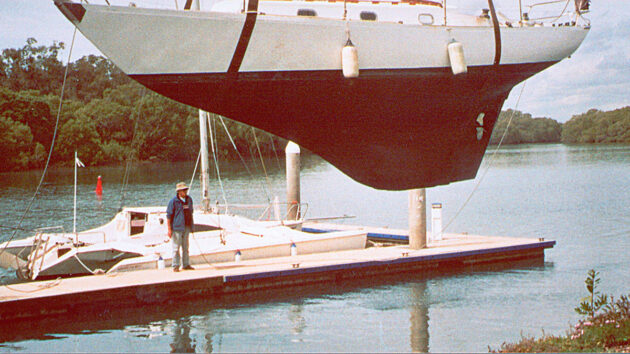
The classic lines of the S&S 36-footer, Tamboo, – ideal for lying ahull in heavy conditions
The wind had been building all day and was now in the vicinity of 60-70 knots. We were down to a double-reefed main and a No3 headsail, reaching hard. Our one sighting of the day was the 45ft steel yacht MakareTu passing us alongside Breaksea Spit. The sea was building and thick foam lay in parallel streaks.
Navigation in those days without the aid of satellites was far more primitive, and it came as a shock in the conditions to see the heaving form of the red lightship appear as if by magic right on the bow – visibility now being down to about 50ft. There was no discussion on board: we were all desperate to get into shelter of any kind whatever the risk. Pilgrim, the former Admiral’s Cupper in the vicinity, did the seamanlike thing, turning its back on the possibility of shelter and heading eastwards to deep water to ride out the cyclone.
As we were heading west our next drama, and under storm jib only, was to miss the rocks off Bustard Head lighthouse by a boat length and surf down its shoulder. A trimaran racing in a separate event was not so lucky, grounding on the rocky headland with all hands lost.
At least we knew where we were after this encounter and set a downwind course to Gladstone Harbour. What we didn’t know was that the Australian Navy had already attempted to leave harbour but could not due to heavy breaking seas blocking the entrance. The wind speed now was well in excess of 100 knots: the wind speed gear at Bustard Head lighthouse gave its last reading at 120 knots when it blew away.
Our last sailing activity was to douse the storm jib. Sheer wind strength was keeping the seas down, but they still contained breaking crests over what resembled a foam bath. Kintama steadied with the windage on the spar and lashed main causing her to edge up to weather then retreat to beam on after breaking crests knocked the bow off.
The crew were absolutely exhausted going below. Everyone had the same aim – to get below decks and escape the screaming wind. It was night now as we lay listlessly on the bunks, calculating our chances of survival. Hours later, in the early morning, there seemed to be a change of motion and noise, causing me to remove a storm board and get on deck.
Kintama was enveloped in an eerie calm: so calm you could have lit a candle. Johnny Green, the Sydney for’ard hand, joined me on deck and looking skywards we saw a tunnel of miles-thick cloud surmounted by a patch of bright blue sky – we were in the eye of the cyclone. ‘It’s all over,’ he yelled. ‘Bullshit,’ I replied: ‘It’s going to come back the other way now and blow just as hard.’
It did back 90° to the north-east, but nowhere near its former strength. A discussion followed as to where we were. We had drifted to the north of our course and now had to reach back to the entrance of Gladstone Harbour.
The wind strength was around 40 knots by feel. Our masthead gear had blown away the night before.
Near the harbour entrance, a sail was seen – MakareTu – and all thoughts of the cyclone were forgotten as reefs were shaken out for the harbour leg to the finish. Kintama had won line honours.
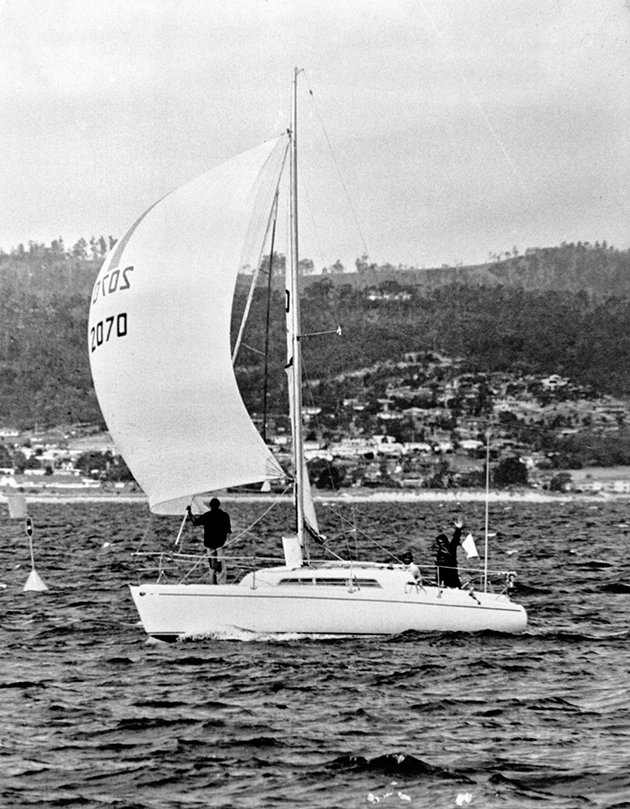
Klinger, Tim’s Farr half-tonner, finishing the 1978 Sydney-Hobart Race. She had capsized the previous day but survived intact
Since the 1972 race, I have owned several S&S-designed yachts of the era, including a Finisterre class centreboarder, a GRP S&S 34 and the Hestia class Tamboo – a wooden S&S design. All of them lie easily ahull as Kintama had done, and I put it down to the lines drawn by the nonpareil Olin Stephens.
Following the ’72 race, I bought the Farr half-tonner Klinger in ’77. She was fast and liked plenty of breeze – from any direction. In ’78 we started her (at 26ft 7in overall) in the Sydney to Hobart with a crew of four. It was a light weather race with the obligatory blow for the tail-enders, of which we were one.
We were almost in Storm Bay when the weather closed in. We had no chance of placing, only wishing to finish. We were going to weather in 30-40 knots when the decision was made to lie ahull and get some rest. Then Klinger capsized, and I was dumped from deep sleep onto the cabin roof.
My initial reaction was distinctly peevish as Rex Neale started to dig me off the sail bags and other cabin detritus. My comment – ‘What the ****’s going on?’ – caused Rex to reply: ‘We’re upside down, that’s what the ****’s going on’. The rest of the conversation was curtailed by the next crest hitting the fin keel and putting us upright again.
The cabin was messy as one storm board was out for ventilation, and we collected 50 or so gallons. Well-built and strong, the hull and rig received no damage. We finished the following day under spinnaker and were escorted into Constitution Dock.
Things to consider when lying ahull
The conclusion I have come to is that the wineglass-shaped hulls of the earlier RORC IOR era present far less target to breaking seas in the knockdown position and consequently allow the yacht to recover. Newer yachts with dinghy-like flat sections aft present a far bigger target for the breaking crests to continue the process of inverting the craft.
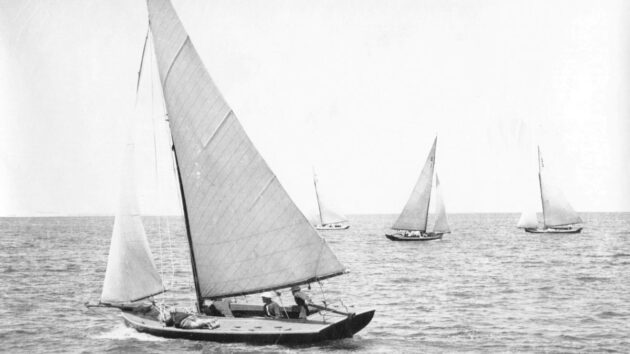
Tassie III racing in Brisbane in the 1950s
I had a similar experience to the Klinger capsize when crossing the Wide Bay Bar (southern Fraser Island) in Tassie III, a 21ft waterline restricted yacht class. She had flat planing sections aft and capsized when hit by a cross sea: all four of us were in lifejackets for the crossing and all hatches secured. She righted herself but one crew member was in the water for 40 minutes before we could get him back on board.
The IOR yachts of these bygone eras were certainly a handful downwind under big spinnakers, but transformed themselves into safe and comfortable cruising yachts when not pushed to extremes.
- Hull shape is important for lying ahull in heavy conditions
- Keep storm boards in and secured
- Crew abilities and the shape they are in are important in considering your offshore options

Heaving to: a question of balance
How tricky is heaving to, and how much does it vary from boat to boat? We tried four different hull…

Heaving To in a light displacement boat
Speed is the key... or rather, the lack of it

Sailing in storms and squalls
One crew's brisk breeze and exciting sail can be another's gale, even if sailing similar boats. So what makes the…
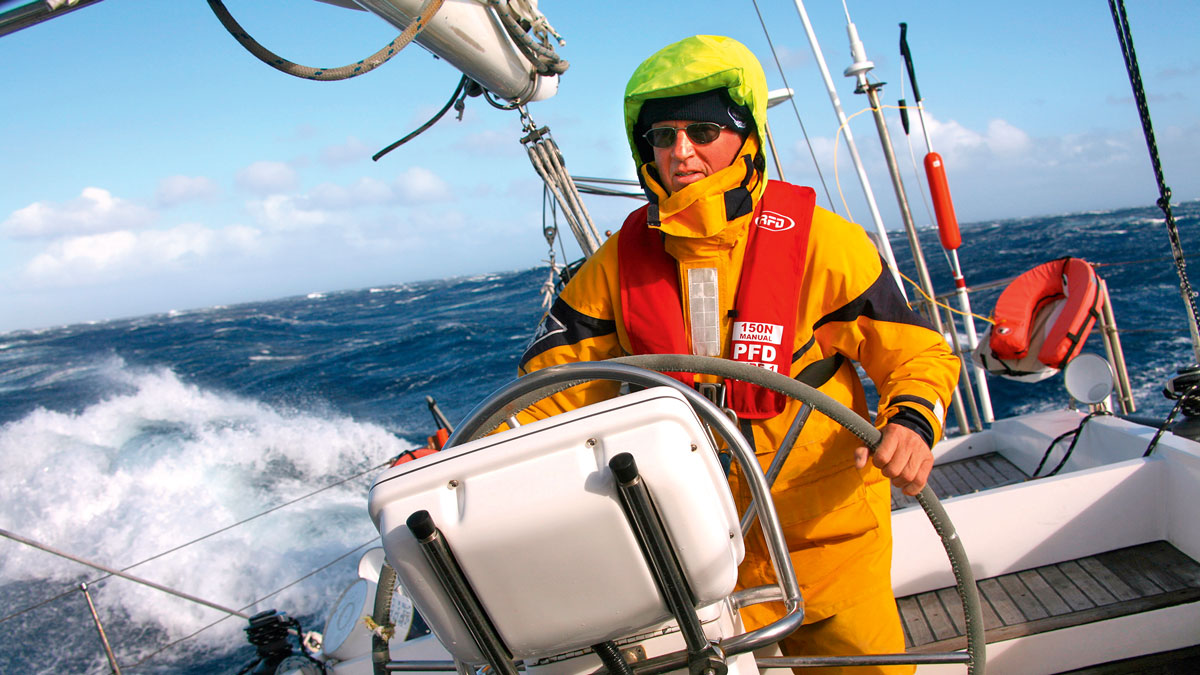
Heavy weather sailing techniques: how to protect your boat in storm conditions
Øyvind Bordal and Magne Klann explain the steps you need to take to protect your rig and sails when the…
Want to read more articles like Lying ahull or heaving to? Which is best for heavy weather?
A subscription to Practical Boat Owner magazine costs around 40% less than the cover price.
Print and digital editions are available through Magazines Direct – where you can also find the latest deals.
PBO is packed with information to help you get the most from boat ownership – whether sail or power.
-
-
-
- Take your DIY skills to the next level with trusted advice on boat maintenance and repairs
- Impartial, in-depth gear reviews
- Practical cruising tips for making the most of your time afloat
-
-
Follow us on Facebook, Instagram, TikTok and Twitter