


David Edgar experiences a knockdown on a fraught solo sail round Portland Bill as a gale gathers strength
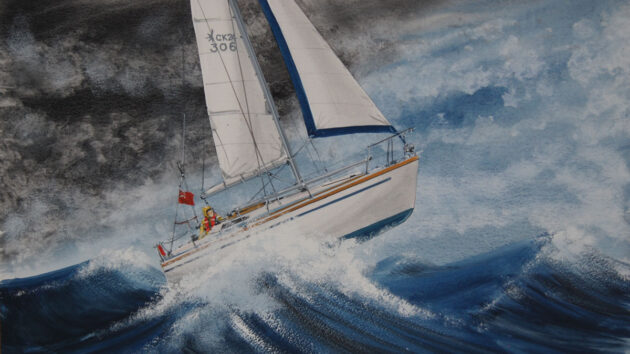
Returning from a solo cruise, I had anchored at Fishcombe Cove near Brixham Marina. The forecast at 1910 had predicted westerly winds of Force 4 to 5, possibly 6. I slept well, looking forward to a fast downwind passage to Portland Marina the following day. In my eagerness to be away, I made the first mistake of the day by raising the anchor while the 0710 forecast was being transmitted.
There was little wind as I motored past the marina. I raised the main, and by the time I passed Berry Head there was sufficient westerly breeze to enable me to stop the motor, unroll the genoa and be sailing. Sun and blue sky appeared, and it was delightful: the wind increased steadily, and white horses chased me. I briefly headed upwind to put a reef in the main and roll the genoa a few turns.
By midday, the wind was gusting above 25 knots and I repeated the upwind manoeuvre to put in a second reef. With only half the genoa out we were flying at around 6 knots, our maximum hull speed, and while surfing down the bigger waves we exceeded 8 knots on the GPS – exciting stuff. It was at this point I picked up a warning of an imminent gale: I needed the lee side of Portland Bill in a hurry.
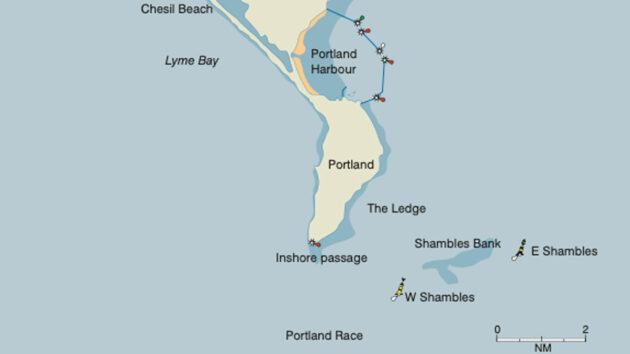
However, I knew that by the time I reached Portland Bill there would be a westerly-going spring tide against the strong wind, which would create a great deal of turbulent water at the very least. I hoped to sail around the worst of the Portland Race. When I was a mile or so from the Portland Bill lighthouse, all I could see were breaking waves from every direction. There might have been smoother water closer to the coastal rocks, but I couldn’t see it, and nor did I fancy taking the chance of closing the shore.
With the tide set firmly against my boat, her speed over the ground dropped to less than three knots, although she was surging through the water at over five knots.
I glanced behind me. There was a massive coal-black cloud advancing above, and forked lightning was clearly visible. I dashed below for the oilies and managed to get them on just before the deluge of rain descended. It was so heavy that it flattened the waves somewhat, and the extra push of wind increased our speed over the ground.
The sea sizzled as lightning struck yards away. The boat started surfing down what appeared to be the near-vertical sides of waves and riding up the following ones, pointing her bows to the sky and charging down the next while I steered as straight a course as possible. This was exhilarating, and there was no time to be frightened: my concentration was too focused on steering to be aware of anything but the next wave.
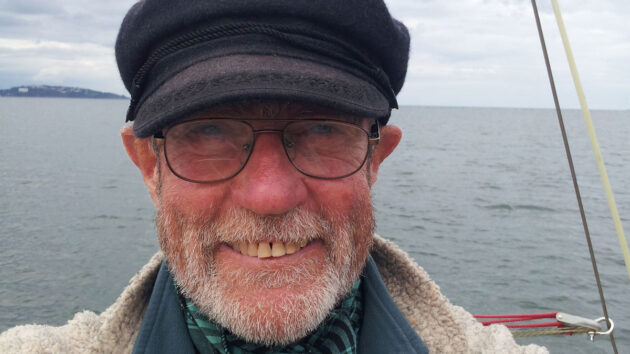
Retired dentist David Edgar started sailing as a teenager in Cadet dinghies from Thames Estuary Yacht Club, Southend on Sea. In 2004/5 he completed a solo Atlantic circuit in a Contessa 32. He holds an Ocean Yachtmaster certificate
Ever so slowly, the old prison building on Portland came into view, then after an eternity of time I noticed we had passed the Shambles buoy to starboard. Imperceptibly, the waves became less steep. I was just beginning to get through the maelstrom when the full force of the predicted gale hit.
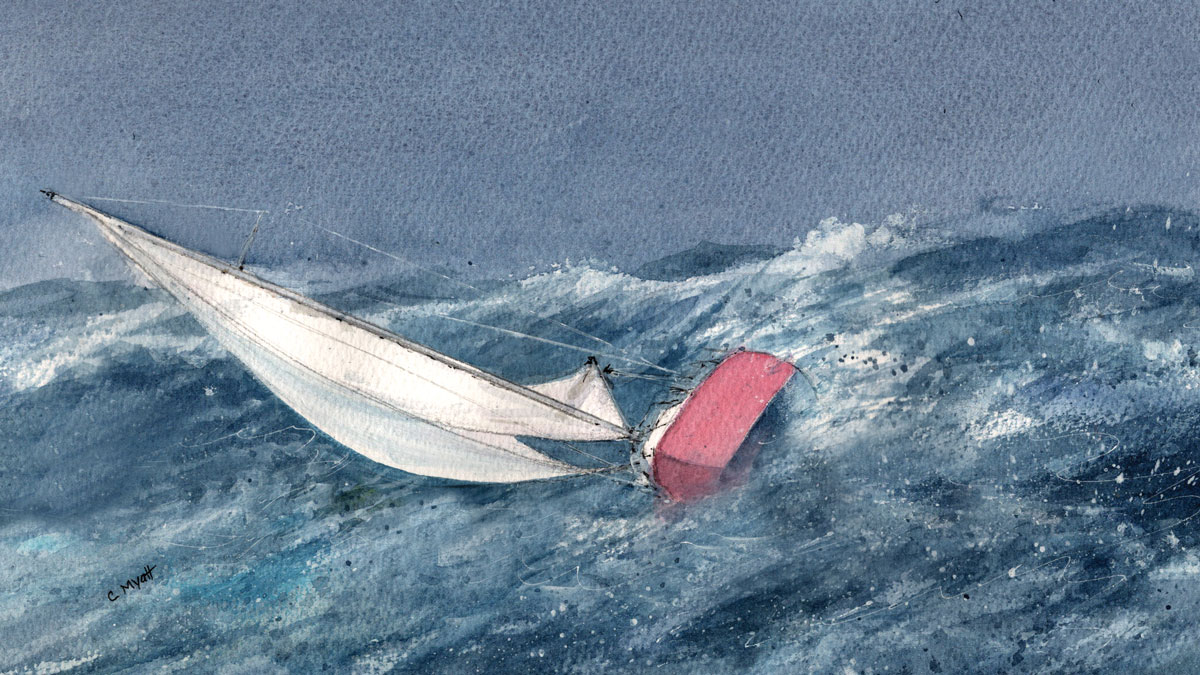
From leaning 10° to lee, Golden Kie crashed over on her side, mast horizontal, and water flooded into the cockpit: but then, as she turned into the wind, the mast slowly lifted and we became upright. That was a gust and a half: I had no chance of checking the anemometer to find out its speed.
Closer inshore now I could see the southern entrance of the harbour, then the eastern. I radioed in for permission to use it and to secure a berth at the marina. With the boat’s engine on, I handed the main and rolled up the genoa. The calm water of the harbour was a relief, but I was motoring into the gale: I could only manage around a knot between the gusts towards the marina.
Thirty-five minutes later, I was at the entrance. Unfortunately, the autopilot could not hold me head to wind while I rigged lines and fenders, but the marina manager and another kind assistant were waiting in the atrocious weather to help me berth. Both of them got soaked while assisting me.
With the lines secured, I let out a huge sigh of relief. I had been very lucky: if the gale had arrived an hour earlier, this adventure might not have had such a fortunate ending.
Lessons Learned from a solo knockdown off Portland Bill
- Get a weather report close to departure time and do not leave without one.
- Do your tidal planning in advance, and don’t hope for the best without it.
- From the almanac, I understood that the Portland Race moved with the tide and would be visible from the surrounding calmer water: I was not prepared for wall-to-wall breaking seas.
- The one aspect I did get right was having the correct amount of canvas up. Golden Kie always felt under control, with the exception of the very strong gust when she self-righted.
What I learned during a boat knockdown while sailing alone
Freya Terry gets an early lesson in the perils of single-handed sailing when she embarks on a round-UK and Ireland…

“I had a banana for a mast” 300 miles offshore: Lessons learned from a mid-Atlantic knockdown
Golden Globe Race entrant and former Clipper Race skipper Guy Waites suffers mast failure 300 miles from the Azores
Force 10 in the Channel: ‘We took a colossal wave broadside, and the cockpit was suddenly knee-deep in water’
A routine Channel crossing became a nerve-shredding passage when a ferocious storm hit, as Ron Stride recalls

“The boat was knocked down, our lifejackets inflated, and then we saw Keith in the water!”
A knockdown wave inflated the crew's lifejackets and broke the skipper's leg as they tried to rescue a man overboard…
Want to read more articles like Sailing through a thunderstorm at Portland Bill: How I survived a solo knockdown?
A subscription to Practical Boat Owner magazine costs around 40% less than the cover price.
Print and digital editions are available through Magazines Direct – where you can also find the latest deals.
PBO is packed with information to help you get the most from boat ownership – whether sail or power.
-
-
-
- Take your DIY skills to the next level with trusted advice on boat maintenance and repairs
- Impartial, in-depth gear reviews
- Practical cruising tips for making the most of your time afloat
-
-
Follow us on Facebook, Instagram, TikTok and Twitter