



Clive Marsh spotlights roomy 10ft to 26ft Westerly Yachts for family cruising that can still be found at dinghy prices.
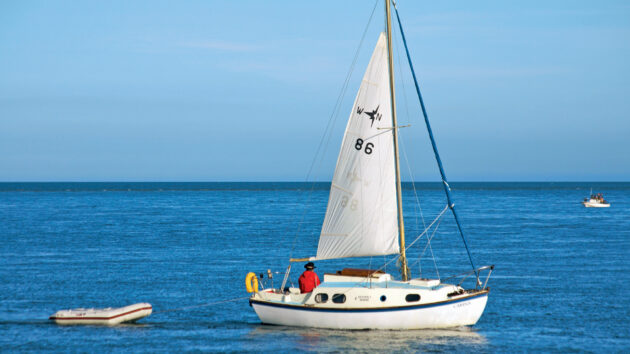
Westerly yachts can be seen at most UK ports and harbours: they’re roomy family boats and some are designed for racing.
The smaller 20ft to 26ft yachts, can often be bought for £4,000 to £7,000 which is about the same price as a good quality used sailing dinghy.
Westerlys are very well made although, like many yachts, they may have no adequate built-in buoyancy.
In my experience this means that when holed, they can – like my old Westerly Cirrus was – be pulled down to Davy Jones’s Locker quickly by its ballast (PBO, March 2022).
Modifications such as making doors and lockers semi-watertight will give you more time in the unlikely event of a holing.
Prices vary depending on whether the boat has been re-engined, had the headlining replaced, had the keel bolts renewed and on the overall condition.
I bought my Westerly Cirrus as a project boat at a knockdown price, but she needed the lot doing.
Project boat reality on my Westerly yacht
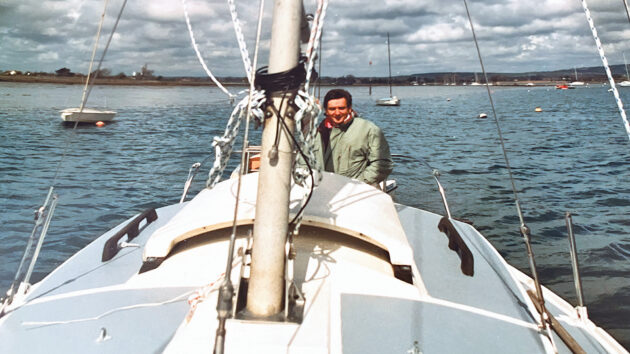
Clive at the helm of his Cirrus Westerly yacht. Photo: Clive Marsh.
By the time I had finished getting Ella sea-ready, she’d cost me more than a refurbished boat, but I decided to go down this route to be sure that I could rely on everything being done properly.
The worst job of all was removing the saggy headlining. You need a mask and goggles because of the dust, and this is best done by a professional with all the health and safety kit.
I stripped all the antifouling off to inspect the hull for osmosis. I found what I thought was one blister, but it turned out to be a solid lump of gel coat.
Not a problem, Westerly yacht’s hulls are well laid up. Boats of this age might have some osmosis, but my Cirrus had none.
Although it may cost more to buy and renovate a project boat there are more of them available, and it is a good way to get to know your boat.
These smaller boats are obviously cheaper but, even though only 22ft, my little yacht had full standing headroom and was comfortable for my family of four.
Westerly yachts have a solid reputation
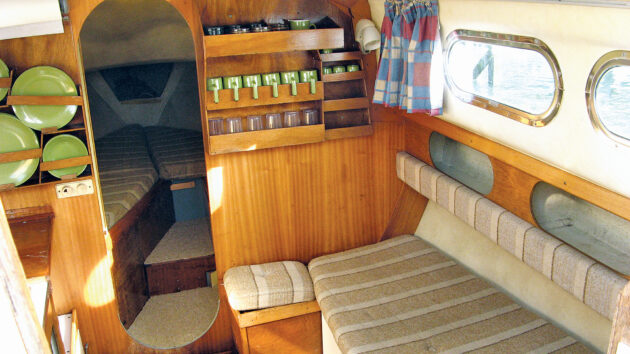
The Westerly 21 is roomy below, but only 5ft 10in headroom. Image reproduced with thanks to the family of the late Alan Crossley.
Westerly yachts started production around 1963 when the yacht designer Denys Rayner was asked by Hilary Scott to design a glass reinforced plastic GRP yacht that was first called ‘The Westerly’, but eventually renamed the ‘Westerly 22’.
The Nomad was also designed by Rayner, and many are still seen around the coast, particularly in the Solent area. As Westerly progressed, it employed some of the most notable designers of the day, including John Butler, Ian Proctor, and Jack Laurent Giles.
The yachts have a reputation for their quality of layup and sturdy build. It would be harder to imagine a stronger GRP boat than a Westerly.
Here are a few of the smaller Westerly yachts often on the UK market:
Westerly 25
This masthead sloop was designed by Rayner and is a longer version of the Westerly 22 which, to my eye, gives her an elegant sheer. About 180 were built, and many are still sailing.
The 25 has a triple keel, is 25ft 1in length overall (LOA) and 21ft on the waterline. She has a long, spacious cockpit and a decent-sized foredeck.
The W25 has now become a classic yacht and I believe, well worth renovating. The W22 is her smaller sister.
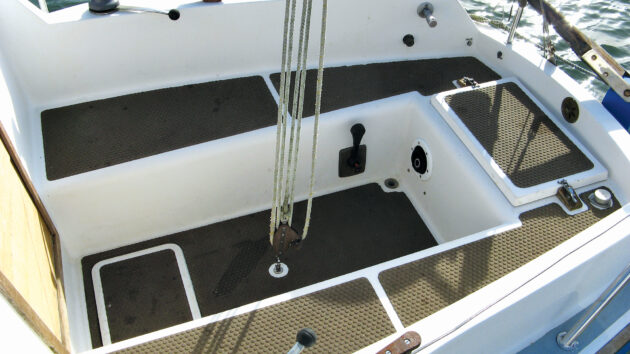
The Westerly 21’s roomy cockpit. Image reproduced with thanks to the family of the late Alan Crossley.
Cirrus and Tiger
These two fin-keeled John Butler-designed yachts are very similar at a first glance, both from their profile and down below, although the Tiger is about 4ft longer than the Cirrus.
My Cirrus was in need of a complete refit and engine rebuild – the cost of this was about the same as the price of a 1970s Tiger in perfect condition. Both of these boats had racing successes.
My Cirrus had a corkscrew motion at times in certain quartering seas due to her short length, but both boats have an excellent reputation and are robust.
There were 398 Cirrus yachts built and 284 Tigers, so there are usually plenty on the market.
The Warwick
This 21ft 6in Laurent Giles-designed boat of the 1970s looks just like the larger Centaur from a distance.
Both the Warwick and the Centaur have a similar ‘knuckle’ in the bow to help the boat rise to a sea and keep the foredeck a bit drier.
Some of these boats have an outboard engine, others a small inboard. The original inboard was the Vire 6hp, which was small enough to be lifted out and taken home for winter maintenance.
If properly looked after it could be reliable, but I found it to be noisy and it caused much vibration. Some owners have now replaced these with small diesel engines.
I renovated my Vire as it involved less work than fitting a new engine would – and the noise encouraged me to switch her off and get sailing as soon as possible.
With bilge keels, the Warwick, Pageant and the similar W21 are ideal for drying out for a tide on a beach like East Head at Chichester for a picnic and maintenance – much easier than anchoring off in a Cirrus and rowing ashore.
Along similar lines is the Jouster with a fin or lifting keel.
GK24
Laurent Giles and Chris Hawkins jointly designed the elegant GK24 as a small racing yacht with accommodation for a crew of four, albeit with limited headroom. She looks sleek.
My late friend James had one for years, but eventually sold it for an open boat in which he could stand up. These boats were available for home completion, so the final finish and quality may vary.
Some have a masthead and others a fractional rig. They have either a deep fin keel or a shallower fin keel. About 320 were built between 1976 and 1981.
The low, flush lines look good, but I wonder if the minimal streamline advantage obtained at the relatively low speeds of a yacht is worth the inconvenience down below?
My friend John had a Maxi 84 with similar lines which had better headroom.
But the racing fraternity like their GK24s and the larger 29s and 34s. GKs look good and just like an elegant sports car, you might have to put up with a little discomfort.
Pageant 23
The pageant is another recognisable Laurent Giles yacht that looks just like the Centaur but is shorter at only 23ft 1in LOA. Pageants share all the Westerly cruising features and are very robust.
With twin keels, they’re marvellously spacious for their length, a great family boat with 551 produced. There is a fin keeled version with a 4ft draught called a Kendall, but these are rare.
Nimrod
This sloop is a small cruiser or day sailer, just 17ft 9in LOA. The designer was Ian Proctor, and 186 were made between 1968 and 1971. They have a lifting fin keel and are a low cost and robust trailer-sailer with berths for two.
The cockpit is a good size. I have owned a very similar one-off cuddy sailer, and the great advantage over an open boat is being able to quickly get out of the rain when at anchor without the need to urgently erect a tent.
But at 1,190lb (540kg) she’s not so easy to move around the yard by hand, and the little cuddy gets in the way when anchoring.
All in all
Westerly yachts have a great reputation, and I enjoyed my Cirrus for many years.
Smaller Westerly yachts are often on the market at bargain prices, reflecting the amount of refurbishment required.
Looking at the market today, I noticed a W22 for £3,500, a Cirrus for £5,999, a GK24 for £4,500 and a Pageant for £5,000.
A lot of fun to be had for not a lot of money, and any refurbishment required helps you get to know your yacht, if that’s how you want to spend your time.
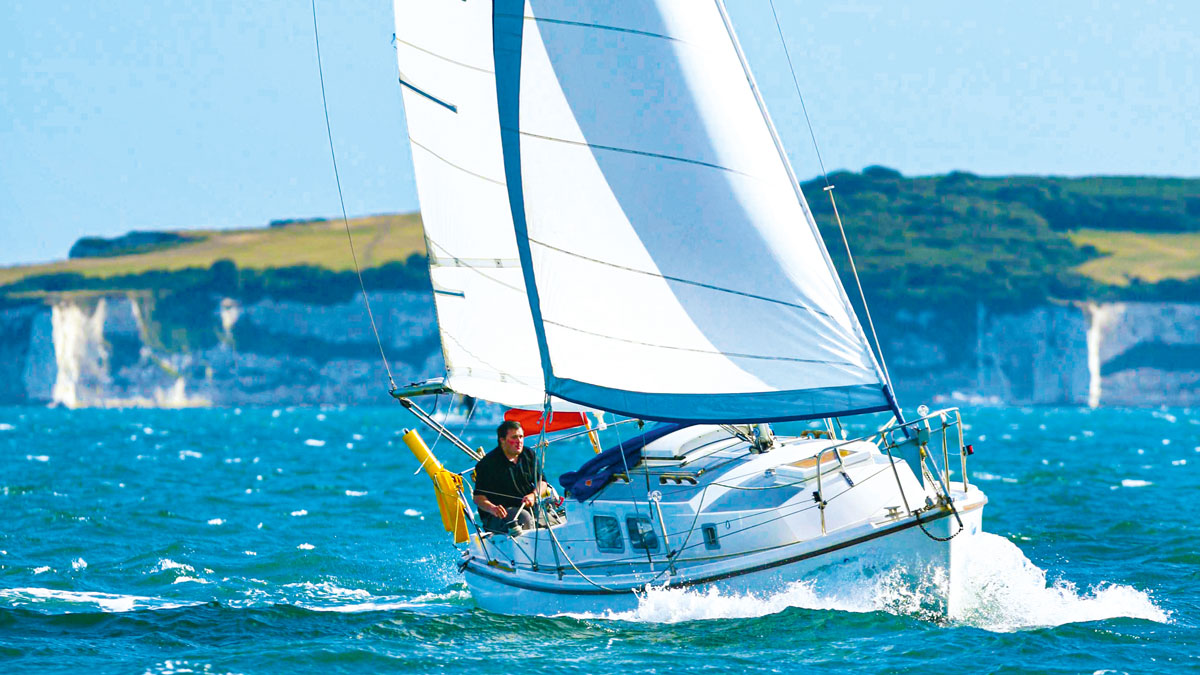
Westerly Centaur: Britain’s most popular yacht
Rupert Holmes analyses the pros and cons for today’s boat owners of the most popular cruising yacht ever built in…
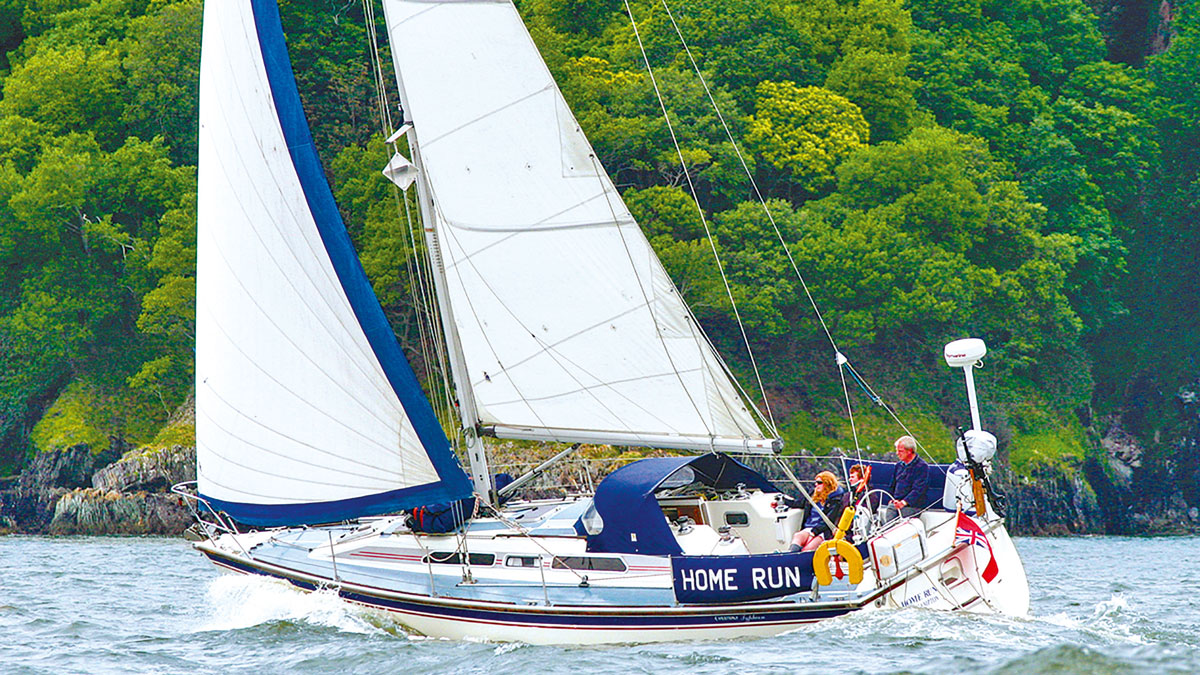
Comparing the Westerly Typhoon 37 and 6 other designs
Rupert Holmes looks at the the Westerly Typhoon 37, his favourite Westerly model of all time, and other alternative boats…
Want to read more articles about Westerly yachts?

A subscription to Practical Boat Owner magazine costs around 40% less than the cover price.
Print and digital editions are available through Magazines Direct – where you can also find the latest deals.
PBO is packed with information to help you get the most from boat ownership – whether sail or power.
-
-
-
- Take your DIY skills to the next level with trusted advice on boat maintenance and repairs
- Impartial, in-depth gear reviews
- Practical cruising tips for making the most of your time afloat
-
-
Follow us on Facebook, Instagram, TikTok and Twitter